
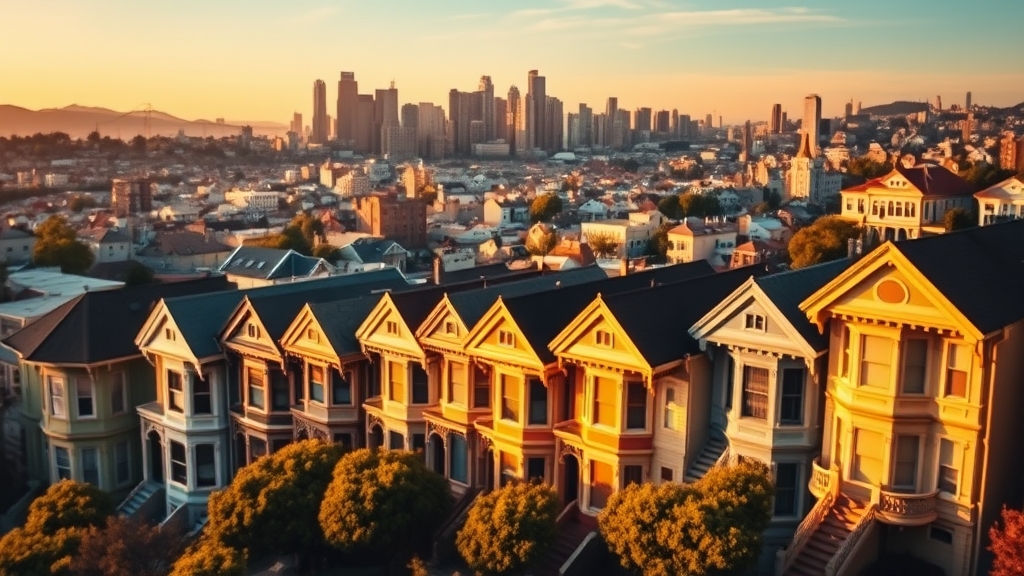


Strong Demand Fuels San Francisco Housing Resilience
In the pulsating heart of the San Francisco housing market, current home values tell a compelling story of resilience amid economic turbulence. With the average home value pegged at approximately $1,310,207 as of 2025, a 2.0% increase from the previous year, the market reflects an enigmatic equilibrium influenced by strong buyer preferences and pronounced market fluctuations.
The median listing home price, around $1.2 million in April 2025, mirrors a similar annual increase, signaling sustained buyer interest, despite broader economic uncertainties. The market’s vigor is evident as homes routinely shift to a pending status within about 15 days, showcasing robust transactional momentum.
San Francisco’s appeal persists due to its formidable economy and high quality of life, drawing in both local and affluent incoming buyers. This sustained demand supplements the upward price trajectory, counterbalancing rising financing costs. Even as affordability concerns loom, they have not greatly undermined the strong buyer interest. Tampa’s multifamily market offers a blend of growth and stability, something seen as a parallel in driving investor confidence as well.
In particular, the luxury segment, with properties priced over $5 million, continues to thrive, with affluent buyers seeking exclusive real estate gems in this iconic city. On the supply side, inventory constraints remain a pivotal driver of the market’s performance. A limited number of homes for sale sustains upward pressure on prices, reinforcing the market’s resilience. Adding to the tight inventory, homeowners are holding onto their properties longer, further contributing to the low availability of homes that sustains San Francisco’s position as a robust seller’s market.
This supply shortage, expected to persevere through 2025, maintains San Francisco’s position as a stalwart seller’s market. New housing developments have yet to appreciably expand the housing supply, allowing for swift sales and shortened timelines to pending states.
Higher interest rates imposed by the Federal Reserve, elevating financing costs, have not managed to dampen buyer demand notably. Instead, economic growth in the Bay Area continues to underpin optimistic market forecasts for 2025.
Although inflation and cost-of-living challenges introduce an added layer of complexity, these factors have not curtailed the bustling market activity. The market remains buoyed by affluent buyers, including tech professionals driving market stability.
The San Francisco real estate terrain continues to thrive across various market segments. While the luxury market outperforms with remarkable strength, non-luxury housing segments face tighter affordability pressures.
Nevertheless, demand remains steady, with price trends showing a generally positive direction. Condos and single-family homes alike command interest, their price appreciation expected to proceed, though at a tempered pace relative to previous years.
Transaction speed adds another dimension to the market’s vibrancy. Homes tend to achieve pending status rapidly, typically within 15 days, reflecting the competitive fervor among buyers amid persistently low inventory levels.
Properties in particularly coveted neighborhoods experience even quicker turnovers, underscoring the high stakes within this dynamic market. As such, investment prospects in San Francisco’s real estate, characterized by strong potential for long-term appreciation, continue to attract interest from investors keen on securing a foothold in this economically charged environment.
The intricate interplay of market forces in San Francisco portrays a housing market unfazed by volatility. Its resilience is fortified by undeniable buyer demand and unwavering supply constraints.
Assessment
San Francisco’s housing market showcases impressive resilience even amidst broader economic fluctuations. Persistent demand and limited inventory keep prices climbing, ensuring market stability.
The city’s unique charm—rooted in its economic opportunities and cultural allure—continues to attract committed buyers. Urban demand trends endure, keeping San Francisco’s real estate scene alert and ready for new developments.
Investors and professionals need to closely watch these dynamic shifts. These movements are key in shaping the industry’s practices and precedents.



















5 Responses
I get the strong demand, but isnt it insane how SF housing prices just shrug off volatility like its a pesky mosquito? 🤔💸
Despite strong demand, isnt SF housing resilience more about limited supply and tech money? Just a thought. #HousingBubble
Is anyone considering the working class in all this? SF housing resilience sounds like a pretty bubble for the rich. Just saying…
Is it really strong buyer demand or just tech moguls inflating SF housing? Not everyones a Silicon Valley billionaire, guys! #HousingBubble
Or maybe its just supply and demand economics? Ever thought of that? #Econ101