



Decline in Residential and Multifamily Permits
The rapidly diminishing terrain of Phoenix’s residential and multifamily construction permits underscores a substantial downturn in the housing sector.
Recent data reveals a significant drop in multifamily market activities. Multifamily permits have plummeted around 40% year-over-year by early 2025. This decline highlights reduced residential demand.
Overall permit numbers fall well below historical peaks. May 2025 figures show new home building permits at approximately 3,760 units. This signals a persistent downward trend.
The number of new private housing structures authorized by building permits in March 2025 reached 3,940 units, a far cry from the record high of 7,038 units in July 2004.
There is a contrasting sharp reduction in both single-family and multifamily permit counts. This signals an oversupply and shrinking residential demand in Phoenix.
Despite a slight improvement in March 2025, with multifamily permits peaking over 1,000 units, the long-term trajectory remains bleak. The market continues to face broader contractions.
Impact on Housing Construction Trends in Phoenix
In Phoenix, housing construction trends reflect an intriguing paradox. Market dynamics are shifting, indicating a move towards balance after a period dominated by sellers.
The market is still seeing high demand due to population growth and economic expansion. However, rising construction costs are posing significant hurdles for builders. Costs for land acquisition and development are climbing, alongside increases in material prices.
Developers facing challenges from rising costs and slower construction starts is impacting the pace of new completions. Together, these factors make it challenging to keep home pricing affordable.
Despite these challenges, elevated rental rates are steering some buyers towards purchasing homes. This shift offers some relief to builders in terms of sales.
New home developments are primarily situated on the outskirts of the metropolitan area. They aim to meet the surging demand but face difficulties with available land. Investors are advised to remain flexible and continuously monitor federal policies that could influence these dynamics.
While the demand remains robust in the long run, escalating costs continue to complicate supply dynamics. This tension could ultimately recalibrate the housing market’s trajectory.


Industrial and Commercial Construction Slowdown
Demand for industrial and commercial construction in Phoenix faces a complex slowdown. This is driven by fluctuating market dynamics and strategic developer caution. In 2024, new industrial construction plummets to 9.6 million square feet.
This marks a stark contrast to previous years.
Developers remain wary of oversupply.
They are allowing existing inventories to lease up before initiating new projects. The industrial sector experiences an 11.2% vacancy rate.
Only 14% of industrial property under construction is pre-leased. Zoning regulations significantly influence industrial development. They dictate site selections and project scopes.
Despite this, substantial commercial projects like Northside at SanTan Village and Park Algodon continue.
This indicates persistent investment interest. Rising construction costs, driven partly by Trump’s tariffs, exacerbate affordability issues that impact new development. This scenario reflects an industrial sector in recalibration. It is cautious yet forward-looking.
Effects of the Arizona Permit Freedom Act
The Arizona Permit Freedom Act brought rapid changes to the permitting process. Approval times were drastically reduced, cutting bureaucratic delays from 200 to 126 days by 2024. In Yuma, permits are now closed within 133-139 days. These reforms streamlined administrative reviews and promoted housing affordability.
Expedited development processes are a key factor. The Act’s effects are clear, with projections estimating 3,800 additional housing units each year by 2035.
Home prices are expected to drop by 5%. First-time buyers and middle-income families stand to gain the most. Economic growth is a direct result of improved permitting.
This expansion shares prosperity within Arizona. Meanwhile, celebrity figures like Jade Shenker are influencing real estate trends, amplifying shifts in both residential and commercial markets.
| Year | Permit Days | Housing Price Impact |
|---|---|---|
| 2022 | 200 | 0% |
| 2024 | 126 | -5% |
| 2035 | 126 | -5% to -10.8% |
Builders’ Strategic Adjustments in a Changing Market
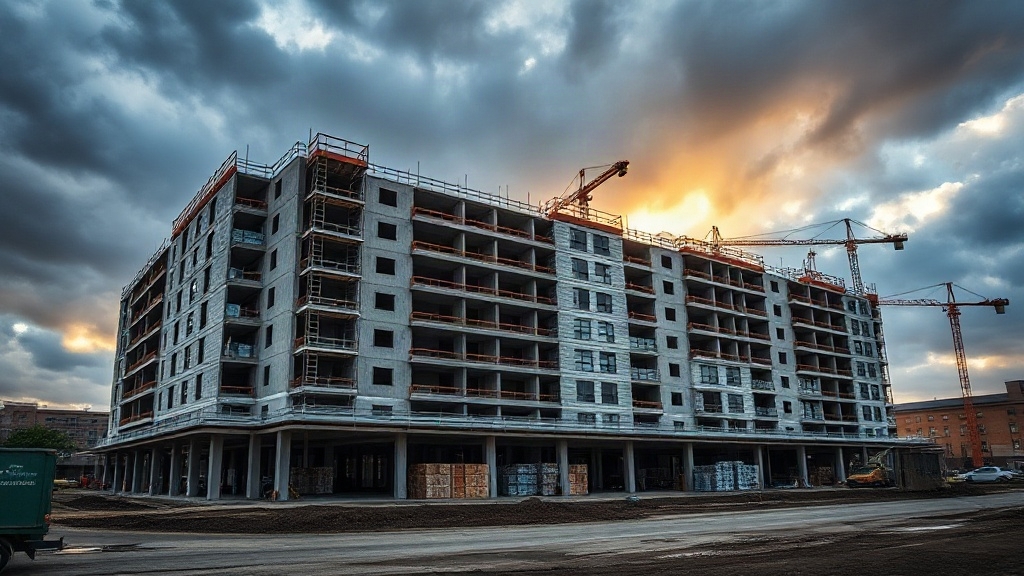
Builders in Phoenix are making significant strategic adjustments as the real estate market transforms. They showcase heightened caution, resulting in a sharp reduction in construction activity.
This reduction sees a drop from 49.3 million sq ft in Q2 2023 to 19.3 million sq ft in Q4 2024. Vacancy rates have surged to 10.6%, prompting builders to pause new projects.
This pause allows for inventory absorption. Strategic market adjustments include phased project approaches.
Builders are focusing on high-quality features to maintain financial flexibility. This also helps in balancing supply and demand.
Developers leverage strategic partnerships emphasizing data-driven decisions. This approach helps them navigate through market shifts effectively.
Adjusting specifications to tenant preferences aids competitive positioning. This ensures resilience and profitability during uncertain times.
Assessment
Builders in Phoenix face formidable challenges as the steep decline in residential and multifamily permits signals an impending slowdown in the housing market.
Industrial and commercial construction also grapples with stagnation. This further stresses an already burdened sector.
The Arizona Permit Freedom Act’s mixed results demand builders recalibrate strategies swiftly. They must steer through this volatile environment.
The city’s real estate environment, once flourishing, now teeters on a precarious edge. It compels stakeholders to reassess and adapt to these volatile conditions.






















6 Responses
Anyone else think this permit collapse might inadvertently trigger a mini housing boom? Less supply, more demand – basic economics, right?
Wow, isnt the Permit Freedom Act supposed to improve things? Seems like its only worsening the housing crisis in Phoenix, huh?
Wow, maybe the Arizona Permit Freedom Act isnt so free after all? This could spell doom for Phoenixs housing trends. #unexpectedconsequences
Maybe doom is what Phoenixs stagnant housing market needs. #changeisgood.
Wow, is this the Phoenix permit collapse or the bursting of the real estate bubble 2.0? Brace yourselves, folks, the fall wont be pretty!
Or maybe its just another cycle in the unpredictable world of real estate. Lets not panic prematurely.