

Key Takeaways
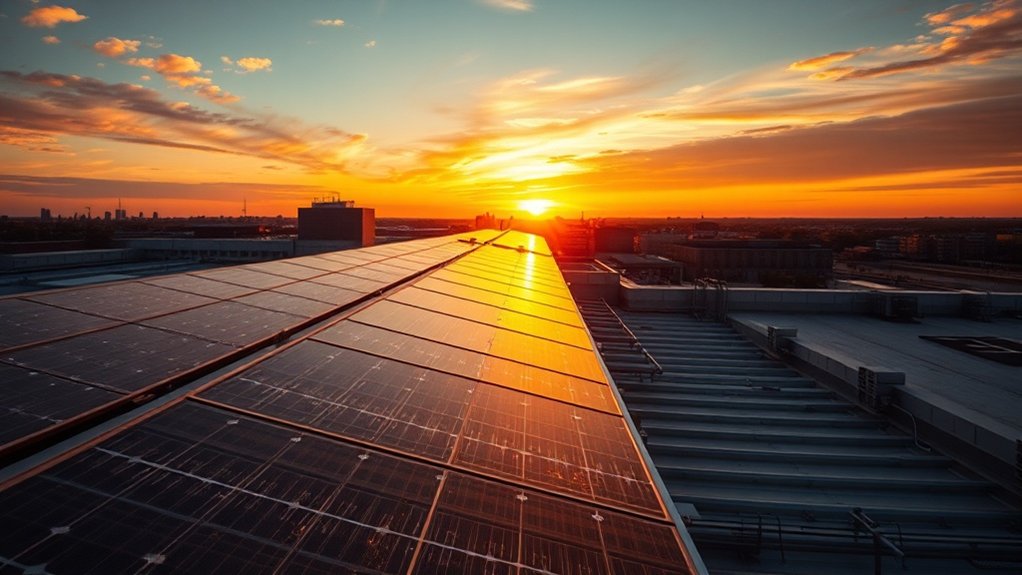
- Transforming unused roof space into a solar asset not only harnesses green energy but also generates passive income.
- Embracing solar technology can significantly enhance property value while simultaneously reducing energy costs.
- The adoption of solar panels marks the beginning of a lucrative and environmentally friendly journey.
The Financial Benefits of Rooftop Solar Installations
You won’t believe the coincidence that the same rooftops you’ve seen every day hold unexplored potential for boosting your cash flow. By turning unused roof space into a solar asset, you gain more than just green energy savings.
This move gives you passive income, making every sunny day a profitable one. And wouldn’t it be rewarding to see your property value soar while slashing energy costs at the same time?
Now, what’s next in this solar-powered journey?
Financial Returns and ROI of Roof-Mounted Solar Systems
Imagine harnessing the power of the sun to fuel your ambitions while amassing savings on your bottom line.
Leveraging commercial roof-mounted solar systems could be your ticket to financial empowerment. With an impressive average commercial ROI from 13.5% to 13.7% annually, you’re not just saving money, you’re making an investment in your future.
Sure, installation costs can be hefty, anywhere from $200,000 to $500,000 net after incentives for larger systems, but think long-term. Local electricity rates can significantly impact the ROI of solar installations and, in states with high rates, the potential for savings is even greater.
Regional variations such as those in Pennsylvania boast an ROI of 14.45% and a payback period of just 9.4 years.
Escalating utility rates make solar a smart move. Once your system’s initial cost is recovered in 8 to 10.5 years, energy savings turn into pure profit.
Federal incentives like the Investment Tax Credit slash costs, making solar an accessible venture.
Imagine sustainable savings and profitable returns fueling your next big adventure.


Advantages of Rooftop Solar Leasing Opportunities
Leverage the untapped potential of your property’s rooftop to fuel your ambitions and drive profit. By diving into solar leasing structures, you boost your property’s net operating income without breaking a sweat or your wallet.
Picture steady cash flow from monthly or annual lease payments, all without you lifting a finger or a dime upfront. Additionally, solar developers provide comprehensive maintenance and monitoring services for the solar array system, ensuring optimal performance and longevity.
These leasing structures catapult your property valuation. Rooftops exceeding 30,000 square feet? They’re your golden ticket, maximizing rental revenue potential. Lease commitments span 15 to 25 years, offering you peace of mind with stable income streams.
Solar developers take the reins, handling design, permits, installation, and upkeep. That’s less stress, fewer headaches. Your role? Reaping benefits. No extra risk, valuable ESG credentials.
This venture aligns with sustainability mandates and shows off your commitment to green energy.
It’s not just business; it’s a statement. It’s stamping your flag as a leader in clean energy.
Enhancing Energy Grid Efficiency and Reliability
You’ve got a chance to boost your real estate portfolio with a powerful tool: commercial rooftop solar. With only 3.5% of commercial and industrial buildings in the U.S. currently having solar panels installed, there’s significant potential for growth in this area.
Reducing Energy Losses
While the open road calls for adventure, consider turning your attention upwards to the sunny promise of commercial rooftops.
By adopting solar energy, you boost energy efficiency and aid grid optimization. Thanks to enhanced module efficiencies, commercial solar panels now convert over 22% of sunlight into electricity. That means less energy wasted. Roof coverage ratios for non-residential systems have a median of 23% (as of 2023), indicating a balanced utilization of roof space for optimal solar energy capture.
With bifacial technology, you capture extra reflected light, increasing output by 5%-33%. It maximizes the usable energy of every rooftop.
Strategically placing panels optimizes tilt and azimuth angles to minimize energy losses. Producing electricity near consumption points reduces the need for long-distance transmission, cutting line losses.
Your investment in rooftop solar not only enhances energy grid efficiency but also brings freedom and independence from traditional energy sources. Step into this empowering adventure.
Improving Grid Resilience
Imagine harnessing the sun’s power to fortify the very lifeline we rely on—our grid.
Commercial solar installations aren’t just passive cash machines. They play a significant role in solar energy independence and resilience strategies. By generating electricity right where it’s needed, rooftop solar panels cut reliance on centralized power plants. You boost grid resilience by reducing outage risks through localized power. Increased solar adoption enhances grid efficiency and reduces overall stress on the distribution and transmission infrastructure.
Add battery storage to the mix, and you’ve got a robust backup during grid failures. This energy independence protects your business and keeps operations buzzing. Commercial rooftops become active players in the energy market. They smooth demand peaks and stabilize grid voltage. Consider these solar setups an investment in freedom and adventure, keeping your enterprise strong through any storm.
Alleviating Infrastructure Strain
When you’re looking to alleviate infrastructure strain, slap some solar panels on top of your commercial roofs.
You’ll generate power right where it’s consumed, optimizing infrastructure and cutting down on long-haul transmission losses. Roof-mounted solar reduces the peak load stress on your local grid.
You get to delay costly infrastructure upgrades, handling load management with skill and strategy.
By shaving peaks with on-site solar, you balance demand spikes and flatten out those demanding load profiles that make grid operators sweat.
Injecting solar power directly into the grid during peak daylight bolsters grid stability, reducing your reliance on central power plants.
This isn’t just savvy business; it’s a way to step up and enhance grid efficiency while sidestepping blackouts.
Market Growth and Industry Trends in Solar Roof Systems
Imagine this: you’re not just investing in a property; you’re plunging into an opportunity fueled by the rising power of solar roof systems.
Picture a market experiencing dynamic growth. Valued at USD 67.79 billion in 2024, this market is set to reach USD 150.01 billion by 2030, with a robust CAGR of 14.15%.
You’re witnessing unparalleled market trends driven by technology innovations. Advances in photovoltaic efficiency and lightweight materials make installation simpler and cheaper.
Commercial solar systems are adding substantial energy capacity—projected to install an impressive 7.1 GWdc by 2025. This momentum isn’t limited to developed economies; emerging markets are capturing capacity growth, too.
Asia Pacific dominates, while the Middle East and Africa accelerate swiftly.
State and federal policies sweeten this investment pot. Tax incentives and net-metering schemes enhance returns, promoting robust adoption across sectors.
Immerse yourself in this high-octane market where trends meet technology, offering you more than just sunlight—freedom and financial growth.
Environmental Benefits and Sustainability Impacts
Grabbing a stake in commercial solar rooftops isn’t just about a savvy investment—it’s a bold stride towards a sustainable future. By adopting solar energy, you dramatically slash your carbon footprint.
Replacing fossil fuels with clean solar power means you’re not just powering thousands of homes, but also cutting tens of thousands of metric tons of CO2 annually.
With solar on your rooftop, you contribute considerably to corporate sustainability.
Moreover, solar energy improves air quality by not emitting harmful pollutants. This shift to cleaner air reduces respiratory issues, cuts public health risks, and lowers medical costs.
Imagine fewer missed workdays and a boost in economic productivity due to better worker health.
Aligning with solar means you’re not just checking boxes on sustainability metrics—you’re defining them.
You’re making efficient use of urban spaces, reducing energy losses, and fortifying grid resilience. It’s more than energy—it’s an investment in a healthier planet.
Key Operational Considerations for Installation
You’re ready to harness solar energy, and now it’s about tackling the essentials of installation starting with a solid roof structure.
Before you install, check your roof’s load capacity to ascertain it can handle both solar panels and mounting systems.
Dig into financial models for long-term savings and choose reliable installers to craft a solar setup that’s built to endure.
Assess Roof Structure
Evaluating your roof structure is an essential first step in the solar installation journey.
You’ll want to guarantee your roof’s structural integrity can handle the extra weight of solar panels, which typically add 5 to 10 pounds per square foot.
A professional load analysis will examine your roof framing, think girders, columns, and rafters—confirming they meet local building codes.
It’s not just about supporting static weight; you must also consider dynamic forces like wind, snow, or seismic activity.
Engineers will give you a sealed certification letter that explains if your roof needs reinforcement.
Additionally, roof inspections check for materials’ age and damage.
They look at material types and guarantee that your roof’s condition won’t compromise the solar system’s success.
Evaluate Financial Models
When you’re diving into the world of solar-powered commercial roofs, evaluating financial models is where the rubber meets the road.
You’ve got to contemplate your investment risk alongside attractive financial incentives.
Break down upfront costs: solar panels, inverters, and labor are big-ticket items. Don’t overlook admin expenses, which can add 10–20% to your cost. National averages peg costs at $2–$4 per watt installed.
Incentives like ITC and rebates lower these expenses, shortening payback periods.
Exploring financing structures is key. A direct purchase means higher upfront costs but delivers full benefits. Leasing or PPAs shift investment risk away from you, while roof rental models offer passive income at no initial outlay.
Choose wisely to maximize both your financial and environmental returns.
Choose Reliable Installers
As you stride into the adventure of outfitting your commercial roof with solar power, selecting a reliable installer is like picking a trusted guide for your expedition.
Check installer qualifications by verifying certifications like NABCEP, making sure they align with industry standards. Plunge deep into their project timelines and track record on similar roof projects.
Asking for references and case studies can provide insight into their quality and customer satisfaction. Confirm their grasp on local codes and their skill in working with different mounting systems.
Pay attention to experience with diverse roof structures since this guarantees smoother integration and longevity for your solar setup.
Clear communication about project milestones keeps you connected and informed throughout the process.
| Compare | Key Factors | Why It Matters |
|---|---|---|
| Certifications | Qualifications | Ensures compliance |
| Experience | Track Record | Smooth integration |
| Communication | Timelines | Keeps you informed |
Navigating Challenges and Maximizing Benefits
Picture yourself standing on the roof of your commercial building, overlooking a sea of potential—solar panels shimmering under the bright sun, opening paths to new revenue streams. You face challenges head-on: regulatory compliance and incentive optimization are keys to releasing your solar venture’s success.
Understand local codes and policies to stay ahead of shifting mandates.
Maximize incentives like tax credits and rebates tailored to your region.
This strategic foresight could transform solar ventures into steady cash flow.
Ensure structural integrity for those panels.
Professional site assessments mitigate complex upfront costs while safeguarding long-term gains.
Leverage long-term contracts to align with regulatory conditions, securing continuous revenue streams from solar leases.
Expanded market dynamics show a 37% hike in installations, indicating robust demand.
Ready your building for this solar revolution and seize the energy freedom it offers.
Protect against utility volatility, boost net income, and harness the power of the sun.
Assessment
You’ve got the chance to turn your commercial roof into a cash-generating powerhouse. Isn’t it time you embraced solar energy’s potential?
With leasing options, federal incentives, and solid returns, you can boost your property’s value while supporting sustainability.
The adventure of harnessing sunlight awaits, offering both freedom and financial empowerment.
Imagine the impact on your bottom line. Get ready to navigate market trends, tackle challenges, and secure your share of the solar energy revolution.
Seize this opportunity now!