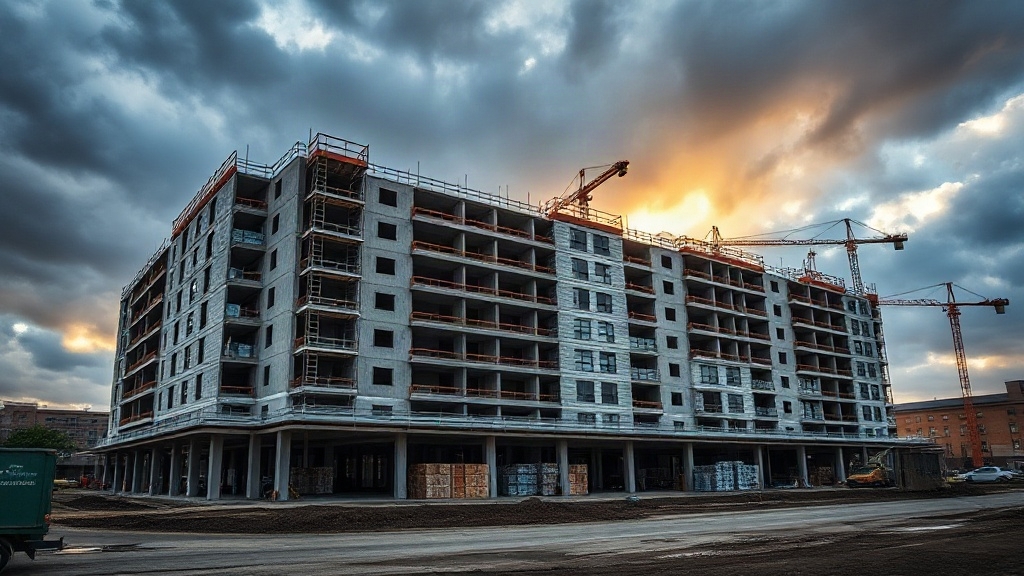



Why Did Georgia Housing Starts Fall in 2026?
Although Georgia remained a long term growth market, housing starts weakened in 2026 as buyer demand fell sharply across key metros.
Atlanta metro sales were about 40% below peak, with fewer new families moving in and purchase applications showing limited confidence. Nationally, mortgage rates hovered in the 6%–6.5% range for months, shaping buyer behavior.
Demand Shock and Affordability Strain
Higher Rates, Lower Confidence
Mortgage rates stayed high as single-family affordability hit an all-time low in Georgia.
Homeowners held low existing rates, reducing resale supply and keeping prices elevated despite faster cuts.


Inventory Glut, Friction, and Builder Pullback
Inventory surged across Georgia, forcing incentives and accelerating price cuts in Atlanta at the fastest pace since 2011. In Metro Atlanta, 22,757 listings on the market marked a sharp year-over-year jump, giving buyers more leverage.
Permitting delays, labor shortages, and tighter construction financing restrained new starts, while investor buying fell 65% from the 2021 to 2022 peak.
What Signals Georgia Housing Starts May Stay Weak?
Why might Georgia housing starts remain under pressure in 2026?
Mortgage rates near 6.23 percent, and projected to stay in a 6.0 to 6.8 range, keep monthly payments high.
That sustains builder caution as buyers remain rate-sensitive.
Demand Deterioration Signals
January 2026 sales fell 10.4 percent year over year to 6,666, despite modestly higher pending contracts.
Slower absorption discourages new starts and prolongs preconstruction timelines.
Days on market rose to 79 statewide and 73 in Atlanta.
A 96.9 percent sale-to-list ratio and 26.0 percent price drops point to weak pricing power.
As inventory rises toward balanced conditions, tracking Months Supply of Inventory can clarify whether Georgia is stalling rather than facing forced-selling dynamics.
Production Frictions
Permitting delays can become more visible when projects rely on tighter pro formas and slower presales.
Builders may defer land closings.
Gradual affordability improvement may not offset financing costs if rates drift higher.
Are Georgia Housing Starts Tightening Inventory or Not?
Builder caution tied to 6 percent-plus mortgage rates is shifting attention to whether resale supply is tightening fast enough to matter.
Active listings fell to 41,986 in January 2026 from 49,090 in October.
November 2025 still showed 60,090 homes for sale, up 14.3 percent year over year.
Inventory Whiplash Intensifies
Statewide metrics
Months of supply slid from 4.7 in November to 3.7 in December.
Early 2026 brought the usual seasonal bump in new listings.
Atlanta demand remains firm, yet entry-level resale stays scarce.
Many owners are holding onto low-rate loans, limiting turnover.
Uneven Product Mix Distorts Signals
Townhomes reached 7.3 months of supply in January.
Condos priced $800,000 to $1 million hit 10.1 months.
This patchwork is shaping developer sentiment while zoning reform debates linger.
Starts weakness appears to tighten only select niches rather than the whole market.
Are Georgia Home Prices Falling and Days-on-Market Rising?
How quickly the tone shifted is showing up in both pricing and time-on-market across Georgia.
Prices Show Mixed Signals
Statewide average value was $325,999, down 1.9% year-over-year through Jan. 31, 2026.
The median price measures diverged.
A $360,600 January median was up 0.2%.
A $740,000 median sale price was up 12.12%.
Metro Atlanta’s median listing price fell 2.7% to $359,900.
This reflected Regional Variations and a 2025 slide.
Higher-demand areas like Buckhead and Alpharetta stayed firmer than price-sensitive Smyrna and Chamblee.
Days-on-Market Stretches
Typical homes went pending in 58 days.
The median days on market reached 79 in January, up nine days.
Atlanta’s median hit 73 days, up 10.6%.
Seasonal Patterns and inventory up 7.1% statewide coincided with a sharp 10.4% drop in January sales.
When Could Georgia Housing Starts Rebound: and What Should Buyers Do?
Although Georgia’s permit pipeline remains constrained by rates above 6%. The national backdrop still points to a slow rebound in housing starts, rising from 1.34 million units in 2026 to 1.37 million in 2027.
Mortgage rates are expected to stay above 6% beyond 2027. That keeps overall growth near 2% or less.
Rebound Timing Risks
Starts still trail 2024 by 0.7% through October 2025. Single-family starts are down 7% year-to-date.
A more balanced market is expected in 2026 as inventory modestly improves.
| Indicator | Signal |
|---|---|
| 2026 starts | 1.34M |
| 2027 starts | 1.37M |
Buyer Moves Under Disruption
Negotiating leverage should widen in 2026. Georgia inspection termination protections also reduce downside.
Buyers should compare loan options and prioritize neighborhood selection in stable-demand areas such as Buckhead and Sandy Springs.
Volatility persists.
Assessment
Georgia housing starts weakened in 2026, adding risk to near-term supply growth. Permitting, financing costs, and builder caution point to continued softness into upcoming quarters.
Existing inventory effects will likely vary by metro, with new construction limited where lots and labor stay constrained. Price declines and longer marketing times remain uneven, tracking local employment and affordability.
A rebound depends on lower rates, clearer demand, and stabilized construction inputs. Policy shifts and conditions will prove decisive.