Unveiling the Fraud: Behind the Scenes of Baltimore’s Real Estate Scheme
The collapse of a major fraud ring in Baltimore has spotlighted a complex real estate scheme orchestrated by New York-based investors. These investors primarily operated through EGBE Ventures. Through adept fraud detection techniques, the intricate network led by Eluzer Gold and Benjamin Eidlisz was brought to light. They exploited a web of related companies to acquire over 700 homes. These homes were primarily in majority-Black neighborhoods. The investors portrayed themselves as legitimate long-term landlords. However, their operations were driven by inflated property prices. Hazardous financial practices further undermined local housing markets. Community advocacy played a pivotal role in revealing the scheme’s damage. It stressed the adverse impacts on neighborhood stability and tenant security. The widespread effects highlighted vulnerabilities in economically fragile areas. Financial issues began with accusations of document falsification against EGBE Ventures’ founder, Benjamin Eidlisz. This amplified calls for safeguards against predatory real estate practices. The vigorously enforced legal proceedings against fraudulent real estate schemes in similar cases emphasize the need for rigorous oversight and transparent operations.
Mechanics of the Scheme: How DSCR Loans Fueled the Fraud
As the veil lifted on Baltimore’s real estate scandal, revelations about the mechanics of DSCR loans surfaced.
These loans became a backbone of the fraudulent operation. The scheme relied heavily on debt service coverage ratio loans.
These were leveraged to secure over $100 million using inflated projections of rental income. Market trends significantly influence opportunities and risks in real estate, making it crucial for investors to remain vigilant. The investigation conducted by The Baltimore Banner highlighted these issues, drawing attention to the systemic failures that facilitated the fraud.
Properties primarily involved exaggerated appraisals. This was facilitated by appraisal collusion.
Values were systematically inflated to support larger loan amounts. Appraisers were incentivized by higher fees.
They cooperated with brokers to inflate values. The fraudulent operation capitalized on underwriting gaps.
Loans were approved despite lacking evidence like renovation permits and consistent lease documentation.
These gaps allowed borrowers to use excess funds for purposes unrelated to property improvement.
Red flags were ignored throughout the process.
Community Impact: Foreclosures and Neighborhood Destabilization in Baltimore
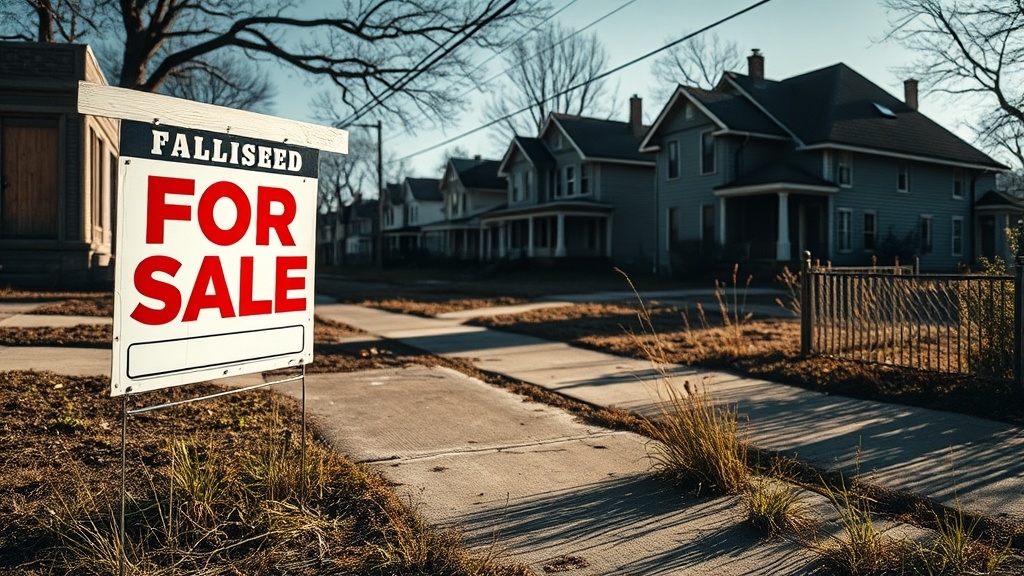
Amid Baltimore’s burgeoning foreclosure crisis, a troubling picture emerges. Rising foreclosure rates in neighborhoods like Carroll and Waverly have led to dramatic destabilization.
This situation challenges the fabric of Baltimore communities. Key impacts include declining property values and foreclosures correlating with significant drops in value.
This trend causes financial strain on remaining homeowners. Lost community cohesion is another major issue. Heightened vacancies due to foreclosures disrupt social bonds.
This weakening of communities reduces their resilience. Persistent vacancies also lead to neighborhood abandonment. This strains local resources and nurtures urban blight.
Safety concerns are heightened as a result. Socioeconomic inequities are exacerbated, especially in lower-income communities. These areas face heightened vulnerabilities.
Predatory lending practices and unstable loan structures contribute significantly. Foreclosures in Baltimore create ripple effects that extend beyond individual households. They threaten the socioeconomic environment and long-term stability of affected neighborhoods.
Financial Fallout: Lenders and Investors Face the Consequences
Baltimore’s growing foreclosure crisis extends its impact beyond individual homeowners. It entangles financiers within a web of financial distress and uncertainty. The collapse of the $100 million fraud scheme has left lenders facing significant default risk. Elevated loan-to-value ratios have impaired recovery prospects. With over half of the portfolio entering foreclosure, asset quality has deteriorated sharply. This reveals the true extent of the investment risk involved. Inflated property valuations have more than doubled lender vulnerability. This effectively pressures capital reserves. For investors, the fraudulent acquisitions have undermined expected cash flows. It has also eroded net asset values, leading to substantial capital losses. One critical impact of the crisis is the decline of first-time homebuyers, reflecting a gap in new market entries and further straining the housing sector. The reputational damage and heightened regulatory scrutiny further complicate access to future investment opportunities. This highlights the severe financial fallout reverberating through Baltimore’s real estate environment.
Lessons Learned: Oversight and the Future of Real Estate Investment Practices
Lessons learned from Baltimore’s real estate fraud highlight the need for improved oversight and investment practices.
A critical takeaway is the importance of regulatory compliance. Continuous education and the use of effective compliance checklists are essential to staying in line with ever-changing regulations.
Another key aspect is risk management. Regular risk assessments, coupled with digital record-keeping, can enhance the visibility of potential issues before they escalate.
Technology plays a significant role as well. By integrating property management software, companies can track compliance in real-time, allowing for more strategic and responsive decision-making.
Governance is also crucial. Conducting specialized audits and implementing prompt response frameworks can protect interests by identifying compliance gaps early.
Implementing these practices minimizes the chance of massive fraud and promotes sustainable investment growth.
This also helps reassure stakeholders in the constantly evolving real estate environment.
Assessment
The collapse of the Baltimore fraud ring highlights the vulnerabilities in real estate financing practices. These weaknesses can lead to widespread economic and social repercussions.
As foreclosures soar, communities face destabilization. This affects countless residents and stakeholders.
Lenders and investors endure substantial losses. Consequently, there is a prompted reevaluation of investment strategies.
The scandal serves as a somber reminder of the need for enhanced oversight. Regulatory measures are crucial to safeguarding the future integrity of real estate markets.