How $4.3 Billion Revived the Beverly Hills Project
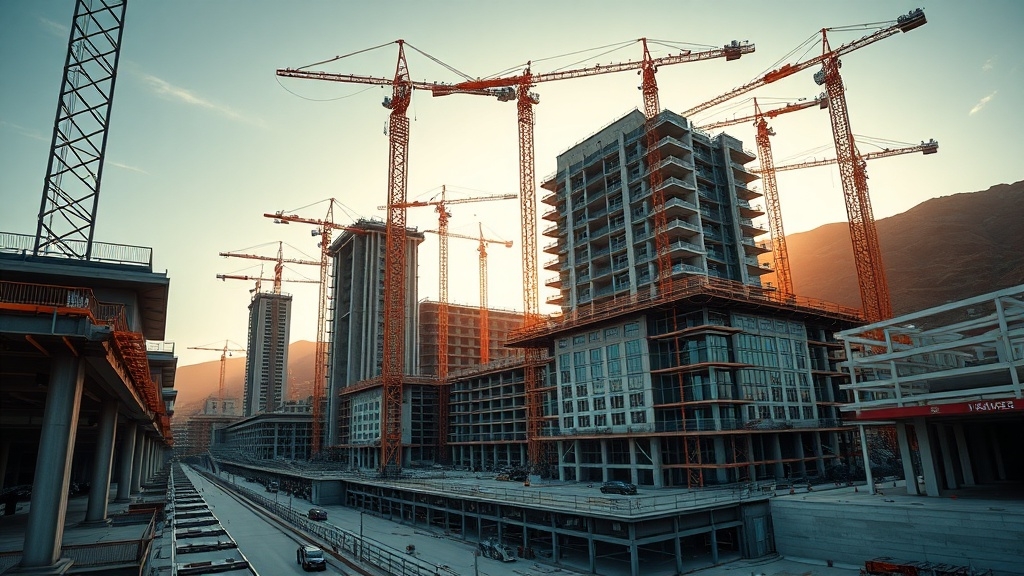
After years of uncertainty, the Beverly Hills mega project regained decisive momentum in March 2026 when $4.3 billion in total financing closed. It marked one of the largest real estate capital stacks assembled in the past decade.
That milestone became the financing catalyst for a 17.5-acre development that had already begun construction in 2024. The project entered vertical development in late 2025.
The funding removed doubt around completion and reinforced construction momentum across a mixed-use plan. It is anchored by the refurbished Beverly Hilton, links to Waldorf Astoria Beverly Hills, and the city’s tallest proposed towers. The financing package included a $2.8-billion senior loan led by JPMorgan Chase & Co.
It also strengthened confidence behind phased openings beginning in 2028. That outlook is supported by pre-sales, luxury brand commitments, hospitality demand, and expectations for thousands of jobs and long-term local economic activity. Similar large-scale investments often emphasize tenant diversity as a buffer against economic swings and a driver of long-term market resilience.
How the Beverly Hills Financing Was Structured
Anchoring the capital stack, a $2.8 billion senior construction loan led by JPMorgan Chase formed the foundation of the Beverly Hills project’s $4.3 billion financing package that closed in March 2026.
This senior leverage supplied the primary construction funding, supporting completion work begun in 2024 and the project’s vertical development from fall 2025.
It ranked among the largest construction financings of the past decade.
Beneath that layer, VICI Properties provided a $1.5 billion mezzanine loan.
The mezzanine evolution was notable. VICI’s commitment began at $300 million in February 2025 and increased to $450 million by July.
It later expanded into the final commitment as part of a longer-term initiative with Cain and Eldridge.
Together, the loans created a blended bank-and-private financing structure, secured by the developers and reinforced by reported sales momentum and luxury brand partnerships.
The structure also reflects a broader market shift as private debt funds increasingly step in where banks are pulling back from commercial real estate lending.
What the Beverly Hills Megaproject Includes
At full buildout, the Beverly Hills megaproject combines ultra-luxury residences, a new Aman hotel and private club, expanded retail and dining, major public-facing gardens, and large-scale underground infrastructure within a single 17.5-acre compound.
It includes 197 Aman-branded condominiums in 28- and 32-story towers. The project also adds a 78-suite Aman hotel and a 100,000-square-foot private club.
Another 200,000 square feet is planned for a premium retail mix. The site will also feature 8.5 acres of botanical gardens with luxury grounds.
Below grade, the development provides parking for about 1,900 vehicles.
The plan also integrates the Beverly Hilton, adds 17 poolside rooms, includes a 38,000-square-foot conference center, and folds in the Waldorf Astoria within one planted setting.
Select homes feature private pools. The gardens use recycled water, native planting, geothermal systems, fire-resistant materials, and on-site storage to support sustainability and emergency readiness.
Why Cain and Eldridge Are Betting on Beverly Hills
Cain International and Eldridge Industries are backing the Beverly Hills megaproject because the financing itself signals unusual conviction in the market. The project has secured $4.3 billion in one of the largest real estate funding packages of the past decade.
That package combines a $2.8 billion senior loan from JPMorgan with $1.5 billion in mezzanine financing from VICI Properties. Together, it underscores deep capital partnerships and institutional trust.
Strategic Market Positioning
The sponsors appear to see Beverly Hills as a rare market position within Los Angeles. They believe luxury residential demand and global brand interest can support long-term value.
Early sales at the first Aman-branded tower reinforced that view.
Cain and Eldridge also frame the investment as a bet on Beverly Hills’ enduring cultural relevance. Leadership points to hospitality, entertainment, and experiential demand as durable drivers.
When the Beverly Hills Project Opens
Beginning in 2026, the Beverly Hills timeline shifts from construction to a staged public opening.
Metro’s first D Line extension segment opens May 8, 2026, linking Wilshire/Western to Wilshire/La Cienega. That milestone cuts Beverly Hills-to-Union Station travel to 21 minutes and clarifies the broader phase timeline.
Key dates drawing attention
- May 8, 2026 opens Section 1 to Beverly Hills
- Spring 2027 targets Century City segment completion
- Beverly Dr Station arrives in Phase 2
- Late 2027 starts homes and commercial openings
- Gardens, paths, and retail broaden public access
One Beverly Hills then begins phased delivery in late 2027.
Initial openings include Aman Residences, commercial space, and components tied to the Beverly Hilton and Waldorf Astoria.
Public-facing features include 4.5 acres of botanical gardens, bike lanes, pedestrian paths, and major subterranean parking.
Assessment
The revival of the $4.3 billion Beverly Hills megaproject signals a major shift in one of the nation’s most constrained luxury markets.
With fresh financing, high-end residential, hotel, and retail components are moving back toward execution after a prolonged stall.
The project reflects renewed institutional confidence in prime mixed-use assets despite elevated costs and market pressure.
Its progress will be watched closely as a test of whether large-scale urban luxury development can still deliver in Southern California.