Pelouze Building Sold for Apartment Conversion
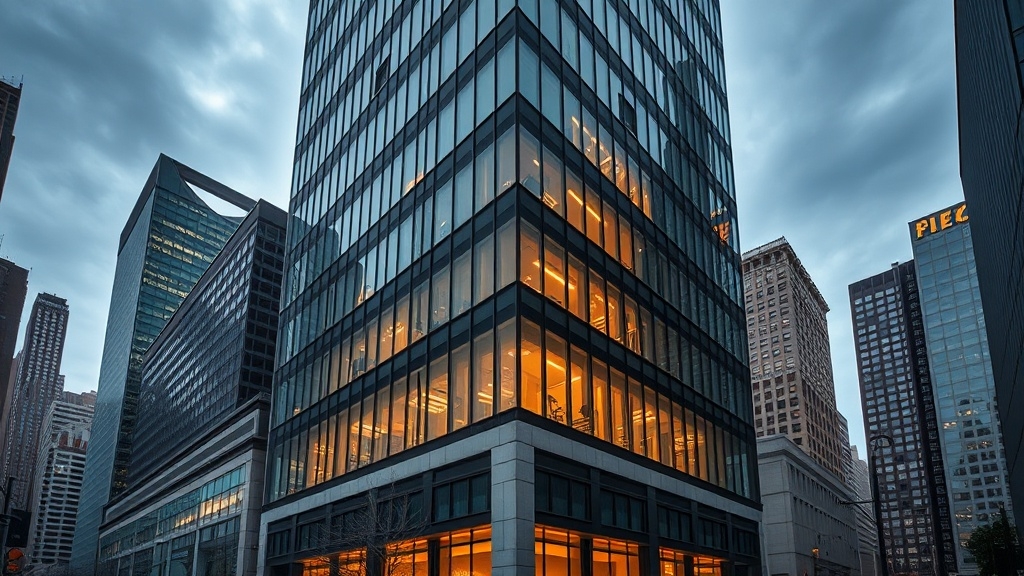
Marking a sharp shift in Streeterville’s redevelopment market, the historic Pelouze Building at 230 E. Ohio Street traded for $9.75 million in October 2025, according to property records and CoStar data.
Horizon Realty Group sold the 1917 loft office building to affiliates of Wildwood Investments about one year after acquiring it for roughly $5.6 million.
The markup underscored demand for office-to-apartment deals as Chicago posts strong rent growth and limited new supply. Similar investor appetite has been visible in markets shaped by limited new supply and scarce inventory.
Pivot Signals Pressure
Designed by Alfred Alschuler, the seven-story property carries historic preservation significance through ties to William Nelson Pelouze and later to Mies van der Rohe’s office.
Before closing, Horizon completed interior demolition and tenant relocation, creating a cleaner handoff.
DX-12 zoning also allowed residential conversion by-right, reducing entitlement risk. The planned project calls for 72 apartments in a by-right conversion that can move forward without a zoning change.
What the Streeterville Project Will Include
Plans for the Pelouze Building call for 72 loft-style apartments on floors two through seven. The program shows how the Streeterville office conversion thesis is taking physical shape.
The mix includes six studios, 54 one-bedrooms, and 12 two-bedrooms.
Floors two through seven would hold the apartments, with 12 units on each floor. Ground-floor lobby updates would add mail and package rooms for residents.
Existing retail space and commercial tenants would remain in place.
In the basement, plans show resident services including a fitness center, business center, storage, and a 50-bike room.
The rooftop would add amenities including a deck, dog run, grills, pickleball courts, fire pits, and outdoor seating.
The proposal also reflects a broader urban trend in which office-to-residential conversions are being used to address housing shortages while reviving underused commercial buildings.
How the Pelouze Conversion Will Work
After Horizon Realty Group cleared the building for redevelopment, the Pelouze conversion moved from concept to execution with zoning approval, completed interior demolition, and the relocation of remaining office tenants.
That relocation work allowed a clean handoff to Wildwood Investments, which bought the 1917 property after Horizon assembled approvals and prepared the structure for residential reuse.
Interior Rebuild Plan
The conversion will keep ground-floor commercial space while remaking the upper six levels into apartments.
Plans call for 12 units per floor across the second through seventh stories.
NORR designed the rehabilitation around roughly 65,000 square feet of former office space.
The plan balances historic preservation with updated residential systems and shared amenities in the basement and on the roof.
The approach turns a vacant office layout into housing without adding parking.
It also expands bike storage and tenant facilities.
Why Chicago Offices Are Becoming Apartments
Chicago’s office-to-apartment push is being driven by a rare overlap of distress and demand.
Downtown office vacancy has climbed to 28 percent, with LaSalle Street near 25 percent as remote work reshaped daily use of central business districts.
At the same time, Chicago faces a housing shortfall of about 100,000 affordable homes, while Illinois needs 227,000 units within five years.
Why Conversions Are Advancing
That imbalance makes conversions attractive.
Roughly 67.5 million square feet of office space, or 18 percent of metro inventory, is considered suitable for residential reuse, especially in empty classical and Art Deco towers.
City subsidies, including $151.2 million in TIF support, help offset costs.
Developers and policymakers also see historic preservation benefits, faster delivery than ground-up construction, and strong demand for homes near transit and jobs.
What the Project Means for Streeterville
In Streeterville, the Pelouze Building conversion would add 72 apartments to a neighborhood where new housing is becoming increasingly important as downtown supply struggles to keep pace with demand.
That addition is modest within Chicago’s 3,600-unit pipeline, but still meaningful in a district shaped by office-heavy blocks and limited new inventory.
By turning an underused loft office building into housing, the project could support a more consistent residential presence and stronger community cohesion.
It could also help increase pedestrian activity near surrounding businesses and along nearby sidewalks.
Market and Preservation Pressure
The sale price increase to $9.75 million points to strong multifamily demand and reflects confidence in Streeterville’s residential market.
Adaptive reuse may also help reduce office vacancy while expanding the central area tax base.
Preserving the 1917 Pelouze Building keeps a piece of architectural history in active use as Streeterville continues adjusting to post-pandemic downtown conditions.
Assessment
The proposed Pelouze Building conversion underscores a widening shift in Chicago real estate as obsolete office space faces mounting pressure.
In Streeterville, the project signals a stronger push toward residential reuse in high-value districts where demand patterns have changed.
If completed, the redevelopment could alter the building’s role in the neighborhood while reflecting a broader market response to persistent office weakness, rising vacancy risk, and the urgency surrounding downtown property repositioning.