

Key Takeaways
- Success in a down market often comes from recognizing and acting on overlooked opportunities.
- Scaling a business doesn’t always mean growing a team—it can mean building smarter systems.
- True wealth is a balance of income, personal fulfillment, and well-being, not just transactions.
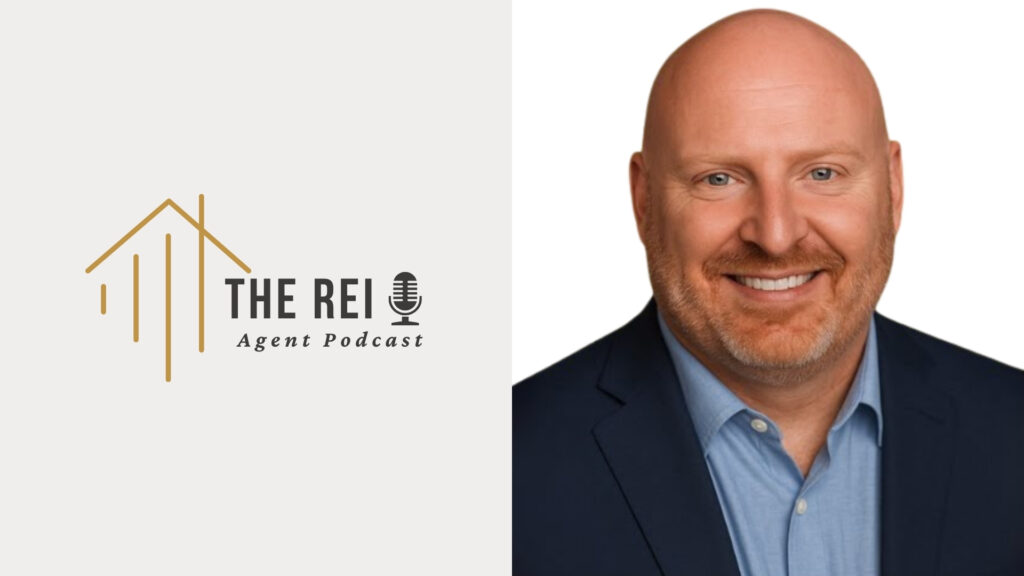
The REI Agent with Brett Keppler
Follow and subscribe to The REI Agent on social


A New Kind of Real Estate Story Begins
On this episode of The REI Agent, Mattias sits down with Brett Keppler, a former corporate worker turned real estate visionary, who redefined what it means to build wealth and freedom during one of the toughest times in the market.
What starts as a story of career disillusionment becomes a thrilling tale of opportunity, grit, and innovation.
Brett doesn’t hold back about the early struggles.
After a short stint in a cubicle job that left him empty, he had a pivotal conversation with a group of older, wealthy men on a ski trip.
Their advice?
“Own real estate.”
That one line stuck—and set Brett’s life on a new course.
Discovering Opportunity in the Downturn
Most agents who got licensed in 2006 didn’t last past the crash. But Brett did more than survive; he thrived.
He found his niche in foreclosures and leaned into what others ran away from.
“I carved out a niche, and then as the market tanked, my opportunities grew,” Brett shared.
He and a partner built a massive REO operation at the exact time others were quitting.
Rather than complain about the hard times, Brett looked for systems.
“We were super lean, doing things differently… We were sending marketing that guaranteed 100 leads in seven days. It was wild,” he said.
The result?
A booming operation doing 350 to 500 transactions a year across multiple cities.
Building the Engine, Then Scaling the Dream
Brett isn’t one to stay static.
After realizing that managing staff and agents alone wouldn’t scale long term, he transitioned into the software world.
His goal?
Build tools that make real estate operations smoother and less dependent on the revolving door of assistants.
That’s how NEKST was born, his now-thriving software solution designed to help agents automate transactions, align dates, and stay organized with the power of AI.
“We’re essentially taking what used to exist in someone’s brain or a spreadsheet and putting it on steroids,” Brett explained.
And he’s not stopping there. His real joy comes from solving life problems behind real estate chaos, giving agents their time and sanity back.
The Investment Dilemma: Compete or Consult?
Despite his background in foreclosures, Brett didn’t pursue a large rental portfolio.
Why?
“If I’m serving investors, I can’t be their competition,” he said.
It’s a bold choice, but one that protected his long-term relationships.
Instead, Brett focuses on higher-leverage activities like consulting, software, and selective capital deployment in large-scale projects and syndications.
“You can make more money working with the client than investing your own time,” he shared.
And with a family and software company to run, time is the currency he values most.
Burnout, Balance, and the Power of Self-Awareness
Mattias and Brett connected deeply on the topic of burnout and identity.
Brett shared, “I know I’m burned out when I dread hugging clients at closing. That’s when I know I need to pivot.”
It was an honest moment that many agents will feel in their bones.
They discussed how the path to holistic wealth requires more than just closings and commissions.
It means recognizing your energy, your family, and the pendulum that swings between business and home.
“You won’t survive if you’re prioritizing the wrong side at the wrong time,” Brett added.
Letting Go of Expectations and Leading Authentically
As a team leader, Brett revealed the hard truth many ignore: “Not everyone wants what you want. And that’s okay.”
It took maturity to accept that his agents may not share his fire, and that replicating himself wasn’t the goal. Instead, he learned to support people where they are, with empathy and respect.
He emphasized that success isn’t just about scaling, it’s about stability, diversification, and personal fulfillment.
That’s why tools like The 12-Week Year are integral to his business and team development.
It brings focus, accountability, and clarity—things every entrepreneur desperately needs.
Wisdom, Wealth, and What Really Matters
In closing, Brett offered his most powerful wisdom: “There are two principles every successful person operates by: diversification and scale.”
But scale doesn’t always mean size; it can mean impact, clarity, and legacy.
The episode wraps with a reminder that wealth isn’t just dollars, it’s health, family, and purpose.
“What’s the point if we’re rich, but obese, depressed, and divorced?” Mattias asked.
And truly, that’s what The REI Agent is all about: helping agents and investors build not just a business, but a life worth living.
Whether you’re burned out, just starting, or dreaming of something bigger, this episode will move you.
Brett Keppler’s story proves that chaos breeds innovation, and clarity unlocks greatness.
Stay tuned for more inspiring stories on The REI Agent podcast, your go-to source for insights, inspiration, and strategies from top agents and investors who are living their best lives through real estate.
For more content and episodes, visit reiagent.com.
Related Articles
- Therapy You Didn’t Know You Needed (Holistic Wisdom for Real Estate Professionals)
- From For Sale Signs to Life Design (How The REI Agent Transforms Real Estate Into Holistic Wealth)
- Achieving Holistic Wealth and Success Through Real Estate (Insights from The REI Agent)
- Partnering with Investors (How Real Estate Agents Can Exponentially Maximize Profits)


Contact Brett Keppler
Mentioned References
Transcript
[Mattias]
Welcome to the REI Agent, a holistic approach to life through real estate. I’m Mattias, an agent and investor.
[Erica]
And I’m Erica, a licensed therapist.
[Mattias]
Join us as we interview guests that also strive to live bold and fulfilled lives through business and real estate investing.
[Erica]
Tune in every week for interviews with real estate agents and investors.
[Mattias]
Ready to level up?
[Erica]
Let’s do it.
[Mattias]
Welcome back to the REI Agent. It’s your friendly host, Mattias. I have a couple of things I wanna talk about today.
One of them is, you know, everybody’s probably been there where they just don’t feel like doing something someday. There could be a lot of different reasons for it. And you kind of have to push yourself through and make yourself do the things.
And often I find that I am better off after I’ve gotten through those things than if I had decided not to. And today, I’m gonna be completely honest, was one of those days. I woke up with, and my voice, you might hear it.
It sounds a little bit off. I’ve had like a croup in my voice. It just felt, I just feel off.
I just feel like I’m getting sick or maybe switching back between Austin and Virginia. My allergies are going haywire. I don’t know what it is.
But anyway, it just felt bad. And I was like, I don’t wanna do these podcasts today. Two back-to-back podcast recordings.
But I’m so glad I did. I had really good conversations with both people. It was energizing, inspiring, and it was a great time.
And that just kind of goes to show, if we let ourselves sometimes get in our own way, we are worse off. I think it’s good to hold to your commitments, push through the things that you know will make you feel better. Been there a million times with the gym.
I’m like, I just don’t think I have it today. And I know then if I, sometimes the days that I feel least like going are the days that I’m like, okay, if I get through this workout, I’m gonna feel 100 times better. And it’s true.
Sometimes you need to shake it up and just kind of force yourself to do the things that are good for you. Speaking of which, I need to get that cold plunge water cleaned out and going again because it’s been a little bit since I’ve done a cold plunge. Yeah, on top of that, I wanted to talk a little bit about our guest, Brett Kepler.
Brett is an inspiring person. It’s a great story to hear what he did. Took being a new agent in 2006 and running with a niche he found through the downturn of the market where most people would think, okay, here’s somebody getting started as a 25-year-old young in the real estate market right before a crash.
Things will probably be pretty good at the beginning, get used to it, get comfortable. Things hit really hard and then they’ll get out of the business. But no, he found the opportunity in a downturn.
And I think that’s just gonna be a reoccurring theme. There are definitely markets out there that are experiencing different. It’s not a booming market for a lot of people.
Overall, my market’s great, so I can’t complain. But coming from Austin, they said their median sales price went down about $100,000. There’s just stories, there’s pockets kind of where there’s a lot of booming happening through the COVID, like Austin boomed through COVID.
A lot of people moved there. I think Arizona’s hurting, Florida’s hurting. And I think there’s opportunity in every market.
And I think you just have to really hone in on what that looks like. And for him, he’ll tell the story, so I won’t take that away from you all and give it to you right now, but we’ll let him say it in his own words. And I think also me and him have a lot of similarities where we are probably never satisfied just kind of settling in and doing the same old thing.
And there’s always a mountain to be climbed and that’s kind of where we are excited and passionate. And both of us have chosen some real estate adjacent ways of doing it or using our skills that we’ve honed over these years to pursue related things while not letting go of real estate in general, the sales, the investing, et cetera. So I think it’s a great story.
I think it’s really worth listening to. And there’s some good nuggets in there for sure to be gleaned no matter what stage you’re at in the journey. So without further ado, here’s Brett.
Welcome back to the REI Agent. We’re here with Brett Kepler. Brett, thanks so much for joining us today.
[Brett Keppler]
I appreciate you having me on.
[Mattias]
Yeah, well, we’ve had a little bit of a conversation. I’m excited to get into this in more depth as we go through your conversation in general, because we have some good tidbits that we’re gonna tease out here for the listeners. But tell me how you got your journey into real estate, what got you started and what that was.
[Brett Keppler]
So I graduated college in 2003. And like most people out of business school, you think, okay, I’m gonna go rise up really fast within a corporation, and I’ll be running things in a few years. And I think I lasted about 18 months at one.
It was a cubicle job, like in Cincinnati, Ohio. Our parent company was in New York. We’d have to wear suits into the office, and we never, it just, the culture was bad.
There was these quarterly reviews. And it was the first time, I think, I had a real boss that would, every three months, tell me what I need to improve. And I was young and cocky, and thought that I was pretty incredible.
So for me to be in that environment and really understand what it’s like to start out at the very bottom of the total pool and have to work my way up, it just, it didn’t fit my personality. The amount of hours that were being put into the job and having to kind of just restrain, I think, how I want to live every day was really tough. So I remember I was out in Colorado, and I was on a ski trip.
There’s some very wealthy, very smart older gentlemen, and they were talking about how you generate real wealth. And they gave me three tips. And the only one I remembered was own real estate.
So I don’t know what the other two were. I’m sure they were probably good too. So I thought, okay, I’m gonna start buying real estate, rich dad, poor dad.
I’m gonna read the different books. I’m gonna figure out these loopholes. And then I’ll build my little empire that way.
And I bought a four family, lived in one of the units, kind of the standard young kid, doesn’t own any possessions. It’s very easy to do. And then I bought a five-unit building shortly after that.
[Erica]
I remember staying here. So you moved to the 18th row?
[Brett Keppler]
I didn’t move into that one, no. That one was, it was a little bit more rundown. I had some equity in the first building.
I took out, put on the next one. The, no, still lived in the first one. But I saw how much my real estate agent made.
I think he showed me like two houses. The four family was like $230,000. He didn’t really do a whole lot more.
He walked away with like $7,000 or something at the end of the day. And I’m like, oh my gosh, that’s like twice what I make in a month. Okay, why don’t I get a real estate license?
It kind of checks those boxes. I can do real estate. I can be my own boss.
You know, I can get out of this current job. So I just went all in. I wanted to move out of my four family, so I bought a little single family house.
I remember I got my, I signed my mortgage. I went to the closing, signed off, put in my two-week notice as soon as, it was total mortgage fraud probably back then. But just decided to, okay, I’m not gonna be able to finance a house for two years, so I’m gonna buy a little single family, live in that, because living around tenants was tough.
And I’m just gonna go sell houses and figure it out. And it was really freeing, like the first day, when you’re like, okay, the world’s your oyster, and you have these big, beautiful thoughts about what’s gonna happen. And then it was just, it was tough, right?
It was 2006 at that time. The market was still good. It was about to crash.
And it was hard because I was so young, and a lot of people would ask what I know about selling houses, because I didn’t know much. I was like 25 at the time, and it was just, yeah, it’s a lot of hustle at that point. And it’s taking any lead anywhere, and trying to be successful.
And it ended up, someone I knew reached out and said, hey, there’s this guy, his name’s Tom. He has this thing called a Fannie Mae account, okay? He needs someone to help him run some buyer leads.
And I’m like, sure, I’ll take anything from anybody. And this was still before the market got bad. So I met this guy, he’s a little bit older, big old dry erase board for everything, and I would just run leads for him.
And I was young, I could use technology really well, and I would give him a 25% commission split, and then I’d split 50-50 with my broker, and I’d make no money, and I’d sell the crappiest houses in town. But I carved out a niche, and then as the market tanked, my opportunities grew, he and I partnered. We ended up building a foreclosure operation that was pretty big.
We started our own company that I started, actually, in my name. I ended up buying him out. Eventually, we got to a point where we were selling in three different markets.
We had an office in Chicago, Cincinnati, Dayton, or the Kentucky. And we were doing anywhere between 350 to 500 transactions a year, kind of just mostly from one base. We had, I think, 10 employees.
We had inspectors in the field out running around. I mean, it got to where, as the market was bad, and everyone was losing their house, and agents were complaining about how terrible the market was, we were doing fantastic. And that really, just kind of being in the right place at the right time, and leaning into something that no one else was, is the reason that I was able to start a brokerage, build a team, fast forward to where we are now.
Now, I still own the brokerage, True Realtors. We have a 10-person team that I still lead, and we’re in the traditional real estate game here in Cincinnati. So it’s been quite a journey, but I guess we started in the humble beginnings, yeah.
[Mattias]
Yeah, I was just speaking with Joshua Smith out of the Arizona market, and he was talking about how just really trying to pay attention to the market, and trying to find where there’s an advantage. And whether you do it intentionally or not, you found this amazing advantage where everybody, so many people got, okay, you tell me that you got into the market at 2006. I’m like, there’s probably what, a 99% chance that you’re not gonna be in it in three years?
Like, it’s a boost to you for making it, for killing it through that time.
[Brett Keppler]
Yeah, to getting to the point where you’re kind of in the top 1% within five years. And it was right, I think what really bode well for me was, this is not a young man’s game, at least it wasn’t back then. It was all established players, and when you can come in, and you have no clue what you’re doing, and you’re like, well, this was back where, I remember we could actually put our, like we do a custom sign for the first time, like I’m really dating myself, but before you had to use the brokerage sign, I’m like, no, I want my own number, I wanna put whatever I want on the sign.
And we don’t wanna use Mildred at the front desk to set appointments, we want to use like a third party showing service. Like all the brokerage tools that they offered, we could replace at that point in time, and we kind of built a brokerage, and we built systems that really took advantage of, just a lot of the major shifts in technology to kind of decentralize all the value that the broker was giving at that point. So, we were super lean, we’re doing things a lot differently than a lot of the other agents in the area, and in terms of growing a team, like if I was looking back at some old creatives, and we had, we would send out marketing that said we will guarantee you 100 leads in the first seven days, and these aren’t like random email addresses, these are sign calls, because we have the cheapest properties in every neighborhood, and we would put coming soon signs out on these properties three months before they were gonna come on the market, because there are no rules, because no one knew what a coming soon was, but we knew that, okay, this is in our inventory, we might as well get people calling on it, so our phone was ringing off the hooks, it was really easy if you kind of leaned in to just the different opportunities to build a pretty big team.
Yeah, it was a crazy time, it was really good, but it was crazy too.
[Mattias]
What was the peak number of agents you had under you?
[Brett Keppler]
Well, so the peak number of agents, I think we had around 15, but most of the, like we had 12 staff members, because we, when we talk operations, we had a full-time person, all she did was confirm receipt of offers, enter offers into the database, reply to offers, deal with just that part. That was her full-time job, 40 hours a week, dealing with offers. We had three people doing BPOs 24-7, like just 40 hours a week.
You know, we had inspectors, we’d have to go and visit every property every week or two weeks. We were doing the same thing, we had folks up in Chicago, we didn’t have a physical office up there. We would do everything from here.
I’ll tell you that, we had a physical office, we didn’t actually staff it. We did it, like our whole operation ran out of Cincinnati. And then, you know, we’d have agents running around, chasing leads and things like that, but it was almost, it was a little bad, because the only, the problem was, I think all the agents got conditioned to very easy deals.
You know, they did zero follow-up, because the phone kept ringing. And they would just rather have, you know, oh, you wanna go see this property? Okay, are you gonna write an offer?
If not, it’s probably a waste of time. So, they didn’t really learn to follow-up. You know, so that, it wasn’t great.
So, as the market transitioned, you know, I saw it coming, and, you know, we picked the name Trio. There’s a lot of companies that would be called, like the foreclosure shop, or, you know, like Austin Foreclosures LLC or something, and we were like, we’ll do Trio, it has REO in it, which is the acronym for real estate owned, but we know there’s gonna be a future where we transition back, so we don’t want it to be obvious that we are a foreclosure company. And, you know, for me, it was important that, okay, now we also have to somehow change our reputation, because when you see a Trio Realtor sign in your front yard, it means your house is foreclosed, right?
So, how do we get these normal, you know, normal folks to want to list with us when everyone’s gonna think that the Murphy’s House down the street is a foreclosure, because we just, we gained that reputation. So, it was a little bit of a challenge. We had to kind of do some rebranding, and, you know, be creative in how we worked it out, but it was that, it was working within that level of chaos that kind of emphasized the importance of systems and just organization processes that need to be followed, which is kind of put me where I am today, and that’s running software to do the same thing for agency teams across the country, as well as my own team that I still oversee here in Cincinnati that’s called Next.
So, I’ve kind of gone from, you know, corporate world to building like a mega team and starting a brokerage to now trying to get into the software game. We’re not trying, but am in the software game, and that’s been another kind of wild ride up to this point, for sure.
[Mattias]
So, the software helps with systems. Explain that a little bit further.
[Brett Keppler]
Yeah, so, I’m sure people that listen to this can relate. The hardest part of having a TC is, or assistant or whatever you want to call it is, is that assistant eventually leaves. They don’t stick around, unless you’re married to your assistant, and sometimes they might still leave, but my issue was, you know, I had a full-time personal assistant, and I lost three over the course of like four years, and it wasn’t because I was a jerk.
It was, you know, one, it just wasn’t a good fit. You know, that one was rough. I probably should have cut this person loose well earlier.
One relocated with her husband for work. One decided that being a real estate agent looked easy. I want to do that.
So, every time you had a new assistant, you had to retrain them on everything, and I would use a lot of the existing tools out there. I mean, this is going way back to like Top Producer, some of the other ones, Basecamp, all these other tools, and ultimately, I just wanted a system that did these things, like give me a start date, give me an end date, and just put all the stuff in the middle on a calendar date so that if my assistant, like if I have to replace my assistant, they can just sit down in a chair and be told what to do, and I had some extra money that I didn’t want to pay the government.
I’m like, yeah, I’ll just invest it in a software company. How hard could it be? And I don’t know how to code, and it is really, really, really, really hard, and it’s really, really, really expensive, and, you know, I built it up to where it was generating maybe $100,000 a year, and then it was rough code.
I didn’t know what I was building exactly because I didn’t know how teams operated across the country, so not to go too far in a different direction, but like when you’re building software and you don’t know what you’re building, you have to choose between building features and actually cleaning up the code, you know, as you’re adding more stuff on there, and I’m like, throw features at it, fix this, fix this, fix this, and you end up with what’s called like spaghetti code. Like it’s just bad, the whole back end, and then it gets slow.
It’s like plumbing a house and not knowing exactly where each bathroom’s gonna go. We can technically take a line through this wall. We can do this.
Let’s add a new one over here. Okay, we can run some up there. Eventually, it’s a hot mess, and that’s where the software company kind of went, and I had to decide do I shut down the whole real estate business and go try to raise money because I had enough traction to do it at that time or not, and it was too big of a risk with my wife and young kids, so it went on the back burner until AI came out a couple years ago, and we’re like, okay, this is now the right time.
The technology is there, so ultimately, for real estate agents or teams, you can upload your purchase contract into our tool. It pulls out all the dates, all the details, all the proper information. You go through.
You can review it. If AI screwed up, you can make an adjustment, but we’re right 95% of the time, and then it will go in and automatically align all of your tasks to match the dates of the contract. It’ll pull out the buyer, seller, all the contact information, and you can do all this in a few minutes, and then you essentially apply your workflow, and you have pre-written emails that are auto-populated with all the proper information, so all of your communication is automated, all your tasks for when you have to do it, how you have to do it.
We’re essentially taking what used to exist in someone’s brain or maybe exists in a spreadsheet or just a really basic, flat task list, and we just put it on steroids, so it was something we built internal first, and then I started showing it to people, and they’re like, oh, can you build this for me? I didn’t know what a cloud application was. I built a desktop application that became a cloud application, and then I’m like, well, I can charge for it, so it was almost an evolution where I tried to build something that I thought made sense for my company, and then I realized there’s probably a bigger opportunity once people started paying me, and then just trying to figure that out and how to build a software company as a non-technical person is also a lot of fun, so I think I just like building things, and then I get bored maybe when I get to a certain point.
[Mattias]
Well, yeah, it sounds like you’re a classic visionary where you can really take things that people, most people would not be able to see the possibilities or have such a clear vision that they wanna keep pursuing this thing and keep pouring money into it, et cetera, to get there. That’s awesome. Yeah, those are really handy features, it sounds like.
I’m definitely wanna check that out. Was that the, that was the next? Was that the?
[Brett Keppler]
That’s next, so yeah, it’s N-E-K-S-T. I think I started it so long ago when people would spell words differently because you could still buy the .com domain, so yeah, the whole thing was like, what’s next? What’s the next thing you have to do, right?
So we made a bunch of mistakes, man. Like, what’s been super interesting is now I talk to people all over the country and you kinda hear their problems, how they’re successful, how they’re not successful, what’s working for them, what’s not, and it’s almost like I’ve become a consultant because, yeah, we sell a tool, but really what you hear is everyone’s problems that they’re experiencing in their market or all the problems they’re experiencing with their teams. And what’s unique, just as a founder of a tech company, is being able to say, oh yeah, I know what you’re going through.
Oh yeah, I know how you’re, I know what you’re experiencing with that agent. I know this frustration and I know this, that, and the other and it’s a totally different demo than probably what people expect because you’re not just showcasing features. Like, we’re trying to solve their life problems and it’s actually a lot of fun for me as well.
[Mattias]
That’s cool. So, did you keep investing at all after those two was nine doors total?
[Brett Keppler]
Yeah, so, I did not. And, you know, I think at that time, you have to realize where’s your, like, what’s the best return on your time? So, I’m a big proponent of investing in real estate.
I made my niche coming out of, like, coming out of working with foreclosures. I had a huge network of investors and I think I had to make a decision as an agent. Am I a competitor or am I their real estate consultant?
Like, am I the one that they’re gonna call about a deal? If I bring them a deal and they know I invest in real estate they’re gonna ask me why I’m not doing that deal. Like, why are you not buying it?
Why are you not flipping it? And they don’t wanna bring me something and say, hey, we’re interested in this property because what’s gonna stop me from going and buying it? So, I had to kind of recognize, okay, if my advantage in real estate is helping investors to identify properties to flip, properties to rent, you know, helping them to determine, you have to repair value, what improvements to make, what not to make, I cannot become their competitor as well.
So, that’s part of the reason I didn’t invest. The other reason is just that, you know, I thought being a landlord would be easy and it’s a huge pain in the butt in my opinion because when you have everything else, everything else in your life, the family, pets, you have your, I was starting a real estate brokerage, I had agents who needed my time and then a tenant locked themselves out or, you know, someone upstairs, the toilet’s overflowing and like, it was just nothing but an annoyance and the time invested there meant no additional return than what I was already scheduled to get, so it was just a pain. Then I could hire a management company but like, you know, I lived in, it’d be really odd since I was one of the tenants, you know, benign, I was living in one of the buildings.
So, I didn’t, you know, I didn’t think to, it’s super lazy to have someone, you know, manage the building you’re living in and, you know, the margins still weren’t that great, you know, so I think you’d have to go all in, you know, on that strategy and I just realized it wasn’t for me. I can make more money, you know, working with a client to find them something to buy and sell than to invest my own time and again, it would also, you know, it would make me more of a threat, I think, to building that client base. So, it makes sense for me not to pursue it.
[Mattias]
That does make a lot of sense. I mean, I think there are people who do it but I think you’re right at the end of the day. Like, I mean, I think if they know that you’re an investor as well and you’re focusing on investment, real estate, it’s your, like, or you’re serving investors, it can feel like that, yeah.
Like, you could be competitive. Sometimes there’s enough deals, like, you know, I just simply can’t buy anything right now. Like, but that’s not always the case.
I definitely think that real estate syndications could be the answer to a lot of people in similar shoes or just people who are really not interested in learning or dealing with all that. Because frankly, I mean, the returns are often better. I mean, you’ve got to be careful and there’s been some pitfalls here recently, especially with, like, people’s bridge loans coming due in the multifamily space and there’s been some hurting in that space in general but, you know, if you learn enough to be able to analyze a deal and trust the people that are running it, I mean, that’s probably the biggest thing right there and or maybe get into a fund of funds that would help vet those opportunities that you can get all the benefits of real estate without really having to deal with it.
Like, we’re gonna invest in a second mobile home park that way, mainly because it seems like it’s gonna be a good sales year and the tax benefits of it, especially if the 100% depreciation comes back, will be worth it alone, even if we’re floating all of it the whole time on an equity line. It definitely pays for itself, but, you know, we’ll not do that.
[Brett Keppler]
So anyway, that’s- You’re 100% correct, 100%. Like, I’ll throw some capital at some Amazon warehouses that they’re building, you know, or we’ll do some upscale luxury and these are all just construction projects, get them up and off the ground. And then maybe I’ll hold on to some of it, maybe I won’t, but yeah, I think that it’s a heck of a lot easier.
I mean, how many times have I heard clients where they’ve just said, you know, I could have put this money in the market and done no work and earned the same return, right? Because the risk associated with it. So I feel that.
[Mattias]
Yeah, and you know, like, I think, you know, over time, you know, the appreciation of the deals will, or of just real estate in general will definitely make you wealthy, but you definitely get to that with syndications too, depending on the structure. And, you know, there’s a different models that like, you know, the ones that we’re in, we’ll have ownership in until they decide to sell. They’re not, they don’t have any plans of selling, but we’ll get our money back, for example, and be able to reinvest that.
And it’s, you know, it’s mainly a cash flow and a tax plan with some bonus equity long-term.
[Brett Keppler]
Yeah, I mean, that’s all this is, is like, you know, I always try to tell the agents on my team, you know, it’s diversification of income streams.
[Erica]
Yeah.
[Brett Keppler]
So, I mean, there’s kind of two principles, I think every successful person operates around, it’s diversification, right? So, you know, if the market goes down, what are you doing to kind of make up for that income? And then also, you know, focusing on scale, right?
What scales and, you know, for agents and teams, like there is a way to scale, but it’s very hard. It’s a service-based business, right? So, I mean, part of the allure to software was like, okay, you can scale software so much easier than having to go out, find another buyer’s agent, train them, you know, get them leads, you know, get them to convert, go through this, you know, sales process.
Like there are people that can scale very well in real estate, but there’s, but there are very few and far between, you know, it’s really hard.
[Erica]
Yeah.
[Brett Keppler]
It’s a lot easier to just chart someone’s credit card every month and it’s unlimited capacity, right? In terms of like whoever wants to use it. So, yeah, I think anyone that’s really running their business, obviously do something well so that you can build that engine.
You know, there’s gotta be something that supports everything else. If you keep moving from one thing to the next and the next, you never have an established base. You’ll never have an engine that can support all the other, you know, things that you wanna try or do.
But then once you have that engine, then yeah, you can’t, in my opinion, you can’t just focus on that engine because you never know when even that income source is gonna potentially get, you know, depleted or, you know, who knows? So, that’s the way to go these days.
[Mattias]
It’s true. I think it’s good to A, you know, be passionate about what you’re doing too. Like, you know, like pursue your passions.
I think it’s a good thing for your holistic health. That’s what it is. All about.
I mean, I’ve gotten burned out from real estate sales in the past and I go through like, it seems like every other year I’m like really on fire and the next year I’m like, I don’t really have.
[Brett Keppler]
How do you know when you’re burned out?
[Mattias]
I think it’s just the amount that I like am eager to return a call or like, you know, see opportunity in everything as opposed to just kind of like go through the motions and it seems to follow a boom year. It has where I’ve, you know, doubled my income or whatever or doubled my sales and yeah, the next year I’m just kind of like burned out.
[Brett Keppler]
For me, it’s, I know when I think, when I know I have to hug another frickin’ client after some closing, it’s so bad, right? I’m like, oh. That’s when I know like I’ve had enough of it.
I’m like, I don’t feel like going. I have to sit there and be like, yay, I’m so excited. Let’s hug, oh, this is such an exciting moment.
Like I have zero, this is bad, but like sometimes I feel like I have to just totally fake all the joy that they’re experiencing because I’m just like so over it. That’s when I recognize, okay, I need to do something else that fills me up because this is supposed to be a moment that is full of joy and I’m like, I’m an a-hole that somehow can’t feel that anymore, right? I’m just, I’ve been in this hamster wheel too much.
I gotta get out and try something else.
[Mattias]
Yeah, well, I think that’s kind of the spirit of often people in the business are pursuing the freedom, the excitement, the building, all that kind of stuff and so it’s really about finding those avenues and continuing to grow for sure. That’s, yeah, that’s one avenue is real estate. Another avenue is building software, I guess.
[Brett Keppler]
You know, whatever, yeah, whatever you need it to be. If you can use, like I said, if you can use something that you can take away from the industry that you know really well and then you can be a subject matter expert and apply it elsewhere, that’s great. You know, like there’s people that come into real estate from, you know, they could be a brand new agent but they came from a place where they understand how to market to consumers, how to talk to consumers, how to build systems and they’ll come in and just crush it, right?
Because they’re taking what they did in the private sector and moving it over, like that’s fine but just you have to have some sort of a skill set. There’s so many agents that I think get into it because it’s, you know, being a real estate agent is just no accountability but still having a profession. Yeah, I always joke all the time that, you know, the number of agents that probably just watch Golden Girls at 11 a.m. every day is still probably through the roof. If that’s even still on, I don’t really know. That’s what I used to do at least when I first got my six. But, you know, that’s, it’s a lot of that.
It’s I don’t want the accountability but I wanna say I have a profession so I’ll do the stuff as it falls on my lap and that’s why we have a lot of just mediocre people in the industry, unfortunately.
[Mattias]
It’s true, it’s very true. Yeah, no, it’s good to fill up your time and to, you know, surround yourself with people that motivate you, that keep you accountable whether you do a mastermind to try to, you know, help yourself be accountable. I think it’s also just kind of depends on your strength.
Like some people like myself almost need to lead a group to find that motivation. It’s hard for me to just, you know, track habits and goals and stuff like that on my own. So yeah, I mean, you just kind of have to figure out what works for you and how to really, yeah, tackle the hardness of this business because it does add up.
Like you at the beginning, you just wanna be successful then after you like achieve it, it’s hard to keep it going. It takes a lot of discipline for sure.
[Brett Keppler]
Yeah, no, you’re right about that.
[Mattias]
Brett, what, do you have any golden nuggets for the listeners and the podcast here about it could be, you know, that getting started in real estate or whatever you want?
[Brett Keppler]
Well, so I’ll fill you in on, yeah, I mean, the getting started part, cause I, you know, I work with a lot of different agents on my team in different stages of their careers. So you have to be able to relate to the brand new agent and the person that’s been there for four or five years. They could probably be, you know, they’re probably close to even if they wanted to starting their own team and how do you make sure you’re still providing, you know, value to them.
But I think the biggest lesson that I had when I created the team, cause there’s a lot of people that, you know, they wanna create a team, that’s their whole, they think that’s the pinnacle. If I can create a team, my life will be easier. And, you know, number one, I think you have to give people a reason to want to follow you.
And that’s not really a nugget, that’s just truth. But then once you get there, you need to be okay with the fact that people on your team do not have the same drive that you have. And I think I spent a lot of time getting really frustrated because the people I brought on my team did not have the same desire to be successful.
And I wanted miniature versions of myself. And they actually, a lot of times they’re older than me. And the thing is, when you do lead a team, you hear everybody’s personal problems, at least I do.
Maybe I’m doing something differently than everybody else. But, you know, there’s a lot of folks that have financial struggles, hardships at home, with their relationships, whatever it might be. And you get to play therapist, not only to your buyer and seller clients, but you get to be a little bit of a therapist to the folks on your team.
And a lot of their problems can be solved by money, okay? That’s for everybody in the world. And then you see them doing things that does not align with what it would take to make more money to solve those problems.
Or why are you not following up with these people? Why are you not putting in the same level of effort that I was, that I was doing? And it is really hard to come to terms with that.
And not just feel frustrated and almost angry at the opportunity that you’re giving to them. I mean, we would spend money on leads. We would put everything in place to make it as easy as possible for them to go and make money.
And they wouldn’t return calls or something like that. So I think, number one, you can always try to find better people. But number two, I think you have to just be okay with the fact that what you want in your life is not the same that everybody else wants in their lives.
And there’s folks that, they’re happy making $50,000 a year, sleeping in, having a very, you know, one vacation a year, driving a 1997 Ford, whatever. And they don’t have these super lofty goals, but yet you’re putting an expectation on them that they should. And it took some maturing for me to recognize that.
And, you know, at the same time, if there was a bunch of me’s on the team, then they would all leave after two years and sit up there. So I would just be churning everybody out because they’re going to go and start throwing brokerages and start a software company. So I think recognizing how to just be better in that regard, whether you’re hiring your first assistant, whether you’re trying to build a team, I think it’s just recognizing that about yourself and understanding what you want in those agents.
[Mattias]
That’s a really good perspective. I think, you know, expectations. I think it’s often thought of like, you know, you telling other people what they should expect and not as much, you don’t think about it as much, like what should you expect in these situations and when the expectations aren’t met is where there’s often problems.
And so that’s a really good perspective. Some of that reminded me a little bit about that, the whole Mexican fisherman proverb or whatever, might’ve been from the four hour work week, do you know what I’m talking about?
[Brett Keppler]
I know, yeah, well you, I can’t recite it,
[Mattias]
but I know that in the general- Yeah, well, a person that was, you know, happy with $50,000 a year and taking one vacation or whatever, and then the business, so the fisherman that fishes half the day and then, you know, plays guitar, drinks wine for the rest of the day, that a business man comes and tells him he should do more and basically incorporate and make this huge thing. So he had just, you know, spent his time playing guitar and drinking wine in the evenings.
[Brett Keppler]
Yeah, exactly.
[Mattias]
What’s the point? Sometimes I wonder that myself, but yeah, anyway, some of us are also wired to just, I’m not gonna be happy if I’m not, you know, out there climbing mountains.
[Brett Keppler]
So- Yeah, you know, so you were 25 when you got licensed?
[Mattias]
Yeah.
[Brett Keppler]
Okay, so have you, and do you mind if I ask how old you are now?
[Mattias]
37.
[Brett Keppler]
Okay, so I’m 44, does that make sense? Yeah, so I don’t know if you’ve gotten to the point where all your friends are having midlife crises and they’re seeing what you do and they think, hey, that looks more fun, and they have, so here’s where I am in my life, right? There’s people that are unhappy with their jobs, because you get, you know, anyone that’s in corporate, they get to a point where they’re like, okay, I thought I’d be further along at this point, and they start getting frustrated, and they’re like, I don’t know how much more upward movement I still have, so they’ll come talk to me about real estate, and, you know, they’ll have young kids and responsibilities, and I’ve seen this happen, because I’ve brought people on, it’s like the same folks that wanna start a property management company, it’s like, you don’t know what you’re getting yourself into, but, you know, they’ll wanna get into it, and I do my darndest to talk them out of it, because if I can talk them out of it, they’re not gonna survive, right? I need to tell them every terrible thing that’s about to happen, but, I’m like, your wife is expecting you to bring in income, it’s gonna take a while, and it’s gonna start out, she’s gonna support you, and she’s gonna smile, and then after so many months, you know, it’s gonna get, okay, when are you gonna give up on this, and go back and do something that’s a little bit more predictable to support the life that we have, it’s gonna get so hard, and, you know, unless you’re getting in young, or unless you’re single, or no kids, or you’re old, like, it’s super tough, right? But you’ll be there soon, when people start asking you questions, about, hey, I’ve thought about getting a real estate license, and you should try to talk them out of it, because if you can talk them out of it, there’s no way they’re gonna survive anyways, because if they can’t get past that initial conversation, it’s gonna be even harder on the other side.
[Mattias]
Sure, that makes sense, and yeah. No, it’s funny how there are definitely those phases, like there’s everybody getting married, everybody having their first kid, probably everybody buying their house around the same time, then there’s the divorce.
[Brett Keppler]
Yeah, that’s right, that’s also where it is, I’m at the divorce stage, because everyone’s kids are getting old enough, to where they’re like, okay, they’re leaving soon, or they’ve left the nest, and it’s great, because, you know, it’ll turn into three transactions, at least for my team, but I shouldn’t say that, it’s terrible that that’s happened, or whatever the right thing is to say, but yeah, it is definitely interesting, for sure.
[Mattias]
Yeah, so I’m curious if you have a favorite book, a fundamental book maybe, that you think everybody should read, or maybe one that you’re just currently really enjoying.
[Brett Keppler]
Sure, so there’s one book that I use in both of my companies, that I think is applicable multiple times a year, and you may be familiar with this, so you’re familiar with the book, 12-Week Year, by Brian Moran, have you heard that?
[Mattias]
I’ve heard of it, but I actually don’t think I’ve read that one.
[Brett Keppler]
So, okay, well then, that makes you feel better, because I feel like everyone probably has, and you’re like, oh yeah, you’re like the 19th person that’s brought that up, but so, 12-Week Year is kind of like it sounds, it is taking, instead of setting annual goals, you’re setting up 12-week goals, and they call it the 12-Week Year, so it’s like, what if we could squeeze four years into one, by being hyper-focused on three things, and what I have found for both of my companies is that everyone is always in a different place in their life and in their business, and as we try to run weekly meetings, or as we try to do retreats, the hardest thing for a lot of team leaders is trying to provide value, not making a sales competition out of every Monday meeting, but actually provide some sort of training and some kind of value. So we will do, usually twice a year, we’ll do a 12-Week Year series, where each person has their own three goals, could be more if they want, but it can be personal, it can be business, it could be something else entirely, but just what are three things that you’re wanting to achieve this year, they’re measurable, they’re actionable, what steps do you have to take to achieve it, and then we have weekly accountability sessions where you report back how you did, did you accomplish the things you set out to accomplish, so it’s taking, like you mentioned, the ability of tracking habits and being accountable to others, and setting actionable goals, and actually achieving them over a short period of time, and building camaraderie around that, it’s really powerful because not every book is going to impact everyone in the right way, and I’ve read books where I’m like, you know, it didn’t impact me, you can always take nuggets out of it, but there’s certain phases in my life where certain books have more meaning, and the one thing that’s consistent about 12-Week Year is that it’s not really teaching you stories, it’s really giving you a kind of a process to follow with others for achieving whatever you need to achieve in the next three months, and they have workbooks that you can kind of, you know, that you can work alongside, there’s, like we buy these binders, so like every day you’re keeping track of what you have to do, and it’s really just total accountability session, but it can be impactful for every single person on the team, and that’s what I love the most about it.
[Mattias]
That’s awesome, yeah, that’s great to do something similar.
[Brett Keppler]
But that’s, yeah, that’s- What do you use for your, like what do you do for some, like what do you use, or like what book do you offer or whatever?
[Mattias]
Part of a mastermind that has a system, and so it’s basically breaking down five-year goals to annual, and so quarterly, and yeah, focusing on three main things, but it’s more than, we do more than business, it’s like business might be one of the areas you choose, but it could be family and all that kind of stuff as well.
[Brett Keppler]
Yeah, and when you talk about like the holistic side of things, right, I think that family impacts business, and business impacts family, right, and there’s always, I always use the, the description, like there’s basically a pendulum, right, that swings between business and family, and sometimes that pendulum needs to swing to the business side, I hate to tell you, and you gotta prepare the wife and kids, or the husband and the kids, or whomever, that you’re not gonna survive if your business needs focus, but you are prioritizing family, but you have to be aware of that and have that conversation, and at other times, like your business is gonna suffer when you go into depression because your family’s leaving you because you don’t pay enough attention to them, so I understand totally, like I wish as this team leader that they all just sold more so that I could just make more if that’s like, you know, what it is, but it’s about having well-rounded, happy, healthy agents, you know, families that actually produce the most long-term fruit, so to speak.
[Mattias]
Yeah, yeah, I mean, because at the end of the day, what’s the point, and we all will catch up, it gets to that point, like, you know, what’s the point of everything? If we’re, you know, obese and divorced and depressed.
[Brett Keppler]
Yeah, rich and all alone, like, what’s the point of that? So, yeah, man, we’re on the same page there.
[Mattias]
Cool, I love it. Well, if people wanna know more about you, I don’t know if you do social media for people to follow and where they could find your software.
[Brett Keppler]
Yeah, yeah, you can learn more about me at @BrettKepler on Instagram, or you can go to nekst.com, N-E-K-S-T.com to learn all about the software. If you wanna chat with me live, I do a lot of live chat support. You can probably just talk to me through the website if you feel like it, but yeah, check it out.
Feel free to critique it, you know, if it can help you in your business, and that makes me feel good.
[Mattias]
Cool, I love it. Hey, Brett, well, thanks so much for being on the show. It’s been a great, it’s been a lot of fun talking to you.
[Brett Keppler]
Yeah, it’s great, thanks for having me.
[Erica]
Thanks for listening to the REI Agent.
[Mattias]
If you enjoyed this episode, hit subscribe to catch new shows every week.
[Erica]
Visit REIAgent.com for more content.
[Mattias]
Until next time, keep building the life you want.
[Erica]
All content in the show is not investment advice or mental health therapy. It is intended for entertainment purposes only.
No related posts.





















5 Responses
Interesting read, but is Brett Kepplers real estate mastery really duplicable, or just the result of market chaos? Any thoughts? #RandomRealEstateMusings
Interesting read but isnt it just another rich guy exploiting market chaos for personal gain? What about average homeowners? Doesnt seem fair.
Bretts methods are intriguing, but isnt it a bit naive to think market chaos can be turned into mastery that easily? #RealEstateRealities
Interesting read, but does Brett Kepplers model really thrive in downturns? Or does chaos just mask underlying issues? Lets debate this, folks!
Interesting read but is Kepplers mastery just a result of market chaos or could anyone replicate it in a stable market?