Key Takeaways
- Consistency in daily actions will outperform talent, strategy, and even experience over time.
- Turning overlooked opportunities into wins is what separates top performers from average agents.
- Building long-term relationships creates repeat business and true financial stability.
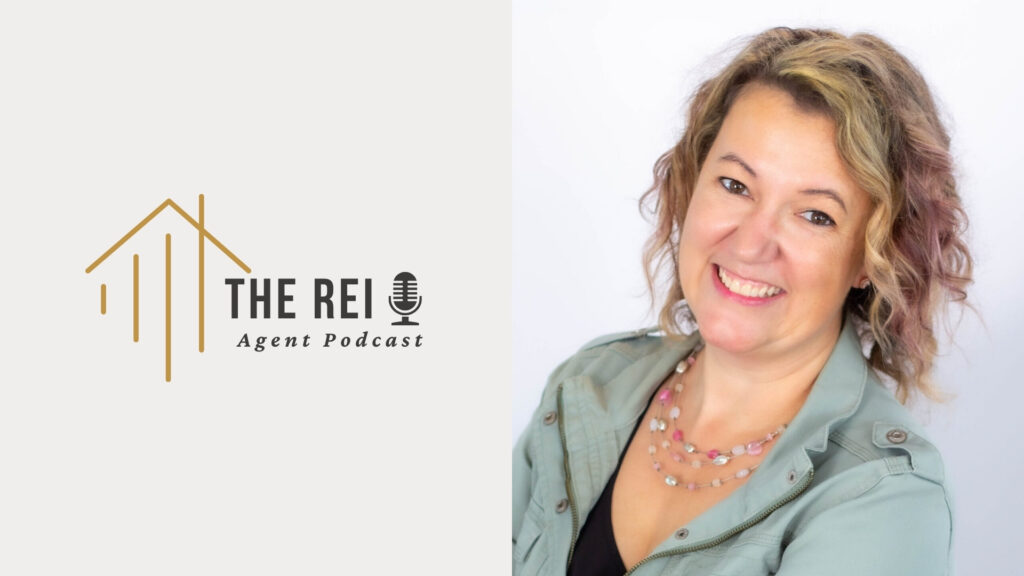
The REI Agent with Alicia Holmquist
Value-rich, The REI Agent podcast takes a holistic approach to life through real estate.
Hosted by Mattias Clymer, an agent and investor, alongside his wife Erica Clymer, a licensed therapist, the show features guests who strive to live bold and fulfilled lives through business and real estate investing.
You are personally invited to witness inspiring conversations with agents and investors who share their journeys, strategies, and wisdom.
Ready to level up and build the life you truly want?
Follow and subscribe to The REI Agent on social


A Bold Beginning with Nothing But Determination
Starting over in a brand new place is not just difficult. It is uncomfortable, uncertain, and often overwhelming.
Alicia Holmquist did exactly that.
She moved across the country with no connections, no built-in network, and no safety net in real estate.
What she did have was belief, urgency, and a refusal to settle for anything less than success.
She did not ease into the business.
She attacked it.
“I had no sphere of influence at all. And I hit the ground running.”
That decision changed everything.
Betting on Herself When It Mattered Most
Most people wait for the perfect moment.
Alicia created it.
She walked away from a job she hated before even finishing real estate school. There was no backup plan waiting. Instead, she found a way to survive while building something bigger.
She became an Uber driver.
Not just to make money.
But to learn her new market, understand neighborhoods, and gain real-world awareness faster than anyone else.
“I didn’t realize how smart it was until later on.”
While others hesitated, she positioned herself to win.
Turning Weak Leads Into Strong Opportunities
Many agents complain about bad leads.
Alicia saw opportunity where others saw frustration.
She leaned into third-party lead platforms that others avoided and made a bold internal commitment to figure them out.
“They kept saying the leads were awful. I said, I’ll convert these.”
And she did.
By studying the system, improving her follow-up, and staying consistent, she turned overlooked opportunities into repeat business and long-term clients.
She understood something most people miss.
Leads are not the problem.
Execution is.
Building Relationships That Never Expire
Success in real estate is not just about closing deals.
It is about staying remembered.
Alicia built systems that kept her connected long after the transaction ended. From CRM automation to creative follow-ups like unexpected holiday messages, she made sure her clients never forgot her name.
“If you’re not staying in front of them, they’re going to move on.”
She did not rely on memory.
She relied on discipline and systems.
And it paid off.
The Deal That Proved Everything
One of her most powerful moments came from pure awareness and confidence.
A client bought a home.
Weeks later, Alicia happened to be in the same neighborhood with another buyer.
She trusted her instinct.
She connected the dots.
She made the call.
“I have never been more sure of anything in my life.”
That same house was sold again within 30 days.
Two clients served.
One opportunity captured.
That is what happens when preparation meets action.
Mastering the Investor Mindset
Working in a high-demand coastal market, Alicia quickly learned that investing is not always what people expect.
Many first-time investors came in with unrealistic expectations.
She guided them with honesty.
She explained seasonality, regulations, and hidden costs that could make or break their investment.
“You have to be ready for the slow months too.”
Instead of chasing deals, she built trust.
And that trust turned into long-term relationships.
The Power of Consistency Over Everything
There is a moment in every career where people start to drift.
They stop doing what worked.
They chase shortcuts.
Alicia refused to fall into that trap.
“Consistency beats perfection every single time.”
She stayed committed to the basics.
Calls.
Follow-ups.
Open houses.
Daily action.
Even when it was uncomfortable.
Especially when it was uncomfortable.
The Truth About Growth in Real Estate
Alicia does not sugarcoat the business.
It is hard.
It requires rejection, persistence, and relentless effort.
But she also understands the bigger truth.
“0% of zero is zero.”
If you are not willing to adapt, negotiate, and evolve, you will not grow.
She chose growth.
And it shows in her results.
A Final Reminder for Anyone Chasing More
Success is not about having the perfect plan.
It is about taking action when it feels uncertain.
Alicia Holmquist built her business from nothing by staying consistent, staying hungry, and staying open to change.
She did not wait for opportunity.
She created it.
“Get real comfortable with being uncomfortable.”
That is where everything changes.
That is where success begins.
Stay tuned for more inspiring stories on The REI Agent podcast, your go-to source for insights, inspiration, and strategies from top agents and investors who are living their best lives through real estate.
For more content and episodes, visit reiagent.com.
Articles Related to The REI Agent
- 10 Shocking Truths From the 2025 Global Housing Storm (And How Agents and Investors Can Thrive Through It)
- Shocking Balance Before Wealth (How Erica Clymer’s Holistic Practices Help Agents and Investors Thrive in Global Housing)
- Global Housing Storm (Holistic Solutions to Million-Dollar Dreams, Desperate Sellers, Rising Rents, and Shifting Wealth)
- Top 20 Terrifying Reasons Agents Will Never Be Investors (And How to Fix It)
- 10 Ways to Kill Real Estate Agent Burnout in 2025 (The Holistic Fix)
- Mattias Clymer is Silently Leading a $70M Movement That’s Changing Agent Lives
- Therapy You Didn’t Know You Needed (Holistic Wisdom for Real Estate Professionals)
- From For Sale Signs to Life Design (How The REI Agent Transforms Real Estate Into Holistic Wealth)
- Achieving Holistic Wealth and Success Through Real Estate (Insights from The REI Agent)
- Partnering with Investors (How Real Estate Agents Can Exponentially Maximize Profits)


Contact Alicia Holmquist
Mentioned References
Transcript
[Mattias]
Welcome back to the REI agent. We’re here with Alicia Holmquist. Alicia, thanks so much for joining us.
[Alicia Holmquist]
Thanks for having me. I’m super excited.
[Mattias]
Yeah. Well, tell us, give us a bird’s eye view of who you are and what you do in real estate. It’s a big question.
[Alicia Holmquist]
I am that awesome ducking realtor. I work South Carolina and North Carolina. I started off five years ago.
I had just moved here. I had no sphere of influence at all. And hit the ground running, became our top producer at Welcome Home Realty within the first year.
Nobody has taken me off my throne since. I was able to, within the first three slash four years, continuously scale up. But I was averaging about 30 transactions, 35 transactions a year.
But that volume kept going up. So what I was after was a little bit higher. And then last year, I doubled my production by scaling a little bit higher.
So hopefully, on pace to do the same this year, already closed 10 transactions, another eight on the way. But I just hit the ground running and I haven’t stopped. So fingers crossed it stays that way.
[Mattias]
Well, I mean, there’s a lot to ask unpacked there. Like, I mean, how the heck did you do it? Is the very broad, easy one to ask.
Where’d you relocate from?
[Alicia Holmquist]
Maine.
[Mattias]
Maine. That’s pretty different.
[Alicia Holmquist]
Thousand miles door to door.
[Mattias]
What made you make the move? And why did you just jump into real estate?
[Alicia Holmquist]
Snow. That was a big part of it. Don’t like the cold, had never liked the cold.
Me and my husband, just we were ready. I had family who had moved here and we kind of followed. But it didn’t work out exactly how we want to.
We ended up in the Myrtle Beach area, not an area we were actually looking to really be in. We wanted to be inland more. We’re a little more country.
And it’s something I’ve always wanted to do. It’s actually something a lot of people have been like, you would be a really great real estate agent. And after buying and selling my own property, I had a okay realtor and I had a great realtor and I was just excited.
I had the opportunity. We moved here. We got jobs.
I hated it. And my husband was like, we didn’t move here for you to hate your job. And I was like, okay, well, I’m going to go to real estate school.
And then I’m going to go into real estate. And he was like, okay, well, that sounds like something you should do. And I got really lucky.
When I was interviewing a lot of real estate agencies, basically we’re like, once you’re licensed, come talk to us and welcome home was like, we’ll start training you right now. And so I was like, well, this is my home and I’m never leaving. And I jumped right in.
And the minute I was licensed, they were like, cool. How fast do you want to start working? I’m like, I need a paycheck like last month.
So put me in coach. I’m ready. And I did.
I just started running with it. And luckily it has not slowed down for me since even with the change in the market.
[Mattias]
What were you doing in Maine? What was your career before? Sales.
Okay.
[Alicia Holmquist]
All different sales.
[Mattias]
And then when you got the job you didn’t like here, was that also sales?
[Alicia Holmquist]
Yep.
[Mattias]
Yeah. And so when you were doing your license course and getting trained along the way, which is awesome, that’s something that brokerages definitely should offer to people. Because I mean, I think when you’re coming from like having to apply for a job and hope you get the job and that kind of world, and you get into real estate and you realize that you’re not really applying for to be part of a brokerage, it’s more like anybody will probably take you and give you a shot.
But there’s going to be people like the brokerage you just talked about that may be more invested in seeing you actually succeed. And that’s obviously when you’re starting, especially probably a brokerage you want to go to more than just the brokerage that has the cheapest or the best commission splits. Because at the end of the day, it doesn’t matter what the commission split is if you don’t sell anything versus sell, get a business that’s really ramped up, right?
[Alicia Holmquist]
Absolutely. When I was actually in real estate school, it was a really, really great school locally. And one of the things they mentioned is to do your homework, which I didn’t do, but I got lucky because somebody brought me on without having to interview a bunch of places after getting licensed.
But they had warned us that basically there’s a lot of brokerages out there that as long as you’re breathing, they’ll hire you. And I didn’t want to be a little fish in a giant pond. I wanted to be somewhere where I felt like I was being at least taught the right way to do things.
And there’s so much ethics involved, there’s so much legality involved. So I was really worried about doing it wrong. And luckily, I was just really supported from the beginning.
[Mattias]
Yeah, because the course, getting your license, it’s not, I mean, you just have to get into the job and do it really to actually learn how to do the job. But anyway, so what were your strategies? When you got started, when did you quit your job?
Did you quit it before you got your license or right when you got your license? And you said that you needed the paycheck last month. So did you need your income to help support the family?
And was that fire that made you hustle more?
[Alicia Holmquist]
Absolutely. So I quit my job before going into real estate school. I knew I had the mindset that real estate was going to be all the time.
It was not going to be a nine to five. I was going to need something to supplement until I started producing. So I actually went to be an Uber driver, because I also didn’t know the area.
Again, I had just moved here. And so I was an Uber driver in between my courses at night and in the mornings early on the weekends. And I learned just how to get around this area.
And I didn’t realize how smart it was until later on where I would be in a neighborhood and be like, Oh, I have been in this neighborhood before. And it was really exciting because I actually got to see parts of the area that other than basically being a tourist here, because I was so new, I hadn’t seen. So it gave me a broader spectrum of the area.
And then the more I learned the local area, the more I actually moved out. So I service like a really giant area of both North and South Carolina, mostly because a lot of the clientele we have here, even a lot of our investors, they’ll start off with an idea of where they want to be. And then they they jump, you know, an hour inland, and it’s so different.
And because North Carolina and South Carolina are set up that we have like 20 MLS is in each state, you have to be parts of multiple just for when your client does jump or else you can’t even see what they’re looking at in the MLS is so um, I just thought that, you know, being as open and trying to connect with as many people and being able to jump if they jump was going to be the best way to do it. And Ubering started that.
And then once I was done with real estate school and had passed all the tests that need to be passed, that scaled back in real estate took front stage, and it just kept taking front stage till I didn’t have to Uber anymore.
[Mattias]
Sure. Makes sense. What, what strategies?
Like what kind of things were you taking on to try to build business? Were you paying for leads? What did you do to, to start seeing that success?
[Alicia Holmquist]
So, so fast, I did pay for leads. I, when I first started at Welcome Home, one of the lead sources that a lot of people had within the company was a product that through realtor.com and everybody did not like it. They kept telling me how awful the leads were, nothing converted.
Uh, they didn’t want, they didn’t seem like serious buyers. And so in my brain, I was like, bet I’ll convert these. I’ll find a way to convert these.
And then I took a quick course with the product and found out how to convert it faster and started converting those very quickly. And luckily some of that became repeat business very quickly, especially a lot of investors use third party sites because they’re on these third party sites and they hit, I want to talk to a realtor. They want somebody right now there until they find their person in that area.
They don’t, they’re not committed. Um, and so I, I used a lot of third party sites and I still use them. Um, I don’t believe in not using them.
I tech savvy nation now and everybody wants the right now until you have a really great relationship with that client. Everybody’s going to hit the button. They’re going to use those major sites and they’re going to hit the button.
So I still use a lot of them. A lot of them are very expensive. A lot of them do take a lot of the money, but those are the clients that come back year after year and either need another property or a second property or they’re selling because they decided they like another area better.
Um, the Myrtle beach area, especially a lot of people will move to Myrtle and then they fall in love with Myrtle which is 20 minutes away or North Myrtle beach, which is 10 minutes away. They just find another area that they like better or they meet friends and they really like friends that are in a certain subdivision and they want to be closer to their friends and drive a golf cart to their house. So it’s, um, there’s a lot of repeat business very quickly here.
We are the fastest growing state. So it’s, it was important to me to get in front of as many people as possible, especially since I had no sphere. Like I didn’t even have a hairdresser when I moved here.
I didn’t have anybody to like say like, Hey, I’m a realtor. You should use me sometime. So I built my business that way.
And then once I had the ability to, then I did things like postcards. Um, I held a lot of open houses. I still hold a lot of open houses.
I think that’s really important, especially when you start taking on listings, you should be doing a little bit more for your sellers than just putting it on the MLS. Um, and then social media marketing. I’ve had some people reach out to that.
So that’s fun. Cause that’s something I wasn’t really sure I wanted to do anything with because it just feels so weird to be on camera, but you’re at, here I am on a podcast. So there you go.
[Mattias]
Yeah, no, it takes, it takes some practice. I think for that piece, I’ve told people, you know, try just 30, a 30 day challenge where you’re just talking to a camera and you have no intent of actually posting it. Um, and if you take that pressure off and you just get more comfortable with doing it, that’s probably going to get you a lot further.
And then who knows, maybe you’ll be able to use some of that footage later, or you’ll just be in a much better place to, to record more naturally. If that’s something you want to do, it’s not something everybody has to do. Um, I, yeah.
So what strategies did you do to try to stay in touch with these people then? Um, like, cause I think sometimes one of the dangers of paying for leads is that, you know, you could be so focused on this is like the stream. This is the stream of income.
Um, I don’t really need to worry about what was behind me, what I’ve already done. Uh, I need to on, uh, or I just need, this is, this is, I’m busy. I’m answering phone calls all the time.
Um, sometimes it’s, you know, not productive or, or, you know what I mean? Like you’re going to have to go through a lot of like calls as well. Right.
That, that won’t necessarily turn into a transaction. Right. I mean, that’s, I’m not, maybe you have a better success rate than a lot of other people, but typically it’s a little bit of like an answering service that you, you have to, to be prompt and responsive and you have to play the numbers game a little bit.
Um, but anyway, how do you, how do you make sure that you stay in touch with the people that you’ve already done business with? Um, so that you can build up that, you know, that sphere, um, of repeat buyers like you talked about.
[Alicia Holmquist]
I have a really awesome CRM. I have full trail, which is an inside real estate product. I’m actually a peer coach with them and it, it, it’s AI based.
It does a lot of stuff for you. So once you close it out, you can, I don’t want to say set it and forget it, but you can set up a follow up routine that alerts you and says like, Hey, uh, they closed a week ago. Call them, see how it’s going.
They closed a month ago. Congratulate them for, you know, a month in the new property. Um, with my investors, it’s like, call it six months and check in to see, you know, how the rental income is coming in and doing it that way.
But I also like to do the weird, I don’t want to say weird cause it’s just the different stuff. Instead of sending like a Christmas card, I send a new year’s card and a Thanksgiving card. I send a 4th of July card.
Um, it’s, I just try to randomly, especially with my closed business, because I have a CRM, I will randomly send out like a happy Monday text to all my closed clients who are still in the database. It just say like, you know, just wanted to say hi. It just makes it easier so that, um, it, I am never going to be that person who remembers that like, Oh yeah, they closed a month ago.
I need to follow up right now. I am still a paper and pen girl too. Like I really do have a paper calendar at all times next to me.
And then I have my Google calendar and then I have my CRM calendar. Um, but I think it’s really important to make sure you’re staying in front of those people. And if you’re not, you’re there, they’re going to move on.
I, the statistic is something crazy that they don’t reuse the same realtor over and over again. And that should speak volumes because in our industry it is the minute one’s done, you gotta have something on the back burner to be ready for the next one. And if it’s one and done, and then you’re waiting for the next one, it’s, it’s really hard to stay in the industry.
So you are constantly making those phone calls and everybody, every realtor out there, I don’t care who you say it’s the basics. It’s what you have to do, but making calls sucks. Like it’s, you get hung up on, you get told off, you get all the things I never, you hear all the time.
I was never looking. I, you know, I never registered on your site. Um, and it’s like, okay, well somebody who has your name and your phone number and your email address is using all of your information and putting it online.
So don’t be surprised if you get a ton of phone calls from other people and they’re like, well, can you like remove me? And I’m like, no, you came through a third party site. Like they gave me your information and probably 20 other people, your information.
Um, but the ones who stick through in and do transact, um, I appreciate them. And I, I let them know. And I just tried to say like, basically I’m here.
If you ever need me again, I have a client at the end of this week who just closed a few weeks ago. And they said, don’t be surprised if we call because her mother’s, you know, going to want to move here once we’re here. And he called the other day and he said, mom’s coming.
And I was like, great, let’s go look at some houses. So my whole weekend will be based around previous client. They just transacted.
So it’ll be fun to talk to them and see how much they love it. And, um, one of my funnest, funnest, that’s not a word. Uh, one of my best transactions, um, one of my favorite stories is that I had a client who moved from out of state.
They fell in love with the house. We closed on the house and 30 days later, I was in the neighborhood with a completely different client and the client needed to take a break. And so, uh, they left and my, my previous client saw me and they waved and I went and stopped by real quick and he said, so how much do you think we could sell this for?
And I laughed cause they hadn’t even lived there like two weeks. And he, he made a face and I was like, Oh my God, you’re serious. It’s the wrong house.
He said, it’s not the wrong house, the wrong neighborhood. Uh, the neighborhood wasn’t growing fast enough. And they had a young son who didn’t have any friends in the neighborhood.
So they wanted to change neighborhoods. And yeah. And I looked at him and I said, I’ve never been more sure of something in my entire life.
The client I have with me right now, this is their house and can you be out by five? And he was like, are you serious? And I was like, I have never been so sure of anything in my life.
I need you out of this house. I need to show it at five. He was like, can you go do five 30?
And I was like, sure, we’ll do five 30. And, um, it was just because of how the house was set up and that particular builder, that particular neighborhood, they weren’t going to build that for a year. So I, the client, yeah, the client came back and said, all right, where are we going next?
I said, I’ve actually canceled out everything else for the day because I’ve never been so sure. And we need to wait another 15 minutes. And they were like, what are you talking about?
I’m like, we’re going to go look at that house. And they kind of made a weird face. I’m like, it’s your home.
I’m, I’m almost sure I’m not wrong on this. And, um, I watched the client pull out of the driveway and I brought them inside. And the, one of the clients started crying and she said, this is my house.
And, uh, the S the older son who was, it was going to be a multi-generational living situation. Um, he checked out the house and he was like, this is exactly what we’ve been looking for. And the husband looked at the kitchen cause he was a big cook, a baker.
Um, and he was like, this is the Island I’ve been looking for. And so they looked at me and they’re like, what do we do now? And I’m like, I got to get the property listing.
It’s like, it’s, it’s not even for sale right now, but I knew this was your house. And, um, 30 days later, we closed. I closed on the same house 30 days later.
And that’s, it’s one of my favorites. I keep up with both. I talked to both of those families.
Um, and it’s, it’s one of my favorite stories.
[Mattias]
That’s awesome. I love it. Um, I was just going to add to about, you know, to wrap up the paying for lead thing.
Um, you know, that we, I think often people will, you know, like, like that whole, like depending on a, one source can be dangerous and not following up people, not having the relationships like you did. Cause obviously, um, these people you said you still keep in touch with, um, you know, the replying on a source of business, um, that’s not really your own book of business is dangerous in that it could change. Right.
I mean, I think, I think like Zillow leads got a lot more expensive, uh, for example. Um, so there’s, there’s just, you know, changes that can happen. And so like, that’s where, you know, it’s not a wrong thing to do to, to pay for them.
But like, if you are doing that, definitely keep that in mind as like, you’re building a book of business that you want to be able to run with independently from these sources, if things change or, or, or whatever. Um, but no, I love that story. That’s, that’s really pretty wild.
Um, and I would be, first of all, like with the, with somebody wanting to sell in two weeks, I’d be like, uh, like logistically, are you willing to take a loss? Cause that’s, that’s hard.
[Alicia Holmquist]
Luckily it was during the bubble. So, um, it, there wasn’t a giant loss. Um, and so that was, you know, the silver lining of the story as well.
Um, but the, even with the clients that repeat for investment properties, even the clients that repeat, who moved here and then want an investment property, first time investors who hear that this area is growing and the numbers are, you know, amazing in the summertime for rentals, um, walking them through that process and explaining those details and having that relationship to kind of, I like to say, speak more freely than you do with a brand new client.
Um, no, not every bot lead turns into something, but if, if you’re not investing in your business, cause at the end of the day, I, when I train other agents, I try to remind them like you’re, you’re, you’re, you are your own boss. And part of the cost of doing business is the cost of doing business. You, your broker is your broker.
Your broker is there to support, help nurture. Um, but they’re, they’re not your, they’re not your boss at the end of the day. You’re your own boss.
So you, you have to be ready on what you’re going to do. And I like to do everything. Like I, I always say the only way to scale is to do it all, but you’ve got to be really structured in how you do it.
If you’re going to do open houses every weekend, that’s what I do my door knocking. Um, there’s a old sales tip that like, if you’re gonna go try to sell somebody, you should sell the store to the left and to the right of them too. You don’t just walk into the one and leave, you walk into all three.
So if I do an open house, I try to knock, if it’s a single family home, I try to knock on, you know, the four or five surrounding houses. I let them know we’re having an open house if they want to come in. Uh, I also let them know that if it’s something they’re thinking about, maybe once this house sells, we could have a sit down and talk about the day on market and what it looks like for them.
Uh, doing the cold calling and constantly following up, even with bot leads, the national statistics for what agents do, they like pay all this money for a lead and they call it twice and they’re like, yeah, they didn’t call me back. I like, I call that until you basically say I found another realtor. I don’t need you.
Don’t call me. Don’t text me. Don’t email me.
I really don’t need to hear your voice on my voicemail again. I appreciate you, but go away until they say like, absolutely not. They’re a lead.
And I, the client that I said, I’m meeting this weekend with his mom, he was in my database for four years and we kept it on and off conversation about when he was ready and when he wasn’t ready and when he was hoping and when it was finally going to all work out and it just finally worked out. And that was one of my first major lead sources, uh, when I first got into real estate. So I, they do convert some of them.
The national statistic is like six to 18 months. So if the national statistic is six to 18 months, if you buy a lead today, there’s a chance that almost for two years they’re not going to convert anyways. So you gotta be, you gotta have those things in place.
You gotta have your schedule in place, your systems in place, and your followup in place to know when it’s time to make the calls and when it’s time to be on the road.
[Mattias]
Yeah, no, that’s really good. Um, you mentioned a few times the investors, uh, so, you know, beach town, uh, I would imagine there’s some Airbnb, some, some short-term, um, rental investment happening. What, what is that most of it?
What, what kind of investment, uh, people are you working with?
[Alicia Holmquist]
So a lot of it, surprisingly that I work with is first time investors. It’s somebody told them that the rental opportunities here are really, really great. Um, somebody sharing numbers with them from a rental that they bought 10 years ago, five years ago.
And, uh, you know, their numbers year after year and sitting down and showing them, you know, projections with different rental companies of what it could be. Myrtle beach and the grand strand is what we call this area, um, is a little bit unique because they actually have pockets where short-term rentals are allowed and not allowed. So you cannot just go buy a single family home and turn it into a short-term investment.
Uh, we also are a condo tell heavy, which is like hotels. Um, and that also has a lot of short-term potential in it. But a lot of these HOAs are so high.
You have to have that realistic conversation, especially with a first time investor of, so, Hey, you’re going to have a great, you know, June, July, August, maybe even September. Uh, the rest of the time is going to be really quiet. We were a tourist area.
So everything you make within four months, maybe six at the most, you also have to be ready for the six months that it’s going to be really sporadic. Um, and have that conversation of, do you turn it into a short-term long-term rental so that in the winter time, a snowbird can come down and rent it for six months and cover at least the HOA costs, maybe your insurance. And also knowing some of the really great rental companies in the area who can help you that you can call quickly and say, Hey, I have a client looking at a property in this condo tell, or a single family house near the beach.
What is the rental opportunity here? And then to make everything even more fun in this area, they passed a rule recently that if you are not local, you do have to use a local management company of some kind. So you cannot, you can’t just have like a cleaning company coming in and checking on things and telling you if something was broken or not.
You have to have somebody who is responsible in the area for disturbances and things of that nature. So it, it becomes a fun little, fun little conversation to have when you have to talk to, especially a seasoned investor. That’s kind of like the fun ones to really talk to.
Like, actually, you can’t do this and you can’t do that. You can’t do it here. I had an investor a couple of years ago who bought on 10th street and 10th street was not short-term friendly, but ninth and 11th were.
And he was like, how is that possible? And I was like, I don’t know. I don’t know.
I don’t make up the rules. They just have a map. It says on the map, it is not.
And he was like, that makes no sense. And I was like, well, it makes a little bit of sense only because the road was recently somewhat updated and developed and they put a bunch of new housing in there. So they’re, they’re more long-term and or permanent resident homes.
And a lot of permanent resident homes don’t want a renter next door to them anymore.
[Mattias]
Yeah, sure.
[Alicia Holmquist]
So it’s, it’s always fun. It’s always interesting. I really like when somebody finds something because the, say the condo is going really cheap and they’re like, the income potential on this is really great year after year.
And then I have to hit them with like, it is, but like, they also have like five years of building assessments of planned and that’s probably going to be passed on to owners. So you’ll be responsible for that. Maybe not this one.
The current seller has to pay that, but you’ll be responsible for the next four years of assessments. And I’m like, what does that mean? I’m like money, extra money.
You’re going to have to pay on top of the HOA. And they’re like, I don’t like that idea. I’m like, I know nobody likes that idea.
[Mattias]
Yeah. Well, I mean, shoot, that’s a, a lot of value there that you’re offering people. Cause that’s a lot of inside knowledge that it would be hard to come across without, you know, having somebody that is in the, in the game, doing it all the time.
And I mean, this is just also kind of like, you know, you think about a beach town where the primary, I would imagine a lot of the economy is based around tourism, right? I mean, that would probably be a huge thing for that area. And to have that many regulations to have that many, like, you know, things you have to, to, to navigate around just kind of tells you, you know, Airbnb is, is, can be a bit of a challenge.
Like I would, to have a short-term type rental, you know, you think you’re safest in an area like that, where the economy is really relying on it, but there, if they’ve changed regulations, if they changed where Airbnbs can be and can’t be, there’s probably people that were stuck that had one in an area that now it’s not allowed anymore. Is that accurate? Yeah.
[Alicia Holmquist]
And so there, the way they’ve always, I say, always, I’ve been doing real estate for five years. I already said that the way some of it has been is if you keep it. So if, for example, you are in a subdivision, condo subdivision, and the HOA rules that they are no longer accepting short-term rentals, they will grandfather in who currently has one.
But the minute you sell, that person cannot continue to keep it. You keeping it, you can continue to rent it as a short-term rental, but the minute you sell it, you cannot anymore. Same with the map of St. Myrtle beach. If you, if it’s, if it was a short-term rental prior to them changing the rules, you are grandfathered in and you can continue to do it. But once it sells, you cannot short-term rental that anymore.
[Mattias]
Does that change the value then of the property?
[Alicia Holmquist]
Oh yeah. Oh yeah. Greatly.
And especially the closer you get to the beach, because everybody wants to be within walking distance of the beach, especially if you’re on vacation, you want to be close. You don’t want to have to call an Uber every single time. You don’t want to have to drive your car down to the beach and pay for parking every single time.
So if you are within the areas that still allow it, those properties, especially if they are not in an HOA and not governed by anything, those properties, I don’t want to say will sell every single time, because if you get too crazy with the price point, it’ll sit for a while. But if the price point makes sense and the rental opportunities make sense, then it will continue to produce. And it will also continue to sell, have equity and sell for top dollar.
There’s an area in Surfside Beach right now that if you find something that is affordable and it is short-term friendly, it’s gone. You have seconds to decide, sight unseen. And that’s not normal in this area.
We have a six to eight month market. So when these properties come up and all of a sudden you have an opportunity to purchase one of them, you’ve got to make that decision really quick because that’s all you got.
[Mattias]
Well, I mean, case in point, why working with somebody that is familiar with the area and familiar with and involved is so important. There was a ton of excitement about the short-term rental space, especially through COVID. I would imagine that there was some change for you all as well, even though you’re primarily a tourist location.
But I would imagine there was probably a boom of people wanting to buy, a boom of people wanting to use Airbnbs that maybe shifted over time. Because in COVID, people were looking for a house they could be in by themselves. Hotels seemed less safe from a germ standpoint.
So getting your own house sounded great. And also, people weren’t traveling. They weren’t flying as much.
So going to something close by, a beach not too far away would be more done than flying to Spain or whatever. So did you see that shift as well through COVID, where there was a boom of people wanting to buy them and then using numbers before there were so many of them? Because we had that in a local resort around here, where there weren’t as many Airbnbs.
And then there was a boom of people buying them and converting them and making Airbnbs. And so people were using numbers from before the boom and projected this kind of revenue. And then it didn’t really come to fruition.
And so there was a little bit of concern about a bunch of failed Airbnbs coming back on the market and changing the prices. Did you see any of that in your market?
[Alicia Holmquist]
Kind of the opposite. So South Carolina, I always like to say, never really made it to the news like Florida did. But South Carolina didn’t shut down, shut down.
As I’m originally from New England, and that was a very different shutdown. What we were seeing a lot of is people from the North who had second homes here, moved here. And they had this condo that they were using part time for years.
And all of a sudden they said, I’m going to live here full time because I don’t want to be in a state that’s completely shut down. And they were putting their condos on the market and they were buying single family homes. And then all of a sudden, these condos were coming available for fairly cheap.
And everybody who I like to say was stuck in their single family home in New England was like, oh, I could buy a condo in Myrtle Beach and we could just go there because I can work from home. It was a lot of the work from home mentality very much shifted this area as a whole, not just in the condo market and the Airbnb market, it was the entire market. We have so many people who realize that it’s two hour flight to Boston.
That’s what it is. It’s two hour flight to Boston. So if you’re from Massachusetts, if you were, it’s like hour and a half flight to Connecticut, it’s like an hour and a half flight to Ohio.
So a lot of these places were realizing that they were sent home to work and now they could come to the beach and they could buy housing fairly cheap, our taxes are some of the lowest in the country. And they were, everything was switching from what was like secondary homes. They were moving into primary homes and then people who were ready for a second home because now they were sent home to work and they didn’t want to work from that location.
So they were buying condos and coming down for six months out of the year. And then I really, that’s some of the best investors in my opinion, because they live in it. They use it as a secondary home or they use it as a vacation home during the cold months.
And then during the hottest months, they go back to New England and they just let it rent out. They don’t worry about trying to book it out for themselves or family or anything like that. So the shift, I think here, there was definitely some probably failed Airbnb ideas, but a lot of it was everything shifting because people were coming here to their secondary homes and saying, okay, now I’m going to turn it into a primary.
I’m not going to go back. And then a lot of people who were stuck said, I’m going to get a condo because I can drive down or fly down and stay there for a few months and have a little more freedom or at least be on the beach or be able to walk the beach. It was really wild for me, even when I moved here, because the mentality of the shutdown back home was very different than here.
Tourism was still a thing. Tourism was still happening. And where I was, it was very shut down at the time.
So it was wild to see both sides of it. And it was wild to see the real estate side of it too.
[Mattias]
Okay. Well, that’s fascinating. Every real estate market’s a little different.
I do want to get into the golden nugget portion. Do you have a golden nugget that you have prepared for our listeners?
[Alicia Holmquist]
Yeah. 0% of zero is zero. Stay negotiable, especially with how much the market has changed.
Investors are getting smarter. Regular buyers and sellers are getting smarter and the contracts have changed and the laws have changed so much in the last couple of years. If you are stuck in the old ways of real estate, old dog needs to learn new tricks.
But if you’re going to constantly say, I’m going to stick to this, or this is the way I do things, 0% of a $0 commission check is zero. So if you’re getting more negotiable and you’re trying to work with people more and you will see an increase in your numbers, you will absolutely grow. And there are realtors out there I hear all the time who like to say things like discount realtors and they might have a lot of transactions, but their volume isn’t high or they don’t close as many dollars.
I’ve closed more dollars being negotiable than when I was being taught that I had to get my full percentage. When I can work with my buyers and work with my investors, I have an investor right now who’s going after a single family home and part of the deal, I called the realtor and I said, I’ll cut my half if that helps your seller so that we can get my buyer in there. Because if they don’t get it, it doesn’t transact.
So I like to, my little golden nugget is 0% of zero zero and get real comfortable with being uncomfortable because being negotiable, I think is the only way to go going forward.
[Mattias]
Yeah, I mean, it is right now we are having different conversations than we had before. You know, really having conversations about commission with a buyer, with a buyer brokerage agreement is a lot different than it was before. Having conversations with sellers about, I don’t know how you all do it, but we don’t, we’re not in my company, at least we’re not putting any kind of commission in there about a buyer’s agent.
That’s just something that we’re negotiating when an offer comes in. And so yeah, it is a different world. But it makes more sense, honestly.
I’m going to tell a buyer that this is kind of what I charge, this is the services I provide, this is what I charge. And that we kind of have an agreement there and we work from going forward. Now, to your point, we can’t receive more commission than we have agreed upon in the buyer brokerage agreement.
But we can’t accept less. And so I usually will explain that. And if there’s ways to make the deal work with a certain limit, I’m going to usually be cool with that when it comes down to actually writing the offer and that kind of thing.
Because you got to think about, especially if there’s multiple offers, which still happens here, we got to think about how we’re going to be the most competitive offer on the table. And so all that stuff comes into play. But like you said, you got 100% commission on zero transactions, it’s zero.
I mean, that’s another way to say what you’re saying. And to the same point, again, like what we talked about with choosing a brokerage, whatever the commission split is, it doesn’t really matter if you’re not going to sell anything. So it’s more, you got to have that volume to have any business.
But what about a book? Do you have a fundamental book that you think everybody should read or one that you just currently are really enjoying?
[Alicia Holmquist]
One of my favorite real estate books that I also tell a lot of agents they should read it is Ninja Selling, because it kind of gets you into the mindset. I really like that one. It goes back to the principles of a schedule, making your calls.
I think it’s something that personally, I think every realtor should read because it’s also a big part of talking about consistency and a second little golden nugget. I always say consistency beats out perfection every single time. So if you’re consistent in your tasks every day, if you’re consistent in your follow-up every day, if you’re consistent with who and what you’re trying to do every day, you’re going to transact just based on you’re doing what other realtors give up doing.
And you hear all the time, like a realtor starts to do really well. And then they like, forget about something if they, whether it’s their phone calls, whether it’s the follow-up with the previous, whether it’s open houses, door knocking, the cold calls, whatever it is, something removed out of the system. And then all of a sudden they, you hear all these people go, we went back to the basics.
Well, if you never leave the basics and you keep, and you make sure you’re still doing the basics, your schedule is always going to change. But if all of a sudden, like three deals are blown up today, and now tomorrow you got to be on the road with three clients. And tomorrow’s normally your paperwork day.
You can’t skip the paperwork day. You can’t skip your call day. You have to figure out how to do it, whether it’s from the car, whether it’s in between the appointments, whether you’re going to have a later evening of doing late, maybe you don’t normally make late calls.
And now you’re going to make late calls. You’re going to get up early next day and try to get a bunch of stuff done. You still got to go back and fit that back in because it’s part of the routine.
And you, especially with how much technology has changed. Like I said, if you’re constantly talking to somebody and the average person is on eight to 12 sites now, and you think about it, there’s like eight to 12 major real estate sites without any brokerage sites out there. So if they’re on all these sites, all it takes is you missing the chance to call and then say, Oh, it’s so weird.
I was actually just on Zillow looking at one, two, three main street. Can you tell me anything about it? Well, if you forgot to call that day, they hit the button.
They already got connected with somebody else. And somebody out there is hungrier than you. Somebody else is that new agent who somebody told them, you’re going to go into real estate and you’re going to make your own schedule and you’re still going to make a hundred thousand a year.
And that realtor is six months in and hasn’t transacted. They’re going to be more negotiable than you. They’re going to be better at follow-up than you.
They’re going to be hungrier than you. And you have to kind of go back to the whole mindset of week one. Like, what did you do week one?
Because at some point during week one, you stared at a database that had like five or 10 people in it and said, I’ve called all of these people 18 times this week. They don’t want me to call. Well, you also got to get more people in the database.
So it goes right back to that schedule. I love that book. And it also, there’s so many different scenarios in that book of people in different positions of real estate.
You have a mom who ends up in her mom’s basement with children. And because of consistency, she only, I think was able to work like a 10 to two every day. What realtor works 10 to two every day and is actually super successful?
Probably none of us, because that’s when we’re normally out doing other stuff because we’re working in the mornings or we’re already on the road, but she stayed consistent 10 to two every single day and was able to scale her business and move out and buy a house and all these things. So it just gives you different scenarios and people who are in different stages of life to show you that that consistency, that follow-up, the scheduling is super important. And we hear it all the time.
And yet my favorite thing about all realtors, especially the new realtors that I get to peer coach, that’s always the funnest is that we say, make the phone calls, you know, every single day, do your follow-up every single day, do the open houses. We train on all this stuff, right? And somewhere I did it.
You probably did it. We get in like the back of our head for a minute of like, cool, they made this much money this year, but I don’t want to do it their way. Cause that sounds like it sucks.
So I want to do it my way. And then when there’s nothing going on and there’s no transactions, you’re like, okay, well maybe I’ll try it their way. Cause they seem to be doing okay.
And then all of a sudden it’s working. That’s like, okay, well, I’ll keep doing it that way too. Technology is always going to change.
So tech is always going to help with it. The AI movement is always going to help with it. But until you get enough dollars in your pocket to pay for a transaction coordinator or an ISA or a virtual assistant, all those things out there, I like to say at some point, I’m going to retire my husband.
He’s going to be my sign and lockbox guy. Until you get to that point, you got to stick with the fundamentals of real estate. Cause those are, those still work every single day that you might be able to get around it a little bit.
You might be able to invest in some real estate leads that help you, but everything falls back to the old way still does work. And the old way is really the only way that doesn’t cost you a ton of money either.
[Mattias]
Yeah, no, I think Ninja is a great system, a great book. And it’s also, if you’re looking to buy leads, what a perfect pair for it, because that’s going to teach you really how to nurture that database. So you’re filling in like, especially somebody coming from a completely different market has no sphere, that’s a source of people, since you don’t know anybody yet, you’re getting leads, getting people to work with.
But then after you transact with them, you just have them in your database. Ninja is more of a relationship sphere networking book. And so it’s really good to do for as a balance when you’re, if you are buying leads as well, if you have a database, you can try just doing the Ninja system.
If you know a lot of people in the community, it’s just being more intentional about reaching out to people meaningfully and providing value and not just you know, spamming them or whatever. So it’s a it’s a it’s a great book. Finally, if anybody is looking to learn more about the Myrtle Beach market, they want to follow you on social media, look you up on a website or whatever, where can they find you?
[Alicia Holmquist]
You can find me on Google, you can find me on Instagram, you can find me on TikTok, you can find me on Facebook. It’s Alicia Holmquist. It’s @thatawesomeduckingrealtor.
And all the different I’m on LinkedIn, all of them are a little bit different, but Alicia Holmquist or @thatawesomeduckingrealtor and you should be able to find me. I hope you do because I finally got good enough that I’m spending money on marketing. So I hope it’s easy to find because all of those links are on there.
And then Alicia@WHRCarolinas.com is our company website. So I’m on there too. So and then hopefully, hopefully within the next two weeks, I’ll be launching DuckingAlicia.com.
So that’ll, that’ll be fun too.
[Mattias]
I love it. Alicia, thank you so much for being on the show. It’s been a lot of fun talking to you.
[Alicia Holmquist]
Thanks. It was awesome.
[Erica]
Thanks for listening to the REI Agent.
[Mattias]
If you enjoyed this episode, hit subscribe to catch new shows every week.
[Erica]
Visit REIAgent.com for more content.
[Mattias]
Until next time, keep building the life you want.
[Erica]
All content in the show is not investment advice or mental health therapy. It is intended for entertainment purposes only.
Related Content:
- From Stagnant to Unstoppable: Building a Purpose-Driven Life and Business with Justin Loncaric
- From Zero Calls to 80 Agents Building a Real Estate Empire with Kobe Xin
- From Stuck to Unstoppable: The Mindset and Strategy Shift That Changes Everything with Jacob Bopst
- From Rock Bottom to Generational Wealth Through Focus and Structure with Aaron Chapman