Market Growth Overview
Grand Junction’s commercial real estate market is experiencing a notable rise in unit sales and leasing inventories. This growth paints a vivid picture of rapid economic expansion in the region.
In 2025, 151 commercial units closed, marking a 36% increase compared to 2024. This surge highlights the emerging opportunities and investment potential capturing the attention of stakeholders. The arrival of larger national chains has acted as a catalyst for new business interest, further fueling this growth trajectory.
The combination of a small market size and a high growth rate signals promising emerging market potential for Grand Junction. Consistent quarterly growth patterns further boost investor confidence.
This highlights sustained momentum despite facing external challenges. Moreover, the 16% year-over-year increase in leasing inventory meets the growing demand for commercial property.
This reinforces Grand Junction’s capacity for continued expansion. Overall, these dynamics illustrate the region’s strategic position as an attractive locale for real estate investments.
Building Activity Trends
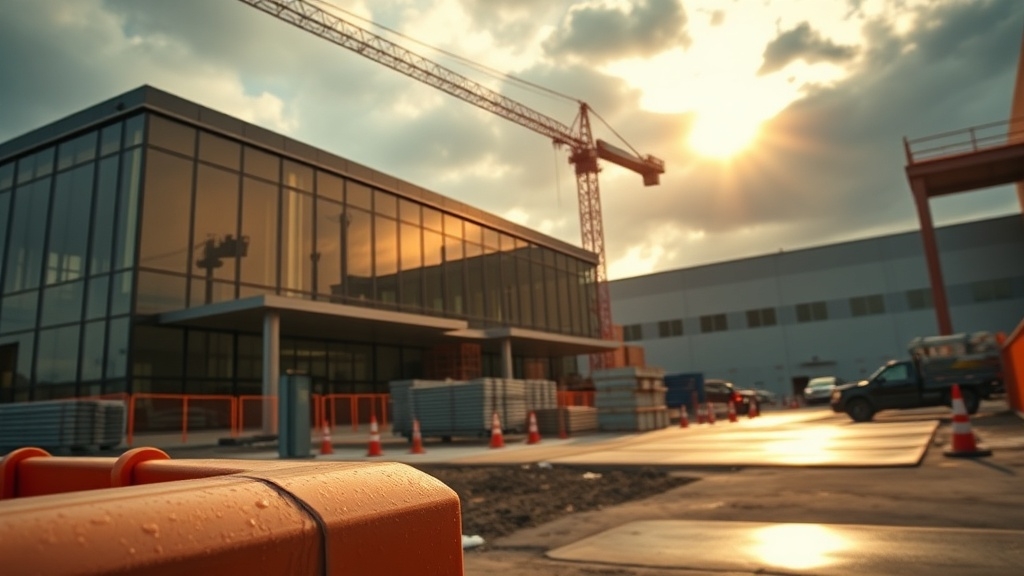
Grand Junction’s construction environment is bustling with activity. There has been a significant 23% increase in permit issuance from the previous year, bringing the total to 32 in 2025. This surge reflects the region’s thriving construction innovations amidst ongoing challenges. Climbing costs and labor shortages remain prevalent issues. The total capital investment for 2025 stands at approximately $162.8 million, which is being utilized in key projects such as the Community Recreation Center and Persigo Wastewater Plant Expansion. The focus on improving and expanding transportation and mobility infrastructure further supports the city’s development goals. New commercial endeavors contribute significantly to the construction scene. Notable projects include a 160,000 SqFt warehouse for High Country Beverage and a 50,000 SqFt Enstrom’s Toffee warehouse. Such developments highlight Grand Junction’s strategic vitality between major cities. They encourage sustained commercial real estate growth in the region.
Impact of National Chains
Evolving from a robust construction environment, Grand Junction’s commercial sector is poised for a transformative impact with the influx of national chains. This influx is more than a stimulus for commercial real estate growth; it reshapes consumer behavior and cements brand loyalty. A 36% increase in commercial unit sales is driven by these entities. They provide job creation and increased tax revenue, thus ensuring market stability. Amazon’s delivery facility is significantly expanding logistics capabilities. This boosts employment and enhances operational efficiency. Such developments also energize local entrepreneurship and adaptive reuse projects. They diversify the region’s economy beyond traditional sectors. National chains underscore Grand Junction’s stature as a regional business hub. They cultivate economic resilience. Additionally, the Florida’s trend of converting shopping malls into mixed-use developments highlights a similar adaptability, offering insights for Grand Junction’s evolving real estate strategies.
Regional Market Comparison
While contrasting Grand Junction with other regional markets, the city emerges as a dynamic force in the commercial real estate setting.
The regional property dynamics in Grand Junction show unparalleled growth compared to its neighbors.
In 2025, commercial unit closings climbed 36%. This highlights robust investment opportunities.
Despite a modest 4% increase in Mesa County’s commercial sales volume, Grand Junction’s lower lease rates from $6 to $12 per square foot offer affordable access for businesses. This is notably cheaper compared to Denver’s considerably higher rates.
Building permits surged by 23%, indicating strong development momentum.
The stability of a 7.75% capitalization rate suggests a resilient investment environment.
In contrast, higher vacancy rates in other regional areas showcase sluggish recovery. This emphasizes Grand Junction’s accelerating market vitality.
The city benefits from a rapidly growing population and diversified economic base, factors that elevate its commercial real estate appeal.
Economic and Real Estate Outlook
Grand Junction’s economic and real estate outlook for 2025 is on the brink of significant transformation.
Employment has increased, adding 1,322 jobs in Q2 2025 compared to the previous year. This indicates a healthy expansion in the job market.
Morgan Mining’s plan to create 893 primary jobs bolsters sustained job creation benefits.
Economic diversification is crucial, with Grand Junction Economic Partnership initiatives focusing on resilience.
Industry expansion in mining, construction, and engineering leads the charge.
Unemployment is on the decline, supported by vibrant growth in healthcare, enhancing broader economic stability.
The real estate market is showing moderate appreciation, evident by the 1.42% rise in the Freddie Mac House Price Index as of Q2 2025.
With declining foreclosure rates, the housing market remains strong. This promotes improvements in quality of life and economic opportunities.
Assessment
The Grand Junction commercial real estate market in 2025 is expected to experience steady growth. This growth is driven by increased building activity and the expansion of national chains.
Compared to other regional markets, Grand Junction remains robust. It contributes positively to the economic and real estate outlook.
Investors and professionals should stay informed as this market evolves. The changing dynamics present both opportunities and challenges in a quickly shifting economic environment.