

Key Takeaways
- Trusts can legally protect your assets from lawsuits, taxes, and probate.
- You don’t need to be wealthy to start using a Spendthrift Trust.
- One house can be your path to long-term financial freedom and protection.
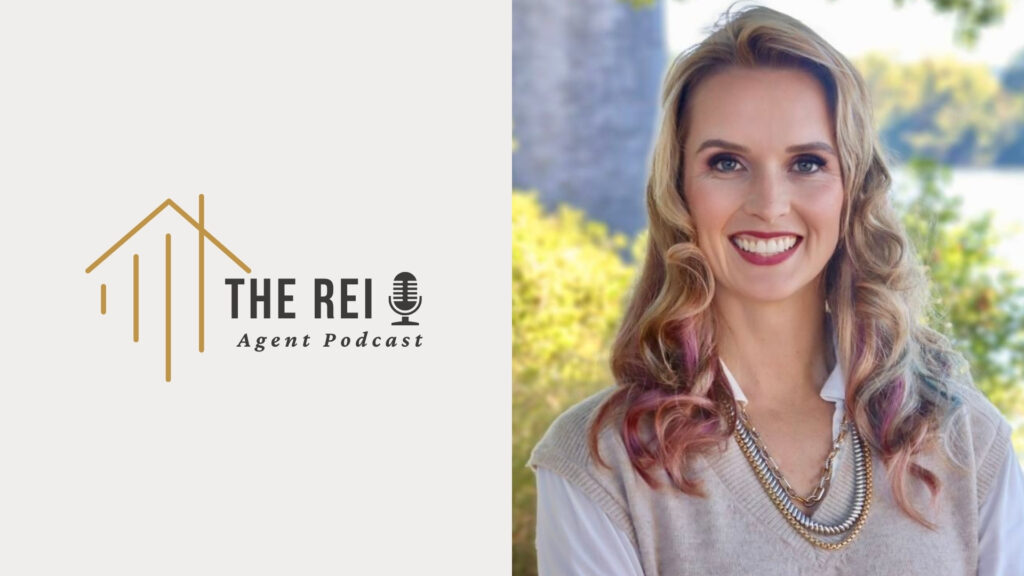
United States Women in Real Estate Investing with Sally Gimon
Turning Tragedy Into Triumph
When Sally Gimon lost her mother, she was hit with more than grief—she faced an unexpected, crushing blow from the IRS.
What followed wasn’t just a fight for financial survival. It was a total reinvention.
In this unforgettable episode of United States Women in Real Estate Investing, host Jeune Ortiz sits down with Sally to uncover the incredible journey that turned one woman’s pain into purpose, and how she’s now helping others do the same.
Sally didn’t start in real estate.
She began her career as an insurance agent. But everything changed when the IRS seized her family’s inheritance.
“They just took the money. No warning. No way to fight back. I knew then—I had to find a way to protect myself and others.”
This wasn’t just about money. It was about empowerment.
The Game-Changer: Spendthrift Trusts
After digging deep into solutions, Sally discovered the Spendthrift Trust strategy. It wasn’t just legal—it was IRS-compliant. And it changed everything.
“I saved $17,000 in capital gains taxes that first year. That’s not theory. That’s real.”
She explains how these trusts legally shelter assets, avoid probate, and even block lawsuits.
Her voice, calm but forceful, makes it clear: this isn’t a trick.
It’s a tool. And every woman in real estate should be using it.
Empowering Women to Take Control
Throughout the conversation, Sally speaks directly to women navigating financial uncertainty.
She insists that taking control of your money is not just smart, it’s urgent.
“You don’t have to be rich to use a trust. You just have to be ready to protect what’s yours.”
From tax savings to lawsuit protection, the trust gives women a powerful shield in an uncertain world.
It’s not just about investing. It’s about defending the wealth you’re building, brick by brick.
Success Stories That Inspire Action
Sally shares client victories that light a fire in the listener. From single moms to business owners, the trust has helped them save thousands, protect their properties, and sleep better at night.
“You can’t control everything. But you can control how prepared you are. That changes everything.”
The One Investment Every Woman Should Make
Near the end of the episode, Sally delivers her strongest advice: buy a house. Not for flipping. Not for show, but at the beginning of your wealth journey.
“Real estate is freedom. Even if it’s just one property, it’s yours. No one can take that from you.”
Her voice is firm, hopeful, and filled with experience.
She’s not just talking theory.
She’s lived the risk, and she’s come out on top.
Your Future Is Worth Protecting
Sally Gimon’s story is a battle cry for women everywhere: learn the tools, protect your future, and never let the system take what you’ve worked so hard to build.
“It’s not about how much you start with. It’s about what you choose to do now.”
In a world full of financial traps, Sally is offering keys, real, usable, life-changing knowledge. And it starts with knowing your worth, your rights, and the power of a properly structured trust.
Let this episode be your wake-up call.
Your financial future doesn’t need to be a gamble. With the right tools and mindset, it can be bulletproof.
Discover the unstoppable energy of USWIREI where fierce, fearless women reveal how real estate investing transformed their lives.
From flipping homes in high heels to building empires one rental at a time, these stories don’t just inspire; they ignite.
United States Women in Real Estate Investing is your space to learn, grow, and rise, surrounded by powerhouse women just like you.
This is more than a podcast.
It’s your permission slip to think bigger, act bolder, and claim your place in the world of wealth.
Ready to be empowered?
Your real estate journey starts right here.
Contact Sally Gimon
Mentioned References
Transcript
[Jeune Ortiz]
Hello and welcome to the United States Women in Real Estate Investing Podcast. My name is Jeune Ortiz, founder of REI Social and host of this great podcast where I get to interview amazing women who are doing fantastic things in the world of real estate. Tonight with me, we have Sally Gimon.
I thought I had nailed that earlier, but I apologize, Gimmon. She’s going to educate us about some amazing tax strategies. Let’s go ahead and hop into it.
Sally, welcome to the show.
[Sally Gimon]
Thank you for having me. I appreciate it.
[Jeune Ortiz]
Absolutely. I am extremely excited. I know I had to cut you off earlier because you started going into some stuff.
I’m like, we’ve got to share this with our listeners. Before we hop into that stuff, just give me a little bit of background about how you got started in real estate investing and just let us know what are some of your strategies, your ex-strategies that you utilize and things like that.
[Sally Gimon]
Thank you. Originally, I got involved with tax liens. True story, back in high school, I read a Sports Illustrated article at the dentist’s office about Arnold Schwarzenegger.
When he came to the United States, he was a bricklayer and he started doing tax liens in California. In Arizona, it’s a tax lien. You have to have all three years to get the house and it was taking a very long time.
One of my friends who was a real estate investor invited me down to a meeting in August of 2018 to show me the real estate group in Phoenix. I said, I need to put it on hold because I was working as a Medicare broker and open enrollment was from October to December. It was going to be my busy time of the year.
I said, I’ll contact you in January. Fast forward a few months, my oldest nephew got married in North Carolina. My mom and dad, who were living in Goodyear, Arizona, which is 20 miles west of Phoenix, drove from Goodyear to Charlotte.
My mom got sick along the way. She got septic to the blood. She was in a hospital for 13 months.
She was on a ventilator for 13 months in a hospital for 15 months. I flew out for the wedding, had to come back because I had to be at work six o’clock Monday morning, working open enrollment. I was going out to their house twice a week to do the mail because my dad stayed in North Carolina.
First week of December, a letter that was 27 pages thick was my mom’s first statement for being in the hospital that was $172,000. Thank God my dad was retired military. I had a mortgage.
I had credit card debt. I had student loans. My three-week-old brand new car driving to work at 7.30 in the morning, second car through a green light, someone ran the red light and T-boned me. All of a sudden, I went from being comfortable to eating ramen noodles twice a week because I had two car payments. Right there in my parents’ kitchen, I called Glenn. I said, Glenn, I need to change my life ASAP.
He’s like, Sally, we’re having a Christmas party next Saturday. Bring a $5 gift and some food. I’m going to introduce you to real estate investors.
I don’t know about you, but going into a party where you know very few people, kind of nerve wracking, but it was the best decision. In 2029, still working full-time, I wholesaled seven properties nationwide, bank-owned properties where the bank owned them. I did a double close and paid off all my debt.
I was a rock star in my real estate group. I’m like, woohoo. In April of 2020, when I went to go do my taxes, I found out about short-term capital gains and how to get on a payment plan with the IRS.
I was so embarrassed. I didn’t want anybody to know because everyone thought I was doing so well. In my national real estate group, a gentleman named Garrett Gunderson had written a book called What the Rockefellers Do.
I had a paperback copy of that book. I started researching the Rockefellers Trust. In September of 2020, I started the Beneficial Trust that helps investors save capital gains, interest income, dividend income, rental income, and royalties, and the Business Trust because I was a 1099 income earner and I had to pay my own federal income taxes.
I became the first woman to teach a mastermind in my Phoenix group. Very proud of that fact because most people in real estate are men, 75% are men, doing really, really well, teaching people how to save taxes. When I decided to move North Carolina to pursue a real estate investing called Upset Bids, I started my own business, The Trust is You, and I want to help as many U.S. business owners, 1099 income earners, and investors know the secret of the rich because if the rich can save taxes, you and I should know how to save taxes too.
[Jeune Ortiz]
Absolutely. Wow, what a story. Okay, so let’s rewind this a little bit because as you were talking, some questions were popping up for me and I’m sure they will for other people who are listening as well.
Short-term capital gains, explain how that works when you’re wholesaling because I know a lot of people are like, oh, you just wholesale and you get the money and then you’re on your way, which is what you thought as well.
[Sally Gimon]
Oh, completely. Nobody tells me the dark side of things, yes.
[Jeune Ortiz]
Right, so explain how that, I mean, I know it cuts you off guard, but explain how that kind of works and how, I guess, the kind of deal or the amount of money that you would need to make that would put you kind of in that position to have those capital gains.
[Sally Gimon]
Correct. There are seven different tax brackets from 10% to 37%, seven different tax brackets, and wholesaling, we were talking earlier about possible fix and flip, things like that, you pay on your profits, you will pay between 10% to 37%, whatever your tax bracket is, for short-term capital gains. When I was a Medicare broker working on my own, I was making about $70,000 to $80,000 a year, and then with what I did with wholesaling, I made over $200,000, almost $200,000 wholesaling.
So I went from 22% up to 24%, and then I had to pay capital gains on that. Well, when I went to my CPA, he told me how much my bill was going to be, I’m like, I can’t afford that. He put me on a payment plan with the IRS to pay my 2019 capital gains off within 12 months.
There was going to be more, there were more taxes involved with it, but I would have been clear the balance until if I did more real estate in 2020. Long-term capital gains, anything over a year, will either be 15% or 20% on the profits, especially if you sell a business, or if you are holding a house for more than a year, let’s say you have a rental, and then you decide, I want to retire from investing, and you go to sell that, and the appreciation on the house went up, that could take a huge chunk out of your profits that no one talks about.
I mean, to me, it was a black hole. I mean, when I start, I talk to people a lot on Zooms, they too get in trouble with the IRS, because if you’re on TikTok, or if you’re on YouTube, everyone says, oh, how easy it is to wholesale. It is, but there’s a downside that you need to know about too.
[Jeune Ortiz]
So those short-term capital gains, does it, I mean, does it apply to every wholesale that you do, or is it a dollar amount that you do?
[Sally Gimon]
It’s on all profits. So just to give you an example, I use this, if you’re doing a wholesale deal for $50,000, you’re filing married jointly, and you’re at 22%, your taxes on that house that you made $50,000 on, nice profit, you will have to pay $11,000 April 15th, the year after, for those short-term capital gains. That’s a lot of money if you haven’t saved it up.
[Jeune Ortiz]
Yeah, it absolutely is. And it certainly does take a chunk out of what you thought you had earned on that wholesale, for sure, or on your flips, or whatever it is. But yeah, if you don’t plan for this appropriately, it’s going to catch you unawares, and then you’ll end up paying.
[Sally Gimon]
Correct. And there is, if you’ve heard of a 1031 exchange, you can kick the can down the street, but as soon as you stop kicking the can, you know, I’ve talked to 16 adult children whose parents are incapacitated, you know, maybe they had a stroke or something, where they were real estate investors, and all of a sudden they get a bill from the IRS, because they didn’t realize they were doing the 1031 exchange, and it’s a large, you know, because every time they’ve done it, they now have to pay those capital gains for kicking the can down the street with, you know, 1031 exchange, you have a very set timeline, but you can save those capital gains for several years, but they do come due.
With the Spendthrift Trust, as long as you keep the trust, you never have to pay those capital gains. I’ve wholesale 29 deals since September of 2020, and made some great money doing it.
[Jeune Ortiz]
Interesting. Okay, so I’ve never done a 1031 exchange, which was going to be one of my follow-up questions, because I know that’s a way for people to kind of get out of paying those capital gains, but what you’re saying is, even if you do a 1031 exchange, eventually you will still have to pay those capital gains, even if you buy a like, what is it, a like property or whatever they call it?
[Sally Gimon]
So if it’s a single family home, you can buy a single family home. As soon as you stop doing the 1031 exchanges, that’s when all those capital gains come due, and you know, someone I just spoke to last week, her father was a very active real estate investor. Unfortunately, he’s got cancer right now, and she’s just like, we sold all his real estate because we have to pay for the drugs.
And she goes, I can’t believe I have a $97,000 tax bill from the IRS I have to pay in three months. I’m like, yep, that’s what that, you know, your dad was using a 1031 exchange, great, good for him, but the devil has to be paid, if that makes sense.
[Jeune Ortiz]
Okay, so if I do a 1031 exchange, and I buy another like property, I don’t have to pay capital gains until I sell that property, correct? Correct. And then I would have to do another 1031 exchange.
Exactly.
[Sally Gimon]
Got it.
[Jeune Ortiz]
Okay, good. All right, but what you’re saying is a way that I don’t have to keep on doing 1031 exchanges if I’m in a place where I’m like, okay, I don’t want to have to buy a like property, I just want to sell this stuff and then not pay any taxes.
[Sally Gimon]
Exactly. To give you an example, one of my clients, she was 74, her husband’s 78. They are down in Tampa, Florida.
They bought an auction house in Tampa, Florida for $300,000. They put $100,000 work into it. And then they were going to sell it for $1.2 million. She would have to find one, two or three houses to replace, you know, the difference, you know, they’re going to make like $800,000 a profit on that house. Her CPA is one of my referral partners. We were able to put the house into the trust.
She got to save the capital gains on that. And then I didn’t realize they had nine other properties in Tampa Bay. They sold all their houses, didn’t have to worry about capital gains.
And they took the money and now they’re in a real estate investment trust where they’re getting paid 12% interest every single month. And she’s like, we’re just living on our laurels right now. And in April, she sent me a picture of them on their, what they call it, the lanay, their outside patio, drinking mimosas because they just made an extra 12% on all the houses they sold.
They put that money and now they’re saving the interest income with the spendthrift trust. They know, you know, I would love to say we’ll live forever, but when they do pass away, they’re going to leave. Their two daughters are beneficiaries and then they have six grandchildren.
They will leave all their investments for their two daughters and all their grandchildren and they won’t have to pay inheritance tax. If they decide to sell it, they won’t have to pay capital gains. They can do whatever they want with it after they pass away, if that makes sense.
[Jeune Ortiz]
Yeah, that’s amazing. All right. So I know there is a school of thought where you should get a trust for every house that you purchase and you flip.
And then you do, you do all that business within that trust. So what is the difference between that and a spendthrift trust? Spendthrift trust.
Okay.
[Sally Gimon]
97% of the trusts sold every year are what my mom and dad had. And what Susie Orman talks about on television, that is the family trust that will avoid going through probate and then it dissolves and all assets have to be broken up. Now, a lot of investors also get put their houses into an LLC.
When I started my spendthrift trust in September of 2020, I had six different LLCs because I had six note properties where I was the paper on the house. People were paying me their mortgage. So I didn’t own, I didn’t own the house.
I just owned the paper on the house. I had to do two simple bill of sales, go to the bank, get each bill of sale notarized. I had to give my banker Jose $10 consideration, $10 for the first bill of sale.
He handed it back to me and then I moved the property into the trust. My servicer who handles the payments on those notes had to have two months to send letters to say, instead of paying this bank account, you’re not going to pay that bank account. But all that money I’m making on interest income because I bought the notes very cheaply and then they’re paying me more.
I get to save, again, that’s between 10% to 37%, the seven different layers. And I personally use 24% for everything because that’s how much I was paying in taxes when I went into my trust. I now have 12 notes.
I’ve wholesaled 29 bills. And at the end of December, I will have four rental houses that all of this money that I make there tax-free. It’s just beautiful.
Wow.
[Jeune Ortiz]
Okay. That sounds like too good to be true, right? It sounds complicated.
It does.
[Sally Gimon]
People are like, how come I don’t know about this? The truth is the Rockefellers, they have at least 20 to 27 CPAs on staff every single year. I don’t know about you.
I don’t even have my own CPA. I hire my CPA to do my taxes. With either the business trust for US business owners and 1099 income earners, where I’ll save federal income taxes, or with the beneficial trust, you are going to file a 1041 tax return.
And we have CPAs who know how to file the paperwork. If you don’t mind asking, which state do you live in? California.
California. They will work with your CPA if you want to stay with your CPA. One of my clients down in Texas went to a CPA three years in a row.
He does seller financing on homes, where he gets homes. The birth strategy, are you familiar with that?
[Jeune Ortiz]
Yes.
[Sally Gimon]
So he gets the birth strategy, he fixes them up, then gets people into them. He was complaining to a CPA that he was paying too much in interest income. Three years in a row, his CPA told Michael stop buying so many houses.
When he started the trust in 2022, he had 85 houses during the birth strategy. We saved him, based on his 2021 taxes, we saved him $135,000 a year in interest income. He now has 92 houses and is in commercial real estate.
He’s just like, I’m saving hundreds of thousands of dollars. And then his wife, his wife, Jennifer, she was a Vietnamese boat person who came over when she was six years old with nothing on her back. So half of their real estate, they help people who come to the Dallas Fort Worth area.
It’s immigrants who are trying to better themselves and they have a charity, help them get them clothes, furniture, and everything else because his wife is used to that. And he’s just like, we get to write off money, we get to help people and it makes our real estate grow even faster.
[Jeune Ortiz]
That’s amazing. So would you recommend this to investors who are just starting out and they do maybe one wholesale and because they’re just starting and it’s a little hard to keep it going, they don’t do another one all year. Would you still recommend that they get involved with this?
[Sally Gimon]
I would recommend someone who does a little bit more than that. Just to give you an idea, there’s seven different layers of taxes and four ways to file your taxes. So if you are filing married jointly, you’re at 22%.
If you wholesale a house for $50,000, you find an inexpensive house, maybe you wholetail it, maybe you just paint it or brush it out and put it on the market and make $50,000. Your short term capital gains due April 15th of the year later would be $11,000. If you do two of those deals in one year, you have paid for the trust and then it’s a one-time payment for the trust and then it goes from generation to generation to generation.
So again, the first house I did, my personal story in July of 2020, it was a deal of the week in my real estate group. It was a bank-owned reverse mortgage. Unfortunately, the woman had passed away.
I bought it for $20,000. It was going to go auction for $50,000. So that spread in between that $30,000, I would have to pay $7,100 in short-term capital gains when it happened.
Well, July of 2020, middle of COVID, everything shut down. It didn’t go to auction until August 28th of 2021. It was one of the first auctions in North Carolina.
I purposely went for a house in North Carolina so I could write it off my taxes to visit my mom in the hospital. When it finally went to auction, it went up to over $64,000. Yay, Sally, I made $44,000.
Fantastic. But even more important, that $44,000 at 24%, I saved $10,300 on that first property in the trust. Again, that’s more than half of the trust.
Since then, I’ve done 28 more wholesale deals. I’ve got 12 notes that are paying me monthly. I have a crypto bot.
I’ve got my friend Glenn who invited me to my first real estate meeting. He does my options trading. Do you do options trading at all?
[Jeune Ortiz]
No, I don’t.
[Sally Gimon]
I don’t like it because you have to put in a call. If nobody picks up your call, you have to buy 100 shares. I can’t sleep at night, so Glenn does it for me.
The money that I put into it was in the trust. The money I make from it goes to the trust. With options trading, a year or less, profits are at 40%, or a year or more, it’d be at 60%.
My friend Glenn now has the trust because he was getting 40%. That’s almost half your profit of what you’re doing in options trading. People don’t realize.
It’s a taboo subject to talk about death and taxes because people don’t understand it, I think.
[Jeune Ortiz]
Yes. I think that’s true. People want to sound like they understand it, but many people don’t.
I don’t, for sure. This is very educational for me, and I’m asking all the hard questions, maybe. Keep asking.
Please do. I’m an open book. Let me ask you this.
Now, you just gave us an example of somebody who is doing options trading who is using this trust. Can you do all of your investments, all of your properties, all of your stock trades and whatnot inside of this trust?
[Sally Gimon]
Correct. In the beneficial trust, there’s five different taxes it’s going to save. It’s going to be capital gains on any profits that you sell.
Interest income, that’s going to be for passive investing, creative financing, subject to seller financing or my notes. Dividend income is going to be anything with the stock market. Futures trading, day trader, stock market investing, I clump options in that.
Rental income, either short term like Airbnb or Verbo or long term, maybe five doors, 20 doors, multifamily, commercial real estate investing, and then royalties. Now, I know what people are going to say about rental income that you can use your depreciation when you have your LLC. You’re still allowed to do that, but the four ways the trust is going to save you money, it’s going to be the federal taxes.
It’s going to keep your information 100% private. Unfortunately, when we were talking about LLCs, I can write a freedom of information letter to the secretary of state or the corporation commission with a stamped envelope, and the secretary of state will send me your name, your address, your telephone number, and everything else. 40% of all LLCs are sued every single year.
It doesn’t keep you private or anything else. And then with the Spendthrift Trust, third way, you will put all your assets into the trust. So me, myself, I’m worth nothing right now.
The only thing I have in my own name is my driver’s license and my passport. You would never know I have all this real estate. It’s in the trust.
So if someone tries to sue me, it becomes a frivolous lawsuit and goes away. And then do you know about the 2024 Corporate Transparency Act that starts January 1st from the treasury department?
[Jeune Ortiz]
No. Tell me all about it.
[Sally Gimon]
Oh, they’re not going to announce it until December 26th. This is from the treasury department and it’s part of the anti-money laundering situation. Every year, you’re going to have to file paperwork for any state entity you have.
So an LLC, an S-corp, a C-corp doing business as or anything else. If you’re an established LLC doing business as or corporation, you don’t have to do the first year’s paperwork until January 1st, 2025. If you start a new LLC or doing business as or corporation, they just changed this last week.
You will have three months to do the paperwork or be fined $10,000 and or two years in jail. If you don’t do the paperwork, yeah, it’s expensive. The government is doing a money grab on small businesses in the United States, unfortunately.
And then if you don’t do the paperwork correctly, I shut down all my LLCs. But when I read through the paperwork from the Financial Crimes Network, my first LLC was done by a law firm back in 2018. They want to know the paralegal who did the work on my LLC.
I would have to call the law firm and who was on your staff six years ago who did my LLC? If I don’t do that paperwork, I could be fined $500 per day, including Saturday and Sunday until I get the right information. This is an insane law.
[Jeune Ortiz]
This is insane.
[Sally Gimon]
Yes. And again, when we get done here, I’ll put it in chat for you, documents to give to any of your listeners because they need to know this. Because let’s say you do the paperwork the first year, but you forget to do it in 2026, you could go to jail for two years or pay $10,000.
That’s a lot of money.
[Jeune Ortiz]
And jail time potentially, which I mean, who wants to do that?
[Sally Gimon]
Exactly. So the Financial Crimes Network, this is a division of the Treasury Department. This is where all those 118,000 IRS agents they hired.
They’re the ones, so a bank or credit union only has to report that a suspicious account. My accounts are suspicious. I have one account.
I should split it up, but I have money coming in. I have money going out. I do a lot of real estate.
They only have to report a suspicious account. The financial crime will investigate. If they find out it is money laundering, they seize the assets and sell the assets on the open market.
The bank will make at least 35% of the seized assets. In Texas, where the law firm that has the copyright on this trust, one of the trust attorneys goes to church with a senior vice president of a national bank. After church, they have coffee and donuts.
So in October, he goes up to the senior vice president and he says, do you know about the Financial Crimes Network? Do you know about the 2024 Corporate Transparency Act? The senior vice president gets a big smile on his face and says, we’ve already identified 1,000 accounts per week in 2024 we’re sending to the Financial Crimes Network.
Even if one or two of those accounts come back, it’s going to go to our bottom line and help our shareholders. It’s going to change small business. I don’t care if you’re a mechanic shop, if you are a florist shop.
Some of my clients shut down 10 LLCs, 20 LLCs. One of my clients had 123 LLCs he shut down to get into the trust. Think of that.
If he didn’t do that, he’d have 120 different forms to fill out for the Department of Treasury. They just don’t want your driver’s license, your address. They want your social security number.
They want your driver’s license number. They want your passport number. If I were a hacker, it’s the first place I’m going to hack because all that information is going to be in one location.
Then if you do have the business trust or the beneficial trust, you’re shielded from having to do that yearly paperwork. This is happening January 1st. So few people know about it.
[Jeune Ortiz]
What I’m understanding here is get rid of your LLCs and instead get one of these spendthrift trusts that you can do all of your business inside of.
[Sally Gimon]
That’s my solution.
[Speaker 3]
Yes.
[Sally Gimon]
Correct. Okay. With the trust, I am building business credit with my trust.
But when I do real estate, one of the reasons I moved to North Carolina, do you do any auction houses in California?
[Jeune Ortiz]
No. No, I actually have my partner and I do our business in Georgia.
[Sally Gimon]
Oh, interesting.
[Jeune Ortiz]
We’re focusing on foreclosures, but we haven’t done auctions. Okay.
[Sally Gimon]
Well, even foreclosures here in North Carolina, there’s 101 counties and all 101 counties, you have to figure out if it’s 10 business days or 10 calendar days. So when I came out for Christmas of 2021, my brother and sister-in-law live just outside of Charlotte in a not Mecklenburg County, but Union County. Mecklenburg County, where Charlotte is, it’s 10 business days.
Over Christmas, I went to the Union County that’s 10 calendar days and it was tax liens and I won three tax liens really, really inexpensively. All I had to do was the bid starts at $750 and then I have to walk in in person and put another $750 more than the last bid. And if nobody else outbids me, it’s now my tax lien.
I’m not trying to crow, but one of the tax liens I won in 2021, I won for less than $3,000, a two-bedroom, one-bath house, brick house in Monroe, North Carolina. I won for less than $3,000. It was my house.
The woman had passed away two years earlier. I hired a contractor because I can’t fix a flipboard. I can’t hammer a nail.
That’s not my idea.
[Jeune Ortiz]
And nor should you. Nor should you.
[Sally Gimon]
Exactly. My contractor spent $600. Basically, we painted the outside of the house.
We painted the inside of the house. I bought it for $3,000, put $6,000 into it. I put it on the open market in April of 2021, and I sold it for $240,000.
All of that went through the trust. And I’m just looking at my notes, so forgive me for going out here. I saved $40,152 at 24% on that one deal alone.
My brother’s like, what are you doing? You’re stealing things. I’m like, no, it’s tax liens.
Because during COVID, North Carolina didn’t do any foreclosures. This huge tidal wave is coming right now because they’re behind three and a half years. I don’t want to be mean, but there’s so much happening right now.
There’s going to be so much happening soon.
[Jeune Ortiz]
Yeah. I know. Real estate investing, it’s difficult like that, isn’t it?
It’s like, man, all these foreclosures are going to happen. Oh, God, people are going to be losing their houses. It’s a mixed bag for sure.
And if we can help people out of those situations, then that’s the main goal here, I think. Exactly. I was going to ask you another question.
This trust works in every state, I’m assuming, without exception? Correct.
[Sally Gimon]
Correct. It’s on the federal level. So even if you’re in Puerto Rico or Guam, it’s going to help you there.
Federal taxes, here’s a story. If you are an American citizen and filed taxes just once, and then you move, let’s say, to Costa Rica and think you no longer have to file taxes ever again, oh, no, no, no. You still have to file taxes wherever you live in the world because you’re an American citizen.
The federal government has a long reach, unfortunately.
[Jeune Ortiz]
Oh, wow. Okay. Wow.
I’m learning so much, Sally. Thank you. This has been amazing.
Go ahead.
[Sally Gimon]
I was going to say one of my friends who contacted me, she’s in Costa Rica, and she’s like, they can’t come after me for taxes. I’m like, I hate to say no. And then she called me back.
She’s like, oh my God, I haven’t filed taxes in three years. I’m so far behind in taxes because she thought she didn’t have to do it. And now she has to trust because she’s got two apartment buildings in Florida that she didn’t think she’d have to pay taxes on anymore.
And I’m like, nope. Living in Costa Rica doesn’t keep you from doing that.
[Jeune Ortiz]
Okay. We can’t outrun taxes. That’s the lesson there.
[Sally Gimon]
Unfortunately. Correct.
[Jeune Ortiz]
Okay. So how does one get started with this trust? And I guess, what’s the cost?
How long does it take to set up? And all those kinds of good details.
[Sally Gimon]
There is an application. One of my clients, just to give you an idea, he’s a fix and flipper in Victorville, California. Last year, about this time, he’s just like, I don’t know if I want the trust.
He was going to make $55,000 on the first property. He was able to fill out the paperwork, get it back to us. He got a new EIN number, employee identification number.
When he went to the closing table for the fix and flip, he had them pay into the new bank account, and then he paid for the trust after that. Well, in all of 2023, he’s one of a crew of five people. He has enough capital.
Instead of just doing four fix and flips in Victorville, he has now done seven fix and flips so far in 2023. Because he’s got more capital and can do more things. Once the trust is paid for, one trust is $20,000.
Most of my clients have either the business trust or the beneficial trust. But if you decide you want both trusts, because I do have three online businesses, and then I have my crypto bot, and I have all my real estate, and my options trading. If you decide to have both trusts, it’d be a one-time payment of $30,000.
It does have to be a certified check or wire transfer. Again, the gentleman in Victorville didn’t pay for the trust until he got paid for selling that house where he made $50,000, then paid for the trust. Now, he does all his real estate.
He signs his name. I’ll be honest. His name is Ricardo.
He signs his name Ricardo, and then he puts TT after it. He’s a trustee of the trust. All the fix and flips he’s done in 2023, he has saved so much in taxes.
He tells other fix and flippers. He tells electricians. He tells small trades people, you guys need the business trust because it can save so much in taxes.
Give you an idea. I work with business brokers because they have my ideal clients. When you sell a business, you’re going to pay long-term capital gains.
A husband and wife in Kentucky who sold a 42-year-old restaurant, they sold it for $3 million, everything in it. What they had saved at 15%, $460,000 in capital gains. At 20%, they saved $600,000 in capital gains.
Six figures that’s going to change their retirement. Jim is 69. His wife, Marianne, is 64.
What if one of them has a stroke? What if one of them needs a hip replacement? That money is their money to do with what they want.
It goes from generation to generation. Right now, I have nine nieces and nephews. None of them, all of them are working as W-2 income employees.
We can’t work with W-2 income because you have FICA and things to pay like that. I’m helping them pay off their student loans so they can have more options with the money they’re making. My one nephew who’s a school teacher up in Cary, North Carolina, I’m making him go to the courthouse once a week and take pictures of documentation for me because he’s now my real estate investing partner.
I’m in Charlotte. He’s in Cary. I’m trying to make him a real estate investor too.
[Jeune Ortiz]
Yeah. Great. Wow.
This is really fascinating. It just sounds like it has so many applications in everything that investors do from flipping to stocks to Bitcoin, crypto even.
[Sally Gimon]
Crypto real estate. Because the trust I sell on behalf of the law firm, it’s copywritten. It’s 72 years old.
The copyright is a royalty or part of the royalties. I don’t pay any taxes because I have the beneficial trust. I get paid tax-free to sell this trust.
It’s a beautiful thing. I’m using capital gains, interest income, dividend income. I’m using all five taxes, rental income and royalties of the Spendthrift Trust.
And currently, I have all the money going into one bank account. What I’m going to start doing is because of my 12 notes, I’m going to start opening different bank accounts for the note. And then for my rentals, different thing because right now, my taxes, thank God I have a CPA.
He’s going to have to figure this all out. My taxes are going to be ugly this year.
[Jeune Ortiz]
Yeah. And so everybody gets their own trust. That’s correct, right?
Correct.
[Sally Gimon]
If you’re doing a syndication, we do have what’s called a real estate trust, where there’s a main trust above and then five beneficiary trusts below. And then you can add more beneficiaries with that. I am working with a syndication.
They’re based out of Atlanta. They just bought an apartment building in Phoenix and two apartment buildings in Georgia that they are raising $25 million for. And the seven of them are all investors.
So the seven beneficial trusts pay into the overall trust. It’s a special trust for syndications, if that makes sense.
[Jeune Ortiz]
Yeah. Okay. And is there a yearly fee associated with the trust?
[Sally Gimon]
There’s not a yearly fee, a one-time payment. You also get a certification that if the IRS investigates your trust or questions your trust, the law firm, it was started by Robert Benson. He was a Harvard law professor 72 years ago.
He wrote this trust. He copyrighted it. They have a certification.
If it ever gets investigated, the law firm will investigate and will defend you free of charge. So you don’t have to worry about that. In the 72 years, one trust got investigated.
The senior IRS agent flew down to Texas, to Houston, to where the law firm is, went into the boardroom, spent about three hours looking at the trust, came out, and he approved it. And none of the trusts have ever been audited beyond being examined like that. It’s a beautiful, it’s an amazing thing.
I mean, people are like, this isn’t true. If people question this, there are over a million attorneys in the United States. Only 4% of all attorneys are trust attorneys.
In a textbook trust attorney study in law school, it’s called Scott and Asher on Trust, Fifth Edition. This is not for you and I to read. I’m not ever going to be an attorney.
But one of my clients, the potential client, his parents have five apartment buildings in the Bronx. The son and his two sisters, they don’t want to be real estate investors. Mom and dad are going sell the five apartment buildings.
He came to one of my meetings. His CPA told him I was lying. I gave that recommendation to the potential client.
His CPA called me two weeks later going, I have 70 clients I need you to work with because they’re all in real estate in the Bronx. I have an affiliate partnership. He refers someone to me.
When they buy the trust, between him and I, I wire him $600 for every referral he gives. When they buy a trust, he gets the $600 for that.
[Jeune Ortiz]
Okay. Wow. Can anybody become an affiliate?
[Sally Gimon]
Correct. Correct. My affiliate, if you go to www.thetrustisyou.com.
I want to say affiliate. I hope I’m going to give you the right information. Let me look at it real quick.
Click slash affiliate. It’s going to take you out to a website. You’re going to set it up for yourself.
I was just on a podcast last week. He just released it on YouTube today. The link he has in there is his affiliate.
Already two people from his YouTube station have already made appointments with me this week. I hope he makes money doing that.
[Jeune Ortiz]
Yes. Okay. Wow.
This has been absolutely fantastic, Sally. Being someone who doesn’t know all about this, I hope I asked all the right questions. Tell me if there are questions that I should have asked that I didn’t ask that you feel is important for people to know about this.
[Sally Gimon]
The one thing about the Beneficial Trust, because we’re real estate investors, the three things the Beneficial Trust does not cover is personal food, fun, and fashion. What would happen, the house I told you about that I got for less than $3,000, in the trust there’s a demand letter. I would do a demand letter up to $3,000 because that’s why I paid for the property.
It’s sold for $204,000. The difference, I can’t do that. I’ll give you an example.
My car, when I bought it brand new in 2015, it was a $27,500 car. It’s not worth that now, a present date, but I can do a demand letter up to $27,500 to pay for my food, fun, and fashion. I do have the Business Trust.
I bank at Wells Fargo because I have family all over the world. I have a red debit card for my Beneficial Trust, a blue debit card for my Business Trust. I was doing the circuit going around to five different counties to do my upset bids.
I had stop and get gas, and I only had my Beneficial Trust debit card. Go into the gas station, and I’m trying to lose weight, and they had my favorite donut, a cake donut with chocolate icing on top of it, and hundreds of thousands, not hundreds of thousands, sprinkles on top of it. I bought a $2 donut that I did not need with the wrong debit card.
At the end of September, I had to do a demand letter for $2 for a dumb donut I did not need. I just fill out the demand letter. I attach the receipt to it, and then when I do my taxes for 2023, that demand letter will go.
I just use my car right now up to $27,500. To give you an idea, one of my clients, she’s in real estate. She and her husband have all these properties.
She was going to take the entire family on a Disney cruise. I said, here’s the difference. If you just go on a regular Disney cruise, you’d have to do a demand letter.
If you do, let’s say, a five-day cruise, and on Tuesday at two o’clock after lunch, you have a meeting where you bring your children and their significant others into the meeting. You can write it off just like your LLC. She’s like, let’s do that.
That’ll be so easy. Other than that, the business trust, you don’t have to worry about the demand letters for the food fund and fashion, but it’s so easy. Some of my clients take $2,000 out just to use it as cash for whatever they’re doing.
I just put it in a manila folder, and at the first day of the month, I just write my demand letter for whatever it was. September had the donut that I didn’t need in it.
[Jeune Ortiz]
Okay. It sounds like there are some things that you have to be aware of, like the demand letter and things like that. After people invest into this trust or buy this trust for themselves, who helps them with ongoing questions about what can I do, what can’t I do, et cetera?
Is it their CPA, or is it you or somebody else?
[Sally Gimon]
Great question. There’s an entire team at the law firm. There’s me, the entire team at the law firm, and then the CPA that’s going to help you file your first year 1041 tax return.
It is your decision if you want to continue working with who we introduce you to, or if you want them to train your own CPA. I tell everyone, if you get a message from me that, hey, text me, I’m not blowing them off. I’m on the Zoom, but I get back to my clients ASAP.
Most of my clients within two months of starting the trust have all their questions answered. I told you a story about Michael who had 85 houses. All he did, what we needed was, there’s three exhibits.
Exhibit A is whatever is an investment, if it’s stock certificates or houses, and it was what he paid for the house, not what it’s worth now, but what he paid for it. He was using QuickenBooks, and he just copied it from a QuickenBook into an Excel spreadsheet and just sent it over. He did have to change the title on all those 85 houses.
How he did that was, he uses a title company in Texas, and once a week, he sent them 10 different houses to change the title and then change the payment plans over. It did take him a few months to get everything situated. That was no problem.
The second exhibit B is your vehicles. We need the year, make and model, the vehicle identification number. You will have to go to the DMV, change the title from yourself into the trust’s name.
The trust will pay for the insurance. The trust will pay for the title registration. Trust will pay for the gas.
The trust will pay for any repairs on the vehicle. One of my clients who’s been in New York, he had four snowmobiles. He had to break into his son’s shed to get the fourth snowmobile vehicle identification number because he’s like, we need everything in the trust because he doesn’t want to get sued.
You have to have everything there. Exhibit C is everything else. Your furniture, your clothes, your patio furniture, everything else you just listed, so it’s all there.
Honestly, to start saving three, four, five, six figures in taxes, it’s so easy to do.
[Jeune Ortiz]
Okay. All right. Well, I’m convinced.
This sounds amazing. You and I may be doing some more business together.
[Sally Gimon]
I appreciate you having me on the show because I’m a real estate investor. My last house that I got as an upset bid, when I turned around and I just wholesaled it and I saved almost $9,000 in capital gains, that just keeps going to the bottom line. I’m not trying to crow, but in three years with my beneficial trust, I have saved six figures in federal taxes and I give to charity.
I’ve started a nonprofit. There’s so much you can do when you have options with money.
[Jeune Ortiz]
Yes, absolutely. Thank you very much, Sally. I feel like there’s so much more that we could talk about and more questions would keep coming up, but I think at this point, it’s best just to direct anybody who has any follow-up questions or wants to get started, just to go to Sally’s website, which is thetrustisu.com and just hit her up, ask her some questions and get started.
[Sally Gimon]
Thank you for having me. I appreciate it because I would love to help other investors. We all should know this information.
[Jeune Ortiz]
Absolutely. Absolutely. Sally, thank you so much.
I appreciate your time and I think we’ll go ahead and close out from here. Thank you for joining this episode and remember to subscribe to the show on your favorite podcast app and visit unitedstatesrealestateinvestor.com for more podcasts and industry news. All right.
Thank you, Sally. Appreciate your time. Take care.
No related posts.




















3 Responses
While Sally Gimons victory over IRS sounds heroic, isnt it just another tale of the rich using trusts to dodge taxes? Just asking.
Anyone else think Sally Gimon must have some secret insider info? Cant believe the IRS lost! Also, hows she everywhere in real estate suddenly? 🤔🕵️♂️
Sally Gimon sure knows her stuff, but arent trusts just a way for the rich to dodge their fair share of taxes? Thoughts?