

Core Logistics Corridors and Leasing Dynamics
In the dynamic environment of logistics within the Inland Empire, examining core logistics corridors is essential. This network is designed to support freight movement and operational efficiency.
The region’s freight connectivity consists of ten strategic sub-corridors. These include five north-south and five east-west orientations. Rising interest rates are reshaping refinancing conditions, echoing challenges faced in other real estate sectors.
These corridors facilitate the flow of goods between key nodes. A significant connection is to the Ports of Los Angeles and Long Beach. The integration with extensive transportation networks enhances logistical connectivity, making this region critical for supply chain operations.
This connectivity also impacts leasing trends in industrial real estate. High demand is driving warehouse developments near transport hubs.
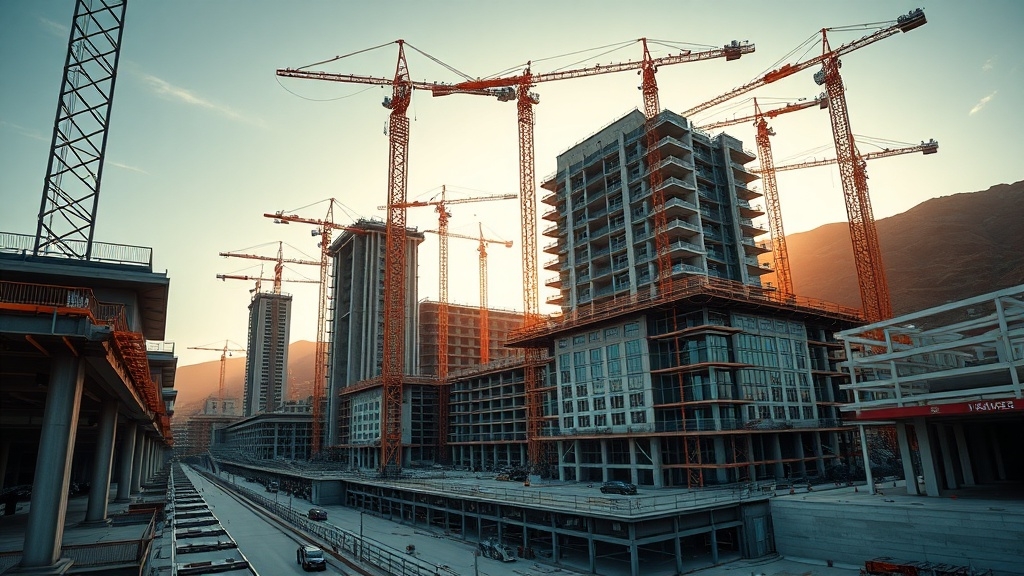
By 2025, over 300 warehouse projects are planned. Leasing dynamics highlight the industrial sector’s focus on strategic positioning along these corridors.
Such trends show the vital role of logistics infrastructures. They significantly shape regional economic environments.
Market Recalibration and Strategic Positioning
The Inland Empire’s market dynamics are undergoing a significant recalibration. This shift is in response to evolving economic pressures and changing tenant priorities. Tenant preferences now emphasize modern, high-efficiency facilities. As a result, vacancy rates in older, less flexible buildings have increased. By early to mid-2025, these vacancy rates ranged between 6.0%-7.9%. This rise was influenced by a surge in new industrial space offerings. Developers have responded by considerably reducing new construction starts. They are now prioritizing quality and adaptability over sheer volume. Rental rates have softened or stabilized, especially in outlying submarkets. Market trends have shown that specialized spaces such as cold storage remain in demand. Tenant-driven leasing activity has also led to recalibrated operational footprints. More tenant-friendly lease negotiations have emerged. This shift indicates a strategic positioning. The focus is on aligning supply with contemporary tenant requirements. There is also a focus on addressing emerging spatial needs.
Economic Influences and Industrial Diversification
Economic forces are reshaping the industrial landscape of the Inland Empire with urgency. A notable decline in industrial construction is observed, falling from 45 million SF in 2022 to 14.5 million SF by Q1 2025.
Fluctuating consumer spending and geopolitical tensions have disrupted supply chains. Demand patterns have shifted, and rental prices have decreased for eight consecutive quarters, reaching $1.07 PSF in Q2 2025.
In response, industrial diversification is emerging. Logistics maintains a leading role, with notable growth in the healthcare and academic sectors.
Tenant preferences are increasingly leaning towards modern, efficient spaces. This shift is prompting relocations and has raised the vacancy rate in older buildings to 7.4% by Q1 2025.
The demand for large, strategically-located facilities tied to e-commerce continues to support regional resilience.
Assessment
The industrial terrain of the Inland Empire is experiencing notable shifts northward. This movement is driven by changes in leasing dynamics within key logistics corridors.
As the market adjusts, stakeholders must strategically reposition to tap into emerging opportunities. Economic factors and industrial diversification are influencing new investment strategies.
Adaptability and foresight are crucial in this changing environment. Investors need to navigate with precision to leverage these shifts effectively.
Such changes have significant implications for future growth. They also impact competitive advantage in an evolving economic landscape.




















5 Responses
Not buying this shift north narrative. What about the economic impact on local communities? Feels like industrial gentrification. Any thoughts?
While I see the shift north, Im curious if the diversification really benefits us long-term or just pads short-term leasing profits?
Interesting take but arent we ignoring the environmental impact of this northward industrial shift in Inland Empire? Lets discuss that too!
Interesting read, but isnt the northern shift just a temporary adjustment? Cant see how itll sustain with current market volatility, thoughts?
Temporary or not, its wise to adjust strategies with shifts. Volatility tests sustainability. Adapt or perish!