
What Counts as a Distressed Listing in Little Rock?
How a listing earns the “distressed” label in Little Rock is typically tied to financial duress, compromised property condition, or a forced sales timeline.
These factors narrow condition thresholds and sharpen seller motivation. Because they often require substantial renovations, distressed homes are frequently priced below market value.
Financial and legal distress markers
Missed mortgage payments can place a home in preforeclosure, often visible through Lis Pendens or Notice of Default filings.
Nationally, foreclosure filings posted a 20% year-over-year increase in October 2025, signaling broader pressure that can spill into local preforeclosure activity.
Tax liens, judgments, or bankruptcy records can also publicly indicate severe hardship and a shortened path toward auction.
Condition and ownership red flags
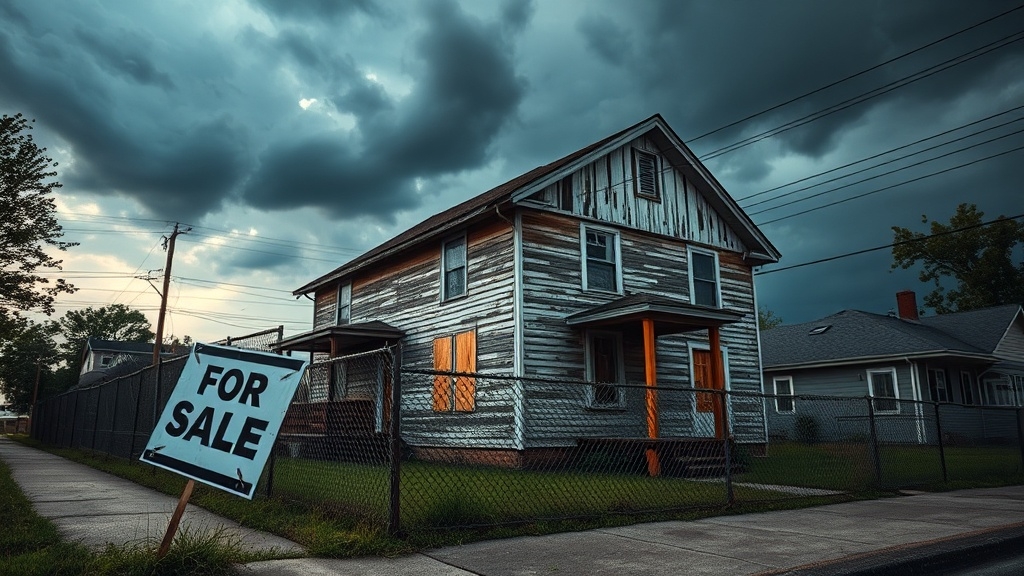
Distress can also apply when disrepair is evident, such as broken windows, peeling paint, sagging gutters, tarps, or vacancy signs like piled mail.
Many are listed as-is with limited inspections.
Others show up as REO after foreclosure, short sales on the MLS, or as sheriff or government auction inventory.
What the 23% Rise in Distressed Listings Really Signals
Although Little Rock posted an 18.5% year-over-year jump in the median sale price to $258K in January 2026, distressed listings still rose 23% over the same period.
The gap points to uneven outcomes even as pricing holds overall.
Distress Uptick Signals Market Sorting
Average marketing time improved to 70 days, and sales run about 4% below list, implying orderly absorption rather than forced repricing.
Hot homes still sell at list and reach pending in 35 days, underscoring segmentation.
Investor Sentiment Tests Market Resilience
Cash buyers provide a clearing mechanism for distressed inventory, while affordable listings expanded to 40.3% of supply. In markets like Albuquerque, 71% cash purchases in 2024 show how cash-heavy demand can accelerate absorption and influence pricing dynamics.
January closings fell to 150 from 175, yet stability in health care and distribution supports market resilience and keeps investor sentiment firm.
Why Distressed Homes Are Increasing (Rates, Resets, Inventory)
As mortgage rates drift toward 6% in 2026 but stay far above the prior low-rate era, affordability continues to fracture across Little Rock.
Elevated costs and 11.84% median listing price growth stretch payments, pushing market time toward 76 days statewide.
Rate Shock and Distress Triggers
Financing squeezes increase delinquency risk in pockets, especially when cash offers set expectations.
Servicer practices that accelerate timelines can convert missed payments into distressed listings.
Loan Resets and Constrained Supply
Adjustable-rate loan resets lift monthly bills, and national default trends point to spillover pressure.
Owners with low fixed rates resist selling, limiting supply as listings rise 6.67% year over year.
- Higher rates reduce qualified buyers.
- Resets force payment recalculation.
- Inventory builds slowly as construction stays cautious.
Where to Find Distressed Listings: Zips, Types, and Channels
Where distressed listings surface first in Little Rock often tracks neighborhoods where affordability has thinned.
That’s happening despite average home values near $211,549 and only 1.1% year-over-year appreciation through January 2026.
ZIP Codes and Property Types Under Strain
Risk concentrates in ZIP codes with rising days on market and heavier investor ownership.
Older single-family homes and small multifamily rentals can show early payment stress.
Channels Where Distress Appears First
County records flag notices of default, tax delinquencies, and probate filings.
Local brokers, servicer REO portals, and MLS remarks often reveal “as is” and lender-held inventory.
Regional Signals
Auction platforms and courthouse schedules can spike when broader shocks hit.
That pattern has shown up in wildfire-displaced Southern California and insurance-strained Florida and Texas markets.
What to Do in 2026: Buy, Sell, or Negotiate Around Distress?
Distress signals in Little Rock now show up in public records, MLS remarks, and investor channels before they reach most retail buyers.
Disruption Outlook for 2026
Median price is $258K, up 18.5% year over year.
Mortgage rates hover near 6.0% to 6.8%.
Homes average 70 days on market.
Inventory at 0.86 months limits concessions.
The sale-to-list ratio is 97.27%.
Distress Decisions Under Tight Supply
Buyers using cash strategies can secure fast closings.
They should still budget repairs and expect 2% to 4% appreciation.
Distressed sellers may accept about 4% below list for certainty.
Negotiation Priorities
- Verify liens, occupancy, and title timing.
- Price for 70-day velocity with few concessions.
- Build exit planning around rental demand and a 40% renter share.
Assessment
Little Rock’s 23% rise in distressed listings reflects mounting stress in the housing market.
Higher borrowing costs, tighter affordability, and limited liquidity are pushing owners toward forced-sale paths.
The increase suggests negotiation leverage is shifting.
Price cuts, concessions, and longer timelines are becoming more common.
Concentrations by ZIP code and channel can change as lenders, investors, and servicers adjust dispositions.
For 2026, the market outlook remains disrupted.
Distressed inventory signals downside risk in certain segments.