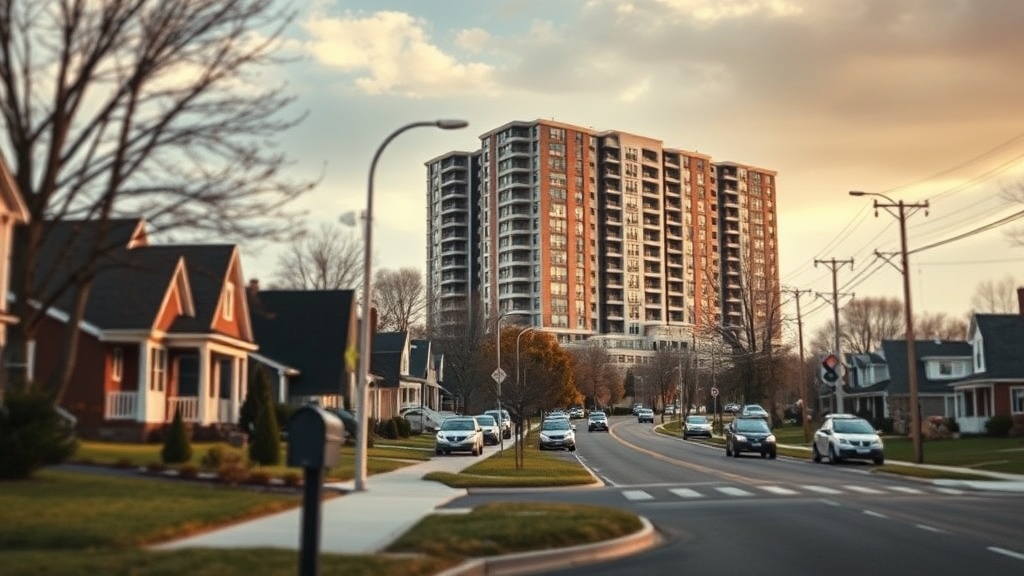
What the Marlborough 400-Unit Project Includes
Four tax lots at 626 Lattintown Road form the basis of a resort-hotel redevelopment. The plan would reuse existing structures while adding new buildings for guest lodging, hospitality services, and recreational amenities.
The proposal covers parcels identified in Planning Board materials from January 16, 2024. It expands prior uses of the property rather than introducing an entirely new activity pattern. Similar large-scale developments often draw scrutiny over transportation and infrastructure because logistics benefits can reshape local traffic patterns and public investment priorities.
The code-required lodging component would provide sleeping accommodations for more than 20 guests. By contrast, 400 Marlborough was later converted into nine condominium units in 1982.
An existing lodge would be renovated for hospitality services. Several new buildings would supply guest rooms.
Additional outbuildings with toilets would support outdoor recreation areas. Daily events for up to 100 people are permitted.
Fifteen larger annual events could host up to 500 people.
Affordable housing is not part of the stated program. Transportation impacts, however, may draw review.
Where the Marlborough Apartments Would Be Built
Planning materials for the broader redevelopment identify the site as four tax lots at 626 Lattintown Road in Marlborough. This places the proposed buildout on property already tied to resort-hotel uses, rather than on a newly introduced tract elsewhere in the suburb.
The location appears to sit within an existing hospitality area. Based on the available facts, that makes the proposal more of a reuse or intensification question than an outward expansion. Similar shifts elsewhere reflect how office-to-residential conversions have become a notable real estate trend as work patterns change.
What the location details indicate
- Four tax lots are identified at one Marlborough address.
- The property is associated with established resort-hotel activity.
- Review would likely focus on zoning maps and transit access.
Because the provided record is limited, no further verified siting details, boundaries, or surrounding street-level impacts can be stated here. Anything more would risk introducing unsupported claims.
Why Marlborough’s 400-Apartment Plan Matters
Marlborough’s roughly 400-unit apartment pipeline matters because it speaks directly to a statewide housing shortage. It also tests how far a jobs-rich suburb can expand its housing stock in targeted locations.
The plan adds apartments in downtown and other key areas where Marlborough has room to absorb regional growth. That matters in an employment center that continues attracting workers but needs more homes near jobs, services, and highways.
The projects also carry wider economic and regulatory weight. Developers estimate about $2.18 million in annual gross tax revenue.
That estimate is backed by major financing and retail space that could strengthen downtown activity.
The pipeline also advances housing equity through 28 affordable units. It also supports compliance with the MBTA Communities Law in a walkable district.
Why Neighbors Oppose the Marlborough Apartments
Residents have rallied against the roughly 400-unit apartment push, arguing that a development of that scale would feel sharply out of character in a suburban area defined by lower-rise homes and a quieter residential identity.
At meetings, opposition has centered on several recurring objections.
Residents fear the Lafayette and Great Jones site would intensify congestion, despite pending traffic studies.
They also worry that limited parking and added vehicles would burden nearby residential streets.
Others argue that multi-story density would erode historic character and deepen concerns about property values.
Neighbors describe the project as overdevelopment that could shift Marlborough away from its single-family pattern toward a more urban form.
Beyond scale, residents cite likely noise, privacy loss, and pressure on local infrastructure.
They say the proposal risks disrupting daily life and the suburb’s established visual identity.
What Happens Next in the Marlborough Apartment Debate
Attention now shifts to the formal review process, where any next step depends on hearings, staff analysis, and decisions that have not been confirmed in the available reporting.
Because the available source material does not document the proposed apartment project, no verified zoning timeline can be described with confidence.
That limits any firm account of what officials, developers, or residents will face next.
In practical terms, a project of this scale would usually move through local review stages, but those steps cannot be attributed to Marlborough without supporting records.
The same caution applies to community outreach.
Public meetings, revisions, and board deliberations are common in development disputes, yet the reporting provided does not establish whether any of those actions have occurred here.
For now, the debate remains procedurally unclear.
Assessment
Marlborough’s proposed 400-unit apartment development has intensified a high-stakes local land-use fight.
The project now stands at the center of competing pressures over housing growth, neighborhood character, traffic, and infrastructure strain.
As reviews and public debate continue, town officials face a consequential decision with enduring effects on density, development patterns, and community opposition.
The next phase is likely to determine whether Marlborough absorbs major residential expansion or imposes new limits on future multifamily proposals.