
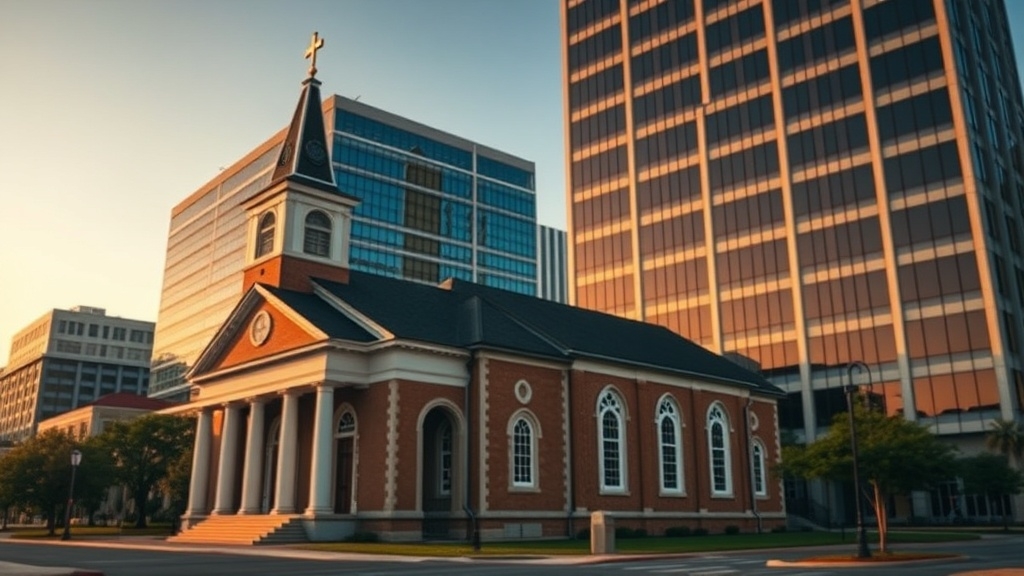
Church Expansion and Local Government Coordination
Navigating the complex terrain of urban development, churches in Mobile, Alabama, coordinate with local government to pursue ambitious expansion plans. Church leaders engage in active zoning collaboration to ensure their growth initiatives comply with city regulations. The Religious Land Use and Institutionalized Persons Act facilitates this dialogue by ensuring nondiscriminatory practices. Regular meetings with city officials give religious organizations the opportunity to provide input on site selection and design. This coordination often leads to adjustments in zoning restrictions, balancing church expansion with community needs. Effective communication between these entities promotes mutual understanding of land-use policies, significantly reducing legal disputes. Amid these plans, concerns about housing affordability and community cohesion have been raised, questioning the potential impact of such developments on the neighborhood. This cooperative approach underscores a commitment to harmonious urban planning while accommodating the civic importance of places of worship.
Recent Changes in Mobile’s Commercial Zoning
In a dramatic shift resonating through Mobile’s urban landscape, recent commercial rezoning initiatives have captured the attention of real estate professionals. This change brings both anticipation and scrutiny. Significant changes are underway at 720 Museum Drive. The zoning is moving from R-1 to B-2. This shift aligns with the Complete Plan’s vision for a Neighborhood Center – Traditional. It opens doors to increased commercial activity. Transforming existing structures to mixed-use developments not only augments commercial potential but also reflects modern urban planning trends. The City of Mobile’s involvement underscores its commitment to expanding commercial zones strategically. With the adoption and revision of the Unified Development Code, which combines zoning ordinances and land development regulations into one document, adjustments are being made. New business overlays and parking exemptions aim to refine zoning regulations. These updates cater to enhanced commercial growth, ensuring zoning changes resonate with community input. The Planning Commission’s thorough reviews play an integral role. They are crucial in these developments.
Navigating Zoning Challenges for Religious Institutions
Religious institutions in Mobile face significant zoning challenges due to evolving urban policies. Zoning districts often exclude religious facilities from certain areas, affecting their ability to function and grow. Despite uniform application of zoning regulations to both religious and secular entities, religious facilities must navigate constraints like parking requirements without exemptions. This adds complexity to their development plans. Exclusionary zoning and community resistance further impede efforts to develop or repurpose church properties for social services, such as affordable housing. These hurdles make it difficult for religious institutions to expand their outreach initiatives. Religious organizations often struggle with off-street parking requirements which can complicate development plans. Legal protections, like the Religious Land Use and Institutionalized Persons Act (RLUIPA), can help by applying strict scrutiny to restrictive zoning measures. The First Amendment of the U.S. Constitution prohibits the establishment of religion and protects the free exercise of religion, providing a legal framework for religious bodies. These measures have the potential to provide recourse for religious entities. Nonetheless, procedural obstacles and the need for variances remain challenging to overcome. This continues to impact the ability of religious institutions to achieve their expansion goals.
Mobile Planning Commission’s Involvement
The Mobile Planning Commission navigates the complexities of zoning frameworks, playing a crucial role in the development of church properties.
Their task involves ensuring that the design of churches aligns with community standards and land use policies.
They are responsible for evaluating and approving Planned Unit Development (PUD) applications. This allows multiple buildings on single sites, fostering efficient land use.
Public engagement is another key responsibility. The commission conducts hearings to incorporate community participation and balance public concerns with developer intentions.
Strategic approvals are also implemented. Up to ten essential conditions for church expansions are enforced, adhering to zoning regulations.
To ensure transparency and accountability, the commission keeps comprehensive documentation of all decisions.
These processes highlight their pivotal role in harmonizing development with community expectations.
Community Development and Church-Based Initiatives
Church-based initiatives are becoming increasingly crucial in Mobile, Alabama. They are playing an expanded role in community development by enhancing community outreach and promoting social cohesion.
By serving as hubs for social services, churches are addressing critical local needs. They focus on areas such as food security and education. Collaborative efforts with community groups allow for better access to resources.
| Focus | Impact |
|---|---|
| Food Security | Alleviates neighborhood hunger |
| Youth Engagement | Promotes educational success |
| Volunteer Mobilization | Supports revitalization efforts |
| Resource Sharing | Expands outreach capacity |
| Partnership Growth | Increases community service |
Partnerships between religious organizations and commercial developments bolster these efforts. They enable resource sharing and expand service capacity to meet the growing community needs.
Assessment
The finalized church deal and subsequent zoning changes mark a critical shift in Mobile, Alabama’s commercial landscape.
With careful coordination between the church and local government, this development exemplifies how religious institutions can successfully maneuver complex zoning challenges.
The Mobile Planning Commission’s involvement was pivotal in this process. They effectively bridged community needs with urban development goals.
This change highlights a significant move towards integrated community development.
The development sets a precedent for future religious and commercial projects across the region.















5 Responses
Does anyone else think that the churchs expansion is actually just a cover-up for a corporate takeover? Just seems fishy to me.
Well, isnt it just peachy how churches expand but cant pay taxes? Maybe thats the real divine intervention here, eh? 😂 #ZoningLoopholes
Interesting move, but isnt church expansion and commercial zoning a bit contradictory? Whats the true motive, Mobile Planning Commission?
Im not convinced. Is this church expansion really about faith or just a sneaky commercial real estate play? Lets dig deeper, folks.
Well, this Mobile church zoning deal smells fishy. Is the local government prioritizing commercial over spiritual needs? Lets talk about that, folks!