OpenAI Leases 450,000 SF in Mountain View
OpenAI has jolted the Peninsula office market by signing a full-building lease for a 450,000-square-foot Class A campus at 350-380 Ellis Street in Mountain View.
The real estate transaction hands OpenAI control of five buildings owned by KKR Real Estate Finance Trust and operated with TMG Partners. Newmark represented the landlords, while JLL advised OpenAI during negotiations.
The lease dynamics are notable because the deal filled the entire campus roughly two years after repositioning began in 2024. The property includes move-in ready finishes, rooftop decks, an executive briefing center and kitchen and break areas on each floor.
The property had previously served as NortonLifeLock’s headquarters before pandemic-era ownership changes and a deed-in-lieu transfer returned it to KREF.
The agreement also highlights how AI demand is reshaping Peninsula real estate, even as local zoning and regulatory hurdles continue to influence large office commitments in Mountain View. Broader industry trends point to the AI-driven real estate market growing at an annual rate of 11.52%, reinforcing why major tenants are making decisive space commitments.
Inside OpenAI’s Mountain View Campus
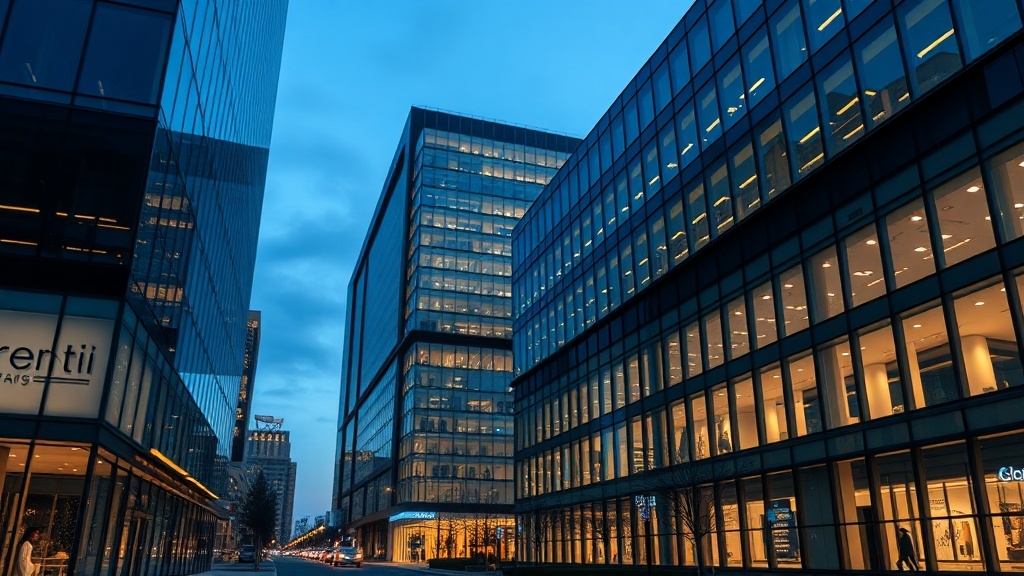
At 350–380 Ellis Street, a five-building Class A campus gives the company control of roughly 439,000 to 450,000 square feet in the center of Silicon Valley.
Buildings A through D form a U-shape around a central outdoor workspace. This layout supports design integration across interconnected three-story and four-story structures.
Recent upgrades delivered move-in-ready interiors, rooftop decks, dining venues, and a unified amenity-rich setting shaped for employee wellness.
The campus layout centers shared outdoor space for daily use. Open rooms and a briefing center support flexible collaboration.
A gastropub, patios, and recreation courts add convenience throughout the workday. Kitchen and break areas appear on each floor alongside conference rooms and collaborative zones.
A two-acre amenity area, parking structure, cafeteria, tennis court, and sand volleyball court complete the campus environment.
This kind of amenity-rich workplace strategy contrasts with large-scale urban developments like Dallas’s $10 billion mega project, which aims to create a live-work-play city within a city.
Why OpenAI Chose This Mountain View Site
In the heart of Silicon Valley, the Ellis Street campus offered a rare combination of scale, speed, and strategic positioning. It matched OpenAI’s long-running push for a deeper regional foothold.
The Mountain View location placed the company in a core technology corridor. That strengthened proximity to talent and supported hiring at significant scale.
Its unified, self-enclosed layout also gave OpenAI room for 1,800 to 2,200 workers. That made it an important choice for long-term expansion.
Readiness and control
The move-in ready campus reduced execution risk.
Recent repositioning by KKR and TMG Partners delivered a future-ready workplace. It included collaborative areas, executive meeting space, and flexible indoor-outdoor environments.
A 10-year lease with a first right to acquire the property added control. The setting also supported community engagement through an integrated workplace designed for sustained regional presence.
How the OpenAI Lease Affects Silicon Valley Offices
That site selection now carries broader consequences for Silicon Valley offices. The full lease of the five-building Ellis Street campus is being viewed as a sharp signal that large-scale demand has returned for top-tier space.
The 449,000-square-foot Class A campus was repositioned for future-ready use. Its lease suggests premium properties can still move quickly despite hybrid schedules and remote collaboration.
| Factor | Signal | Effect |
|---|---|---|
| Full-campus deal | Demand depth | Supports pricing |
| Mountain View location | AI clustering | Lifts confidence |
| Fast execution | Reduced hesitation | Aids absorption |
For landlords, the transaction strengthens the case for investing in institutional-quality campuses within core technology corridors.
For the broader market, it reinforces Mountain View as a preferred AI office node. It also encourages other technology tenants to reconsider expansions that had been delayed amid elevated vacancy concerns.
What the OpenAI Expansion Suggests About AI Hiring
OpenAI’s planned expansion from roughly 4,500 employees to 8,000 by the end of 2026 points to a new phase of AI hiring. This phase is defined less by pure research growth and more by scaled product delivery, enterprise sales, and deployment capacity.
This AI hiring surge, averaging about 12 employees daily, reflects an enterprise pivot shaped by competition from Anthropic, Google, and other startups. Hiring is centered on engineering, product, research, and enterprise sales as OpenAI pushes business revenue toward 50%.
- AI talent demand is shifting toward commercialization, integration, and customer adoption.
- Growth in AI roles is occurring alongside broad job cuts tied to automation and infrastructure spending.
- The market signal is selective, favoring firms that convert AI models into enterprise platforms, coding tools, and business automation products.
Assessment
OpenAI’s 450,000-square-foot lease in Mountain View marks a rare large-scale office commitment in a strained Silicon Valley market.
The deal underscores how AI expansion is reshaping demand, favoring premium campuses with infrastructure, access, and room for rapid hiring.
For landlords, it signals that top-tier space can still attract major tenants.
For the broader office sector, it highlights an increasingly uneven recovery.
AI-driven growth is concentrating in select buildings, submarkets, and talent corridors, while weaker properties face deeper pressure.