

Key Takeaways
- Nuveen has raised $320 million to invest in necessity retail assets located in high-demand urban neighborhoods across the U.S.
- Grocery-anchored shopping centers are emerging as a resilient option amid rising interest rates and disruption from technology.
- Investors who do not adapt quickly to these shifting market dynamics risk significant losses and potential obsolescence.
Urban Retail Realignment: The New Investment Landscape
Nuveen has rocked the market, securing $320 million to target necessity retail assets in America’s most coveted neighborhoods—think just steps from the Brooklyn Bridge or under the shadow of Chicago’s Willis Tower. Urban density is pushing investors onto high-stakes ground, with only grocery-anchored centers offering reliable shelter from soaring rates and ruthless tech shocks.
Failure to pivot quickly risks total obsolescence, and those who hesitate could watch their portfolios crumble.
Next, discover how these battlegrounds are shifting beneath your feet.
Adapting Retail for Urban Density and Tech Disruption
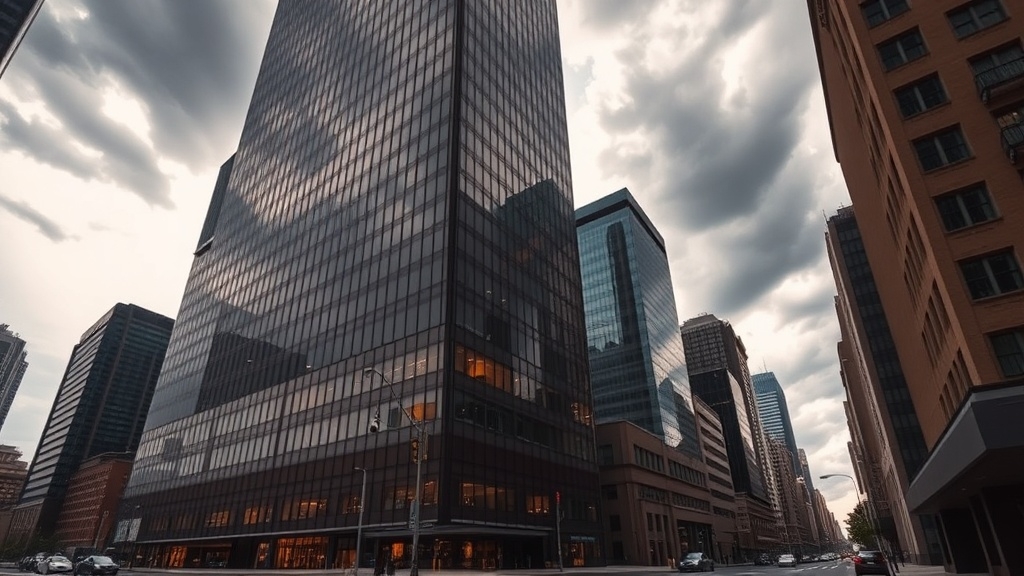
In the shadow of Wall Street’s towering spires, a new era of retail real estate ignites an urgent call—to adapt or face the fallout.
Concrete moves are happening far from the neon glare of Times Square. The Nuveen US Cities Retail Fund, launched in 2018, has secured $320 million in new capital as of May 2025. The fund’s laser focus: necessity-based neighborhood retail properties, anchored by essential services like grocery stores—vital lifelines within America’s high urban density topography.
In a market restless with change, retail tech continues to reorder expectations. Shoppers in places like the bustling streets of Chicago’s Magnificent Mile demand hyper-convenience, forcing investors to rethink every square foot.
Urban density is not just a statistic; it’s a survival metric. Stores must serve dense clusters where people live and work, or risk collapse amid empty, abandoned aisles.
Nuveen’s strategy targets only the highest-liquidity markets. The ambition is clear: embed at the heart of daily consumer flows, where retail tech meets routine necessity and delivers resilient income even during economic tremors.
Their sector-specific approach zeros in on assets that provide consistent foot traffic—grocery-anchored centers—while sidestepping the volatility plaguing sprawling suburban malls.
The threat is real. Each block not calibrated to consumer needs risks rapid obsolescence. Neighborhood properties near Miami’s Brickell City Centre thrive by catering to workers and residents who demand efficiency.
Nuveen’s direct retailer relationships are a double-edged sword, providing an advantage but offering little room for missteps.
Market disruptions—fueled by apocalyptic headlines about shifting consumer behavior—are not abstract. Reality bites: failure to modernize through retail tech or respond to urban density patterns results in underperformance.
Nuveen leverages proprietary research, mapping consumer needs with digital precision, seeking out growth while competitors falter on dated models.
Investors sense the incoming storm. Elevated interest rates and lingering supply constraints threaten portfolios coast to coast, from Los Angeles’ concrete sprawl to the brownstones of Brooklyn.
Yet, necessity retail reveals its backbone—grocery anchors in high-density corridors offer rare stability. Persistently low vacancy rates carve out safe havens where rents hold and demand grows.
Nuveen’s US Cities Retail Fund forms part of a much larger retail platform that manages $8 billion in assets across the country.
Diversification across cities—each with its own flavor of risk—remains Nuveen’s shield. Deep expertise empowers tactical moves: leasing, asset repositioning, or outright redevelopment when market cracks appear.
Without continuous adaptation, properties become relics, outstripped by the relentless pulse of urban life and consumer tech advances.
The market’s savage competition grows fiercer as investor demand returns. Attractive pricing in core urban zones is fleeting, and those late to pivot will be trampled.
Every commercial corridor, from San Francisco’s Embarcadero to Dallas’ Uptown, faces this reckoning.
Nuveen’s sectorized management, armed with specialized knowledge and rigorous analytics, is on high alert. Future opportunities gleam only for those who heed the warning and invest where urban density and retail tech collide—waiting is not an option, as the next cycle looms just beyond the skyline.
Assessment
Manhattan’s skyline is changing, and with it, retail faces challenges from both urban density and fast-moving tech disruption.
It’s clear that standing still just isn’t an option.
Nuveen’s bold $320 million move is more than a headline—it’s about adapting and thriving as necessity retail feels the pressure of shifting consumer habits.
Supply chains now weave their way through city streets and digital channels, creating new risks for traditional retail spaces.
If investors don’t pay attention, their portfolios could suffer, especially as sought-after neighborhoods like Chicago’s Magnificent Mile turn into arenas for staying relevant.
Now’s the time to rethink your approach.
Take a cue from Nuveen’s strategy and explore how your investments can weather this new era of retail evolution.
















10 Responses
Interesting read, but isnt this just gentrification packaged as urban realignment? What about affordable retail in less affluent neighborhoods? Equity matters too, folks!
Interesting, but isnt it ironic to target top neighborhoods while calling it a necessity retail fund? Smells like gentrification in disguise to me.
Interesting read, but arent we just inflating another retail bubble here? What about focusing on sustainable, community-driven initiatives instead?
Is Nuveen really adapting to tech disruption or just hoarding prime real estate in the name of urban realignment? Sounds sketchy to me!
Interesting read, but isnt throwing $320M at top U.S. neighborhoods just perpetuating economic disparity? Lets consider more equitable investment strategies, folks!
Seems like Nuveen is just gentrifying neighborhoods under the guise of urban retail realignment. Whats your take on this? #FoodForThought
Nuveens strategies might look like gentrification, but its just smart urban regeneration. #NoGentrificationHere
Interesting read, but isnt Nuveen essentially gentrifying these top neighborhoods? What about affordable retail for lower-income communities? Just food for thought.
320M for top neighborhoods? What about investing in underprivileged areas? Urban realignment should also focus on less affluent regions for balance. Just a thought.
Interesting read, but isnt this just gentrification disguised as urban retail realignment? What about supporting local businesses? Just food for thought folks.