
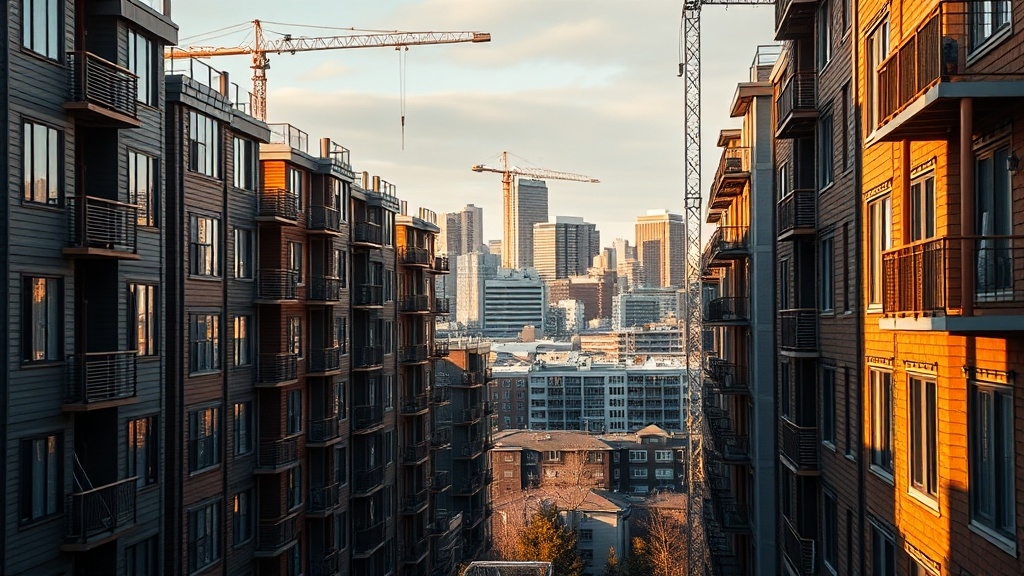
Addressing Income Disparities and Housing Affordability
The stark income disparity between Portland’s homeowners and renters raises urgent questions about the city’s escalating housing crisis. Median homeowner incomes stand at $126,117, contrasting sharply with the $58,946 median renter income. This underscores significant income inequality. Housing costs are climbing faster than income growth, with rents rising 3.3% from 2023 to 2024. These increases exacerbate affordability challenges, pushing accessible housing further out of reach. Racial and ethnic disparities deepen these issues. Individuals from marginalized groups often face heightened affordability obstacles. Portland’s constrained affordable housing stock is dwindling under market dynamics. High-end developments are favored, tightening the squeeze on low-income renters. Nearly 25% of renters spend over 30% of their income on housing. Many regions nationwide are experiencing significant declines in housing affordability, impacting homebuyers and investors. Only dual-income households could afford to purchase a home in any district, revealing the severe affordability challenges that persist. As a result, the burden of finding affordable housing intensifies.
Tackling Homelessness and Supportive Housing Needs
Portland is currently grappling with a growing homelessness crisis, which is characterized by a troubling increase in its unsheltered population. The city allocated $700 million for homelessness initiatives in 2023-24, yet the rate of homelessness is increasing faster than housing placements. Systemic inefficiencies have been noted by local governance, highlighting the need for improved strategies. Efforts are underway to engage the community in mitigating the crisis, with a focus on supporting marginalized groups disproportionately affected. Integrated services are essential. A combination of housing, mental health, and addiction support is necessary to stabilize vulnerable individuals. Notably, 95% of clients maintained permanent housing post-intervention last year, underscoring the effectiveness when resources align properly. Bellevue’s multifamily boom serves as a beacon for potential development pathways, indicating that innovative construction and investment strategies can significantly bolster housing availability. Demographic disparities persist, especially among African-Americans and women, necessitating targeted strategies to address these issues. Recent data shows that there has been a 29% increase in the unhoused population in Portland from 2022 to 2023, emphasizing the urgent need for effective intervention.
Overcoming Policy and Zoning Obstacles
Behind Portland’s vibrant neighborhoods and lush scenery lies a series of complex policy and zoning challenges hampering the city’s housing development. Chronic land constraints and increased regulations, particularly in multifamily housing, limit the growth of Portland’s housing supply. Accumulating taxes and regulations elevate development costs. This diminishes affordability across the city. Despite these hurdles, recent zoning reforms have encouraged more diverse housing through “middle housing” types like duplexes and triplexes. These reforms, however, confront the “urban doom loop”—a vicious cycle where social issues and reduced services deter investment. Addressing high-density development costs and enhancing affordability remains pivotal. Neighborhood demographics may shift as transit accessibility decreases, demonstrating the broader impact of infrastructure on community development. Portland exemplifies how innovative local policies can broaden affordable housing. This progress occurs even amid stringent zoning and land constraints. It shows that cities can make strides without awaiting broader governmental intervention.
Strategic Planning for Future Housing Development
Strategic housing development in Portland relies heavily on aligning with long-range planning initiatives. The Affordable Housing Opportunities Project (AHOP) aims for zoning changes to increase affordable housing options. This effort enhances urban sustainability through active community engagement. By coordinating with local groups, AHOP ensures comprehensive feedback is received. As tiny homes gain popularity as a response to the housing crisis, Portland’s planners may consider incorporating such innovative solutions to bolster affordability. The Central City Code Amendments Project and RICAP 11 streamline approval processes. These measures efficiently support and expedite development efforts. Public infrastructure standards are integrated to meet sustainability goals. This alignment promotes the city’s long-term environmental objectives.
| Project | Key Focus | Impact |
|---|---|---|
| AHOP | Zoning changes, community feedback | Increased affordable housing capacity |
| Central City Code Amendments | Alignment with the Central City 2035 Plan | Stimulated housing production |
| RICAP 11 | Streamlined processes | Efficient project approvals |
| OMSI District | Transit-oriented development | Job creation, significant economic output |
| Red Rock Creek Commons | Nonprofit-driven affordable housing | Low-income family support, stability |
Strategic planning fosters diverse, sustainable housing for Portland’s growth. This approach carefully balances economic, social, and environmental needs.
Assessment
Oregon leaders are under increasing pressure to improve Portland’s housing situation. Efforts are being made to revamp the housing environment.
By addressing income disparities, they hope to make housing more affordable. This initiative aims to reshape Portland’s economic framework.
Efforts to tackle homelessness include supportive housing initiatives. These aim to restore stability to affected communities.
However, overcoming entrenched policy and zoning obstacles is a significant challenge. Strategic planning for future housing development is essential.
These initiatives will play a crucial role in dictating Portland’s urban and social future. The stakes are high as leaders push for sustainable growth.




















8 Responses
Interesting read, but shouldnt the focus be on creating jobs first? More income equals better housing affordability, in my opinion. What do you guys think?
Jobs dont mean much if housing costs outpace income growth. Its a balance, not a sequence.
Interesting read, but isnt reviving Portlands housing just another way to gentrify and displace low-income residents? Wheres the plan for them?
Revivals can include affordable housing, its not synonymous with gentrification. Lets broaden our perspectives.
Just my two cents, but isnt revival just a fancy term for gentrification? What about the current homeowners? Arent they at risk here too?
Revival doesnt always mean displacement. Progress shouldnt be a zero-sum game.
While I appreciate the effort, isnt it ironic were strategizing housing revival yet ignoring the elephant in the room – gentrification? Just food for thought, folks.
Gentrification isnt the elephant, its the scapegoat. Revival needs strategy, not just criticism.