
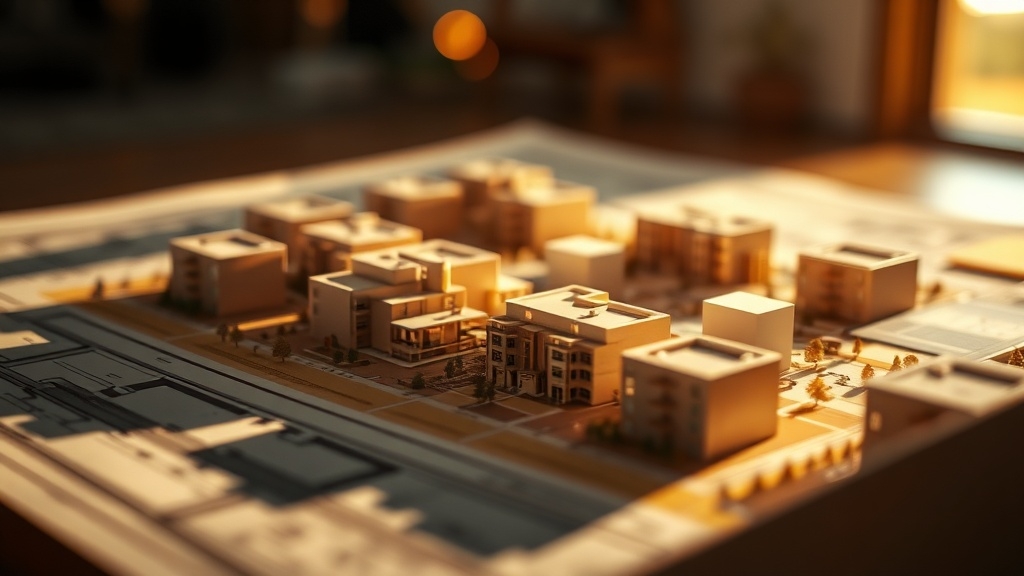
Redevelopment Scale and Housing Units
The Paseo Nuevo Housing Development has undergone a strategic reduction in scope. This marks a sharp deviation from its original design of 500 residential units.
The revised plan now includes 233 market-rate units. This is a notable reduction from the initial proposal.
This strategic downsizing highlights the project’s focus on preserving key existing elements. Important features such as the Nordstrom building and cultural site amenities are maintained. Plans for the development were released to the public on Thursday before the Santa Barbara City Council meeting.
The redesigned housing architecture showcases a balanced approach. It emphasizes residential density and urban integration. Bellevue’s high occupancy levels, comparable to 94.1%, are aspired to be maintained through this design.
Market-rate units will be located on the Ortega Street-facing site. This area was previously the location of the now-demolished Macy’s building.
The design emphasizes a compact and efficient housing model. Meanwhile, affordable housing units will be situated separately.
These units prioritize neighborhood integration. There is an extensive distribution of units across the redevelopment area.
This enhances community connectivity without overwhelming existing infrastructure.
City Involvement and Land Use
Santa Barbara’s city council recently examined complex land use negotiations, placing a spotlight on significant municipal involvement in the Paseo Nuevo redevelopment.
At the core of these negotiations is the city’s ownership of a strategic parcel known as Parking Lot 2.
The council passed a resolution declaring this land exempt surplus.
This move facilitates negotiations for affordable housing.
The city will maintain ownership of ground leases for 40 years.
This duration provides leverage in redevelopment efforts.
As a result of negotiations, the planned housing units were downsized from 500 to 313.
This reduction impacts the scope of redevelopment.
Furthermore, there is a transfer of city land intended for Alliance Bernstein.
This signifies a significant shift in land use strategy.
The city council’s actions parallel Oakland’s recent move to enhance tenant protections amid escalating housing pressures.
The new grocery store planned as part of the development emphasizes the project’s commercial and residential integration.
Council members have also required renegotiating certain prohibited housing agreements.
This initiative aligns with city objectives to increase density and integrate residential functions.
These actions reflect a strategic pivot in urban design and policy for the city.
Mall Structure and Retail Space
City decisions on land use have significantly reshaped the future of Paseo Nuevo, impacting the mall’s structure and retail spaces. Plans prioritize preservation, maintaining most interior components while limiting demolitions to the Macy’s building.
Preserving the foundational structure helps bypass costly reconstructions. This strategy conserves the central retail spine, maintaining over 175,000 square feet of existing space.
Retail modifications include a redeveloped footprint. Proposals introduce anchor tenants like an upscale grocery store and a substantial fitness center to revitalize the tenant mix.
These changes are designed to balance new residential boundaries. The adjustments ensure vibrant commerce continues without disturbing established retail patterns.
Structural integration allows for site-specific exemptions. This approach accommodates evolving market demands, reflecting economic and spatial adjustments in retail strategy.
Amid rising interest rates and reduced home values, the development aims to provide stability and adapt to the economic uncertainty influencing many housing markets.
New Amenities and Tenant Plans
How will the sweeping redevelopment plans at Paseo Nuevo impact its future scenery? The introduction of a 17,000-square-foot grocery store and a sprawling 25,000-square-foot fitness center are pivotal components of this transformation.
Each amenity integrates seamlessly into the existing mall structure. These additions aim to draw both residents and visitors, offering a blend of convenience and lifestyle enhancement.
The upscale grocery store is designed to diversify retail offerings. It seeks to invigorate the downtown atmosphere.
The fitness center replaces some mall tenants. This change provides a much-needed physical wellness destination.
Both amenities support sustaining vibrant foot traffic. They serve as key attractions for different community demographics.
Such strategic enhancements are fundamental in redefining Paseo Nuevo’s role as a multi-faceted urban hub. A similar approach is seen in Portland, where affordable housing project developments focus on improving the community’s accessibility and livability.
Economic and Community Considerations
Beneath the surface of Paseo Nuevo’s redevelopment lies a complex tapestry of economic and community considerations poised to reshape Santa Barbara’s urban framework.
With the introduction of 313 housing units, including 80 affordable housing units, the project attempts to balance community identity and economic imperatives.
Santa Barbara’s state-mandated affordable housing requirement is set at 10%. However, advocacy for 30-40% aims to safeguard local interests against displacement risks.
These affordable units are strategically placed on city-owned land near Chapala and Canon Perdido, ensuring consistent public benefit.
Economically, transferring land ownership valued at up to $39 million and cultivating new commercial spaces enhance both economic activity and the local tax base.
The potential vulnerability of housing demands in burgeoning markets like Phoenix shows how labor shortages can affect construction timelines.
Community identity challenges persist, reflecting divergent opinions on residential growth versus potential tourism-related identity shifts.
Assessment
The Paseo Nuevo housing development represents a significant urban transformation. It is poised to reshape the city’s environment.
With city involvement driving smart land use, the integration of residential units is set to redefine community living.
Innovative retail and modern amenities complement this vision, enhancing the area’s appeal.
The project’s economic implications and community benefits underscore its potential impact.
As plans move forward, the development promises to address housing needs while revitalizing commercial spaces.
This marks a pivotal moment in the city’s growth trajectory.


















7 Responses
So, are we just ignoring the fact that this Paseo Nuevo project may potentially skyrocket local property taxes? Just food for thought.
Interesting, but arent we overlooking the potential traffic nightmare this Paseo Nuevo plan could cause? Just a hunch, could be wrong though.
Interesting plans, but isnt the city better off refurbishing existing structures than creating more retail space and housing units? Just a thought.
Am I the only one who thinks the city should focus more on affordable housing than another shopping mall? #Priorities
Affordable housing? Lets not encourage more free-loaders. Progress means more shopping malls. #Capitalism
Honestly, why cant we preserve the malls structure? Not everything needs a modern touch. A bit of nostalgia wont hurt.
Nostalgia doesnt pay the bills. Modernization is key for survival in todays economy.