
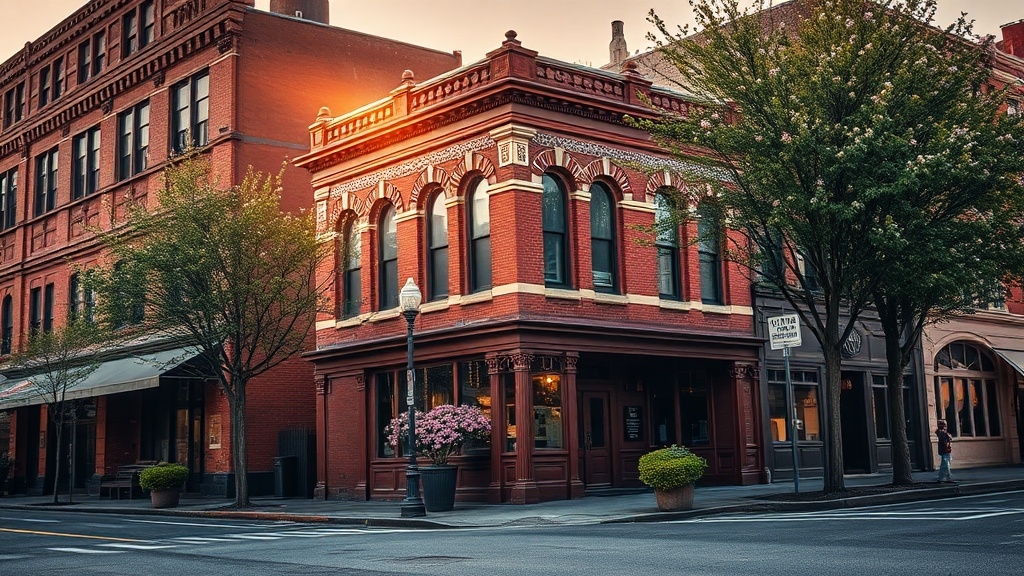
Historical Context of Albina Neighborhood
In the rapidly growing Pacific Northwest cityscape, the Albina neighborhood emerged at the intersection of industrial expansion and complex racial dynamics.
Established in 1887 and annexed by Portland in 1891, Albina quickly became a bustling industrial enclave.
Its appeal attracted diverse groups, including Irish, German, and Scandinavian laborers powering its docks and railroads.
Over time, Albina turned into the primary settlement for Portland’s African American community, driven by restrictive real estate practices.
Segregated yet resilient, Albina saw a rise in Black entrepreneurship.
Residents established businesses and communal institutions, nurturing a vibrant economy along Williams Avenue.
Despite systemic discrimination, Albina’s history stands as proof of its role in shaping Portland’s socio-economic fabric.
Urban Renewal and the Displacement Crisis
In the 1960s, urban renewal initiatives transformed Portland, placing the Albina neighborhood at the center of a significant displacement crisis.
The effects were profound.
Approximately 188 properties were demolished, displacing 171 households. Of these households, 74% were Black, leading to a collapse in their generational wealth.
Forced relocations dismantled long-standing Black community networks. Vital cultural and support structures were erased.
Displacement fueled social instability and economic decline. This exacerbated conditions that hindered community recovery in North and Northeast Portland.
The legacy of this displacement continues to echo today. Settlement compensates Black residents and descendants displaced by urban renewal since the 1960s, signaling efforts to address and mend these historical wrongs.
Albina Neighborhood Improvement Project
The Albina Neighborhood Improvement Project (ANIP) was initiated in 1961. It served as a pivotal community-driven response to the negative impacts of urban renewal and displacement.
Led by the Albina Neighborhood Council and Portland Development Commission, the project focused on rehabilitating, not demolishing, neighborhoods. ANIP empowered residents by providing information and access to home improvement loans.
This strategy aimed to stabilize the housing stock and combat deteriorating conditions. A key component of ANIP was robust community engagement.
Activities included neighborhood clean-ups, tree plantings, and social initiatives. The Albina Neighborhood Improvement Committee (ANIC) promoted multiracial collaboration, showcasing strong African American leadership.
The project set a precedent for future community-led urban revitalization efforts. By its conclusion in 1972, ANIP had established a solid foundation.
Recent Revitalization Efforts: Albina One Housing Project
In the unfolding narrative of Portland’s real estate development, the Albina One Housing Project emerges as a beacon of transformation and reconciliation. Situated in the Eliot neighborhood, this initiative contributes to community resilience and housing equity by offering 94 affordable units. Specifically, 34% of these units are set at 30% of the Area Median Income, half accepting Section 8 vouchers.
Three key features include:
Cultural Design: The building showcases murals by local BIPOC artists, strengthening cultural ties.
Family Focus: Over half of the units are family-sized, supporting young families, particularly single fathers.
Support Services: Partnerships with local organizations provide career mentoring and education, promoting economic stability.
Similar to Charlotte’s expanded Housing Trust Fund initiative, Albina One epitomizes a successful blend of social impact and development. These elements position Albina One as a critical component of the broader Albina Vision Trust’s efforts.
Socioeconomic and Cultural Legacy of Albina
Portland’s Albina district tells a compelling story of resilience amidst historical oppression and socio-economic adversity.
Largely shaped by deeply rooted discriminatory housing practices, Albina emerged as a significant cultural hub despite overwhelming challenges.
Restrictive real estate policies confined the African American population there. Yet, the residents demonstrated cultural resilience by creating a vibrant community life.
Economic empowerment through thriving businesses and cultural institutions defined Albina’s enduring legacy. The flood-induced migration post-Vanport further entrenched Albina as the epicenter for Black Portlanders.
This migration nurtured a rich tapestry of cultural and civic life. Despite economic hardships, initiatives like the Albina Neighborhood Improvement Project supported community preservation.
The district’s vibrant social environment underscores its ongoing impact on Portland’s cultural and economic setting. Albina continues to inspire with its resilient spirit and rich cultural identity.
Assessment
The Albina Neighborhood’s restoration marks a pivotal moment in urban renewal. It aims to address past displacements and socio-economic challenges.
Through the Albina One Housing Project and other revitalization efforts, the area seeks to nurture an inclusive community. These initiatives honor its rich cultural heritage.
They address historical injustices and are essential steps toward sustainable urban development. The Albina Neighborhood stands as a model for integrating history and progress in urban planning.






















3 Responses
Interesting read, but doesnt the Albina renewal project risk gentrifying the area, destroying its cultural history instead of preserving it? Thoughts?
While I appreciate the Albina revival, isnt it ironic? Were celebrating history by rebuilding what urban renewal once destroyed. Thoughts?
Interesting read, but isnt this revitalization just another word for gentrification? Whats the real cost for the original Albina community? #FoodForThought