

Key Takeaways
- The Lutterloh Building in Sanford, NC, was sold for $1.93 million to a Florida investor.
- Sanford’s urban renewal efforts heighten its investment appeal, drawing parallels to cities like Pittsburgh.
- Investors face potential challenges with local zoning and preservation efforts, which may impact economic opportunities.
Sanford’s Market Transformation: A Case Study in Revitalization
The historic Lutterloh Building at 201 Chatham St, Sanford, NC, has sold for $1.93 million to a Florida investor. Nestled near Sanford’s famous Depot Park, this sale underscores the city’s rising investment appeal.
Sanford’s revitalization efforts, akin to Pittsburgh’s urban renewal, present both opportunities and challenges in preserving historic charm while modernizing. Investors face risks of local zoning and preservation hurdles, intensifying the stakes. Understanding these developments could unveil more economic potential.
A New Era for Lutterloh Building
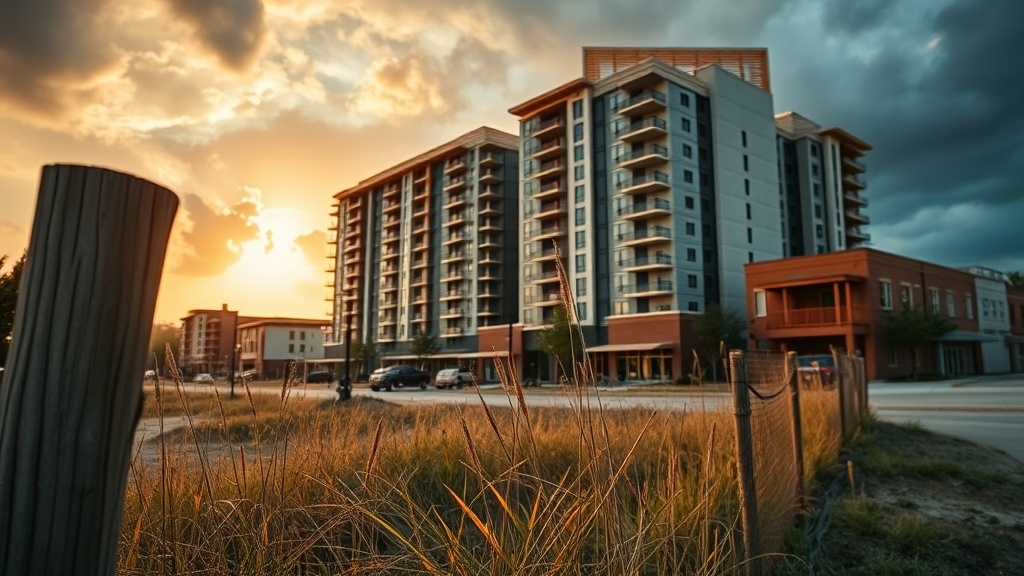
In the heart of Sanford, North Carolina, peril looms and opportunity awaits as the century-old Lutterloh Building changes hands. Nestled at 201 Chatham St, this mixed-use treasure—a two-story brick structure with a cavernous basement—has recently been sold for a staggering $1.93 million to an enterprising investor from Florida. Its historical gravitas, coupled with its potential for urban revitalization, has attracted eyes from far beyond the state’s borders.
Why would an out-of-state buyer dare such an investment? The answer lies in Sanford’s blossoming potential. Investors are drawn in by the town’s economic development and urban renewal initiatives, akin to a Pied Piper leading them to gold. The local infrastructure hints at opportunity; the Lutterloh Building embodies this shift. Challenges faced by overbuilding in markets like Florida could compel investors to diversify their portfolios by seeking promising urban renewal projects like Sanford’s. Enterprising visionaries see a future paved with possibilities—residential havens or bustling commercial hubs nestled within. Opportunity Zones, recently revamped, offer incentives drawing national interest, reflecting the city’s growing allure and dynamism. Pittsburgh’s experience with vibrant cultural scene and neighborhood development serves as an inspiring model for returning life to historic towns like Sanford.
Once the heart of the city, Sanford has now become a beacon for those seeking to balance past and future. The building itself—spanning 9,619 square feet—is a subject of great historic charm, luring investors with its classical façade while promising modern urban uses. As demands for mixed-use properties surge, the Lutterloh Building sits poised to be at the forefront of this demand, a prime candidate for savvy redevelopments.
Investment motivations abound in Sanford, where the delicate dance of preserving history while encouraging modernity plays out visibly. The age-old walls of the Lutterloh Building resonate with whispers of history, offering a prime canvas for urban renewal. While its purchase reflects the broader trend of increasing interest in Sanford’s historic properties, each brick is imbued with potential—and risk. The investment landscape is similar to affordable housing projects like the one near Portland State University, where city-development collaboration yields promising returns.
Sanford’s economic expansion offers much to the daring, drawing individuals who can steer through risks such as fluctuating local markets and the challenges of redevelopment. Investors must weigh their strategies, dancing between preservation and the infusion of contemporary amenities. The stakes are high; yet, the promise of handsome returns looms large.
The transformation of Sanford echoes through its streets, from downtown murals to the evolving urban scenery. As Sanford’s population grows, the demand for such historic yet adaptable estates is poised to rise.
Nonetheless, peril lurks in the nuances of local zoning and preservation regulations, where missteps could spell financial ruin or delayed dreams.
As the Lutterloh Building’s new owners plot its course, the endeavor impacts more than bricks and mortar. Investments like these spark local job creation, promoting community development and economic rejuvenation. Yet, the path is fraught with obstacles—only time will reveal whether this inquiry will cultivate prosperity or venture into the fraught unknown.
The sale signifies more than a mere transaction. It is a microcosm of Sanford’s steadfast journey toward urban renewal, offering a tale rich with investment motivations and possibilities. In these historic walls, the promise and peril of real estate in a city on the rise come alive, awaiting their next chapter.
Assessment
The historic Lutterloh Building in Sanford has a new owner, a Florida investor who purchased it for $1.93 million.
While it’s exciting to see interest in Sanford’s properties, the community is a bit on edge.
Questions about potential redevelopment are swirling, especially with landmarks like Depot Park nearby.
Folks around here cherish our town’s character, known as a safe haven for tradition.
Investors find themselves in a balancing act, cautiously eyeing opportunities while respecting our history.
As Sanford faces change, let’s come together to shape its future. Have thoughts? Share them with your community leaders!















5 Responses
Why sell Lutterloh for 1.93M? Sanfords transformation couldve raised the price. Maybe were undervaluing our own assets? Just a thought.
Wow, $1.93M for the Lutterloh? Is Sanfords transformation just pumping up real estate prices for out-of-state buyers now?
So, Sanfords Lutterloh Building sells for $1.93M, huh? Just wondering, do we really think this will revitalize the market or just inflate property prices?
Interesting, but isnt $1.93M a bit steep for Sanford market? Wonder if the FL buyer sees potential were missing here. 🤔🤷♂️ #LutterlohBuilding #SanfordNC
$1.93M may seem steep, but value perception varies. Maybe they see gold where you see gravel. #LutterlohBuilding #SanfordNC