
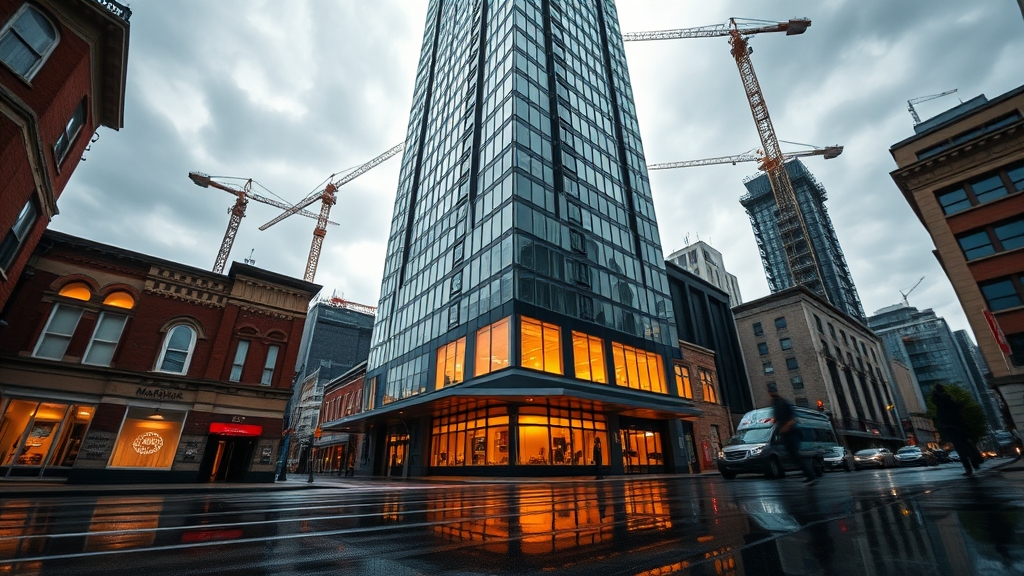
Hotel Development Faces Market Challenges
The project’s proximity to Seattle Center and Climate Pledge Arena allows developers to tap into the bustling entertainment district. However, market uncertainties remain present throughout the region’s hotel investment landscape.
Stream Real Estate and architect Board & Vellum are progressing with their proposal near the MarQueen in Seattle’s Uptown district. This move signifies a notable investment despite the hospitality sector’s ongoing recovery struggles.
The hotel’s design process highlights the hurdles developers face amid volatile competition in Seattle’s urban core. Industry analysts caution that post-pandemic hospitality investments still involve significant risks despite initial recovery signals.
Board & Vellum’s architectural team is under pressure to create a design that stands out in Seattle’s crowded hotel market. They need to balance aesthetics with operational efficiency while incorporating Stream Real Estate’s sustainability goals.
Competition is intensifying as multiple developers eye Seattle’s entertainment corridor, sparking concerns of potential oversupply. Despite signs of improvement, investor confidence continues to be dampened by economic uncertainty.
Stream Real Estate’s focus on environmental sustainability could shape design choices, potentially raising costs to meet regulatory demands. The company’s history suggests an emphasis on green building technologies and energy-efficient systems.
Property values in the Uptown area are experiencing volatility due to increased development activities in Seattle’s economic core. Nearby properties boast high valuations, indicating the necessity of substantial capital for competitive positioning.
The project must navigate complex regulatory frameworks in Seattle’s planning and zoning codes. Design review processes can prolong development timelines, adding financial pressure amid changing construction material prices.
Events at Climate Pledge Arena generate notable foot traffic, creating opportunities for strategically located hospitality properties. However, the seasonal nature of events can lead to revenue volatility, concerning institutional investors.
Even as the project progresses through initial development phases, investment challenges persist. Cost estimates for similar Seattle hotels have often surpassed original projections, affected by supply chain disruptions and labor shortages.
Financial partnerships are crucial as Stream Real Estate explores funding options for this capital-intensive venture. Traditional hospitality lenders remain cautious, applying strict underwriting standards post-pandemic.
The hotel’s potential economic impact includes job creation and increased local spending, which might garner municipal support for faster permitting processes. Regional growth patterns back long-term demand predictions despite short-term market volatility.
Foreclosure filings increased in hotspots like Phoenix, Atlanta, and Las Vegas due to economic conditions similar to those affecting hospitality.
Adjacent developments are reshaping Seattle’s urban environment, adding competitive pressure yet enhancing the district’s allure to travelers. The MarQueen’s strong presence validates the demand for more hospitality capacity.
Environmental regulations in Seattle may require innovative compliance approaches, influencing project budgets and timelines. Stream Real Estate’s sustainability expertise could offer regulatory maneuvering advantages.
The project reflects broader Seattle real estate trends, where proximity to entertainment venues drives investment decisions. The site’s historical significance includes previous establishments like Chase Bank and Tower Books, adding cultural context to the development. This comes despite ongoing challenges in the hospitality sector’s recovery journey.
Assessment
The Seattle Uptown hotel project’s advancement is occurring amid unprecedented hospitality industry turbulence. Rising construction costs and shifting travel patterns are squeezing profit margins across metropolitan markets.
Hotel developers are facing mounting pressure from elevated interest rates and uncertain demand projections. The project’s proximity to the established MarQueen Hotel is intensifying competitive dynamics in an already saturated corridor.
Industry analysts warn that oversupply risks could destabilize regional hospitality investments. The development’s success hinges on Seattle’s economic recovery trajectory and corporate travel normalization.














7 Responses
Seriously, Seattles hotel markets already saturated, isnt it? Why add more? Do we really need another Uptown Hotel Project? Seems like a financial gamble to me.
Market saturation drives innovation and competition. Lets welcome the Uptown Hotel Project!
Interesting read, but arent we ignoring the elephant in the room? How can this project advance amidst a crippling hotel industry? Just food for thought.
Is it just me or does it feel like the Seattle Uptown Hotel project is being forced despite market challenges? Just my two cents.
Is it just me or does Seattle really need more affordable housing rather than another hotel? Lets consider the locals first, folks!
Isnt this Seattle Uptown Hotel just another gentrification move? What about preserving local culture instead of market challenges and assessments?
Culture isnt static, it evolves. Maybe the hotel is the new local culture?