United States Real Estate Investor

United States Real Estate Investor

United States Real Estate Investor

United States Real Estate Investor

United States Real Estate Investor

United States Real Estate Investor

St. Louis Residents Face Insurance Crisis Post-Tornadoes

Article Context

This article is published by United States Real Estate Investor®, an educational media platform that helps beginners learn how to achieve financial freedom through real estate investing while keeping advanced investors informed with high-value industry insight.

  • Topic: Beginner-focused real estate investing education
  • Audience: New and aspiring United States investors
  • Purpose: Explain market conditions, risks, and strategies in clear, practical terms
  • Geographic focus: United States housing and investment markets
  • Content type: Educational analysis and investor guidance
  • Update relevance: Reflects conditions and data current as of publication date

This article provides factual explanations, definitions, and strategy insights designed to help readers understand how investing works and how decisions impact long-term financial outcomes.

Last updated: May 29, 2025

PLATFORM DISCLAIMER: To support our mission to provide valuable resources and insights, United States Real Estate Investor may earn affiliate commissions from links or advertising featured in our content. Images are for informational and entertainment purposes only and may not be fully representative of people or places.

United States Real Estate Investor®
insurance struggles after tornadoes
Over 70% of homeowners in St. Louis' tornado-affected areas lacked insurance, unveiling stark disparities and challenges in community recovery—discover what's next.
United States Real Estate Investor®

United States Real Estate Investor® News

Insurance Accessibility Crisis in North St. Louis

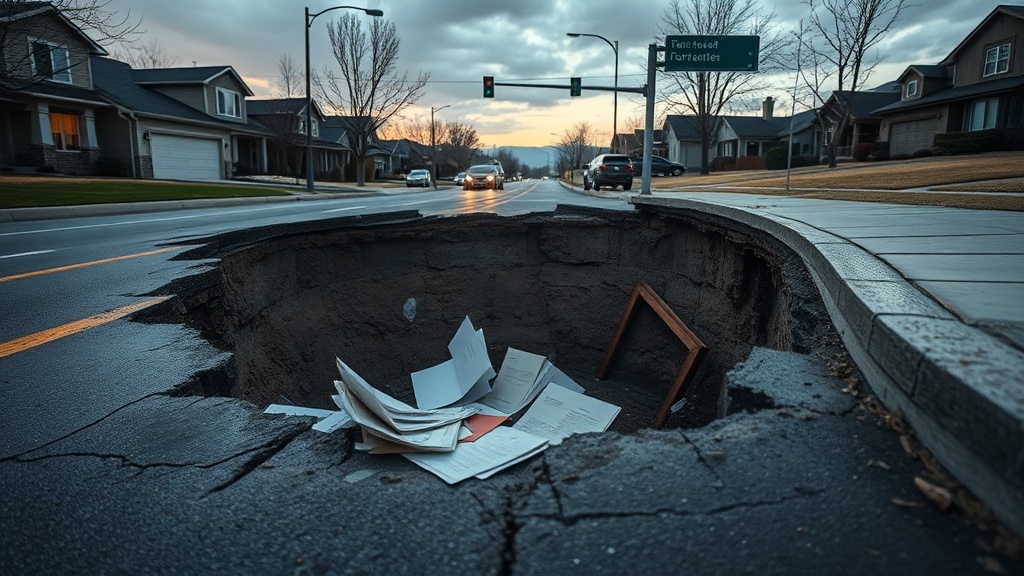
In the aftermath of the devastating tornadoes in north St. Louis, gaps in insurance coverage significantly impeded homeowners’ recovery efforts. Over 70% of homeowners in some of the hardest-hit blocks lacked insurance, leaving them with immense financial burdens.

This crisis highlighted the urgent issue of insurance accessibility, especially in vulnerable communities with home values below $150,000. The median sales price in these neighborhoods is approximately $97,000, contributing to high rates of uninsured homeowners.

Missouri’s regulatory framework exacerbates the situation, as it does not mandate insurance for mortgage-free homeowners. This policy has left many exposed, particularly in areas with 91% Black residents, where historical inequities and economic divides have perpetuated the insurance gap.

The legacy of redlining and discriminatory housing practices continues to manifest in stark disparities, weakening community resilience. Insurers often require extensive home repairs before issuing policies, contributing to these barriers.

Vacant homes lead to higher premiums due to perceived fire risks, complicating insurance acquisition. Many residents face rejection or unfeasible premiums even after costly home improvements.

Repairing essentials like windows can exceed $20,000, a financial hurdle for many. Financial and housing market strains add complexity, as residents struggle to secure loans for repairs.

Lower home values decrease collateral value, stalling community recovery. Uninsured homeowners unable to rebuild swiftly see property damage from tornadoes as a personal loss, estimated at $1.6 billion.

Government efforts and non-profit organizations are underway, but challenges persist. Nearly 5,000 structures were reported destroyed, prompting a state of emergency declaration from the city’s mayor. Many neighborhoods faced more extensive damage than others, highlighting the uneven impact of the storm.

Despite attempts to secure federal aid, substantial gaps in insurance infrastructure threaten long-term recovery and resilience. These systemic issues hinder community recovery, amplifying the risk of long-term displacement.

The insurance crisis in north St. Louis underscores the need for policy solutions that address affordability and access. Local organizations and researchers are working to comprehend these gaps and develop strategies to bolster community resilience.

However, for many residents dealing with financial barriers, the path to recovery remains challenging. This underscores the pressing need for interventions bridging the divide between vulnerability and resilience.

Assessment

St. Louis residents are confronting a significant insurance crisis following devastating tornadoes.

In North St. Louis, premiums are soaring, and coverage options are shrinking.

Insurers are reassessing risk profiles due to the uptick in natural disasters.

This situation poses a threat to homeowners who may be forced out of their neighborhoods.

Such displacement could affect the community’s socioeconomic structure and the real estate market.

The instability highlights the urgent need for policy measures to protect those most affected.

United States Real Estate Investor®

5 Responses

  1. Why not just move out of tornado zones, guys? Seems easier than complaining about insurance accessibility. Just thinking out loud here.

  2. Why dont St. Louis residents just move somewhere else? Tornadoes are frequent there, seems like theyre asking for trouble. Just a thought.

  3. Bit strange, isnt it? Insurance coverage vanishes when we need it the most. Time to rethink this system, eh guys?

  4. Feels like insurance companies always bail when disaster strikes. Anybody else think we should nationalize disaster insurance? Just a thought.

  5. Isnt it ironic that insurance, meant to shield us from disaster, becomes inaccessible when we need it most? This system needs an overhaul, ASAP.

Leave a Reply

Your email address will not be published. Required fields are marked *

Thank you for visiting United States Real Estate Investor.

United States Real Estate Investor®

Information Disclaimer

The information, opinions, and insights presented on United States Real Estate Investor are intended to educate and inform our readers about the dynamic world of real estate investing in the United States.

While we strive to provide accurate, up-to-date, and reliable information, we encourage readers to consult with professional real estate advisors, financial experts, or legal counsel before making any investment decisions.

Our team of expert writers, researchers, and contributors work diligently to gather information from credible sources. However, the real estate market is subject to fluctuations, changes, and unforeseen events.

United States Real Estate Investor cannot guarantee the completeness or accuracy of the information presented, nor can we be held responsible for any actions taken based on the content found on our website.

We may include links to third-party websites, products, or services.

These links are provided for convenience and do not constitute an endorsement or approval by United States Real Estate Investor.

We are not responsible for the content, privacy policies, or practices of any third-party sites.

Opinions expressed by contributors are their own and do not necessarily reflect the views or policies of United States Real Estate Investor.

We welcome diverse perspectives and encourage healthy debate and discussion.

By accessing and using the content on United States Real Estate Investor, you agree to this disclaimer and acknowledge that the information provided is for informational and educational purposes only.

If you have any questions, concerns, or feedback, please feel free to visit our contact page.

United States Real Estate Investor.

United States Real Estate Investor®
Picture of United States Real Estate Investor®
United States Real Estate Investor®

Helping you learn how to achieve financial freedom through real estate investing.

Don't miss out on the value

Join our thousands of subscribers

Subscribe to our newsletter to learn how to attract clients, close deals faster, and a lot more!

United States Real Estate Investor logo
United States Real Estate Investor®

This is the easiest way to know the industry.
The Ultimate Real Estate Investing Glossary

United States Real Estate Investor®

More content

United States Real Estate Investor®

notice!

Web & Social yearly Package

Please, have ad set files ready before purchase.

Please, be aware that after your purchase on the Stripe payment portal, keep your browser open; You will be automatically redirected to the ad set submission page.

notice!

Web & Social Monthly Package

Please, have ad set files ready before purchase.

Please, be aware that after your purchase on the Stripe payment portal, keep your browser open; You will be automatically redirected to the ad set submission page.