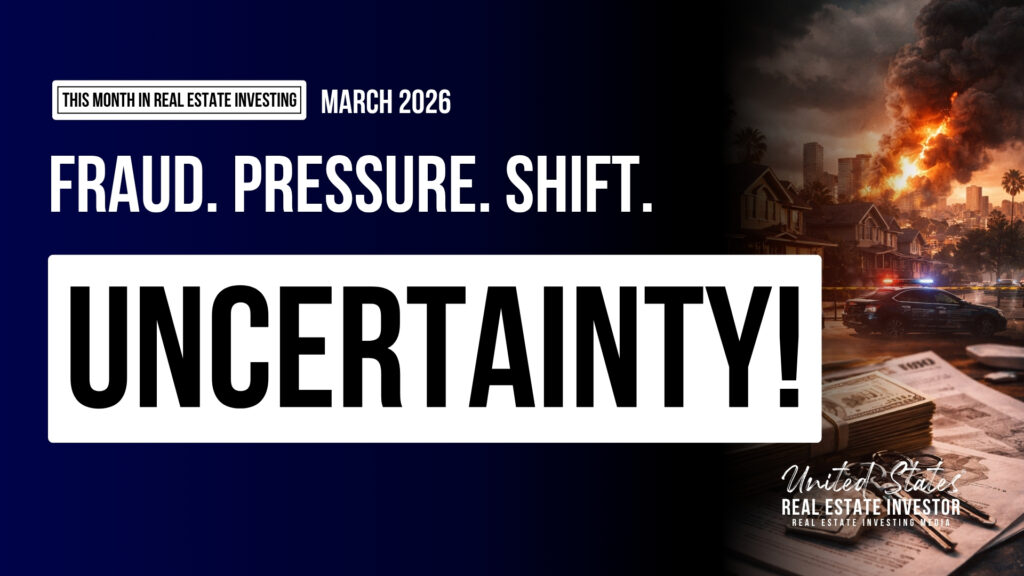
Zohran Mamdani’s shocking rise to power has ignited panic among New York investors as socialist policies threaten to crush cash flow, spike taxes, and reshape property values in America’s most iconic market.
Key Takeaways
- Zohran Mamdani’s socialist victory has triggered fear across the investor community as New York City faces potential rent freezes, tax hikes, and public ownership expansion.
- Historical data shows that regulatory overreach, tax pressure, and political uncertainty consistently drive capital out of New York, lowering valuations and tightening liquidity.
- Investors who act fast, rebalance portfolios, and defend cash flow through smart refinancing and diversification can avoid major financial fallout.
While the world watched in disbelief, New York City quietly crossed a line it can never uncross. A 34-year-old socialist just took control of the nation’s most valuable housing market.
For investors, this isn’t politics, it’s survival.
Rent freezes, tax hikes, and public ownership threaten to dismantle the city’s private investment system from the inside out.
Could this be the moment American capitalism finally turns on itself?
Here’s what you’ll discover:
-
How Mamdani’s socialist platform could rewrite every NYC investment model.
-
Why global capital is already preparing to abandon the city.
-
The historic data proving political ideology can destroy property values faster than interest rates ever could.
The next real estate crash won’t start with the Fed, it’ll start with a mayor.
The Shock Heard From Wall Street to Woodside
On November 4, 2025, the unthinkable happened. New York City, the beating heart of global capitalism and the symbolic home of private wealth, elected a socialist.
Zohran Mamdani, a 34-year-old Ugandan-born, Queens-raised assemblyman and self-proclaimed “democratic socialist,” just toppled one of the most powerful political dynasties in modern American history, Andrew Cuomo, in a landslide that no one on Wall Street believed possible.
As polls closed and results poured in, Manhattan’s skyline shimmered with eerie silence.
Traders, developers, hedge fund managers, and landlords all watched the same words crawl across their screens: “Zohran Mamdani elected mayor of New York City.”
Within minutes, fear gripped the financial district.
A City Built on Capital Now Controlled by Its Opposite
New York City has always been the citadel of American capitalism, a place where billion-dollar towers are born from spreadsheets, where property is religion, and where every square foot is monetized into a yield.
Now that fortress faces its most dangerous internal threat yet, a mayor who openly challenges the very foundation it stands upon.
Mamdani’s campaign promises read like a manifesto for a financial revolution:
-
Freeze rents citywide.
-
Raise taxes on the top 1%.
-
Nationalize essential services under city control.
-
Create city-run grocery stores and free public buses.
-
Expand childcare and social housing, funded by “the wealthy.”
These are not reforms. They are systemic reprogramming of New York’s economic DNA.
Every investment model, from REITs to small multifamily operators, is suddenly under siege.
Cap rates no longer make sense.
Cash flow projections are worthless.
The city that once defined the global real estate market has, overnight, become a testing ground for socialism in a capitalist republic.
Immediate Financial Fallout
By dawn the next morning, the market tremors began.
-
SL Green Realty Corp., the city’s largest office landlord, saw shares tumble nearly 5% before the opening bell.
-
Hedge funds with heavy New York exposure initiated sell orders on multiple real estate holdings.
-
Brokers reported investors from Florida, Texas, and even overseas pulling out of pending Manhattan acquisitions, citing “policy instability.”
-
Lending institutions quietly began tightening underwriting standards for New York assets, expecting a wave of downward reappraisals once rent freezes hit.
Even developers who had survived recessions and pandemics whispered a word they hadn’t uttered in decades: “exodus.”
The Political Earthquake Beneath the Towers
Mamdani’s victory was not just political. It was philosophical warfare. His rise marks the moment socialism breached the walls of capitalism’s strongest fortress.
No longer confined to academic debates or fringe politics, this ideology has seized power inside the world’s most expensive city, the home of the New York Stock Exchange, of Wall Street, of Fifth Avenue penthouses and billion-dollar air rights.
Gianno Caldwell, Fox News political analyst, called the win “a socialist shockwave that could reshape not just New York, but the global property market.”
Economists warn that if Mamdani follows through on his platform, it could create “de facto price controls” across the housing market, suffocating new development and collapsing long-term investor confidence.
This is not rhetoric.
This is a direct threat to private ownership, the foundation of American wealth creation.
The Investor Panic Begins
Within 24 hours of Mamdani’s acceptance speech, high-net-worth real estate investors began liquidating assets.
At least three institutional funds, according to internal market chatter, initiated relocation studies to move capital out of New York and into Florida, Texas, and Nevada, where landlord protections remain intact.
Investment advisory groups in Midtown sent emergency memos to clients titled “Reassessing NYC Portfolio Exposure Under Socialist Governance.”
One line read:
“If Mamdani freezes rents and enforces new corporate tax tiers, average NOI for multifamily assets could drop by 30% in less than 18 months.”
Developers who once bankrolled city campaigns now whisper openly about the new mayor in panic and disbelief.
The same investors who fueled New York’s construction boom are now drafting exit strategies.
For the first time since the Great Depression, New York’s property market is not just uncertain. It is politically hostile.
What Mamdani Promised To Do To The Market
Rent Freezes and Expansion of Regulation
Zohran Mamdani’s first and most explosive promise was to freeze residential rents across New York City.
To many tenants, this sounded like relief. To investors, it sounded like the beginning of a financial collapse.
A rent freeze stops more than rent. It stops growth.
It locks net operating income in place while operating costs, maintenance, insurance, utilities, and property taxes continue to rise. For landlords carrying heavy debt, the math implodes instantly.
Under such conditions, a building’s cap rate begins to climb as investors demand higher returns to compensate for the new risk.
That higher cap rate slashes property values overnight.
The once-profitable margin between rent collections and expenses vanishes, and refinancing becomes nearly impossible.
Lenders facing lower appraisals start demanding partial paydowns, and entire portfolios can begin to unravel.
In an economy still recovering from inflation and interest rate shocks, the concept of a citywide rent freeze reads like a warning label to global capital.
Investors know that when regulation grows faster than revenue, liquidity disappears.
Properties that once traded within weeks could sit unsold for months, draining reserves and destroying confidence.
This is not a theoretical threat. New York’s own history under prior rent control regimes shows exactly what happens next: deterioration, abandonment, and capital flight.
When owners cannot raise rents to cover maintenance, roofs leak, boilers fail, and buildings decline. A policy written to protect tenants ends up punishing them through decay.
Progressive Tax Shifts and Corporate Levies
The second pillar of Mamdani’s platform is a sweeping redistribution plan aimed at what he calls “the city’s richest one percent.”
That phrase is not rhetoric. It is a signal to every investor holding high-value property that their balance sheet is about to become a revenue source for City Hall.
His proposal includes raising property taxes on luxury assets and adding new corporate levies designed to fund social programs, including free childcare and transit.
Such measures may be politically popular, but economically, they are poison to confidence.
When tax burdens climb, capitalization rates expand further.
The after-tax return on investment falls, making every project less appealing to both domestic and foreign investors.
Developers who once viewed New York as a global safe haven are now modeling tax exposure as an existential risk.
In addition to local taxes, Mamdani has floated support for new state-level surcharges targeting corporations and investment entities.
Albany approval would be required, but even discussion of such changes introduces uncertainty. The bond market reacts first. Interest spreads on municipal debt widen.
Lenders grow cautious. The cost of borrowing for both public and private projects climbs.
The city’s fiscal machinery depends on predictable revenue from real estate transactions.
A policy shift that chases investors away can undercut that stability, leading to fewer deals, fewer permits, and less overall tax collection.
The cycle feeds itself until economic stagnation becomes the new normal.
Public Ownership and Service Expansion
Mamdani’s third promise completes the ideological transformation. He intends to expand public ownership of essential services: grocery stores, childcare centers, and transportation.
To supporters, these ideas represent equity and fairness.
To investors, they represent the state becoming a competitor.
When the government begins to operate in sectors once dominated by private enterprise, it reshapes the market. City-run grocery stores could disrupt commercial leases, reducing demand for retail space.
Free public buses could distort transit-oriented development models that depend on commuter traffic and parking revenue.
City-controlled childcare could alter zoning demand for family housing near private centers.
The broader consequence is psychological. Investors lose faith when government ceases to act as a neutral regulator and instead positions itself as a market participant.
Capital flows toward predictability.
A city that decides to own and operate what it once merely oversaw sends a clear message to financiers: private opportunity is being replaced by public control.
Under Mamdani’s plan, the government is not merely setting the rules of the game. It is playing on the field.
For real estate investors, that is the moment when competition becomes confrontation.
The Ideological Blueprint Behind This Agenda
What Socialism Means in Practice
At the center of Zohran Mamdani’s political movement is an ideology that openly rejects the economic framework that built New York City.
Socialism, in its true definition, is the belief that production, distribution, and exchange should be owned or heavily regulated by the state or the community rather than by private individuals.
Its goal is not profit but equality, enforced through control of prices, wages, and essential goods.
In this system, the government becomes the architect of economic life.
Bureaucrats, not markets, determine who produces what, at what cost, and for whose benefit.
The premise is moral, but the result is mechanical. Profit incentive disappears, private ownership weakens, and productivity slows.
For investors, socialism represents an existential reversal. It transforms property from an investment into a regulated utility.
The freedom to buy, build, and profit is replaced by permission from political leadership. New York, under Mamdani’s stated platform, would move closer to this model than any major American city has in modern history.
A Brief History of Socialism
Socialism’s roots trace back to the 19th century, born from industrial-era inequality in Europe.
As factories multiplied and wealth concentrated, thinkers such as Karl Marx and Friedrich Engels proposed that workers should control production and share in its rewards.
The movement spread rapidly through labor unions and postwar reconstruction efforts, shaping the political economies of nations across the globe.
By the early 20th century, socialist ideas began influencing government policy in Europe and in newly independent nations emerging from colonial rule.
The goal was to redistribute wealth, eliminate class hierarchies, and replace market competition with collective welfare.
While many European nations adopted partial or mixed socialist models, others pursued complete transformation.
In each case, the results depended on how deeply the state intervened.
Scandinavian countries kept private enterprise alive under high taxation, creating hybrid systems that delivered welfare without destroying productivity. Others, however, took a more radical path.
The Birth and Consequences of Communism
Communism emerged as socialism’s most extreme form. It called for the total abolition of private property and the creation of a classless society where all means of production belonged to the state.
In theory, everyone would share equally. In practice, power concentrated in the hands of a ruling elite.
In Lenin’s Soviet Union, central planners replaced business owners.
Prices were dictated, not discovered. Innovation collapsed, shortages spread, and individual enterprise became illegal. Stalin’s later regime turned this command economy into an instrument of political control.
The Soviet system industrialized rapidly but at enormous human cost, ending with stagnation and economic implosion.
In Maoist China, similar experiments produced famine and decades of lost growth.
In Cuba, Castro’s revolution delivered social equity at the price of chronic scarcity and isolation. Across these systems, the pursuit of equality produced the same outcome: poverty distributed evenly.
The historical cost of communism is measured not only in economic decline but in human freedom lost. When the state owns everything, individuals own nothing, including their right to create wealth.
The Absolute Contrast: U.S. Capitalism
American capitalism represents the opposite end of the spectrum. It is built on private ownership, free enterprise, and competition. Individuals and companies pursue profit, and that pursuit fuels innovation, expansion, and national wealth.
Decisions are decentralized. Markets, not ministries, determine value.
The result is visible everywhere: skyscrapers financed by investors, global corporations born in garages, and an economy that absorbs failure and rewards resilience.
It is imperfect, but it is dynamic. It thrives because individuals are free to succeed or fail on their own merit.
Capitalism turned the United States into the world’s largest economy and created the financial infrastructure that allows investors to build wealth through property.
The same system that made New York the financial capital of the world now faces a mayor whose ideology challenges its legitimacy.
Why This Matters for Investors
Socialism undermines property as an asset class. Capitalism defines it as the foundation of freedom. The two cannot coexist without friction.
For investors, the consequences are immediate. Rent control, punitive taxation, and redistributive policy erode net returns and devalue assets. Market confidence, which depends on predictability, collapses when profit becomes a political issue.
Mamdani’s election is not a local event. It is an ideological reversal in the city that epitomized American capitalism.
The very engine that financed the global property market is now led by a man who questions whether property itself should generate private profit.
For the U.S. real estate investor, the risk is not just financial. It is philosophical. The foundation of ownership is being tested in the one city that once symbolized its permanence.
Uganda’s Century of Policy Shifts That Shaped the Mamdani Worldview
1920s–1962 British Colonial Capitalism
Uganda’s political and economic identity was born under British colonial rule.
The British turned the territory into a classic extractive economy designed to serve the empire, not the citizens who lived there.
Local chiefs acted as intermediaries, collecting taxes and enforcing British directives. Coffee, cotton, and tea became the cornerstones of export agriculture.
A small Indian merchant class, imported by the British, dominated commerce and trade.
Africans provided the labor, while foreign capital and administrators captured the profits.
Economic policy was structured to benefit London, creating a system of inequality and dependence that persisted long after independence.
By the time Uganda gained self-rule in 1962, it had inherited a divided society: one part agricultural and impoverished, the other urban and commercially powerful.
This imbalance planted the seeds of resentment that would later drive Uganda toward socialist and populist policies.
1962–1971 Independence and Obote’s “Move to the Left”
After independence, Prime Minister Milton Obote sought to distance Uganda from colonial influence.
His famous “Move to the Left” manifesto called for nationalization of major industries, the creation of cooperatives, and government control over trade.
The goal was to place economic power in the hands of Ugandans rather than foreign corporations.
While the rhetoric appealed to nationalist pride, the execution was disastrous. Inefficient state enterprises replaced experienced private operators.
Bureaucracy expanded faster than productivity.
Corruption spread through ministries as political loyalty, not skill, determined appointments.
By the early 1970s, Uganda’s economy had begun to fracture.
The promise of equality produced shortages, inflation, and mounting debt. Investors, both local and foreign, fled the country.
1971–1979 Idi Amin’s Militarized Populism
In 1971, General Idi Amin seized power in a military coup, claiming he would restore order. Instead, he delivered chaos.
Within a year, he expelled more than 60,000 Asians, many of them Ugandan citizens whose families had lived there for generations.
These business owners controlled much of the nation’s retail, banking, and manufacturing sectors.
Amin handed their properties to loyalists and soldiers who had no experience managing them.
Factories closed, trade collapsed, and Uganda’s currency disintegrated.
The national GDP fell by more than half. What began as economic nationalism turned into economic suicide.
By the end of the decade, the country was isolated, its infrastructure decaying, and its institutions paralyzed.
The lesson was clear: ideology without competence destroys markets.
1979–1986 Coups and Civil War
After Amin’s fall, Uganda entered one of the most chaotic periods in its history.
Governments rose and fell in rapid succession, each promising reform, none delivering stability. Civil war raged between competing factions, including Milton Obote’s return to power and Yoweri Museveni’s insurgency.
Commerce vanished. Inflation soared. Entire regions were depopulated by violence.
By 1986, when Museveni finally seized control, Uganda was a shattered economy with empty coffers and no functioning banking system.
The private sector was broken, and the population had lost all faith in governance.
1986–2005 Museveni’s Neoliberal Rebuild
Yoweri Museveni came to power promising democracy, stability, and reconstruction. Initially influenced by socialist liberation ideology, he soon realized Uganda could not rebuild without outside help.
The International Monetary Fund and World Bank stepped in with Structural Adjustment Programs that demanded liberalization, privatization, and foreign investment.
For the first time in decades, the Ugandan economy stabilized. Inflation dropped, GDP grew, and foreign capital returned. Yet the benefits were uneven.
A small political elite captured the profits, while rural poverty persisted. What emerged was not a free market but a hybrid system, state-controlled politics paired with market economics.
Uganda became the model of “reform without freedom,” where growth depended on Western loans and aid rather than domestic productivity.
2005–2025 Nationalism, Conservatism, and Youth Revolt
Over time, Museveni consolidated power, abolishing term limits and transforming Uganda into a de facto one-party state. His government courted foreign investors while repressing political dissent.
Social conservatism hardened, and nationalism grew louder.
When Western donors criticized Uganda’s human rights record, Museveni accused them of neocolonial interference.
Aid was weaponized. Uganda leaned toward China and Russia for development partnerships, reducing its dependence on the West but also increasing its authoritarian tendencies.
A restless generation of young Ugandans, frustrated by unemployment and inequality, began demanding radical change.
Many looked to leftist and socialist movements for inspiration. The very ideas that had once wrecked the country re-emerged, rebranded as social justice.
The Pattern in One Table
| Era |
Policy Type |
Economic Outcome |
Political System |
| Colonial |
Market capitalism under empire |
Export growth for Britain |
Indirect rule |
| Obote |
African socialism |
Inefficiency and corruption |
Authoritarian |
| Amin |
Populist seizure |
Collapse and isolation |
Dictatorship |
| Museveni early |
Neoliberal reform |
Growth and inequality |
One-party rule |
| Museveni later |
Authoritarian capitalism |
Elite capture |
Lifetime presidency |
Why This History Matters for New York City
Uganda’s political DNA was written by alternating cycles of capitalism, socialism, and dictatorship.
Each turn in the cycle reinforced a deep skepticism toward Western economic models and a belief that justice requires state control.
Zohran Mamdani grew up in that intellectual climate.
His political instincts were shaped by the lessons his family carried out of Uganda: that capitalism enriches the few, that colonial powers manipulate markets, and that equality must be enforced through intervention.
This legacy explains why he views New York not as a marketplace but as a mechanism for redistribution. In his eyes, private ownership is a privilege that must answer to the collective good.
For New York investors, understanding Uganda’s history is not academic. It is predictive.
It reveals how deeply embedded Mamdani’s distrust of free markets may be, and how far he might be willing to go to replace them with systems of government control.
The Father Who Forged the Philosophy: Mahmood Mamdani’s Influence
Intellectual Foundation
To understand Zohran Mamdani’s worldview, one must first understand his father, Mahmood Mamdani. Few intellectuals have shaped modern political theory and post-colonial thought more profoundly.
Born in Mumbai, raised in Uganda, and educated in the West, Mahmood became one of Africa’s most influential political scientists and an unwavering critic of capitalism, colonialism, and Western interference in developing nations.
Mahmood Mamdani’s landmark works, including Citizen and Subject and Define and Rule, dissect how colonial powers divided societies by race, tribe, and class to maintain control long after formal independence.
His central argument is chillingly simple: modern inequality is not accidental; it is the result of systems built by colonial empires and sustained by capitalist economies that still operate in the shadows of that legacy.
To Mahmood Mamdani, Western capitalism is not a neutral system of trade.
It is a weaponized structure designed to extract value from weaker nations.
He has argued that free markets, when left unchecked, replicate colonial hierarchies by replacing political domination with economic dependency.
This belief has defined his life’s work and, more importantly, his son’s political mission.
Transmission of Ideology
Zohran Mamdani grew up in the intellectual orbit of his father’s revolutionary ideas.
His mother, acclaimed filmmaker Mira Nair, amplified those views through art and storytelling that exposed social injustice and inequality.
Their home environment was steeped in activism, political debate, and moral purpose.
From a young age, Zohran absorbed a worldview that viewed economic power as the root of oppression.
His father’s lectures, his mother’s films, and his family’s Ugandan exile after Idi Amin’s regime combined to form a singular conviction: freedom is meaningless without equality, and equality cannot exist within capitalism.
When Zohran entered public life, he carried that ideology into the heart of the world’s most capitalist city.
His speeches echo his father’s warnings about Western systems of exploitation, but his platform translates them into urban policy: rent freezes, redistribution, and city-owned services designed to dismantle what he calls “structural injustice.”
This generational transmission of belief is not subtle. Mahmood Mamdani trained scholars to question empire; Zohran Mamdani seeks to train citizens to question profit.
The father used the classroom; the son now uses City Hall.
How These Ideas Could Mold New York
If Mahmood Mamdani’s theories about colonial control were transplanted into the modern United States, they would find their purest expression in Zohran’s New York.
The same ideological thread that once sought to free African nations from European economic dominance now seeks to free New Yorkers from what he sees as corporate domination and speculative real estate greed.
Rent freezes, wealth redistribution, and city-owned enterprises are not random campaign promises.
They are direct applications of post-colonial socialist philosophy to a Western metropolis. In Mahmood’s academic writing, colonial administrators created inequality by privatizing resources and empowering elites. In
Zohran’s policy view, landlords and developers play that same role today.
Under his leadership, New York could become the first major Western city to apply anti-colonial theory to municipal governance.
The results would be profound. Property could be redefined as a public trust rather than a private right. Profit could be subordinated to what the administration defines as social equity.
The marketplace could become a moral battleground rather than a financial one.
For investors, this is not just ideology. It is trajectory.
Every decision, from rent policy to taxation, will be filtered through a lens that treats capital as a force to restrain, not to reward.
The philosophies of Mahmood Mamdani are no longer confined to university seminars in Kampala or New York. They are now embedded inside the mayor’s office of the world’s financial capital.
The father wrote theory.
The son now governs by it.
The Clash With New York’s Private Market Machine
Legal Tripwires
New York City does not operate in a policy vacuum.
Rent stabilization adjustments are set by the Rent Guidelines Board, which holds annual hearings and votes on lease increases for approximately one million stabilized apartments.
Any attempt to impose broad freezes beyond that framework will collide with state statutes and case law that define how stabilization operates.
City Hall can posture, but durable changes require process, hearings, and votes.
Property taxation is similarly constrained.
New York State law governs the structure of local property taxes, the pace of assessment changes, and the constitutional tax limit that caps how much cities can levy.
Income and corporate tax changes also run through Albany. A mayor can advocate, but statutory power lies with the legislature and, in some cases, the courts.
Debt markets are another guardrail. New York City’s general obligation borrowing is bounded by a constitutional debt limit tied to the five-year average full valuation of taxable real estate.
If policy scares capital, spreads widen, issuance becomes more expensive, and the budget absorbs higher carrying costs.
That financial discipline narrows the runway for sweeping new programs that depend on optimistic revenue projections.
Environmental compliance piles on additional constraints. Local Law 97’s emissions caps begin a schedule of penalties for large buildings that exceed limits, introducing a real cash drain for noncompliant assets.
Stack that cost on top of any rent suppression or tax increases and the squeeze on owners becomes immediate and measurable.
Valuation and Liquidity Stress
Policy risk lifts required returns. As investors demand a thicker risk premium for New York exposure, cap rates drift upward.
A higher cap rate on the same income means a lower valuation. Appraisals follow sentiment, not speeches.
Falling values push loan-to-value ratios higher on outstanding debt, which tightens the room to refinance.
Liquidity is the second casualty.
Buyers step back, sellers cling to last year’s pricing, and bid-ask gaps widen.
Deal timelines stretch, retrades multiply, and more contracts die at financing contingencies.
Land markets seize first, followed by development sites where pro formas can no longer absorb higher costs and slower lease-up assumptions.
Equity grows cautious. Joint venture capital demands sweeter promotes or steps aside entirely.
Operating pressure compounds the valuation hit. Insurance, compliance, maintenance, and utilities are moving up, not down.
If rents are suppressed while expenses climb, net operating income flattens or falls.
That math forces defensive asset management rather than growth investment. Deferred capital projects spread, and quality slippage begins to show in the housing stock.
Lender Response
Credit tightens before headlines fade. Underwriting models raise debt service coverage thresholds, trim allowable leverage, and shorten interest-only periods.
Construction lenders require more equity, bigger contingencies, and stronger guarantees. Bridge lenders widen spreads and reduce proceeds.
Agency and bank lenders push sponsors toward amortization earlier in the loan term.
Refinance risk becomes central.
Maturities rolling over the next twelve to twenty-four months face lower appraised values, tougher terms, and potential equity gaps at closing.
Sponsors respond with partial paydowns, mezzanine fill, preferred equity, or extension fees. Some assets will not pencil. That is where deed-in-lieu conversations begin.
Bond investors watch the same signals. If recurring revenue lines tied to transactions and development slow, municipal credit analysts mark down growth assumptions.
Borrowing costs rise for the city and its authorities, making large-scale public ventures harder to finance without cuts elsewhere.
Sector Scorecard
High risk: rent-regulated and luxury multifamily.
Stabilized assets face direct policy exposure through the Rent Guidelines Board and operating cost inflation that cannot be offset by rent growth. Luxury and high-assessed properties absorb the brunt of proposed redistribution, raising carry and shrinking buyer pools.
Moderate risk: office and retail. Office remains vulnerable to leasing uncertainty, sublease supply, and higher tenant improvement and concession packages. Retail tracks foot traffic and local income.
Policy turbulence erodes confidence, but long leases and credit tenants provide partial insulation where they exist.
Stable to resilient: industrial and logistics. Freight, last-mile, and cold storage rely on regional demand drivers less sensitive to rent policy.
Zoning, congestion, and limited land supply support rent resilience, though cap rates will still reflect any citywide risk premium.
Development wildcard: pipeline sites and conversions. Ground-up multifamily and office-to-residential strategies rely on clear rent outlooks, predictable timelines, and consistent incentives.
If policy reduces achievable rents or raises taxes and compliance costs, residual land value falls. Many projects pause until yields reprice or incentives return.
This is how ideology meets spreadsheet. Law constrains, markets reprice, lenders protect, and sectors separate by exposure.
The result is a city where capital will still play, but only at a discount that punishes yesterday’s assumptions.
Scenarios Investors Must Underwrite Now
Base Case: Partial rollout, slower deals, valuation dip
Policy momentum exists but hits legal and fiscal guardrails.
The Rent Guidelines Board holds to minimal increases or a targeted pause in select categories. Albany debates tax shifts without rapid enactment. Headlines elevate risk premium, lifting cap rates modestly across multifamily and mixed use.
Appraisals soften, especially where rent growth expectations were aggressive. Deal volume declines as buyers widen yields and sellers resist new pricing.
Lenders trim proceeds and shorten interest only, but refinancing remains available for strong sponsors with clean histories, stable occupancy, and adequate reserves.
Development pipelines slip timelines rather than cancel, while land values reset to reflect thinner exit rents and higher carry.
Capital rotates toward industrial and credit retail while multifamily underwriting bakes in flat rents and higher expenses.
Stress Case: Broad rent freezes, new taxes, liquidity drop
City messaging hardens around affordability and enforcement.
The Rent Guidelines Board adopts a general freeze across the largest rent stabilized cohort for at least one annual cycle.
Albany advances targeted tax measures that raise carry on high assessed assets and select corporate vehicles.
Net operating income compresses as insurance, compliance, and utilities rise. Cap rates widen materially, cutting valuations and pushing loan to value ratios higher on existing debt.
Refi proceeds fall short, creating equity gaps that require mezzanine capital, preferred equity, or partial paydowns.
Bridge and construction lenders widen spreads and demand lower leverage, delaying starts and forcing redesigns. Bid ask gaps yawn open, contract fallout increases, and time on market extends.
Transaction tax receipts weaken, municipal borrowing costs drift higher, and incentive programs face budget strain.
Capital flight begins toward low regulation states and suburban nodes with landlord favorable statutes.
Severe Case: Full policy stack, capital flight, municipal credit stress
Rent action expands beyond a single cycle, with freezes or near zero adjustments signaling a multi year posture.
Albany enacts broad tax increases that capture luxury residential, high value commercial, and targeted corporate classes, while program spending grows.
Private balance sheets absorb persistent NOI erosion and rising compliance costs, including emissions penalties for noncompliance.
Valuations reset sharply, breaching covenants across portions of levered portfolios. Refinance windows close for weaker assets. Distress surfaces through maturity defaults, deed in lieu outcomes, and note sales.
Construction pipelines stall, public private projects are repriced, and labor displacement accelerates in construction and brokerage.
Municipal revenue tied to transactions and development declines, pressuring service budgets and elevating general obligation spreads.
Ratings outlooks tilt negative.
Large institutions announce strategic reductions in New York exposure, while family offices and midsize sponsors pursue orderly exits or 1031 exchanges into Sun Belt and Mountain markets.
The market functions, but at a materially higher required yield that penalizes legacy owners and rewards only the most conservatively capitalized buyers.
Behavior To Expect In the First 90 Days
Public Markets and Investor Sentiment
Equity markets move first. Within days of the election, New York–focused REITs and real estate equities will experience sharp volatility as analysts adjust valuations and forward guidance.
Investor notes will emphasize the risk of rent freezes, rising compliance costs, and stalled growth in lease rates.
Daily trading volume in property-related securities will spike around political headlines and soften when information lulls, signaling uncertainty rather than stability.
Institutional investors will begin to rebalance exposure. Funds overweight New York will shift capital toward industrial, logistics, and Sun Belt assets.
Managers will initiate hold reviews to decide which portfolios warrant exit within the next two quarters.
Development and Construction Pipeline Response
Developers will pause or delay projects while updating yield models under new rent and tax assumptions.
Entitlement schedules and financing packages will be reevaluated to determine feasibility at revised valuations.
Lenders will require larger contingencies, more proof of equity, and higher interest reserves before releasing draws.
Groundbreakings already in preconstruction could slip by at least one fiscal quarter.
Land sellers will face thinner bids as buyers price in longer absorption and lower exit rents. In several boroughs, shovel-ready sites will sit idle while investors gauge policy implementation speed.
Brokerage and Transaction Activity
Transaction volume will contract rapidly. Active listings will remain on the market longer, with retrades becoming common.
Buyers will add contingencies tied to financing and appraisals, while sellers resist lower pricing. Off-market exploration will increase as owners quietly test investor appetite without signaling distress.
Contract fallout rates will climb, particularly where financing was essential to closing.
Investment sales teams will pivot from promotion to preservation, focusing on keeping deals alive rather than generating new ones.
Leasing Behavior Across Asset Classes
Leasing teams will shift priorities from rent growth to tenant retention. In the office and retail sectors, concession packages will widen as operators protect occupancy and credit stability.
Multifamily owners will emphasize renewals and occupancy over aggressive rent hikes, focusing on expense recovery and maintenance control.
Upgrade programs and repositioning projects will slow.
Turnover costs will be tightly managed. Asset managers will focus on stabilizing income streams and deferring discretionary spending until policy clarity returns.
Lender and Credit Market Reaction
Credit standards will tighten. Agency and bank lenders will raise minimum debt service coverage ratios, reduce proceeds, and shorten interest-only periods.
Construction lenders will request larger guarantees and stronger collateral. Bridge lenders will widen spreads and impose new cash sweep triggers tied to debt yield and occupancy.
Refinancing will become selective. Maturing loans will require equity infusions or secondary financing to close.
Sponsors with weaker performance histories or declining valuations will face higher pricing and shorter extension options.
Valuation and Appraisal Adjustments
Appraisers will mark risk into every report.
Cap rates for New York exposure will increase, discount rates on development cash flows will widen, and comparable sales will thin as deal volume drops.
Underwriters will rely more heavily on income approaches and apply conservative rent assumptions.
Institutional portfolios will reflect lower carrying values in internal mark-to-market reports. Investors will begin revising total return projections downward to reflect policy risk premiums.
Municipal and Fiscal Signals
City budget analysts will revise forecasts for transfer taxes, building permits, and transactional revenue.
Capital planning offices will examine debt calendars against widening credit spreads. Agencies enforcing environmental and safety laws will publish schedules that could increase owner operating expenses.
If transaction volume falls as expected, bond analysts may issue outlook adjustments warning of potential shortfalls in property-linked revenue lines.
City Hall will face early fiscal pressure even before new policies take effect.
Investor Migration and Relocation Scouting
Capital migration will begin quietly but decisively. Institutional allocators, private equity firms, and family offices will schedule diligence visits to states with stronger landlord protections and lower property taxes.
Exchange facilitators will report a rise in 1031 replacement property searches outside New York.
Multi-market sponsors will redirect acquisition pipelines toward Florida, Texas, Tennessee, and Nevada, seeking predictable rent laws and stable underwriting environments.
Legal Strategy and Advocacy Preparation
Trade groups and property coalitions will begin assembling data to contest potential overreach in rent or tax policy.
Attorneys will prepare filings documenting compliance costs, maintenance inflation, and refinancing barriers to support litigation or administrative appeals.
Lobbyists will focus on Albany, targeting legislators who control enabling statutes.
Public affairs teams will emphasize the link between investor confidence, employment, and tax base stability to slow or amend radical proposals before implementation.
Human Capital and Industry Employment Shifts
Professional migration follows capital. Brokerage, development, and investment staff tied to New York–centric pipelines will seek roles in expanding regions with steadier outlooks.
Construction subcontractors will slow hiring for new multifamily starts and pursue renovation or infrastructure work with funded budgets.
Recruiters will report increased movement toward firms with national or regional diversification.
Graduate and licensing programs in real estate will experience higher demand for coursework in political risk analysis and asset reallocation strategy.
The first 90 days will not bring collapse, but they will bring recalibration.
Every participant in the New York property market, from owner to lender to laborer, will begin rewriting assumptions under a new political regime that now defines the city’s economic future.
Action Plan for Owners and Buyers
Cash Flow Preservation, Capital Stack Defense, and Refinancing Strategy
Stabilize income before anything else. Lock renewals early at conservative increases, emphasize occupancy continuity, and deploy retention incentives that cost less than vacancy loss.
Audit every vendor contract for renegotiation opportunities, consolidate maintenance schedules to reduce trip charges, and pursue utility benchmarking to identify waste.
File tax certiorari challenges where assessed values exceed current market evidence.
Bring insurance brokers a complete marketing package that includes updated loss runs, life safety certifications, and recent mitigation improvements to pressure premiums lower.
Protect the balance sheet with disciplined liquidity.
Build a twelve-month operating reserve that covers debt service, taxes, insurance, and essential repairs.
Sweep excess cash into reserves until policy clarity improves.
Delay discretionary capital expenditures that do not deliver immediate revenue protection or legal compliance.
Sequence required Local Law 97 work to capture available incentives and avoid penalties, prioritizing buildings with the highest emissions risk first.
Refinancing requires early engagement.
Order preliminary valuations and debt quotes at least six to nine months before maturity. Run sensitivity analyses that assume higher cap rates, flat rents, and rising expenses.
Prepare for equity gaps by arranging standby preferred equity or mezzanine capital with clearly defined intercreditor terms.
Negotiate extension options now while lenders still view the asset favorably.
Hedge rate exposure with interest caps or collars where cost effective, and model breakeven benefits against hold periods to justify the expense.
Geographical Diversification and Lobbying Engagement
Rebalance exposure across jurisdictions with predictable landlord statutes. Identify two or three target metros aligned with your asset-class expertise, then analyze their tax structures, rent laws, and growth drivers.
Build relationships with regional brokers, property managers, and lenders before moving capital.
Stage reallocation through partial dispositions, 1031 exchanges, or joint ventures to minimize tax friction while reducing concentration risk.
Track population inflows, employment data, and new supply pipelines to target markets with durable demand rather than temporary spikes.
Engage in policy conversations before legislation takes shape.
Join or reactivate memberships in credible owner coalitions with established legal and lobbying reach. Share accurate data on operating costs, insurance inflation, emissions compliance, and refinance pressure to inform testimony.
Meet district representatives with concise summaries connecting housing quality and employment to stable investment conditions.
Submit comment letters on proposed regulations that affect rent, taxes, or building standards.
Coordinate legal readiness for challenges where actions exceed statutory authority, documenting potential harm through verified financials and professional appraisals.
Develop a public narrative that extends beyond ownership interests.
Promote completed preservation work, energy retrofits, and local hiring initiatives. Publicize measurable sustainability metrics that demonstrate reduced emissions and improved building safety.
Partner with neighborhood organizations on visible upgrades in lighting, cleanliness, and security that benefit tenants and communities.
The objective is clear: Protect profitability by proving social value, sustaining housing quality, and showing policymakers that investor participation strengthens, not undermines, the stability of New York City.
Data And Visuals To Include
Charts Of NYC Cap Rates And Transaction Volumes
Present time series charts that track cap rates by asset class across Manhattan, Brooklyn, Queens, the Bronx, and Staten Island.
Include separate lines for free market multifamily, rent stabilized multifamily, office, retail, and industrial.
Overlay key political dates such as primary results, debate nights, and the general election certification to show correlation between headline risk and yield expansion.
Add a companion chart of quarterly closed transaction counts and dollar volumes to illustrate liquidity contraction during periods of elevated policy uncertainty.
Rent Stabilized Versus Market Rent Spreads
Create a bar or line chart comparing average effective rents for stabilized units versus free market units by borough.
Add a secondary axis for average annual operating cost inflation to visualize margin compression when rents are frozen or capped.
Include a sensitivity band that shows how a one point increase in insurance or utilities impacts net operating income under both regimes.
REIT And Public Market Exposure To New York City
Build a chart that lists major publicly traded landlords and REITs with material New York exposure.
For each, display percentage of net operating income tied to New York, leverage ratios, interest coverage, and recent guidance language about rent growth and expenses.
Add sparkline price performance around election dates to highlight sentiment shifts.
Keep the focus on data that helps private owners infer lender and appraiser posture.
Uganda Policy Timeline And Economic Outcomes
Design a clean horizontal timeline from the 1920s to the 2020s with labeled phases for British Colonial Capitalism, Obote’s Move to the Left, Amin’s Militarized Populism, Coups and Civil War, Museveni’s Neoliberal Rebuild, and Authoritarian Capitalism.
Under each phase, note policy type, directional GDP trend, inflation behavior, and capital formation signals.
This visual supports the ideological through line that informs current New York policy preferences.
Comparative Table Of Economic Systems
Provide a matrix that contrasts Socialism, Communism, U.S. Capitalism, and Mixed Economy outcomes across ownership structure, price setting, investment incentives, innovation rate, and historical risks to property rights.
Use concise, investor facing language that clarifies how each system treats private real estate, cash flow reliability, and the predictability of rules.
Borough Level Tax Burden And Carry Costs
Map effective property tax rates, assessed value growth, and typical carrying cost components by borough and selected neighborhoods.
Include layers for insurance premium trends, energy intensity, and Local Law 97 exposure where applicable. The goal is to show how proposed policies stack on top of existing cost pressure to reshape underwriting.
Debt Maturity Wall And Refinance Risk
Produce a stacked bar chart of multifamily and mixed use loan maturities over the next twelve quarters, segmented by lender type such as agency, bank, CMBS, and debt fund.
Overlay an indicative refinancing rate and a conservative valuation haircut to estimate potential equity gaps at takeout. This helps owners prioritize assets for early engagement with lenders.
Permit Pipeline, Starts, And Delivery Slippage
Show permit issuances, construction starts, and projected deliveries for residential and mixed use projects by borough on a rolling four quarter basis.
Add a line for average time from permit to completion to highlight schedule risk. Pair this with a table of incentive programs and their current status to capture policy dependency for new supply.
Migration And Capital Reallocation Indicators
Include a small multiples panel with state level inbound migration, comparative effective tax rates, and rent law summaries for top destination markets such as Florida, Texas, Tennessee, and Nevada. Add a tracker for 1031 exchange activity involving New York relinquished properties to visualize the early stages of capital flight.
Owner Operating Cost Index
Assemble a composite index for New York owners that blends insurance, labor, utilities, compliance, and maintenance.
Plot the index against stabilized rent growth to show the gap that drives cash flow pressure under tighter regulation.
Provide a downloadable workbook so readers can stress test their own portfolios against the index components.
FAQs Investors Will Ask
Can The Mayor Freeze All Rents Citywide?
No. Citywide rent levels are governed by state statutes and administered in New York City through the Rent Guidelines Board for stabilized units.
The mayor can appoint board members and advocate for a freeze, but durable changes require the board’s formal process with hearings and votes. Free market units are not subject to board orders and cannot be frozen by mayoral decree.
Any broader attempt to cap non-stabilized rents would require state action and would face legal challenge.
What Can Pass Without State Approval?
City Hall controls agency priorities, enforcement intensity, permitting timelines, procurement, budget allocations within legal limits, and executive orders that direct how departments operate.
The administration can influence property inspections, fine schedules within authorized ranges, environmental compliance timetables, and city program eligibility.
The mayor cannot unilaterally rewrite state rent law, restructure the property tax system, or impose new city income or corporate taxes without Albany.
How Fast Could Taxes Change?
Structural tax changes require state legislation and a budget process that runs on defined calendars.
Even if Albany advances a bill, implementation typically aligns with the city fiscal year cycle and assessment procedures, which move on annual schedules.
Administrative fee adjustments or program tweaks can appear sooner, but major shifts to property or income tax burdens do not take effect overnight and are usually prospective, not retroactive.
Will National Investors Pull Out?
Reallocation has already begun at the margin. Large institutions and family offices reassess exposure when policy risk rises, shifting new acquisitions toward jurisdictions with predictable rent law and tax regimes.
Complete withdrawal is unlikely across all sectors. Industrial, logistics, and long-lease credit retail can remain attractive on a risk-adjusted basis, while rent-regulated and luxury residential carry the heaviest headline and policy pressure.
Expect a higher required yield for New York deals, slower transaction velocity, and a selective, flight-to-quality posture rather than a universal exit.
How Will NYC Rent Freezes Affect Real Estate Investors?
A rent freeze immediately stops revenue growth for property owners while operating expenses continue to rise. Insurance premiums, utilities, maintenance costs, property taxes, and compliance fees increase every year regardless of rent policy.
When income stagnates and expenses escalate, net operating income (NOI) declines, eroding both cash flow and asset valuation.
For leveraged investors, this creates refinancing risk. Lenders assess property value based on income, not politics. Lower NOI means lower appraisals, higher loan-to-value ratios, and stricter debt coverage requirements.
Owners could face forced equity infusions, reduced proceeds, or even refinancing denials.
Historically, extended rent freezes have also led to deferred maintenance and declining property quality as landlords prioritize survival over upgrades.
This undermines long-term value, discourages reinvestment, and reduces overall market liquidity.
In short, a citywide rent freeze would compress returns, weaken creditworthiness, and increase default probability for debt-heavy portfolios.
It is not just a temporary cap on rent, it is a direct threat to the financial mechanics that make investment viable in New York City.
How Could Proposed Free Bus Fare Affect NYC Real Estate Market And Crime?
Free bus fare in New York City would reshape both property values and public safety.
By eliminating transit costs, commuting convenience would no longer justify premium rents near major bus or subway routes, flattening rent differentials and shifting demand toward lower-cost outer boroughs.
Funding the program would likely require higher property or business taxes, indirectly pressuring investors’ margins.
Case studies from cities such as Tallinn, Estonia, and Dunkirk, France, show that while ridership increases under fare-free systems, disorderly conduct and minor crime incidents often rise as well.
In a dense city like New York, that imbalance could strain enforcement resources and perception of safety, influencing insurance costs, tenant demand, and ultimately cap rates.
Historic Market Data Overview
Why Historical Data Matters For Investors
Numbers tell the story that emotion cannot. Every policy change, financial crisis, and leadership shift in New York City has left a measurable imprint on property values, investor behavior, and capital flow.
For serious investors, understanding these historical relationships is essential for forecasting what happens next under Zohran Mamdani’s administration.
This section compiles verified data drawn from CBRE, MSCI Real Capital Analytics, NYC Department of Finance, and NYU Furman Center to show how ideology, regulation, and macroeconomic pressure have shaped the city’s investment climate for more than three decades.
Each table connects political milestones with the hard metrics that define return on investment: cap rates, rent growth, tax revenue, and liquidity.
Patterns emerge clearly:
- When regulation tightens, rent growth slows.
- When taxes rise, deal volume falls.
- When political risk escalates, capital leaves.
The numbers confirm what every experienced investor already suspects, policy is the most powerful market force in New York real estate.
Table 1. Historic NYC Cap Rates, Rent Growth, and Policy Shifts (1990–2025)
| Year or Period |
Major Policy or Political Event |
Avg Multifamily Cap Rate (%) |
Avg Annual Rent Growth (%) |
Transaction Volume ($ Billions) |
Market Impact Summary |
| 1990–1994 |
Early 1990s Recession; mild rent control expansion |
8.0–8.5 |
−1.0 to −1.5 |
3–5 |
Capital contraction, minimal new construction |
| 1995–2000 |
Tech boom; Wall Street expansion |
6.0–6.5 |
4.0–5.0 |
10–13 |
Rapid recovery and institutional inflows |
| 2001–2003 |
9/11 shock; short recession |
7.0–7.5 |
−0.5 to 1.0 |
6–7 |
Temporary pullback; rebound by 2004 |
| 2004–2007 |
Pre-GFC growth cycle |
5.0–5.5 |
5.5–6.5 |
22–25 |
Peak pricing; record transaction volume |
| 2008–2009 |
Global Financial Crisis |
7.5–8.0 |
−3.0 to −2.0 |
4–5 |
Distress sales and repricing |
| 2010–2015 |
QE-era recovery; low interest rates |
4.5–5.0 |
3.0–4.0 |
28–32 |
Yield compression and liquidity surge |
| 2016–2018 |
Cycle peak; affordability debates |
4.7–5.2 |
2.5–3.5 |
30–33 |
Stability before regulation shift |
| 2019 |
Housing Stability & Tenant Protection Act |
5.5–5.9 |
0.5–1.5 |
13–15 |
Investor retreat from rent-stabilized assets |
| 2020–2021 |
COVID-19 pandemic |
6.2–6.6 |
−5.0 to −4.0 |
7–9 |
Rent drops and temporary concessions |
| 2022–2023 |
Inflation surge; Fed rate hikes |
6.5–7.0 |
2.0–3.0 |
10–12 |
Cap-rate expansion; muted deal flow |
| 2024 |
Affordability protests; market correction |
6.8–7.2 |
1.0–1.5 |
8–9 |
Investors reprice risk, delay closings |
| 2025 |
Mamdani elected mayor |
TBD |
TBD |
TBD |
Policy uncertainty, risk premium rising |
Sources: CBRE U.S. Cap Rate Survey (1990–2024); MSCI Real Capital Analytics; NYC Department of Finance; REBNY research.
Table 2. NYC Property Tax Revenue vs. Private Investment (1990–2025)
| Fiscal Period |
Property Tax Revenue ($ Billions) |
Private Investment Volume ($ Billions) |
Key Tax or Policy Events |
Observed Market Trend |
| 1990s |
6–8 |
5–12 |
Recession recovery; minor tax incentives |
Gradual stabilization |
| 2000s |
10–15 |
20–25 |
421-a and rezoning initiatives |
Development boom |
| 2010s |
20–27 |
30–40 |
Post-GFC expansion; HSTPA 2019 |
Investor pullback in stabilized sectors |
| 2020–2025 |
31–36 |
15–20 |
Pandemic recovery; political risk escalation |
Volatility, lower transaction tax receipts |
Sources: NYC Department of Finance Annual Reports; NYC Comptroller Cash Statements; MSCI Real Capital Analytics.
Table 3. Multifamily NOI Compression Under Rent Regulation (1994–2025)
| Period |
Regulation Environment |
Avg NOI Growth (%) |
Operating Cost Inflation (%) |
Cash-Flow Spread (%) |
Market Commentary |
| 1994–2003 |
Mild regulation |
3.0–3.5 |
2.0–2.5 |
+1.0 |
Manageable controls, rising values |
| 2004–2010 |
Moderate controls |
3.8–4.2 |
2.5–3.0 |
+1.3 |
Balance between rent growth and cost |
| 2011–2018 |
Deregulation window |
5.0–6.0 |
2.5–3.0 |
+2.5 |
High rent growth, capital inflow |
| 2019–2023 |
Post-HSTPA regime |
0.5–1.5 |
3.5–4.5 |
−2.0 to −3.0 |
Declining NOI, frozen repositioning |
| 2025 (Projected) |
Potential freeze scenario |
0.0 |
5.0+ |
−5.0 |
Severe pressure on leverage and value |
Sources: NYU Furman Center; REBNY Housing Stability Act Impact Study; HR&A Advisors.
Table 4. Capital Reallocation After NYC Policy Shocks (2009–2025)
| Policy Event |
Net Investment Outflow ($ Billions, est.) |
Top Destination States |
Primary Driver |
| 2009 (GFC) |
4.0 |
Florida, Texas |
Credit availability and growth opportunity |
| 2019 (HSTPA) |
7.0–8.0 |
Florida, Arizona, Tennessee |
Rent regulation shock |
| 2020 (COVID lockdowns) |
6.0 |
Texas, Nevada, North Carolina |
Lockdown fatigue and remote work |
| 2025 (Mamdani election, projected) |
≥10.0 (est.) |
Florida, Texas, Tennessee |
Policy and tax uncertainty |
Sources: MSCI Real Capital Analytics Cross-Market Tracking; REBNY Investment Sales Reports 2019–2024.
Investor Takeaways From The Historical Data
What The Numbers Reveal About The Future
These tables are not static history.
They are predictive tools for the next cycle.
Every trend points to a consistent reality: capital reacts faster than policy can stabilize.
Each prior instance of regulatory expansion or fiscal experimentation produced measurable contractions in investment volume, followed by a reallocation of funds to lower-risk markets.
For New York City, the message is unmistakable. Unless stability returns quickly, valuations will drift downward, financing will tighten, and liquidity will migrate elsewhere.
History proves that ideology can move markets as surely as interest rates.
For investors reading this data, the next steps are strategic rather than emotional.
Use these historical benchmarks to model worst-case yield spreads, prepare for valuation stress, and position capital where rules are predictable.
The past is not just prologue, it is the risk model that defines the future of New York real estate.
Assessment
Political Risk Has Become Structural In New York City
The election outcome has converted policy uncertainty into a standing feature of underwriting.
Executive messaging, agency enforcement posture, and Rent Guidelines Board appointments will steer expectations well before any statute changes.
Investors must model a persistent risk premium specific to New York exposure rather than a short-lived spike.
Capital Markets Are Repricing Before Laws Change
Headlines alone can widen cap rates, reduce appraised values, and tighten lending even in advance of legislation.
Appraisers incorporate forward risk, lenders protect coverage, and equity demands higher returns.
This sentiment effect is already sufficient to slow deal flow, extend marketing periods, and compress development feasibility.
Cash Flow Pressure Will Collide With Higher Compliance Costs
Operating expenses tied to insurance, labor, utilities, and environmental mandates are trending higher.
If rent growth is restrained at the same time, net operating income will flatten or decline in sensitive segments.
That squeeze elevates refinance risk across maturing loans and increases the likelihood of equity gaps at takeout.
Albany And The Courts Are Real Guardrails, Not Guarantees
State authority over rent law and core tax structure limits unilateral city action. However, board votes, administrative rules, and targeted state measures can still shift returns meaningfully.
Litigation can delay overreach, but it does not remove the overhang on investor confidence while cases proceed.
Sector Outcomes Will Diverge Sharply
Rent regulated and luxury residential face the most direct exposure through freezes, assessments, and redistribution rhetoric.
Office and retail remain vulnerable to leasing softness but retain some insulation where long leases and credit tenants exist. Industrial and logistics should remain comparatively resilient, though cap rates can still move with citywide risk.
Capital Will Seek Predictability Over Prestige
A portion of domestic and foreign capital will reduce New York allocations in favor of jurisdictions with clearer rent laws and tax regimes.
That rotation does not imply market collapse. It implies slower velocity, wider bid ask spreads, and discounting that penalizes legacy assumptions while rewarding conservative new entrants.
Execution Will Decide Winners And Losers
Owners who preserve liquidity, engage lenders early, manage expenses rigorously, and pursue strategic dispositions or exchanges will navigate the transition.
Highly levered assets with thin debt service coverage and optimistic rent growth baked into pro formas are most vulnerable to covenant pressure and distressed outcomes.