Key Takeaways
- Waterfront tiny homes in 2025 offer the perfect blend of affordable luxury and investment potential.
- These dwellings promote sustainable living while providing financial benefits such as low upfront costs and tax incentives.
- Investing in tiny homes allows for a unique opportunity to enjoy personal freedom while contributing to eco-conscious development.
The Future of Waterfront Living: Tiny Homes as a Smart Investment
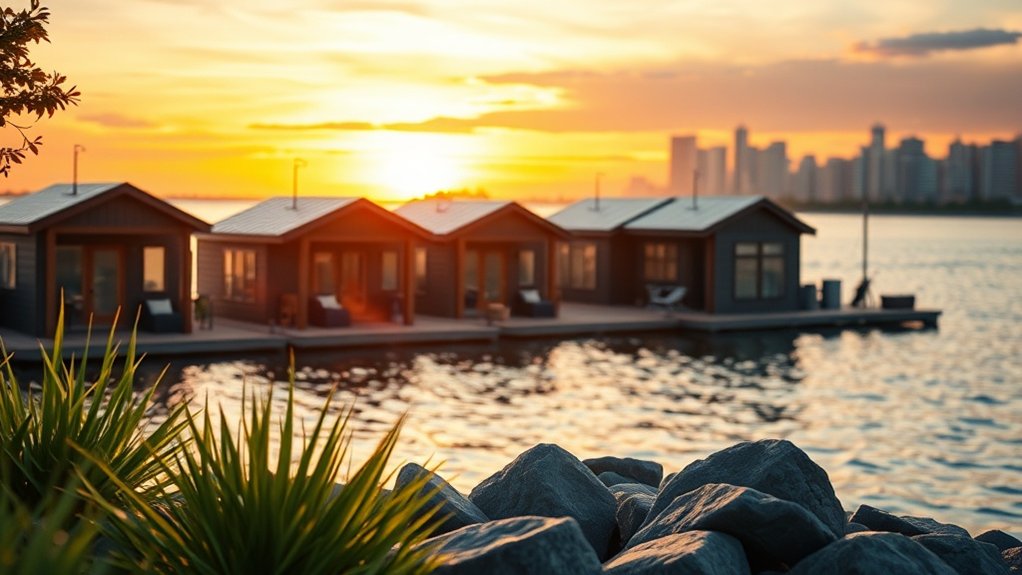
Picture yourself investing in waterfront tiny homes in 2025. These gems are the epitome of affordable luxury, offering both a cozy escape and a profitable venture. They’re a ticket to freedom and adventure, blending eco-consciousness with lucrative potential.
Immerse yourself in this opportunity, where sustainable living meets financial empowerment.
Imagine low upfront costs and tax incentives paving your path.
Curious how to maximize returns while contributing to sustainable living? You’re on the brink of discovery.
Rising Demand for Waterfront Tiny Homes
If you’re looking to break free from the confines of traditional living and immerse yourself in a life of adventure and sustainability, the rising demand for waterfront tiny homes is your ticket.
Housing affordability and urbanization make these compact abodes a hot trend, allowing you to enjoy desirable locations without breaking the bank. Priced between $10,000 and $100,000, tiny homes become a practical choice as traditional real estate prices climb.
Now more than ever, trending lifestyles prioritize minimalism and eco-friendly features. With the market for tiny homes projected to grow at a 5% CAGR from 2025 to 2033, it’s clear that more people are recognizing the value of these innovative and sustainable living solutions.
Tiny homes, with their smaller carbon footprints and sustainable use of space, cater to this growing interest in environmental responsibility. Imagine waking up to a waterfront view.
These homes offer not only a scenic escape but a commitment to preserving nature. Eco-friendly materials and energy-efficient designs make your tiny home a sanctuary that respects the earth while delivering a lifestyle of freedom and empowerment you’d expect.
Maximizing Return on Investment
When you plunge into the world of waterfront tiny homes, you snag not just a piece of property but a wise investment packed with potential returns.
You’ll discover how rental income from these desirable spots creates a robust stream of passive income. Platforms like Airbnb and Vrbo allow you to tap into global travelers seeking unique stays, boosting your occupancy rates.
With the significantly lower upfront cost compared to traditional homes, investing in waterfront tiny homes provides a more accessible entry point for homeownership or real estate ventures. Harness the power of energy efficiency. Lower heating and utility costs mean more money stays in your pocket. Coupled with the stability and appreciation of waterfront properties, your investment’s value stays strong.
Benefit from market analysis. The tiny home market, with its projected growth to $13.17 billion in 2025, points towards reliable returns. Use tax incentives to bolster your financial gains, maximizing profits while minimizing costs.
Ultimately, owning a waterfront tiny home isn’t just about profit—it’s about adopting sustainable, luxurious living that promises adventure and freedom.
Financing Tiny Home Purchases
Exploring financing options for purchasing tiny homes, especially those perched alongside serene waterfronts, can feel both thrilling and challenging. Traditional mortgages won’t cut it. So, you’ve got to look at tiny home loans as a viable route. Personal loans are flexible and can get you anywhere from $50,000 to $100,000, but keep an eye on interest rates that can be quite steep. If your tiny home’s got wheels, consider an RV loan. These function like vehicle financing and might be just what you need. Builder financing and contractor loans can also be available through tiny home manufacturers—perfect if you’re buying custom. Online lenders specializing in tiny home financing, like SoFi and LightStream, offer alternative financing options. A small down payment and no lender fees? That’s appealing. Don’t forget, peer-to-peer lending platforms bring individual touches—a dance between your credit score and the loan offers that suit you best. Credit score plays a crucial role in obtaining favorable loan terms, so maintaining a strong credit profile is essential for securing the best options.
Navigating Zoning and Regulatory Challenges
Financing’s sorted, so now you’re ready to take on the challenge of zoning for your waterfront tiny home. Steering through zoning restrictions and regulatory compliance is vital for success.
Here’s how to start:
- Understand Zoning Classifications: Your property needs to align with zoning maps. The right classification allows tiny homes, so consult local zoning administration.
- Request Rezoning and Variances: If necessary, explore thorough zoning or planned unit developments. Variances might be needed due to typical square footage requirements. Note that a variance allows deviation from zoning regulations based on unique or exceptional circumstances.
- Explore ADU Regulations: The 2025 Maryland Accessory Dwelling Units Act is a model to follow. This could allow your tiny home as an ADU, easing restrictions on single-family lots.
- Check Building Codes: Confirm compliance with the International Residential Code. Based on your location, local codes might require further adjustments.
Case Studies of Successful Tiny Home Investments
You’ve got your eyes on tiny homes, so let’s hit the ground running with three standout case studies that highlight strategic location choices, community-centric developments, and innovative design features.
Imagine Manny Reyna’s success, fueled by prime Airbnb rentals without the headache of land ownership.
Or Rob Abasolo’s tactic of reinvesting in unique amenities that keep rent returns climbing.
Plus, see how Yuma Mobile Home Park transformed property value with tiny home conversions, showcasing how innovative community developments can lead to long-term gains.
Strategic Location Choices
1. Imagine Lake Richland-Chambers, Texas, where you’ve got 57 feet of shoreline for vacation rentals.
The lake’s activities fuel rental demand by pulling in vacationers.
2. Pine Lake, Alabama, offers a lifestyle boost with docks and trails around a 3-acre spring-fed lake, appealing to renters and residents alike.
3. Picture Belize, where proximity to national parks attracts eco-tourists craving outdoor adventures, benefiting short-term rental turnover.
4. Oregon’s coastal communities complement nature-centered tiny home living, amplifying desirability with access to water and trails.
Community-Centric Developments
How can you invest in something that’s not just a home but a whole adventure waiting to unfold? Immerse yourself in stunning locations where community engagement and sustainable living are at the heart of tiny home developments, like Escalante Village in Colorado.
Here, you’ll find affordable, customizable homes by the Animas River, offering community gardens and walking paths.
Head to the Orlando Lakefront in Florida for lakeside living with private docks and vibrant community spaces.
Thinking eco-friendly? Peacewind in Cocoa emphasizes organic farming and robust social events.
Each community delivers unique, enriching experiences that boost both lifestyle and investment potential.
Position yourself where real estate and eco-conscious dreams unite, crafting those unforgettable, adventure-filled living spaces.
It’s your time to thrive.
Innovative Design Features
When you invest in waterfront tiny homes, you’re not just buying property; you’re revealing a lifestyle brimming with freedom and adventure.
Combining innovative design features will maximize your investment return and livability.
1. Natural Light Optimization: Expansive windows and floor-to-ceiling glass panels merge indoor spaces with breathtaking views.
Skylights and sliding glass doors facilitate sunlight and seamless indoor-outdoor transformations.
2. Multifunctional Spaces: Built-in storage and convertible furniture, like Murphy beds and fold-out tables, transform tight spaces.
Lofted sleeping areas maximize living zones in designs under 600 sq ft.
3. Sustainable Materials: Reclaimed wood and bamboo enhance aesthetics and minimize environmental impact, while greywater systems and energy-efficient insulation contribute to eco-friendly living.
4. Outdoor Living Integration: Decks and rooftop gardens extend spaces, blending relaxation with waterfront scenery.
Your investment becomes a sustainable, compact, and luxurious retreat.
Emerging Trends in Affordable Luxury Living
Envision this: you’re on the cutting edge of real estate trends, finding refuge in the allure of luxury that doesn’t compromise on integrity or connection with nature.
Imagine sustaining your lifestyle with minimalist elegance, where downsizing brings freedom and financial flexibility.
You’re part of a growing movement adopting sustainable living in smaller spaces, adorned with luxury finishes like Italian marble and reclaimed hardwood.
These homes offer sophisticated design without the burden of excess maintenance, granting more time for adventure.
As you step into the future, seamless indoor-outdoor living becomes your reality.
Over 60% of luxury property specialists agree: integrating nature through full-height glass walls and waterfront views enhances your experience.
In emerging markets like St. Louis and San Francisco, luxury doesn’t just mean opulence; it means smart investments that withstand economic shifts.
Your financial strategies rely on value, lifestyle flexibility, and sustainable choices, enriching your real estate ventures.
Assessment
Imagine yourself stepping into the world of waterfront tiny homes, where tranquility meets profit. Take John, for instance, an eco-savvy investor who turned a $50,000 tiny home into a hot Airbnb destination. Thanks to this, he enjoys a steady flow of rental income alongside some sweet tax benefits.
Why not ride this wave of opportunity, too? Embrace the freedom of sustainable living with low costs, eco-friendly designs, and strategic market insights. Dive into exciting real estate adventures while crafting a future that’s as profitable as it is picturesque.