
What Drives California Ranch Premiums?
Water, access, and location anchor California ranch premiums, with buyers assigning outsized value to assets that protect use, income potential, and long-term control.
Reliable water remains central because rights may stay with the ranch and vary in worth by age, volume, and source. That reliability supports agricultural income, recreation, habitat, ecological health, and climate resilience. Areas with superior surface water and well-managed groundwater often sustain stronger values because water security reduces production risk and supports long-term control.
Access Risks Pressure Values
Deeded, insurable, year-round access is equally critical. If entry from a public road is uncertain, especially across non-contiguous parcels, practical use weakens and value falls.
Title review matters because access is not always secure.
Setting Scarcity Shapes Demand
Location also drives premiums through privacy, elevation, views, and proximity to forests, peaks, and meadows. Secluded end-of-road settings attract buyers seeking control, open space, and nearby community amenities. In land markets shaped by infrastructure competition, land prices can rise sharply where long-term control and development flexibility are limited.
Stable demand persists for high-quality land, even as rates and costs pressure sentiment.
Which Ranch Features Command Higher Prices?
Buyers consistently reward ranches that combine usable acreage, functional layout, and ready-to-operate improvements. Value rises from land that supports pasture, trails, privacy buffers, circulation, and multiple site functions rather than from gross acreage alone.
Markets often distinguish between total size and pasture usability. Wider, accessible parcels usually outperform fragmented or steep land because they support movement, recreation, and flexible use. This preference for practical, income-supportive land mirrors broader real estate demand for industrial assets that offer stable utility and long-term value.
Improvements With Immediate Utility
Well-planned barns, corrals, arenas, fencing, roads, and power access can push pricing higher. They reduce replacement cost, delay, and permitting burden for the next owner.
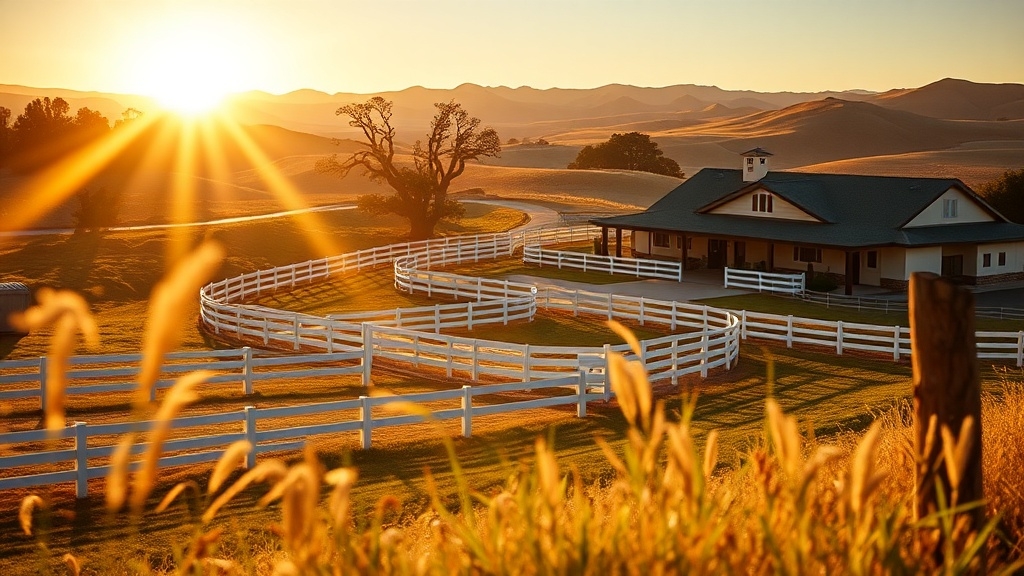
Strong equestrian infrastructure is especially prized in lifestyle-driven ranch markets. Scenic views, privacy, and cohesive site design also support premiums.
Visual appeal strengthens buyer demand when the ranch feels both functional and finished, not merely large.


How Do Water and Land Use Affect Value?
Across California ranch markets, dependable access to water often separates premium properties from discounted ones. Land-use rules determine how much that access can actually be monetized.
Parcels with surface-water access typically sell for more than groundwater-only land. Values rise further when both sources are available.
Buyers assign a premium to water reliability because stable supply lowers exposure to pumping limits, crop disruptions, and future uncertainty.
That distinction has sharpened under SGMA. Expected groundwater cutbacks and possible fallowing have already reduced prices for properties relying mainly on wells.
Regulatory pressure is now directly reflected in land values.
Land-use policy also shapes outcomes. Zoning constraints, conservation easements, and farmland protection programs can limit conversion to more intensive uses.
That means even strong water access may not translate into the highest possible market value.
Why Do Move-In-Ready Ranches Win?
Pricing pressure from water limits and land-use rules shapes what ranch buyers can pay. But purchase decisions are also being pulled by properties that can be occupied without delay.
Move-in-ready ranches gain an edge because immediate occupancy removes construction waits, contractor uncertainty, and material delays. That speed matters for buyers managing school calendars, job starts, or relocation deadlines.
Demand Drivers
- Single-story layouts improve accessibility and support aging-in-place.
- Open plans simplify circulation, supervision, and shared use.
- Completed systems reduce pre-move tasks and near-term repairs.
- Clearer pricing limits budget drift and financing surprises.
Low-fuss living strengthens appeal across first-time buyers, families, and older households. With stair-free movement, easier upkeep, and predictable costs, turnkey ranches match practical lifestyle goals while attracting broad demand in competitive markets today.
How Do Location and Access Shape Pricing?
At the foundation of ranch valuation, location often sets the baseline price. It shapes regional desirability, market depth, and per-acre expectations.
In California, parcels near towns, major roads, airports, and recognized vineyard districts often earn premiums. Stronger demand, easier logistics, and terroir proximity all help support higher pricing.
Higher western slopes can also see stronger values. Climate, scenery, and nearby public lands can reinforce buyer appeal.
Legal Entry and Practical Reach
Access conditions materially shift value.
Year-round legal entry from a public road usually supports pricing more than uncertain private routes. It also tends to outperform remote access that becomes unreliable during snow or flooding.
Landlocked acreage, non-contiguous parcels without clear reach, or properties burdened by crossing rights generally trade at discounts.
The strongest lifestyle premiums appear where privacy, scenery, and dependable service access coexist.
Assessment
California ranch pricing continues to reflect a sharp lifestyle premium tied to scarcity, water security, usable acreage, and immediate livability.
Buyers consistently pay more for properties that reduce operational risk and require little post-close investment.
Move-in-ready improvements, dependable access, and favorable land use conditions remain decisive.
As competition narrows around high-quality assets, weaker ranches face widening discounts.
This reinforces a market where functionality and certainty drive value faster than raw land alone.