
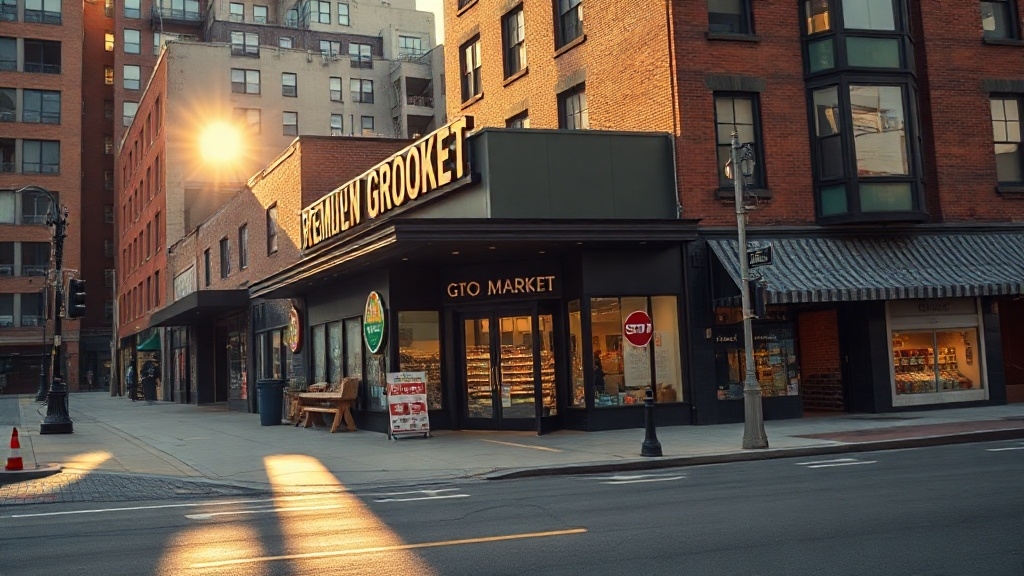


Where Whole Foods Is Opening in Brooklyn
Across Brooklyn, Whole Foods Market is expanding through a mix of full-size stores and smaller neighborhood formats.
The newest addition is the Williamsburg DailyShop, scheduled to open Feb. 26, 2026, at 774 Grand Street in Brooklyn. The small-format store spans 7,888 square feet. It is part of Whole Foods’ Daily Shop concept designed for fast-paced urban lifestyles.
Opening-day hours begin at 8 a.m., with regular daily hours set from 8 a.m. to 10 p.m.
Elsewhere, Whole Foods maintains a visible presence in Fort Greene at 292 Ashland Pl, Brooklyn, NY 11217.
That store operates daily from 8 a.m. to 10 p.m. and serves as another established Brooklyn location.
The borough’s larger anchor remains the Third & 3rd store in Gowanus at 214 3rd Street.
It opened Dec. 17 and measures more than 56,000 square feet.
How Daily Shop Fits Brooklyn Demand
In dense Brooklyn corridors, Whole Foods’ Daily Shop format aligns with neighborhood demand for speed, walkability, and smaller basket trips.
At roughly 7,888 square feet, the model supports urban convenience where larger grocery boxes are difficult to place. Its layout favors fast circulation, standing-room shopping, and quick checkout over extended browsing.
Brooklyn’s buyer demand remains active even as elevated mortgage rates and million-dollar median pricing increase pressure on household budgets.
| Demand signal | Daily Shop response |
|---|---|
| Dense, mixed-use blocks | Small-format fit |
| Time-pressed shoppers | Self-checkout speed |
| Frequent short trips | Weekly essentials |
| Final-minute meals | Grab-and-go foods |
Tight Footprint, Faster Mission
The assortment emphasizes grab-and-go meals, snacks, produce, meat, seafood, and weekly essentials. That mix suits Brooklyn shoppers making short neighborhood trips or completing dinner plans.
Williamsburg’s selection and early customer data elsewhere suggest the format can attract new and returning urban shoppers.


Why Former Rite Aid Stores Attract Grocers
Former Rite Aid stores attract grocery interest because they offer high-traffic neighborhood locations, mid-sized footprints, and existing parking. Their layouts can often be adapted for food retail faster than a ground-up project.
These sites usually have strong street visibility and easy neighborhood access. That helps grocers capture routine trips in corridors where shoppers already buy daily necessities.
Vacant drugstore boxes also stand out because reuse is often often cheaper and faster than building a new supermarket. That makes them appealing to operators looking to open stores with less time and cost.
Open floor plans can be reworked for produce, dairy, meat, and frozen sections with fewer structural changes than many other retail spaces. Existing utilities can also improve plumbing feasibility, reducing renovation complexity and shortening timelines.
Rite Aid closures have created a large supply of visible vacancies. That gives independent grocers and regional chains practical expansion opportunities in underserved communities.
At the same time, investors evaluating retail reuse opportunities should apply due diligence and verify cash flow assumptions carefully, especially as broader markets face growing scrutiny over high-return promises and damaged investor trust.
Why Whole Foods Signals Retail Strength
Whole Foods also points to a broader measure of retail strength because its performance has reinforced the value of physical grocery stores even in a digital-first market.
Amazon’s acquisition was widely read as confirmation that food retail still depends on stores, not just e-commerce.
The deal helped define grocery as an omnichannel business where convenience, fulfillment, and in-person shopping work together.
Premium Demand and Store Economics
Whole Foods’ premium positioning strengthens that signal.
Its differentiated brand, quality standards, and curated assortments show that consumers continue to support higher-service brick-and-mortar concepts.
The chain also stands out for strong sales productivity, including high sales per square foot and disciplined reinvestment in store presentation.
That efficiency matters to landlords and investors because it suggests durable revenue, resilient traffic, and competitive store economics.
What Comes Next for Brooklyn Retail
Tightening supply is pushing Brooklyn’s next phase of retail leasing beyond legacy prime corridors and into emerging neighborhood streets.
With larger spaces scarce and smaller footprints leasing quickly, demand is expected to keep migrating toward high-traffic, neighborhood-serving corridors.
North 6th Street’s $275 per square foot asking rent, along with sharp increases on Washington Street and Fulton Street, reflects a market with limited availability and stronger landlord leverage.
New Nodes Under Pressure
Rezoning in Gowanus and along the Atlantic Avenue corridor is creating fresh space for retail densification.
Those projects are likely to attract necessity-oriented tenants, food-and-beverage operators, and local entrepreneurship tied to dense residential growth.
Mixed-use districts with active street life appear positioned to capture the next wave of leasing, especially in small-box, visible, tourism-oriented formats.
Assessment
Whole Foods’ Brooklyn lease points to a tightening retail market, where well-located space is being absorbed by stronger operators.
The move into a former Rite Aid underscores how grocery demand is reshaping vacant storefronts and reducing exposure to prolonged retail dark space.
For Brooklyn landlords and tenants, the lease reflects a market favoring necessity-based uses, creditworthy brands, and fast repositioning.
The next phase is likely to bring sharper competition for viable boxes and rising pressure on weaker retail formats.