

Salem Witch House Neighbor Lists for $1.99M
In a rare Salem listing, the historic home at 314 Essex Street has entered the market for $1.99 million. The price places a steep premium on a property directly beside the city’s famed Witch House.
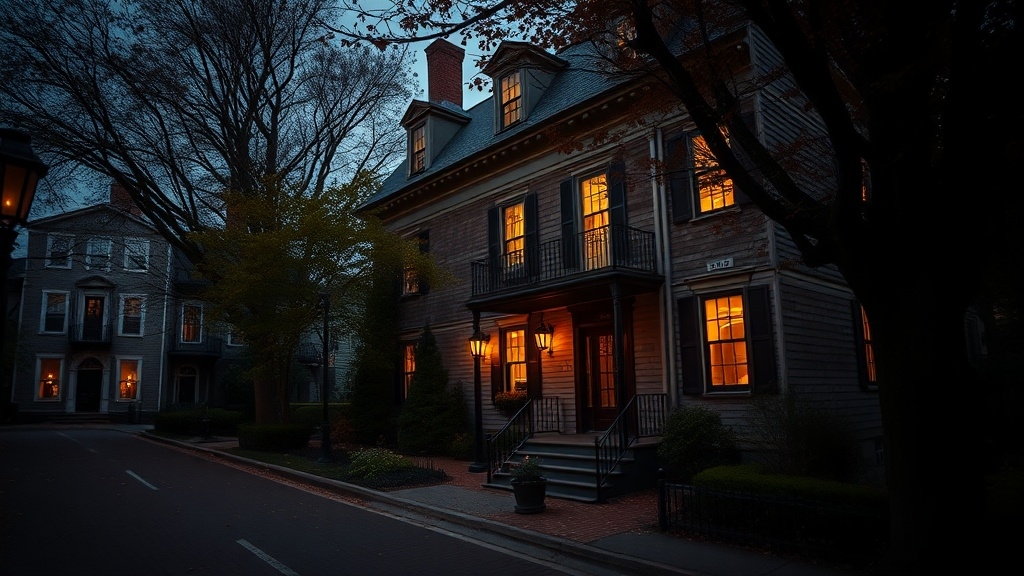
The 4,670-square-foot Georgian-style residence contains six bedrooms and five bathrooms, including four full baths and two half baths. Historical records date its construction to 1755 for Mary Lindall. The home is also notable as the childhood home of Benjamin Thompson, who later became Count Rumford.
This marks the first time the property has been offered for sale in 80 years. In market comparison, the asking price stands well above many Salem historic homes, which often sell between $600,000 and $1.2 million. Nationally, office-to-residential conversions have become a major real estate trend as changing work patterns reshape property markets.
The owner’s pricing reflects the building’s architectural condition, downtown setting, and unusual provenance. Planned renovation work has emphasized historic preservation while preparing the interior for updated future use under a long-term investment strategy.
Why 314 Essex Street Matters in Salem
Beyond its $1.99 million price tag, 314 Essex Street carries unusual weight in Salem because it stands as a rare surviving 1755 Georgian-style gambrel home directly beside the Witch House.
Its location on the Essex Street corridor places it within one of Salem’s most historically sensitive settings. That proximity gives the property importance beyond ordinary residential value.
As one of the oldest remaining homes in the Federal Street area, it functions as a visible link to Salem’s 18th-century past.
Its 2016 restoration preserved original details while reinforcing historical integrity.
The house also matters for colonial preservation because its gambrel architecture, symmetrical Georgian form, and period features remain legible today.
Like other historically significant homes shaped by a balance between preservation and modernization, debates over historical integrity often influence how such properties are valued and understood.
In a city defined by heritage tourism and landmark identity, 314 Essex Street endures as a residential marker of Salem’s colonial history.


Inside the Salem Witch House Neighbor
Street-level context around the Witch House is unusually tight, with 310 Essex Street occupied by the Jonathan Corwin House and nearby addresses defining a dense historic corridor.
The immediate setting mixes historic neighbors with active visitor traffic.
At 300 Essex Street, a commercial building and walking-tour kiosk press against the south side.
A coffee shop at 314 Essex stands across from the entrance, while 320 Essex adds another historic structure eastward.
That layering helps explain the area’s creepy folklore atmosphere.
| Address | Meaning |
|---|---|
| 300 Essex | South-side commercial edge |
| 314 Essex | Direct street-facing activity |
| 320 Essex | Historic continuity nearby |
| 325 Essex | Parking supports constant turnover |
In 1692, records show 12 households within 500 feet.
No Corwin relatives are documented in adjacent homes, underscoring a neighborhood shaped instead by seamen and merchant families.
Why the Home Is Priced at $1.99M
At $1.99 million, the asking price rests on a rare combination of scale, pedigree, and scarcity in Salem’s historic core. The valuation reflects 4,670 square feet, a six-bedroom layout, and a largely intact Georgian design that stands above typical local inventory.
Its historic pedigree also supports the figure. Built in 1755 for Mary Lindall, the house is linked through records to Benjamin Thompson, later Count Rumford.
That connection strengthens buyer interest beyond ordinary architectural appeal. Pricing is also shaped by market scarcity.
The property was not sold as a residence for 80 years before 2012, an unusually long ownership gap that limits true comparables and adds a scarcity premium. In Salem, few homes combine this scale, preserved form, and documented provenance in one listing.
What to Know About Touring the Property
For visitors planning a tour, the Corwin House operates on a seasonal schedule that shifts noticeably outside peak months.
Daily hours run from April 15 through November 15, 10:00 a.m. to 5:00 p.m. Final entry is at 4:45 p.m.
Winter access narrows to Thursday through Sunday, from noon to 4:00 p.m. Final entry during winter is 3:45 p.m.
Seasonal closures include major holidays.
Regular season: Daily, 10:00 a.m. to 5:00 p.m.
Final entry: 4:45 p.m.
Winter season: Thursday to Sunday, noon to 4:00 p.m.
Final entry: 3:45 p.m.
Admission: Adults $12, seniors $10.
Children ages 6 to 14: $8.
Entry Rules and Visitor Flow
October reservations are required. Group bookings are unavailable that month.
At other times, tickets may be bought online for same-day tours or in the rear gift shop for immediate entry.
Tours are self-guided. Staff are stationed inside to answer questions.
Assessment
The listing at 314 Essex Street underscores mounting pressure in Salem’s historic housing market.
Its proximity to the Witch House ties the property to one of the city’s most visible tourist corridors, where scarcity and preservation shape value.
At $1.99 million, the home enters a narrow segment defined by location, condition, and historical context.
Any sale will likely be watched closely by local agents, preservation observers, and buyers tracking high-end inventory in one of Massachusetts’ most closely followed historic districts.