
Why Bristol Myers Squibb’s Lease Matters
Bristol Myers Squibb’s 427,000-square-foot lease immediately stands out as one of San Diego’s largest signings in the past year. It gives Alexandria Point stronger market validation as a premier life science hub. The deal was described as the second-largest life science lease in Alexandria’s history.
The transaction lifts Alexandria Point’s profile and adds regional prestige to San Diego’s biotech standing. It also signals that the market can compete more directly with Boston and the San Francisco Bay Area for major research tenants.
Pressure on Market Rankings
Industry observers view the lease as evidence of soaring national demand for specialized biotech real estate. Judge Liza Strom said the project could deliver major regional dividends for decades through economic impact and research stature. At a time when other commercial sectors are contending with elevated vacancy rates, major life science commitments underscore the enduring appeal of specialized research campuses.
Efficiency Through Scale
For Bristol Myers Squibb, the agreement supports strategic consolidation by bringing dispersed local R&D operations into one purpose-built research center. Single-site occupancy should reduce logistical complexity and strengthen operating efficiency.
How Bristol Myers Squibb Is Expanding in San Diego
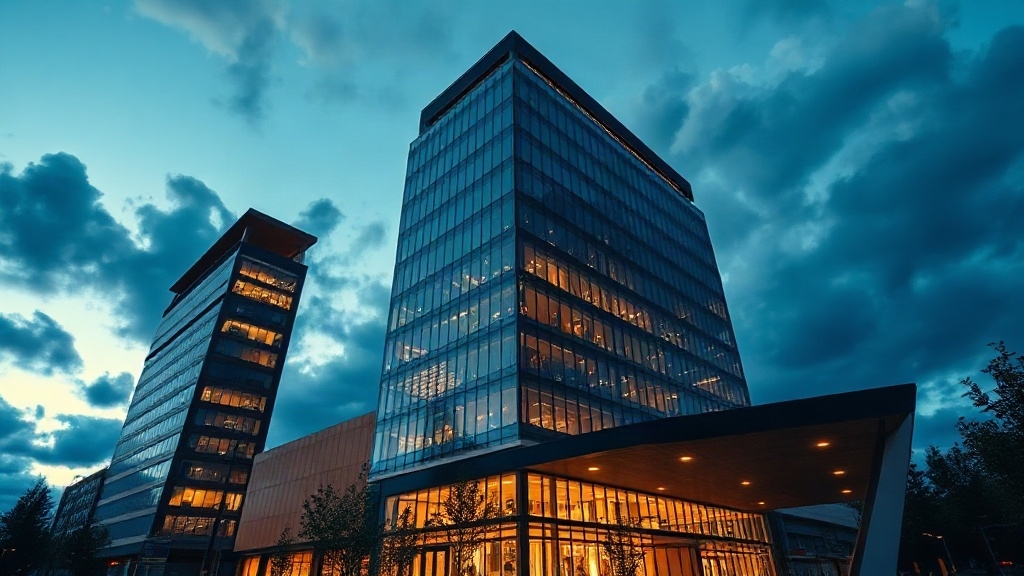
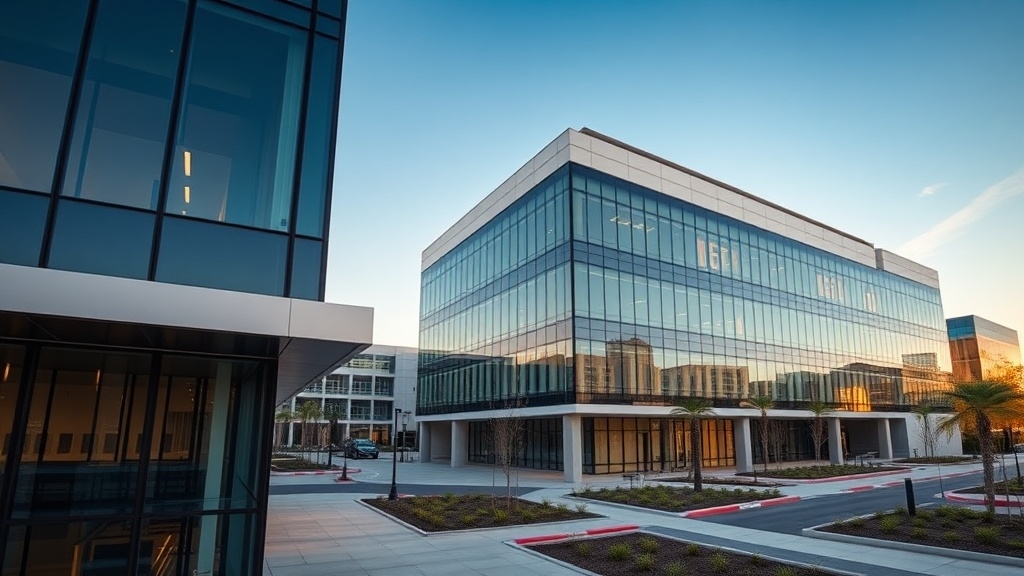
Anchoring its next phase of regional growth, Bristol Myers Squibb plans to occupy a 427,000-square-foot research and development facility at Alexandria Point in San Diego’s University Town Center near La Jolla.
The long-term lease will bring the company’s San Diego R&D units together in one purpose-built hub developed by Alexandria Real Estate Equities.
Company leadership said the move will unify oncology discovery teams and core labs focused on advanced biopharmaceutical therapies.
Occupancy is projected for the fourth quarter of 2025, giving Bristol Myers Squibb a larger platform for scientific operations within the region’s life science cluster.
The Campus Point setting also places the company within a broader megacampus built for mission-critical lab work, amenities, research partnerships, and potential local hires tied to future growth and collaboration.
The project also aligns with broader real estate innovation trends, as AI-driven real estate is projected to grow at an annual rate of 11.52%.


What San Diego Lab Vacancy Means Now
Even as Bristol Myers Squibb commits to a major new R&D hub, San Diego’s broader life science real estate market is confronting a sharp vacancy shock.
Vacancy reached 26.5% in Q3 2025, with 5 million square feet available across 24.6 million square feet of supply. That reflects weakening demand, tenant caution, and longer funding timelines.
Pressure Points
Vacancy nearly doubled from 10.5% in Q3 2023. Direct vacancy rose to 6.4 million square feet.
Central San Diego hit 29.8% availability. Leasing activity slowed to 347,000 square feet.
Negative net absorption totaled 585,000 square feet. The rise in sublease space above 1.3 million square feet signals downsizing and market exits.
Construction has slowed sharply, with 592,000 square feet underway, all pre-leased. That suggests developers and investors are focused on absorbing existing vacant inventory first.
Why San Diego Lab Landlords Offer Bigger Concessions
As vacancy hovers near 30 percent, San Diego lab landlords are escalating concessions to compete for a shrinking pool of tenants.
With 22 leases totaling just under 300,000 square feet in Q4 2025, activity fell by one-third from a year earlier. Weak tenant demand has left available inventory far ahead of absorption.
Falling Rents Are Not Enough
Asking rents have declined for 14 straight quarters to $5.64 per square foot, the market’s lowest level since 2020. That erosion has pushed landlord incentives beyond pricing alone.
Free rent, sometimes reaching a full year, has become a major tool. Owners are also pairing rent cuts with amenities to stand out.
Subsidies Target High Build-Out Costs
Landlords are heavily subsidizing tenant improvements for specialized lab users. These landlord incentives reduce upfront costs, yet many tenants still delay commitments.
What’s Next for San Diego Lab Development
In the near term, San Diego lab development appears headed for a prolonged pause.
More than 3.2 million square feet is set to be available countywide by the end of 2025, and financing for new construction remains difficult to secure.
The financing outlook is still restrictive despite strong venture capital flows and 2.4 million square feet of leasing in 2024.
Key Market Signals
- Availability reached 27.4 percent
- Rents remained under pressure
- Best-in-class space drew pre-leasing
- Adaptive reuse gained momentum
- Conversions reduced relocation costs
Developers are expected to favor adaptive reuse of office, industrial, and biotech properties over ground-up projects.
Phase 3 at Campus Pointe reflects that strategy.
With 857,000 square feet delivered in late 2024 alone, experts see little appetite for additional starts.
That is unlikely to change until vacancies normalize and demand broadens beyond top-tier buildings.
Assessment
Bristol Myers Squibb’s 427,000-square-foot commitment stands out in a market facing elevated lab vacancy and slower leasing velocity.
The lease provides a rare signal of confidence for San Diego’s life sciences sector, even as landlords widen concessions and newer projects confront tougher absorption conditions.
Near-term pressure on owners and developers is likely to persist.
Still, large tenant commitments in core clusters suggest that well-located, high-quality lab assets may retain an advantage as the market resets.