


Key Takeaways
- Mortgage applications for new home purchases fell 13.6% from a year ago in October 2026, the fourth straight month of year-over-year declines, according to the Mortgage Bankers Association’s Builder Application Survey released November 20, 2026.
- MBA estimates new single-family home sales ran at a seasonally adjusted annual rate of 592,000 in October, up 1.4% from September, but on an unadjusted basis it estimates just 44,000 homes sold, down 6.4% from September.
- FHA loans made up 36.9% of new-home applications, more than double FHA’s 15.7% share of all mortgage originations in the third quarter, a sign that new-home demand now runs through entry-level financing.
- The average loan size for new homes fell from $374,724 in September to $368,934 in October, as a roughly 60-basis-point rate spike in two months pushed buyers toward smaller, cheaper homes.
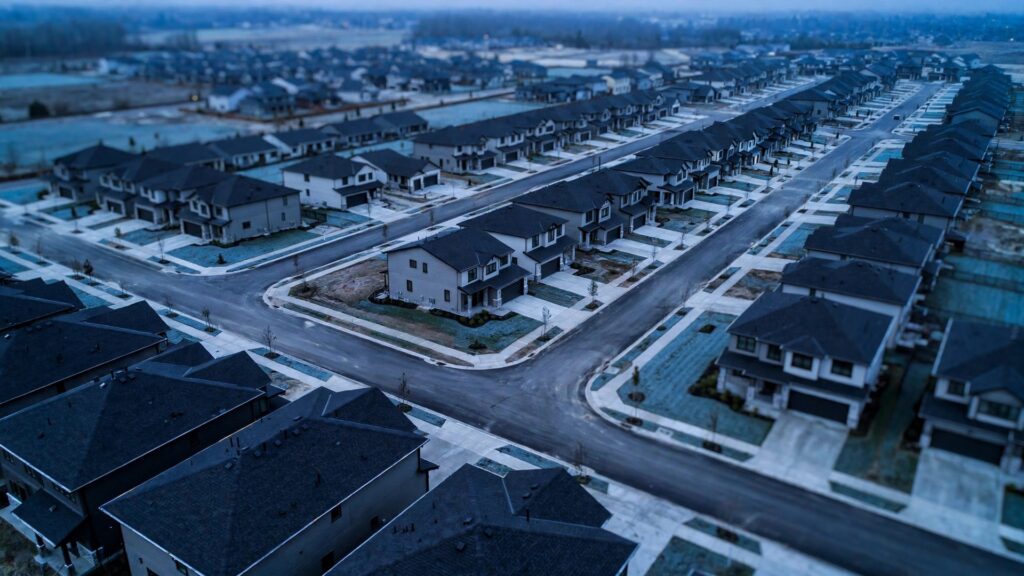
Builders are offering incentives at post-Covid highs, and buyers are still walking away. That is the plain reading of the Mortgage Bankers Association’s Builder Application Survey for October 2026, released November 20, 2026.
Applications for mortgages on newly built homes fell 13.6% from a year earlier and 7% from September. The figures are not adjusted for seasonal patterns, and October was the fourth consecutive month in which applications fell from a year ago.
The survey tracks application volume from the mortgage subsidiaries of home builders across the country. It is one of the earliest reads on new-home demand each month, and this one points down.
A 60-Basis-Point Rate Spike Did the Damage
“The recent spike in mortgage rates weighed on new home purchase activity in October. The 30-year fixed rate increased approximately 60 basis points over the past two months, reaching 7.5% last month,” said Joel Kan, MBA’s Vice President and Deputy Chief Economist.
“As a result, applications for the purchase of newly built homes declined year-over-year for the fourth consecutive month,” Kan said. “The deterioration in affordability conditions and current mortgage rate uncertainty have caused many potential homebuyers to hold off on their purchases, even as many homebuilders continue to offer incentives to buyers.”
That last point is the one builders cannot fix with a rate buydown flyer. Incentives are already widespread, yet applications fell anyway, which tells you the constraint is buyer confidence and monthly payment math, not a lack of builder effort.
The demand weakness lines up with what sales counters are seeing on the ground. Zonda counted October new-home sales down 11.7% from a year ago, with 86% of builders reporting demand slower than expected, a separate methodology that reaches the same conclusion as the application data.
| October 2026 Builder Application Survey | Figure |
|---|---|
| New-home purchase applications vs. a year ago | -13.6% |
| New-home purchase applications vs. September | -7% (not seasonally adjusted) |
| Consecutive months of year-over-year application declines | 4 |
| MBA estimated new-home sales, seasonally adjusted annual rate | 592,000, up 1.4% from 584,000 in September |
| MBA estimated new-home sales, unadjusted | 44,000, down 6.4% from 47,000 in September |
| Average loan size for new homes | $368,934, down from $374,724 in September |
The Sales Increase Is a Seasonal Adjustment, Not a Recovery
Read the MBA release quickly and you could walk away thinking new-home sales rose in October. MBA’s seasonally adjusted estimate did tick up 1.4%, to a 592,000 annual rate from 584,000 in September.
The unadjusted count tells the other half of the story: an estimated 44,000 new homes sold in October, down 6.4% from 47,000 in September. Seasonal adjustment expects October to be weaker than September, so a smaller-than-usual drop becomes an adjusted gain.
Kan put the level in context himself: “MBA’s estimate of new home sales increased slightly in October, but the annualized sales pace for the past two months remained at its weakest level since July 2022.”
The loan mix shows who is still buying. Conventional loans composed 47.9% of new-home applications, FHA loans 36.9%, VA loans 14.1%, and RHS/USDA loans 1%.
That FHA share is the fresh insight in this release. FHA accounted for just 15.7% of all purchase and refinance originations in the third quarter, so new-home buyers are leaning on FHA financing at more than double the market-wide rate. Government-backed, low-down-payment loans are carrying the entry level of the new-home market.
The shrinking average loan points the same way. At $368,934, the average new-home loan fell $5,790 in one month, a drop consistent with buyers trading down to smaller homes and builders steering demand toward cheaper product. It fits the price picture in the NAHB Cost of Housing Index, where the median new home sold for $39,600 less than the median existing home in the third quarter.


What Buyers and Investors Should Do With an Early Signal
MBA stresses that its estimate is a leading indicator of the U.S. Census Bureau’s New Residential Sales report, because new-home sales are recorded at contract signing, which is typically coincident with the mortgage application. Scotsman Guide reported that the Census Bureau is scheduled to release its official October estimates on November 25, so this survey is the early read, not the final word.
The forward signals around it are not friendly. Building permits just fell to their weakest level since May 2020 and pulled the Leading Economic Index down 0.3%, which means the supply pipeline behind October’s weak applications is thinning too.
For readers weighing a move, the actionable steps are:
- Treat the application slump as negotiating leverage. When applications fall for four straight months and builders are already offering incentives, ask for the buydown, the closing-cost credit, and the price cut, in that order, before you sign.
- If you are an entry-level buyer, price the FHA route seriously. More than a third of new-home applicants are using it, and builders’ in-house lenders are set up to close those loans fast.
- Watch the Census report on November 25. If the official count confirms a pace near MBA’s 592,000, the weakest two-month stretch since July 2022 is the planning baseline for winter, not a one-month blip.
- If you invest in new-construction-heavy markets, underwrite the smaller loan size. Demand is concentrating in cheaper homes, so entry-level product near $368,934 in average loan terms is where the remaining buyers are.
The full figures are in MBA’s October 2026 Builder Application Survey release.
Data source: Mortgage Bankers Association, Builder Application Survey for October 2026, released November 20, 2026; FHA share of total originations from ATTOM’s Q3 2026 origination report, covered by this site on November 19, 2026.