

Key Takeaways
- Southern housing markets like Cape Coral and Austin are already in steep decline, with inventory up 290 percent since 2022.
- Blackstone and other Wall Street firms are acquiring single-family homes at scale while retail buyers hesitate.
- Key economic signals like the Buffett Indicator suggest a broader collapse is coming, far beyond housing alone.
Southern prices are plunging. Northern cracks are spreading. U.S. housing collapse seems imminent.
Wall Street is quietly stockpiling homes while middle-class families drown in 7% interest.
Are you ready for the next wave of financial devastation, or are you standing directly in its path?
- Inventory is exploding in the South, with a projected 2 million homes for sale by 2028
- Blackstone is quietly acquiring single-family rentals while retail investors stay blind
- The Buffett Indicator just crossed 209 percent, signaling a market-wide asset bubble primed to collapse
Here’s what you’ll get inside this article:
- Why home prices are collapsing in Cape Coral and Punta Gorda
- The shocking strategy behind Wall Street’s buying spree
- What Warren Buffett’s silence really says about the economy
The question is simple.
Will you adapt in time?
The South Is Bleeding: Home Prices Plunge As Inventory Soars
Let’s not sugarcoat this.
You’re looking at the beginning of a regional collapse so aggressive that most investors are still pretending it’s not happening. While the media keeps repeating “soft landing,” the South is screaming “hard correction” loud and clear.
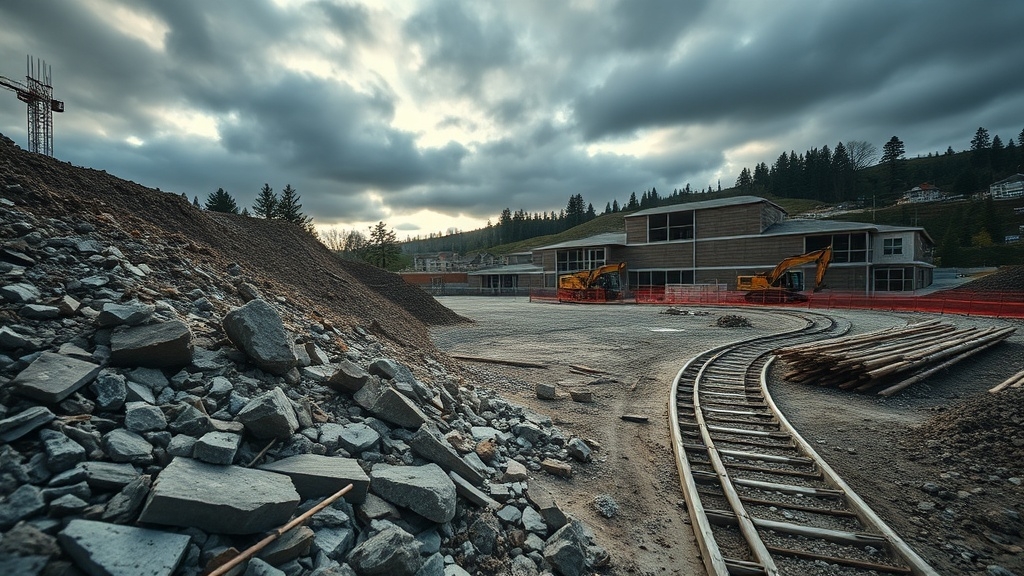
Inventory in the South and West has exploded by 290 percent since 2022.
That’s not a typo.
Three years ago, we were hovering at pandemic-era lows. Now, we’re on track to hit nearly 2 million homes for sale by 2028. That’s 10 times the supply we saw at the 2022 peak.
And when you flood the market with that kind of inventory, there’s only one place prices can go. Down.
Look at Texas.
Look at Florida.
These aren’t just soft spots. They’re crash zones in motion.
Austin alone has dropped 23 percent in value since its top. Cape Coral is down 17 percent. Punta Gorda is down 16 percent.
And that’s just the beginning.
This isn’t a matter of cyclical pricing. This is a shift in the ground under your portfolio. It’s not just a correction. It’s a collapse in slow motion.
People who bought in 2022 are watching builders undercut them by tens of thousands of dollars. Homeowners feel cornered. Sellers are frozen. Buyers are vanishing.
If you’re waiting for things to “normalize,” you’re not paying attention.
This part of the country is unraveling.
Most people still think it’s fine.
Florida Turns Toxic: Cape Coral and Punta Gorda in a Death Spiral
Let’s talk about what’s really happening on the ground in Florida.
Cape Coral, once hailed as an investor’s paradise, is now one of the most distressed housing markets in the entire country.
The numbers don’t lie. Median sale prices have fallen 11 percent over the past two years, with a 7.7 percent drop just this year.
That kind of decline isn’t gradual. It’s fast, sharp, and dangerous for anyone holding on too long.
In Punta Gorda, it’s even uglier. Prices are down 16 percent since 2022. A typical single-family home has dropped 12 percent in value just over the past 12 months.
What’s fueling the drop?
A brutal, unstoppable wave of inventory.
Active listings in these Florida markets are blowing past any historical levels since 2017.
Unlike the crash of 2008, this isn’t about bad mortgages. This is about sheer imbalance. Too many homes. Not enough buyers. Builders are slashing prices to move product.
Sellers are pulling their listings, hoping to wait it out. But here’s the problem: waiting only works if conditions improve.
They’re not.
Meanwhile, mortgage rates are sitting at 7 percent. So even though home prices are falling, affordability hasn’t improved. It’s gotten worse.
What you’ve got now is a dead zone. Nobody’s buying. Nobody’s selling. But inventory keeps climbing.
If you’re thinking this is just a short-term correction, you’re fooling yourself. Florida isn’t cooling. It’s collapsing.
Builders vs. Homeowners: The Brutal Battle No One Saw Coming
What’s happening right now in these southern markets isn’t just about inventory or rates.
It’s about war.
Not literal war, but something close.
A brutal battle has broken out between builders and existing homeowners.
Nobody’s winning.
Builders are desperate. Their margins are getting crushed. So they’re doing the one thing they swore they wouldn’t do again, slashing prices.
They’ve got to move product. They’re sitting on new construction that’s been sitting too long. So they drop prices by 30,000. Then 50,000. Some even more.
Guess who gets caught in the crossfire?
That homeowner who paid top dollar in 2022.
Imagine watching your neighbor buy a new construction version of your home, same size, same layout, for 75,000 less than what you paid just two years ago. That’s not a paper loss. That’s a gut punch.
And it creates a psychological trap. You can’t sell without taking a loss. You can’t refinance because rates are too high.
You feel stuck.
Trapped.
Bitter.
Maybe even angry.
That’s the fuel behind what’s happening now.
It’s not just a market shift. It’s emotional. It’s personal. It’s economic pain layered with hopelessness.
This isn’t a temporary hiccup. This is structural.
And while builders keep dropping prices just to survive, homeowners are pulling listings left and right, waiting for a rebound that may never come.
Denial in the Midwest: The Quiet Cracks Spreading Fast
If you think the Midwest is safe, think again.
The signs are subtle. But if you’re paying attention, they’re impossible to ignore.
Let’s take Ohio.
Just a year or two ago, you couldn’t walk into an open house without getting shoved aside by a bidding war. Homes were selling before the weekend even started.
It felt like the boom was permanent.
But now?
Listings are starting to pile up. In some counties, active listings are up 10 percent. That may not sound like much, but look deeper.
Median listing prices have dropped in 11 out of the last 12 months. That hasn’t happened in nearly a decade.
And this is in a market where inventory is still low by historical standards.
So, what’s the problem?
Direction.
It’s not about where we are today. It’s about where we’re heading.
The trend is clear. For 19 of the last 20 months, inventory has climbed. New listings are stacking up. That red-hot seller’s market is cooling fast.
Most investors aren’t ready for it.
This is the pattern of a correction.
First, the flashy boom towns start to tumble. Then, quiet cracks form in the places nobody expected.
By the time the average investor realizes what’s happening, it’s already too late.
You don’t wait until the flood hits your street to build the levee.
This isn’t just the South’s problem anymore.
Wall Street Is Buying While Everyone Sleeps
Here’s the part nobody wants to admit.
While everyday investors panic, institutions like Blackstone are buying up homes like it’s 2012 all over again.
You think the market’s crashing?
They see opportunity.
Blackstone already owns more than 61,000 single-family homes. That number is about to surge now that they’ve acquired Tricon Residential. They’re stacking portfolios in cities like Atlanta, Dallas, Tampa, Charlotte, and Phoenix, places where prices are already under pressure.
Why would they buy now?
Because they know what’s coming. They understand that when ownership becomes unaffordable, renting becomes non-negotiable.
If families can’t buy, they have to rent from someone. Guess who that someone is.
This isn’t just a land grab. It’s a long-term strategy.
Wall Street has no problem letting values drop if it means locking in millions of Americans as lifetime tenants. While you worry about resale values, they’re focused on rent rolls.
And the scariest part?
The average investor is still asleep at the wheel. Focused on rate cuts. Hoping for another boom. Watching YouTube gurus say it’s all temporary.
Meanwhile, Blackstone is buying the future.
The Buffett Indicator Is Screaming, But No One Is Listening
Warren Buffett isn’t buying.
That alone should make you pause.
The man whose name is synonymous with long-term investing is sitting on $347 billion in cash right now.
Why?
Because the data is flashing red, and he knows what most people refuse to accept.
Take the Buffett Indicator. It compares the total value of the stock market to the size of the U.S. economy. When that ratio gets too high, Buffett himself said you’re “playing with fire.”
Right now, it’s at 209 percent. That’s higher than the dot-com bubble. Higher than 2021’s meme-stock madness.
You think this is normal?
It’s not.
Then there’s the Schiller PE ratio, which adjusts for inflation and averages out earnings over the past decade. It’s pushing toward all-time highs. That only happened in 1929, 2000, and 2021.
All three times were followed by brutal crashes.
What’s this got to do with housing?
Everything.
Because we’re watching a stock market floating on dreams while the housing market buckles under pressure. We’re living inside two bubbles at the same time.
If either one pops, the other won’t survive it.
But here’s the real kicker.
Buffett’s not making big moves. He’s waiting. Watching. Refusing to follow the herd. Because he knows what happens next.
It’s not a soft landing.
It’s a correction that slams into reality and takes everything with it.
Why This Boom Feels Safe But Isn’t
You’ve probably heard the phrase “this time is different.”
That’s what everyone says at the top.
Right now, you’re living inside a fantasy bubble built on that exact belief.
After 18 years of mostly uninterrupted growth, people don’t just hope prices will keep going up.
They expect it.
They feel entitled to it.
Stocks, housing, crypto, it’s all been a nonstop parade of gains. Every dip gets bought. Every warning gets laughed off.
That’s dangerous.
Because the longer the good times roll, the more reckless people get. Buyers stretch. Investors ignore risk. Builders overproduce.
The whole system starts running on emotion instead of fundamentals.
This isn’t just economics anymore. It’s psychology.
People are still quoting outdated narratives.
They say inventory is low, so prices can’t crash.
They say lending is tight, so defaults won’t rise.
They say demand is strong, even though buyers can’t afford what’s on the market.
But here’s what they miss.
Direction matters more than position.
It doesn’t matter that inventory is still technically below pre-2020 levels. What matters is that it’s rising.
Fast.
When you zoom out, you see that we’re sitting on the edge of a shift so big, most won’t realize it until their equity vanishes.
Markets always revert. Valuations always snap back.
Bubbles always pop.
This one just took longer to build. Which means when it goes, the damage will be bigger.
The Illusion of Safety Is Dead: Why Investors Must Wake Up Now
If you’re still clinging to the idea that everything’s fine, let this be your wake-up call.
The data is screaming. Inventory is rising in the South at breakneck speed.
Prices are falling hard in places like Cape Coral and Punta Gorda. Builders are slashing prices to unload homes, while trapped homeowners watch their equity evaporate.
And that’s just the housing side.
Over in the stock market, we’re sitting at the most overvalued levels in American history.
The Buffett Indicator is blazing past 200%.
Schiller’s PE ratio is tipping into 1929 territory. Meanwhile, Warren Buffett is sitting out, hoarding cash, refusing to play the game.
You’ve got Wall Street gobbling up rentals. Not because they love housing, but because they know the middle class is getting priced out of ownership.
This isn’t isolated. It’s systemic.
This isn’t a correction. It’s an unraveling.
And if you’re still waiting for “things to go back to normal,” understand this: there may be no going back.
Now is the time to reassess everything. Your portfolio. Your strategy. Your exposure. Because pretending this isn’t happening won’t save you from it.
Act while others are frozen.
That’s how wealth is protected and built.
















3 Responses
Isnt it strange how were fixated on the Souths housing collapse, while the Midwests silent decay gets ignored? Just an observation, folks.
Honestly, if builders invested more in affordable housing, we wouldnt be in this mess. But hey, who listens to common sense these days?
Isnt this just market correction? How can we tell the difference between a crash and a long overdue recalibration? Just food for thought.