Arizona Luxury Real Estate 2026: Market Snapshot
Although broader housing activity is cooling, Arizona’s luxury tier is entering 2026 with measurable momentum.
Supply pressures are tightening. Mortgage rates have stabilized around 6.5–7% in early 2026. Rising inventory should be read through the lens of Months Supply, which is trending toward more balanced conditions rather than signaling forced selling.
Market Snapshot Signals Disruption
Phoenix metro placed seventh nationally for fastest-moving luxury markets as seasonal trends lifted year-end closings.
The five biggest 2025 deals reached $128.55 million, spanning $19.05 million to $33.5 million.
Late 2025 also set fresh ultra-luxury benchmarks above $10 million.
Pricing and Inventory Squeeze
In Q1 2026, homes above $650,000 gained 2.9% and luxury condos rose 3.2%.
Central Phoenix single-family advanced 5.8%.
Inventory dynamics are sharpening, with multiple offers appearing on modern builds and turnkey properties posting shorter days on market.
Median prices are projected to moderate 3% to 5% in Q2 2026, extending a stabilized, gradual-growth outlook.
Cash share remains elevated.
Arizona Luxury Buyers: Who’s Moving In and Why
More than one third of Arizona’s luxury buyers now arrive from outside the state, reshaping demand at the top end of the market.
California, New York, and Illinois lead the pipeline, alongside the Pacific Northwest and Midwest.
Phoenix metro added 85,000 residents in 2024, intensifying competition for limited land and rapidly tightening inventory. In places like Paradise Valley, strict zoning and limited land availability continue to constrain new development. Across nearby Santa Fe, cash purchases have jumped 40%, showing how faster, financing-free closings are increasingly influencing high-end Southwest markets.
Inbound Wealth Flows Tighten Supply
High net worth retirees and relocating professionals cite tax motivations, favoring a lighter burden than coastal markets.
Customization dominates, with 70% seeking bespoke plans and efficient, move in ready finishes.
Lifestyle Pressures Redefine the Product
Lifestyle drivers center on year round sunshine, privacy, premium amenities, and outdoor living that supports wellness routines.
Demand concentrates on indoor outdoor layouts, resort pools, spa baths, and smart home privacy features.
Arizona Luxury Hotspots: Scottsdale, Paradise Valley, North Phoenix
Three luxury corridors are now absorbing a disproportionate share of Arizona’s top end demand: Scottsdale, Paradise Valley, and North Phoenix.
Scottsdale and Paradise Valley Confront Scarcity
Scottsdale inventory stays limited, pushing demand to Silverleaf and Desert Mountain builds.
Few resales are available.
Median luxury price is $3.1M.
Growth of 4 to 6 percent is projected for 2025 to 2026.
Paradise Valley estate demand is surging near Camelback and Mummy Mountain.
Median luxury price is $5.4M.
Growth of 3 to 5 percent is projected amid intense review of privacy and architecture.
North Phoenix Absorbs Spillover Risk
North Phoenix draws buyers seeking gated communities, urban access, and investment ready luxury leases.
Golf communities and culinary destinations are reinforcing competition across corridors.
$18M plus sales are accelerating in Metro Phoenix.
Even with the Federal Reserve’s rate cut to 3.75%–4.0% signaling potential economic recovery, volatility and shifting sentiment are still shaping how investors time luxury purchases across these corridors.
Arizona Luxury Home Features Selling Fastest in 2026
As Arizona’s luxury corridors tighten further, feature-driven differentiation is increasingly dictating which listings sell first in 2026.
Custom millwork and butler’s pantries are also shortening days on market.
Smart Systems Cut Marketing Time
Homes with integrated automation for lighting, security, and climate control are moving faster when connectivity is seamless across updated interiors.
Smart security upgrades alone are associated with a 3.5% increase in property value, reinforcing why integrated monitoring is becoming a must-have.
Voice and app management, whole-home monitoring, and energy-efficient smart appliances are central, especially in Smart Kitchens.
Wellness and Desert Design Drive Scarcity
Wellness Suites anchored by stone spa baths, infrared saunas, steam rooms, cold plunges, and private fitness studios are absorbing demand.
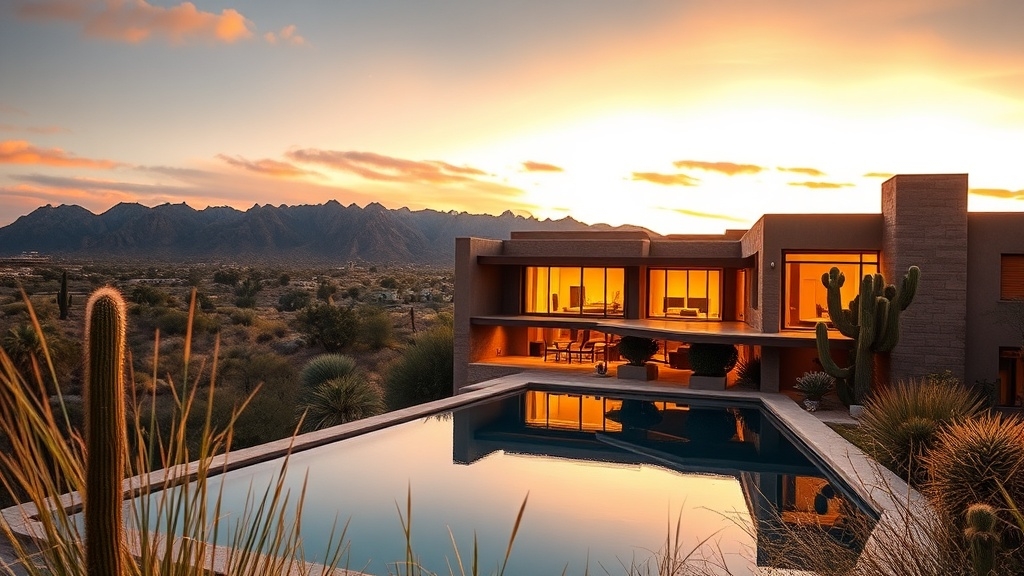
Outdoor kitchens with oversized stone islands, cantilevered pools, and firelit patios are selling quickly, especially near golf and wellness amenities.
Picture-framed desert vistas and organic palettes are also helping homes move first in the most competitive pockets.
Pricing and Prep That Sells Arizona Luxury in 2026
Feature-led bidding wars are still deciding which Arizona luxury listings move first in 2026.
Sellers face rapid value erosion when pricing misses micro market signals in Paradise Valley and Scottsdale.
Tempe’s $7.25 million listing underscores how Arizona’s trophy segment is resetting buyer expectations statewide.
Pricing Errors Trigger Rapid Value Erosion
Pricing Psychology favors a precise launch price and a firm marketing window.
Overpricing extends days on market and weakens later negotiations even with modest 2 to 4 percent appreciation.
- Hyperlocal comps by submarket
- One strategic price reduction
- Seller credits or prepaid HOA dues
- Winter early entry for relocator demand
- Monitor jumbo rates mid 2026
Prep Gaps Expose Trophy Homes
Market-aligned valuation pairs with timeless finishes, lighting, and outdoor upgrades.
Staging ROI rises when wellness, entertaining, work zones, and indoor outdoor flow photograph cleanly.
Assessment
Arizona’s luxury segment is clearing above $18 million more often, tightening competition for trophy listings.
Buyers are concentrating on Scottsdale, Paradise Valley, and North Phoenix, where land scarcity and build costs are pushing replacement values higher.
Properties moving fastest in 2026 are turnkey, privacy-forward homes with updated systems, strong indoor-outdoor connections, and security.
Accurate comps, disciplined staging, and verified condition reports are defining closings in a volatile, high-dollar tier across the region.