Key Takeaways
- Discipline and intentional living create a foundation that outlasts setbacks and uncertainty.
- Skill development through repetition transforms rejection into confidence and long-term mastery.
- A clear vision paired with consistent daily habits can rebuild a life after unexpected loss.
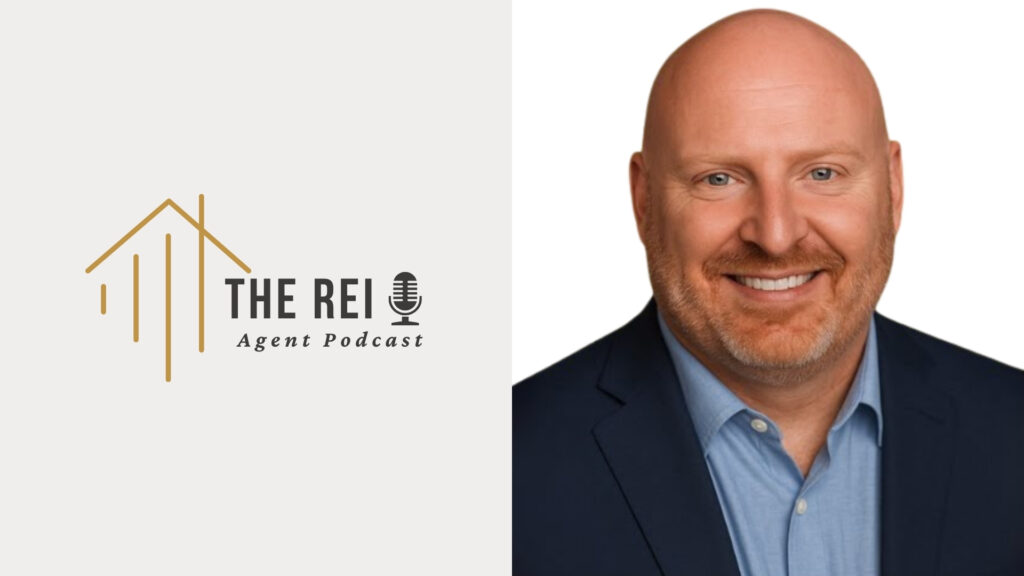
The REI Agent with Bryan Casella
Value-rich, The REI Agent podcast takes a holistic approach to life through real estate.
Hosted by Mattias Clymer, an agent and investor, alongside his wife Erica Clymer, a licensed therapist, the show features guests who strive to live bold and fulfilled lives through business and real estate investing.
You are personally invited to witness inspiring conversations with agents and investors who share their journeys, strategies, and wisdom.
Ready to level up and build the life you truly want?
Follow and subscribe to The REI Agent on social


The Relentless Spark That Ignites Transformation
Every so often, a story comes along that shakes the dust off worn-out assumptions and reminds us what is truly possible for a driven human being.
Bryan Casella’s journey from a rising basketball star to one of the most respected voices in real estate is one of those rare stories that grabs the listener and refuses to let go.
His conversation on The REI Agent Podcast is a deeply human reminder that every setback can be a doorway, every rejection can be a teacher, and every dream can be rebuilt stronger than before.
Bryan’s path is not a straight climb.
It is a hard-fought ascent born from discipline, vision, and a decision to stop letting life happen and start building life intentionally.
His story offers anyone with a goal a powerful blueprint for personal expansion.
“I was literally talking to fifty new people every day.”
“On the other side of all that rejection is the most peace I have ever felt.”
The Collision That Created a New Beginning
From a young age, Bryan was consumed by basketball. He lived it, breathed it, and pursued it with a level of intensity most people never tap into.
Early mornings in the gym, late nights on the court, long days pushing himself past every limit.
That fire shaped who he became.
But when two major injuries ended the future he had trained his entire life for, he had to face something most people dread. Reinvention.
He describes the moment with honesty and clarity. The loss was painful, both physically and emotionally.
Yet inside that pain was the beginning of something new.
It forced him to look inward, challenge his identity, and ask what life could look like without basketball as the centerpiece.
“This was one chapter. It did not work out. Now we move on.”
Learning to Outwork Every Obstacle
When Bryan stepped into real estate, he had no contacts, no experience, no money, and no safety net.
What he did have was the hunger to win and the internal switch he had built during his athletic years. He pulled the resilience from his past and poured it directly into his new path.
His commitment was single-minded.
He door-knocked for hours. He cold-called endlessly. He rewired his environment with visual reminders of the future he wanted. And through every moment of failure, he kept going.
“I came in like a freight train. It was going to be mathematically impossible for me not to put deals together.”
That intensity carried him from brand new agent to a breakout figure on YouTube, a top producer in his market, and then to a nationwide leader, coach, and speaker who has helped thousands of agents step into their potential.
Vision Is a Muscle, and Bryan Trained It Hard
Mattias and Erica often guide conversations toward holistic well-being, and Bryan was the perfect match for that direction.
His life is proof that the inner game determines the outer results.
He spoke openly about the disciplines that changed everything for him.
Journaling. Vision boards. Visual cues taped to car mirrors. Goals written daily.
Pictures above his bed. Symbolism throughout his environment kept him aligned with his desired future.
These were not cute rituals. They were anchors.
“If you do not live intentionally, life just happens to you.”
Rejection as a Catalyst for Confidence
Over time, Bryan discovered something few people ever realize.
Mastery of difficult tasks reshapes your identity. Rejection stops feeling painful. Instead, it becomes a sharpening tool. A test you grow stronger through.
On the other side of those tests is a version of yourself that feels free, powerful, and capable.
“When you get really good at something, it feels like a superpower.”
This shift is what allows Bryan to help others today. He knows what it takes to push through discomfort, and he knows the transformation that waits on the other side.
Leading With Purpose and Building a Mission Bigger Than Himself
What began as survival soon became service. When agents started asking Bryan for help, he recognized that most people needed more than tactics.
They needed clarity.
They needed direction.
They needed someone who lived the principles he taught.
That realization led to launching courses, speaking internationally, and eventually building a nationwide team. His purpose expanded. His leadership grew.
Now, he helps others build careers from a place of discipline, intention, and holistic growth.
“Get back to the basics. Cut the fluff. Reset if you have to.”
Your Future Is Built One Intentional Decision at a Time
Bryan’s story is not about real estate. It is about becoming the kind of person who refuses to let circumstances define their future.
His journey shows that the grind is temporary, but the transformation lasts forever. Setbacks will come, but how you respond will shape everything that follows.
If you embrace the vision, if you commit to the basics, if you take ownership of who you are becoming, then life will open doors you have not even imagined yet.
“Eventually, when you get to the other side, you become someone you would not even recognize.”
This episode is not just inspiring.
It is an invitation to step boldly into the person you are capable of becoming.
Stay tuned for more inspiring stories on The REI Agent podcast, your go-to source for insights, inspiration, and strategies from top agents and investors who are living their best lives through real estate.
For more content and episodes, visit reiagent.com.
Articles Related to The REI Agent
- 10 Shocking Truths From the 2025 Global Housing Storm (And How Agents and Investors Can Thrive Through It)
- Shocking Balance Before Wealth (How Erica Clymer’s Holistic Practices Help Agents and Investors Thrive in Global Housing)
- Global Housing Storm (Holistic Solutions to Million-Dollar Dreams, Desperate Sellers, Rising Rents, and Shifting Wealth)
- Top 20 Terrifying Reasons Agents Will Never Be Investors (And How to Fix It)
- 10 Ways to Kill Real Estate Agent Burnout in 2025 (The Holistic Fix)
- Mattias Clymer is Silently Leading a $70M Movement That’s Changing Agent Lives
- Therapy You Didn’t Know You Needed (Holistic Wisdom for Real Estate Professionals)
- From For Sale Signs to Life Design (How The REI Agent Transforms Real Estate Into Holistic Wealth)
- Achieving Holistic Wealth and Success Through Real Estate (Insights from The REI Agent)
- Partnering with Investors (How Real Estate Agents Can Exponentially Maximize Profits)


Contact Bryan Casella
Mentioned References
Transcript
[Mattias]
Welcome back to the RAI Agent. We are here with Bryan Casella. Bryan, thanks so much for joining us today.
[Bryan Casella]
Mattias, thanks for having me. Super excited. Should be a fun conversation.
[Mattias]
Now, I can tell you must have, I don’t know if you have any Latin American, like, culture. I know you have it around you because you’re coming out of Miami, right? But, like, you said my name right, and you said it with, like, a, like, the Spanish pronunciation.
So, you’re coming out of Miami. What’s your background?
[Bryan Casella]
Yeah, my family is from South America. They’re from Argentina. So, I was raised speaking Spanish.
I got sent to school, preschool, kindergarten, without speaking a lick of English. So, I learned English in school. So, I’m basically born and bred.
You’re in our house. It’s, like, a time warp to South America. It’s, like, pretty intense.
So, I got both cultures growing up, even because I grew up in LA. I’m in Miami now. But it was just, it was, like, a complete warp for people because they’d walk into my house.
They’re, like, where am I, right? Like, the artwork, the food, right? Just everything about the layout of the house was like you were in South America.
So, it just tripped people out.
[Mattias]
That’s awesome. Well, both of those locations, I imagine, have a strong Latin American presence. I don’t know about Argentinian, particularly, but that’s awesome.
Well, give us a bird’s eye view of who you are and what you do in real estate.
[Bryan Casella]
Yeah, man. I’ve been in the industry now for 13 years. I started in LA back in 2013.
And back then, I think I was one of the first people who really mixed doing the traditional real estate stuff and doing social media. So, on the scene locally, I exploded for being a new agent and just being a hustler and putting deals together. So, I’m being featured on panels and doing all this stuff really early on.
But I was documenting the journey. I think long before a lot of people really jumped onto video. So, within 2 or 3 years, I just explode.
I get 100,000 subscribers on YouTube. My business is growing. I did 13 deals my first year, 29 my second, and then 39 as a solo agent, my third.
And then after that, I built my team and grew it out. And then eventually, we went nationwide like we are now. But simultaneously, I’m growing my social media.
And by 2018, I had 200,000 subscribers on YouTube, my old YouTube channel. I started coaching. I started traveling and speaking.
And it really exploded after that. I started doing the whole online thing, coaching, training, building my team, investing in real estate. And the train just took off after that.
Wow, that’s a lot.
[Mattias]
Right. The first thing I thought of is starting off as an agent in LA. I could imagine somebody coming from a county that’s smaller outside of LA, thinking that it would be very hard to break into a big area like that.
There’s probably a ton of competition. Can you speak to somebody who might be wanting to get their license or is considering being licensed in an area that is more competitive than or has maybe more house sales, more agents than maybe like a smaller kind of county?
[Bryan Casella]
I’ve heard that a lot. And I think in a sense, you feel it. However, if somebody comes in and really…
Because what people don’t know is like my degree of hustle was just out of this world. And I don’t say that to try to toot my own horn. I was just so hungry and literally building from nothing that I had no other choice.
So I’m out there literally cold calling and door knocking all day, like five, six hours a day, every single day, six, seven days a week. So sometimes, yeah, I would do a listing appointment and I’d have competition. But it didn’t feel that competitive.
The competition was more with me. And as I started really getting the reps in and improving my skills and getting opportunities, I said, man, this is like the real estate world’s an oyster for anybody if they really put in the work. Where I think a lot of agents fail or fall short is they come in and they’re not coming in with the right mentality.
They’re coming in with, well, I’m going to dip my toes in the water and try this and try that versus I came in like a freight train. I was like, dude, I’m just going to talk to so many people every day. It’s going to be mathematically impossible for me to put deals together.
And that’s kind of what happened. So I was literally talking to 50, five, zero, 50 new people every day, live conversations, whether at the door or on the phone. And I don’t know many agents that’ll do that even now who are starting out.
But I had my back against the wall. I said, hey, I have to, I’m coming from a professional athletic career that ended early due to injury. I have to reinvent myself.
I’ve never done sales. I had to borrow my dad’s suit to start in the industry. So I look goofy because my dad’s shorter than me.
So the sleeves literally standing up or like down to here. So it was just a fiasco. I had everything working against me, right?
No connections, no network, no income from money. But the hustle and as cliche as that sounds, if you really work that hard and you commit to the process, like I got coaching and training, I was literally living, breathing and eating real estate, going to sleep early, waking up early. I just, I’ve made that my world.
And I think that’s why I was able to break through regardless of the competition. I just truly believe a lot of agents don’t dedicate themselves to that degree. And for me, it was easy because what was on the other side of that hard work was worth it to me.
I was very clear about what I wanted. And I think a lot of people miss that. The whole theme here, the holistic approach to life through real estate, everything outside of real estate was just as important to me.
But I knew real estate would be the vehicle to help me in other areas of life too. So I just, I literally took it head on and just went as hard as I could.
[Mattias]
Well, I think there’s always a grind phase that, you know, you need to, when you’re starting a business, you need to kind of go through this grind phase of, or it’s going to take a long time. Like, you know, like you could, you don’t have to necessarily grind super hard, but your business is going to reflect what you put into it. And so I think that’s what you’re talking about is basically you get what you put in, you get out what you put into it.
And I can see that with that kind of mentality where you’re basically outworking everybody else in the market. It doesn’t really matter how many other agents there are in that regard. It’s almost better to be in an area that has more volume than right.
And because that you have more opportunity to, to, to get more business. So like, so you, what some people might see is like, ah, it’s too, too competitive kind of advantage for you because you worked harder than the competition and there’s more opportunities in the market to take advantage of.
[Bryan Casella]
Yeah. And even on the flip side, right? Like, because I have a lot of team members on my team and even students in my, in my coaching that are in like rural towns or small towns and they come in and they crush it right away because there’s less volume in those areas, but there’s less people who are that dedicated to their craft.
Right. So they’re coming in and within their first year, they’re selling 30, 40 homes and people are like, well, what are you doing? And they’re just doing the basics.
So maybe I didn’t sell that many my first year because of where I was, but that formula still works regardless of where you’re at. It’s just finding individuals who are willing to commit at that level for an extended period of time is, is where it gets a little complicated. Yeah, no, that’s very true.
[Mattias]
I gotta, I gotta ask you about the professional sports background. What was this? Tell me about that story.
[Bryan Casella]
Basketball. I played basketball in high school. I played in college.
I got a full ride. I played at a USF in San Francisco. So I played division one from there.
I got recruited and I played overseas. I played in the Drew League in the summers. I did the NBA combine back in the day where they test your vertical, your sprint speed and all that.
But my career ended after my second major ankle injury back in 2011. I was just shy of being 25. So all that got derailed after my second major injury.
I didn’t walk for months. It was pretty brutal. And that’s the point where I had to reinvent myself.
And a couple of years later is when I got into real estate.
[Mattias]
Well, let’s, let’s go back to that moment if you don’t mind for a second. I mean, like this, this, if I imagine correctly, was your whole life you’d worked probably since what age at this basketball dream, picked up a basketball when I was 10, 11.
[Bryan Casella]
And then by 13, 14, I was like, okay, this is it. This is the ticket. Like I even had visions of it when I was younger, but I think 13, 14 is when that extreme grind and work ethic really kicked into where I’m waking up early and going to school before school to work out.
Right. I’m working out at lunch after class, people are going, you know, later on. Cause I went to a military school for high school.
Right. I don’t know if you want to talk about that, but that’s a whole other story. But when people left, I stayed on campus and I got the keys to the gym and I would work out when everyone else went home and partied.
So I took it to another level of dedication, but yeah, man, it just, you live, breathe, eat, whatever that is. And I’m just so competitive in general. I wanted to be the best.
So it was my life. A hundred percent.
[Mattias]
Was that where that ethic came from that, that, that drive was, was to be, to be competitive, to be better, uh, what you knew what it took and you were dedicated to do it.
[Bryan Casella]
Yeah. That contribute to it for sure. Because I already had a taste of it.
I wouldn’t say then that anything ever will measure up to the passion that I had for basketball when I was younger. I think having that ability to compete and want to be the best in something and then understanding and having a clear vision of what you want your future to look like both personally and professionally. I think having those two ingredients together really is the key.
And like when I work with people personally, whether friends or, you know, students, a lot of the conversations default to that. It’s not what to do and the techniques and all that. Everybody knows that stuff and it’s been out forever, but how can I get an individual to really become clear and activate that switch?
Like I had to just go after it. If you can do that, then I believe anybody can be successful, but the game becomes, can that person internally figure out what really makes them tick and become clear on it? And once they do, you know, then they can really turn on that like hyper mode that I call, you know?
[Mattias]
Well, uh, yeah, you’re, you’re exactly right. And that’s what I was kind of getting at too, is that, uh, to me, I think I, I didn’t, I wasn’t in the military. I didn’t do organized sports, um, in high school or I was actually dreaming of being a basketball player in like elementary school, but I never grew tall.
So it didn’t work out for me. So super well. Uh, but, uh, but my point is that I, I often think about how, what discipline I’ve had to learn, um, and had to give to myself and how I probably would’ve been a lot easier had I, or I would’ve been instilled that earlier had I done organized sports or had some sort of military kind of things.
I feel like that kind of brings it in, but it sounds like you went above and beyond to, to get there. And that was, you realized that earlier that you really, to, to do the work, uh, it’s, it’s, you know, so crucial to be able to achieve what you want.
[Bryan Casella]
Yeah. And I would just say in general, I’m a competitive dude. Like even if we play video games, I want to beat you, you know, like, and, and maybe it’s a little too much.
However, I know how to channel that. I know how to channel it to really help me in my life. And I kind of know now being older, um, I know how to tune it down because I remember even playing here at like LA fitness or 24 hour fitness and playing some basketball.
And I’m like, why am I getting so mad? But it’s just that competitive spirit. I want to win.
I don’t care if it’s a pickup game to me, this is the NBA championship game seven. I want us to win, you know? So I’m like getting on the guys, but I took a step back and said, okay, you know, I’m being a little immature here.
These guys are just trying to get a sweat in and I’m over here treating it, you know, like it’s a deal. Uh, so it does get out of control a little bit, but I’m grateful that I’ve developed that because it really allows you to push. And I think a lot of people that competitive spirit, uh, they haven’t really figured out how to tap into it.
[Mattias]
Yeah. Well, I’m curious then when, if, if, when you had that second injury, if you knew at that moment that this, this whole life building up to this moment, it was, it was done, or when did you realize that like, this was no longer the path and you had to figure something else out?
[Bryan Casella]
Yeah. Even after the first one, I started noticing my psyche was kind of messed up. I started playing a little bit scared.
Um, I was scared of getting hurt again. And then when the second time I got hurt and the severity of it, yeah, it pretty much had already, I come to that realization, like, you know what, um, even if I do recover from this, am I going to be even close to a hundred percent? And then is anybody even going to want to sign me?
Cause now I’m a liability. I’ve been injured twice. I’ve had two major surgeries, you know, and those nagging injuries too, that I’ve had little ones.
So I was always kind of a question mark for a lot of teams. I performed very well and did well, but, you know, you see that a lot in the NBA, like somebody like Derrick Rose, who was just fantastic, but he was just plagued with injuries. And like that story breaks my heart because it kind of relates to me.
I wasn’t as good as Derrick Rose or as athletic as him, but I get it. Right. It’s like, it sucks when you’re pushing yourself and you want to be the best and you’re right there.
And then you get injured, then you recover, then you get injured again. And it’s like, ah, uh, but yeah. And it took me to a dark time mentally because I played the victim for a little bit and I said, man, I worked so hard.
I put all my eggs in this one basket. This was taken away from me unfairly. And I was in that mode for a while.
Uh, so much so that even my dad was a little concerned, like, man, hopefully this doesn’t wreck my son emotionally because he poured his life into this. Um, but you know, I, I eventually kind of figured it out, but it was, it was a difficult time for me, um, upstairs right here because I’m sure.
[Mattias]
Yeah, no, totally. I mean, like, cause yeah, like it’s, it’s, that is out of your control. Like, it’s not like you, you, um, decided not to wake up and train and it resulted like, you know, like it, that’s, that is, that is frustrating.
Um, at what point did you then decide, uh, like that real estate was, was the next thing you’re going to choose? Like how soon after this realization that you need to do something else?
[Bryan Casella]
Yeah, it took a while. You know, I stayed overseas for a minute because I said, man, the moment I touched back down in America, I got to like face the music and completely change my life. And I, being young, I was still kind of avoiding responsibility.
I was like, yeah, I’ll kind of hang out. But after about, you know, six to eight months after that, you know, I finally wiped my tears and said, all right, I got to get back to, you know, the States and figure this thing out. So I go back and I knew for a fact because of my experience doing odd end jobs in the summer and doing work study in school that was like for my scholarship, I said, okay, I’m not going to work for somebody else because I’ve already experienced a little bit of corporate work environment and just as environments.
And I couldn’t stand to do like, I’m a very happy go lucky type of dude. And maybe I just had bad luck, but these guys were so negative in the workplace that I would leave my shift upset. And then they would be happy.
I’m like, dude, they drained me of all my good energy and they left me with all this negativity. I was like, man, this is crazy. And then, you know, just the office politics type stuff.
I was like, I don’t want anything to do with that. I I’m willing to be out on the street on a cardboard box, building my own business than I am working for somebody else. So I do just to appease my parents, I do an interview at an enterprise, the rental company.
I’m sure you’ve seen the car rental company, right? I do the first interview and the lady’s like, oh, you’re going to work six days a week, like 12, 14 hour days. This is in Los Angeles, mind you back in like 2011, 12.
And she’s like, and you’re going to make 30 grand a year. I’m like, what? I’m like, so I’m going to work six days a week, have no life and make barely enough to maybe pay my rent.
So I don’t go back for the second interview. She calls me. I’m like, you know what?
If it’s not for me, thank you. So I start hanging out with some of my friends who are doing entrepreneurial things and really looking at what I thought would be a good fit for me. And when I walked into a real estate office, after having talked to, I talked to my original basketball coach back in the day from like NJB, National Junior Basketball League.
Cause I remember he was a real estate broker. I said, Hey, you know, I’m looking at kind of what I want to do next. And real estate seems interesting.
He’s like, oh yeah, come to the office. We’ll sit down and we’ll talk. So I meet with him and we ended up talking for like an hour and a half.
Mind you, he hadn’t seen me since I was probably, I don’t know how tall. And now I walk in and he’s, you know, he’s looking up to me because I’m six foot two now. Right.
So he’s, I’m towering over him and it just made sense. You know, he started talking to me and I said, okay. I think the main thing that worked for me to choose real estate was a lot of people look at business and entrepreneurship and its many branches and they look at it from a position of, well, what is missing?
What I don’t have. I looked at it from what do I bring to the table? What are my advantages playing in this field?
And I brought up the competitiveness, the discipline I’m willing to learn. I looked at the advantages of real estate. I don’t have to climb up a corporate ladder.
If I start selling right away, I start making money. And I said, this is it. I don’t know anything about sales.
I’m not a sales dude. Like I told you, I didn’t own a suit, but I can, I can figure this thing out. And I just, I just came in with that mentality.
So I signed up there on the spot. His office offered the classes at the time because the online thing really wasn’t going back in like 2011, 2012 when I was getting licensed. And while I was doing the licensing process, I would sit in on the meetings.
I would go to their scripting role play. I would attend listing appointments with some of the agents. So by the time I got my license, like, you know, eight months later, I already moved and talked like a vet because I had already done coaching and done all the other stuff.
So I was ready to go, but I already came in with that mentality, like I’m going to be number one. And I think that’s really what helped me hit the ground running pretty quickly because I got my first listing, I think within two or three weeks.
[Mattias]
Oh, wow.
[Bryan Casella]
Yeah.
[Mattias]
Yeah. That’s awesome. I mean, you’re basically learning the real parts of the job while you were getting your license.
Cause I’ve heard tons of people that like want to get their license because they’re like thinking about like they want to get investing. They want to invest in a house at some point. And they’re like, maybe if I get my license, that’ll teach me kind of more about real estate.
[Bryan Casella]
I’m like, no, yeah, definitely not. Definitely not. I don’t think I’ve used anything ever from the classroom once, you know?
[Mattias]
Yeah, no, that’s, that’s awesome. And I mean, I think what a powerful lesson of, you were put in one of the most justifiable ways of wanting to feel like a victim, right? There doesn’t get much more than that, where you really don’t have control over that.
And just what a powerful lesson of you can turn that into something else. You can turn that into if I don’t get a listing or whatever, maybe it’s an opportunity for something else, for something different. And I know that when I go through the most stressful times in real estate, there’s a deal that’s just like, really, there’s crazy people or whatever big problems or both.
And it’s just stressful. I think the thing that always helps me get through those is like, once this is done, nothing’s going to faze me anymore. And it’s like, you just got to get past this part.
It’s going to work out. Something’s going to work out. It may not be the deal, but something’s going to work out.
It’s going to be resolved. And once you get past that, you can just kind of coast and the smaller problems that were stressing you out before just will feel like pebbles.
[Bryan Casella]
Absolutely. And one of the other things that really helped me, because I had a few light bulb moments during that time, but I remember always kind of almost feeling sorry for, or even empathy for a lot of people who were living in the past, like, oh, back in high school, right? Or back when I was 18, if coach put me in the game, I’d be a pro, and I always like kind of felt sorry or bad for them.
And as I was going through my mental funk, I said, man, I’m going to turn into one of them if I don’t get my stuff together. And I don’t want to be that because let’s take a step back and look at life objectively. I’m 24, 25 years old.
I have my whole life ahead of me, right? Like this was one chapter. Okay, it didn’t work out.
Let’s move on, right? Like what are we going to do? Sit here and dwell on it for 20, 30, 40 years.
And among other moments, it really helped me have a better, grander perspective on the situation and to say, okay, yeah, like this is cool. You know, cry it out, wipe your tears off, and then let’s move on to the next thing.
[Mattias]
Well, and that whole experience taught you that work ethic too. And it probably gave you the confidence because you showed up for yourself over and over and over again. And so you had the confidence that like, if I do that in this thing, then I’m going to be the number one agent or whatever.
And so like, I think that that is maybe one of those things that people miss when they don’t have that switch you talked about, where they turn it on and they just kind of show up all the time and do the things that they need to do and actually do them is maybe they haven’t kept those promises to themselves. Maybe they haven’t like shown up to the gym when they don’t feel like it, they just don’t go. And they don’t reinforce that behavior that gives them the results that they want.
[Bryan Casella]
Yeah. And you have to accept like, and it was very difficult for me early on to really relate to a lot of people because just my mentality in regards to dedication to something like for me was basketball, which is different. And I think that the issue that I had was I was trying to get people to understand me, but I learned through maturity.
It doesn’t matter if people understand it. So later on when I would read books and I would watch interviews and I’ve even met like, you know, Kobe and Michael Jordan and all them. When I started reading what coaches would say about them and listening to interviews of them talking, I’m like, yes, like that’s the stuff that I say that people call me a lunatic for.
Right. But I get it. These guys are obsessed with just wanting to be better.
Like they don’t care about the realm of everybody else and all that’s crazy because whether it was basketball or real estate, when I would share with people what I did, they were like, dude, you’re insane. Like what? Like you’re in the gym at like four in the morning.
I’m like, yeah, dude, I want to get better. Like I got to get in there. Right.
But I would like try in the beginning to like rationalize it to people. And that was a big mistake. I was like, I’m just going to do what I do because I’m on this path and they’re on the path going over here.
Why am I trying to rationalize myself? So that further gave me even more confidence. I was like, oh, okay.
When you want to be the best, we’re just different. Like we think differently, we perform differently, we have different priorities. That’s just what it’s going to be.
So instead of trying to explain yourself or rationalize, just do you live your life, accept the fact that most people are going to think you’re nuts and do what you do. Because then if you’re fulfilled and you’re living the life that you like and your career is going in the direction that you want, then that’s truly all that matters. Right.
And again, a lot of this is like maturity and realizations, but like I fought with that for a long time, you know, I really did. And although I got along with a lot of people and I was always at parties and that kind of stuff, even though I wasn’t really drinking and that kind of thing, I had very few close friends because I was just, I guess too intense for a lot of people, you know? So I have a lot of acquaintances, but very few close friends because of that.
Because a lot of stuff that I do, it’s just very intense and all the way. And I think it’s just, it’s too much for a lot of people, which, you know, I understand now that I’m older.
[Mattias]
With regards to that intensity and like how a lot of people don’t have it. If somebody’s hearing you right now talk and they’re feeling fired up and they want to go door knocking and they want to go cold calling and they want to, you know, be able to handle the 50 people that slam the door in their face or, you know, tell them to go to hell. Yeah.
Like, do you have suggestions? Do you have, do you have recommendations for, for getting that, uh, that tenacity, that, that vision, that, you know, that willpower to continue to keep going, to keep waking up early and work? What, what suggestions do you have to people?
[Bryan Casella]
Absolutely. Uh, there’s two things I can say. One is this, and this is something that people don’t know.
Right. And I think they, or if they’ve never taken something to this level, they won’t understand until they do it. Anything that like, even for me, basketball, when I started wasn’t easy.
Right. Same thing with cold calling and door knocking, all of that was foreign to me. I wasn’t the guy that the prototypical person that people were like, Oh, he would do great in sales.
Like I was a monster on the court and a great leader, but off the court, I was just the average Joe, right? I didn’t bring just a regular life, that intensity. So people forget, or either don’t know that when you become really good at something, it’s magical.
Like when you get really good at door knocking and cold calling and presenting to people, it almost seems like you have a superpower. Like I’m at the point now, and I have been for a long time where if I have somebody in front of me, who’s like motivated and qualified, I’m going to get that deal. And I think by the time I finished as a solo agent, before I grew my team and eventually got out of production, I was taking almost nine out of 10 listings when I went on an appointment.
And most agents I talk to now are like taking two or three out of 10. But that was just my dedication to the craft. I’m going to become a master cold caller, door knocker, presenter, really refine my communication, improve my public speaking skills.
But when you become really good at it, you start to understand why you went through all the rejection before. And then you realize the mistakes that you made. So all it is, is a constant refinement of your technique.
So that’s waiting for you at the end. But in the moment, I say, I tell people, we have to look at this thing objectively. Doing the traditional sales stuff, and this is my opinion now, I believe is the highest form of self-improvement that any individual can go through.
Because we shelter ourselves from the world through and because of our insecurities many times. We’re afraid to put ourselves out there online or talk to people because we’re insecure about how we look, our voice. We think maybe we don’t have enough value or whatever it is.
But when you do this over and over and you overcome that, you unlock a version of you that number one, you would never recognize. But number two, life becomes so much better for you. I can tell everybody on the other side of all that rejection and grind and hard work is the most peace I’ve ever felt, the most fulfillment.
I feel like if I just have a quick conversation with somebody, I can completely change their emotional state and perspective. I can bring light to the world. I can encourage people.
I can have a moment with maybe a kid. Dude, I remember for a couple years, I had a Lamborghini for three years, right? And I love the moments where I would park somewhere, then I come out and the little kid’s going crazy over it.
I’m like, oh, come here little buddy, like sit in the car, right? And giving them that moment versus before, before I really developed socially, I might not have done that, right? So now I give that kid a moment that might last a lifetime for him that was just an insignificant blip in my mind.
But because I developed that and now I’m a lot more open with people and expressive, I can grant that experience to somebody. And that to me, being on the other side of it totally makes it so worth it. And when you’re going through the grind, that’s kind of what you have to remind yourself.
Eventually when I get to the other side of this thing, sure, I’ll have the money and the success, but I’m going to be a completely different person. And that for me was one of the visuals that I had on the wall of that better version of me. I wanted to just be socially totally free, comfortable, and be able to express myself at a level that I would be proud of, like really developing my communication.
And because of that, I was clear about it and I knew what I wanted. I had the vision. I could feel it.
I could sense it. Everything went towards channeling and getting to that eventual position, right? So that long-term goal is what helped me make it through those temporary difficult moments.
[Mattias]
And are you kind of a visionary person where you’re thinking about where we’re going kind of naturally? Like you’re like, you know, like this is where I want to be. This is where I want my team to be.
And I still make, like, I think some people might think about all the ways or all the details, all the weeds of getting there or what they have to do today. And then they don’t think about the future as naturally. Would you say that you are more of a futuristic kind of person?
[Bryan Casella]
Yeah, I would say I’ve developed it because I think, and naturally, I think we all are. It’s just, it’s suppressed. Like when we’re kids, dude, every kid, I don’t care where they’re from, has just a boundless imagination.
And same thing with goal setting, right? Like, let’s say a seven-year-old walks up to you and is like, hey, Mattias, I’m going to be an astronaut. Can you imagine what he would say if you try to talk him out of it?
He’d probably curse you out and like, oh, leave me alone. He’s weird. Leave me alone.
Yet we just give up so easily, right? So it’s crazy how we’ve lost that through conditioning and growing up. But I would say from a basketball standpoint, absolutely I was.
What developed after was the whole journey when I got into real estate and exploring personal development, reading, training, and doing all that stuff. It really expanded my mind to become more of a visionary just in life in general versus just in basketball. So absolutely.
And then being a leader now with, I’ve coached like thousands of agents. I still have a ton of people on my real estate team that we deal with every single day. You have to have that ability as a leader because everyone’s looking to you and you’re the top of the totem pole.
And we all have to know where’s that destination, where’s that road. And you’re basically the leader, right? So part of it was a development and the other part was out of necessity, right?
When I put myself in this position, I’m expected to be that visionary. So it’s a little bit of both. Some of it I channeled naturally and the other part I think was developed over time.
[Mattias]
Well, I’m thinking if somebody has a harder time seeing that or thinking that way, I’m wondering if like that’s where like some of that affirmations and kind of the journaling, the goal setting things that people often recommend in the mornings would come into play where you can, you know, you envision yourself being the successful agent, to be the number one agent or whatever and doing that by getting really good at the, you know, talking to getting the rejections, getting really good at the, you know, getting through that whole thing and understanding that every time you do something that you don’t want to, it becomes easier the next time. Every time you make that phone call, you door knock, the next door becomes easier to knock on. And I think all that stuff can really help to get kind of push yourself past yourself and do what you need to do.
[Bryan Casella]
Yeah. And really, it’s interesting that you brought that up. I’ve had so many people say that stuff is lame or everybody knows that.
And I’m like, well, are you actually doing it? Because like what you brought up. It sounds hokey.
Yeah. Yeah. Those basics are so key.
But really like when you go a layer or two deeper, all it is, is you taking conscious time to think about these things and then look at the future. Same thing with like, I tell people those things are fantastic. And one of the first things I recommend to people, the other one is I say, take time every day to think about these things.
Right. In addition to that, you know, I tell people, look at the symbolism and visual cues around you. So my goals, those first couple of years, like the background on my phone would be one of my goals, right?
I carried in my suit pocket, pictures of things that I wanted to accomplish. So when I was out there door knocking and it was tough, I would look at them. If I had a bad interaction, I would look at them.
[Mattias]
The picture of the Lamborghini.
[Bryan Casella]
Yeah, exactly. Like seriously, I would even, and this is before I really developed a stronger mentality. I would carry, after I closed a couple of deals, I would literally carry a thousand or $2,000 cash on me because when I got a bad rejection at the door, I would literally pull out the money to make me feel better.
Right. But that’s a cue, right? Same thing with, you know, the vanity mirror on my car, right?
When you folded it, I had pictures there. When I woke up in the morning on my ceiling above my bed, I pasted pictures there where I brushed my teeth in the bathroom. I had pictures there.
So I was always looking at what I wanted and where I was going. Constant reminder, constant visual acuity, constant, you know, visualization, constant symbolism around me. So even if I did have a bad moment or I was distracted, just having those things in my environment brought me back.
And I said, okay, let’s do it. I can take a quick little break and then we’re back to work to accomplish that thing. And I even have downstairs, I’m probably going to do a video pretty soon here.
I have an old journal that I’ve had since like 2015 and I can literally open it up and read. And there’s entries from 2014, 15, 16. I’ve literally accomplished everything that I’ve written down to the T and beyond that.
But I used to literally write it down every day. I make this much money. I own this car.
I live in this neighborhood, blah, blah, blah. Right. I own six investment properties, whatever it is.
And it’s cool to look at that stuff. And I was like, wow. So I’m going to do like a 10 years later type of video where I literally show people and open up the journal.
Look, this is literally what I wrote 10 years ago because it’s dated. That’s awesome.
[Mattias]
Yeah. No, I mean, like I talk about this all the time. I think like if you don’t live intentionally, if you’re not intentionally living, life just happens to you.
And most people are in that position where they just, life is just happening. They’re just responding to what comes up and they’re just going through it through the motions. But if you don’t take control and live intentionally, and that can be done in a few different ways.
I don’t think there’s a hundred percent correct way of doing these, but like what you’re talking about is like you’re, you’re, you’re, you’re harnessing yourself basically. You’re, you’re brainwashing yourself, if you will. I mean, you’re, you’re doing all, you’re setting yourself up in a way, like you talk about, you know, people talk about if you’re thinking about buying a red convertible and you’re thinking about it, you had this idea, then all of a sudden you see the red convertible everywhere.
Right? So you’re, you’re setting your brain up for this. I like, you know, looking for opportunities, you’re priming yourself.
And, and so there’s, it may, somebody might reject the self-help world or reject these kinds of things because they think it feels hokey or whatever. But, but, but know that that’s, what’s happening is you’re just taking control of your life and you’re, you’re kind of manipulating your brain. You’re manipulating, you’re manipulating your life to get what you want.
So it’s why not?
[Bryan Casella]
Yeah. I just think that the wrong people have been promoting it because really true personal development and like self-help, however you want to label it is difficult. It’s not easy.
Like you have to face a lot of, you know, your insecurities and shortcomings, humble yourself, put your ego to the side and say, Hey, I have some stuff that I need to work on and improve on. And for me, even intimately, like my relationship with my mom and my dad prior to me doing personal development was pretty good, but it wasn’t that good. And I made it a thing.
I said, okay, I want to improve my relationship with them, but that’s going to have to force me to level up, humble myself, and then come at them differently to fix it. I can’t just expect them to do it. And, and seeing the changes in that and other areas was just mind blowing to me.
Right. And I said, okay, this, this isn’t easy, but it’s, it’s worth it. It just requires the individual to fully commit to this process.
And it’s not popular. It’s not sexy. Just like the stuff we talked about, you have the wrong people talking about it.
Right. So people think it’s corny, but this isn’t going to get you clicks and views, which is what I think most people want nowadays. But it’s, it’s definitely a recipe and a path for an individual to live a better life.
And that’s really to me, what’s most important at the end of the day.
[Mattias]
Yeah, a hundred percent. I do want to get into what made you start building the team and kind of how you went about that.
[Bryan Casella]
Sure. Yeah. So I hit a crossroads probably year two, three, where I was like, all right, I got to make a decision.
Am I going to be a solo agent with an assistant and maybe a buyer’s agent and just crank deals and just live, breathe, eat real estate 24 seven? Or do I want to explore this path of speaking, building a team and then doing and putting my time and other stuff while growing my business? And I just decided on the second one.
At the time I was already doing speaking tours and getting a lot of guest appearances in places because my social media was exploding. And I said, man, I really enjoy that part. Same thing with giving back.
Around that time, people started asking me for coaching and help. And at first I kind of shunned it. I was like, dude, just get out there and work.
You don’t need me to help you. But then I realized, I was like, man, my mentality is a little bit different and it’s not that easy for most people. So that’s when I started doing, I released a door knocking course back in 2015 and Inman News featured it.
I sold like hundreds of copies that first month and people like, oh my god, this is incredible. And I’m like, dude, that was like a basic course that I put together. It was nothing special.
But of course, everything that I studied and worked on and refined in my approach, they loved it or they hadn’t seen anything like that before. And then later, that evolved to coaching. And then I ended up going to Australia to speak.
And I went to Canada. I went to Latin America a couple of times to speak. And I’ve spoken with most of the guys from Million Dollar Listing and Florida and California.
And I’ve been to so many boards of realtors. And that’s kind of what I saw in the future and what I wanted to do. And that’s why I chose to go the team route.
And then in 2020 is when I went nationwide with my team. So originally, we were in Southern California. And then in 2020, I decided to open up the doors and go nationwide.
[Mattias]
What’s that look like? So anybody that wants to join your team can, no matter where they’re at.
[Bryan Casella]
Yeah. So the cool thing when you’re at a cloud-based brokerage like I am, is it gives you that ability. Otherwise, I’d have to personally be licensed in all the states.
So what I’ve done is I found effective leadership in a lot of these core regions. And then from there, I have trickled down leadership. So if somebody wants to join, as long as they’re licensed in that state, they’re good to go.
So they contact me, we meet, I share with them the team structure. And then if it’s a good fit for them, they end up joining. But everybody can join.
As long as my company’s open in those states, we’re good to go. And it’s not a problem.
[Mattias]
Cool. Yeah. So how much of your time are you spending with that versus the speaking and the coaching?
[Bryan Casella]
Yeah. It’s pretty split now. I mean, back in 2020, 2021, I dealt with the whole…
When people were getting de-platformed back then, I basically had all my platforms shut down like Instagram and YouTube. So all the stuff I have now, I had to start over. But up until then, I was still probably more on the real estate side.
Because although I stepped away from production, I was still pretty heavily involved helping people with transactions and stuff. And I like it. I like the negotiation aspect of real estate and the hustle bustle.
I still enjoy it. But nowadays, I would say probably 50% of my time is spent on the team and us growing because now I’m a lot more active in recruiting. And the other 50% is spent on speaking, doing guest appearances, coaching and that kind of stuff.
It’s pretty streamlined the way I have it set up. But I would say it’s split at this point, probably 50-50.
[Mattias]
Cool. I mean, there have been a million golden nuggets already in this conversation. But I’m curious what golden nugget you want to share with our listeners.
[Bryan Casella]
Yeah. I would really just encourage people to get back to basics. Basics and fundamentals is something I always just drill into people because they’re so important.
And I even found myself getting away from them. Because as soon as we start to have a little success, we start feeling ourselves and we think we can just ditch everything. So in real estate, get back to the basics.
Get back to building a sphere of influence and working it. Get back to talking to people live in person. Get off social media.
Stop scrolling. Get back to going out there and meeting people, featuring local, small and medium-sized businesses and networking with them. Get back to the core essence of real estate, building your skill set, becoming an expert in your market.
The more you do that, regardless of what the market’s doing in the economy and interest rates, you’re going to find success. There’s so many people around me right now that are having record years and one of the worst markets ever. So that formula is always going to stay the same.
And I think as time goes on, we’re being pulled further and further away from traditional stuff. And I think that’s causing a problem. So I really want people just to get back to the basics, get back to the fundamentals, cut the fluff and start there and reset if you have to.
And then from there you can build.
[Mattias]
Yeah, I love that. That’s so true. Favorite book or that you think everybody fundamental book that everybody should read or maybe just one you’re really enjoying now?
[Bryan Casella]
Yeah, there’s a lot. But one that I would really recommend, especially if we’re going to go more the sales side is Pitch Anything, like a baseball pitch. Pitch Anything by Oren Kleff.
K-L-E-F-F. Great book. The dude, fantastic salesperson.
I think he raised I don’t know how many billions of dollars for like hedge funds, but he gives you a different perspective on selling and talking about the next level storytelling and those kind of things. And I really think for people who deal with other people in business and just in general who want to really improve their communication, that book is money. Pitch Anything.
You definitely will not regret it. That book is amazing.
[Mattias]
That’s a new one for me. So I’ll have to check that out. And then you have mentioned a bunch of different platforms you’re on.
Where can people find you?
[Bryan Casella]
You can find me on Instagram. If you want to shoot me a personal message, I still run my Instagram. It’s just @Bryan.Cosella.
That’s my new account with a little blue check mark, even though I didn’t want to give my money to Meta. I wanted to make it official because people have impersonated me and try to scam people. So, I got the check.
Same thing on YouTube. I think my handle is @BryanCosella305 on YouTube. I have 1400 subscribers on my new channel or something like that.
We just started it. But you can find me on Facebook too and all that stuff. But if you type in my name, you can find me.
I’m pretty Googleable, if that’s a word.
[Mattias]
Awesome. Hey, man, this has been a really great conversation. I’m sure anybody that’s listening to this is fired up now.
So thanks so much for being on here.
[Bryan Casella]
Yeah, man. Appreciate you inviting me.
[Mattias]
It was cool.
[Erica]
Thanks for listening to the REI Agent.
[Mattias]
If you enjoyed this episode, hit subscribe to catch new shows every week.
[Erica]
Visit REIAgent.com for more content.
[Mattias]
Until next time, keep building the life you want.
[Erica]
All content in this show is not investment advice or mental health therapy. It is intended for entertainment purposes only.