



Key Takeaways
- Boston’s office vacancy rate has risen sharply to 24%, reflecting significant turmoil in the market.
- Leasing activity has slowed considerably, impacted by the shift to remote work and a surplus of available sublease spaces.
- Investors face increasing uncertainty as the duration and extent of the downturn remain unclear.
Shifting Dynamics in Boston’s Commercial Real Estate
Boston’s office market is experiencing significant upheaval, with vacancy rates soaring to an unprecedented 24%. The leasing slowdown has been driven by persistent remote work trends and stalled demand in major sectors such as life sciences.
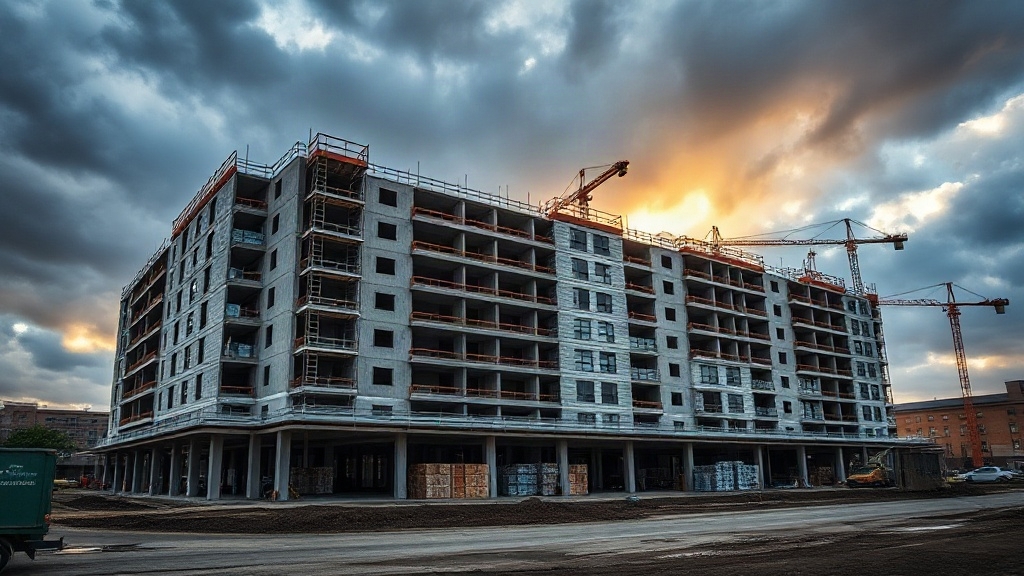
Vast office towers now sit largely empty, while ongoing construction and a surge in sublease listings have contributed to the market’s oversupply.
Investors now face a challenging landscape with growing uncertainty over how severe the downturn may become and which stakeholders will emerge resilient amidst the turbulence.
Boston Faces Soaring Office Vacancies and Market Turmoil
As darkness envelops the heart of Boston’s commercial core, the office vacancy rate has erupted to a staggering 17.1%, shattering any illusion of stability and sending shockwaves through the nation’s property markets. The numbers are relentless, stripping away comfort, leaving the city’s skyline etched with uncertainty and alarm.
The chaos is not confined to Boston—across the United States, office towers stand as silent tombs to a rapidly changing world, but the epicenter of the aftershock lies in this long-revered gateway market. As buildings grow emptier, some investors may look to resilient districts and community redevelopment strategies popular after natural disasters as a potential blueprint for reversing commercial market declines.
A tide of remote work has swept through Boston’s central business district, tossing decades-old certainty into oblivion. Tenants relinquish large swathes of floor space they no longer need, forcing waves of space reclamation upon desperate landlords. The data offers no solace: the vacancy rate has more than doubled since 2019’s hopeful close, an era when only 6.7% of offices stood empty.
Now, nearly one out of every five office suites sits abandoned, filling the city’s heart with a chilling void.
The bleeding is uncontained. In the past year alone, the vacancy rate surged 440 basis points—an explosion reflected nationally, where office vacancies approach 19.7%. Once immune to national malaise, Boston now teeters on the brink, outperforming only by the slightest edge. Despite the nationwide increase, Boston’s 17.1% vacancy rate remains one of the tightest office markets in the country.
There is no reprieve from the deluge of darkened windows and shuttered elevator banks.
Local employment trends may limit demand for new or expanded office space, contributing to the sustained rise in vacancies. Leasing activity is paralyzed. Only a handful of major leases offer fleeting hope, while key industries remain dormant and still. Life sciences, once a titan fueling the city’s market boom, lies in stasis.
Technology, finance, and professional services—normally dependable anchors—are stagnant, evaporating the prospect of a swift turnaround. Although foot traffic improved by 10.3% year-over-year, attendance still limps at only two-thirds of pre-pandemic highs, painting a bleak portrait of partial recovery.
The pressure comes from every angle. New deliveries pour millions of square feet into an already-saturated market, intensifying a glut that landlords cannot stem. The construction pipeline continues undeterred, compounding the city’s supply problem, robbing any chance for quick absorption.
Nearly 44.8 million square feet stand available for lease or sublease at the dawn of 2025, mocking efforts to reverse the trend.
Even the sublease market joins the onslaught, with over 13 million square feet on offer. Sublease listings multiply as companies scramble to adapt, amending their footprints to steer persistent uncertainty. Space recycling, once a niche tactic, becomes a desperate maneuver for survival.
Yet, a whisper of resilience lingers. Boston’s prime addresses continue to draw investors, propelled by persistent, though slowing, rent growth. But beneath the surface, fear festers.
The specter of empty towers grows, threatening the very foundation of Boston’s commercial real estate. The lights are dimming, the silence deepens, and the market braces for an uncertain, unforgiving future.


Assessment
What’s Next for Boston’s Office Market?
Boston’s office market is facing serious challenges, with vacancy rates climbing to 24% and leasing activity slowing down noticeably. The number of available subleases is growing, and the usual buzz in downtown office buildings has faded, largely due to continued remote work trends and an ongoing influx of new office space. Investors are navigating difficult conditions, and the path to recovery remains unclear for now. Still, these challenges present opportunities for creative solutions and those willing to adapt. If you’re invested in Boston’s commercial scene—whether as a landlord, broker, or tenant—now’s the time to rethink strategies and consider bold moves to turn today’s uncertainty into tomorrow’s opportunity.

















7 Responses
24% vacancy rate, huh? Maybe Boston should consider converting some office spaces into housing. Kill two birds with one stone?
Or maybe we should ask why 24% of Bostons offices are empty in the first place?
Maybe this is actually a good thing? Time for Boston to re-envision unused office spaces for affordable housing maybe?
Wow, with 24% vacancy, wouldnt it be smart for Boston to convert some offices into affordable housing? Just thinking out loud here.
Sure, lets just turn every office into apartments. Who needs workplaces anymore, right?
Wow, 24%! Maybe its time Boston reconsidered its zoning laws? Office spaces could turn into affordable housing! Just a thought.
Wow, 24% vacancy? Maybe its time to convert some of those offices into affordable housing. Just a thought, Boston…