Key Takeaways
- True wealth comes from clarity, discipline, and continuously building something meaningful, not from chasing passive income myths
- Land investing works best when emotion is removed, and problems are solved through speed, liquidity, and honesty
- Long-term success flows to those who build trust, relationships, and visibility rather than operating in isolation
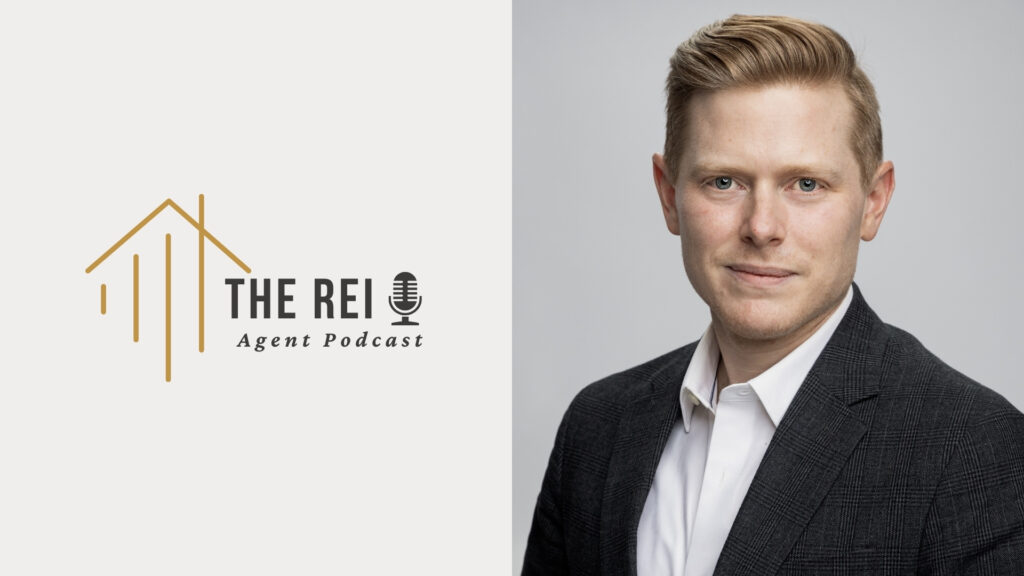
The REI Agent with Drew Haney
Value-rich, The REI Agent podcast takes a holistic approach to life through real estate.
Hosted by Mattias Clymer, an agent and investor, alongside his wife Erica Clymer, a licensed therapist, the show features guests who strive to live bold and fulfilled lives through business and real estate investing.
You are personally invited to witness inspiring conversations with agents and investors who share their journeys, strategies, and wisdom.
Ready to level up and build the life you truly want?
Follow and subscribe to The REI Agent on social


The Conversation That Reframes Success Before the First Dollar Is Made
Success in investing is often sold as a finish line. Bigger deals. Faster exits. Passive income forever.
But in this episode of The REI Agent Podcast, the story unfolds very differently.
This conversation is not about shortcuts. It is about clarity, discipline, and building a life that still feels meaningful after the wins stack up.
Drew Haney does not just talk about land investing.
He talks about how people think, why they sell, how wealth actually feels once you have it, and why the real work begins after financial freedom shows up.
From Trading Screens to Trading Dirt
Drew Haney did not start in land. His career began in commodities trading, where numbers moved fast, and emotions moved faster.
Over time, he realized that while he loved the game, the game did not love him back. That realization forced a pivot.
Land became the new focus because it behaved differently. It was slower. Less emotional. More forgiving if bought correctly.
Drew learned to see land as an illiquid commodity where patience created opportunity and spreads rewarded discipline.
“I loved trading, but it just was not working. I had to change the game I was playing.”
That shift changed everything.
The CarMax Mindset and Why People Sell for Less
One of the most powerful ideas shared in the episode is Drew’s comparison between land investing and the CarMax business model.
People do not always want top dollar. They want relief. They want speed. They want a problem gone.
Landowners often sell at a discount not because they are uninformed, but because time, stress, or emotional weight matters more than squeezing out every dollar.
“They are not being taken advantage of. They are choosing the easy button.”
This mindset reframes how ethical investing actually works. The seller wins by solving a problem. The buyer wins by providing liquidity. Nobody loses when the transaction is honest.
Why Passive Income Is Not as Passive as Promised
In a moment that challenges a sacred investing phrase, Drew shares a belief shaped by experience. Passive income is not magic. It is simply your own money coming back slower.
At this stage of his life, Drew prefers cash now. He would rather redeploy capital quickly than wait years for consistency that still requires management, attention, and risk.
“Passive income is just getting your own money back slower.”
This is not cynicism. It is clarity earned through hundreds of deals.
Appreciation Is a Bonus, Not a Strategy
Living in Southern California puts Drew in the heart of appreciation culture. But he refuses to build a business on it. Appreciation might happen, but it is never the plan.
His focus stays locked on what works right now, not what might work later. That mindset keeps emotion out of decisions and protects against false confidence when markets shift.
“I never want to bank on appreciation. I just do what works now and do more of it.”
Land Versus Houses and the Weight of Emotion
Another major insight from the episode is the emotional difference between land and houses. Houses carry memories, pride, fear, and ego. Land rarely does.
That emotional distance changes negotiations, due diligence, and stress levels. It allows deals to be evaluated like commodities instead of personal identities.
“With houses, people get emotional. With land, it is just a commodity.”
This distinction alone opens a new mental doorway for investors who feel burned out by residential drama.
Networking Beats Isolation Every Time
When asked for a golden nugget, Drew does not offer a tactic. He offers a truth earned through years of showing up.
His entire income now comes from referrals. Not ads. Not cold outreach. Relationships.
“People do business with people they trust. Every time.”
The deals flow to those who are visible, consistent, and human. Not perfect. Human.
Becoming the Person Deals Are Sent to First
Drew explains the power of becoming a known entity in a niche. When people recognize expertise, deals naturally rise to the top. The best opportunities rarely come from searching harder. They come from being positioned better.
“The more known you are, the more you get to skim the top.”
That positioning does not require ego. It requires contribution, presence, and long-term thinking.
Wealth, Flow, and the Danger of the Finish Line
The conversation eventually moves beyond investing into something deeper. Drew speaks candidly about having money and time and still feeling unfulfilled. That realization led him to create his podcast, The Other Side of Enough.
He compares life to climbing a mountain. The climb is where the meaning lives. The peak is brief.
“All the fun is in building it. Once you stop building, that is when things fall apart.”
The Real Definition of Progress
Progress is not about exiting life. It is about engaging with it. Building businesses. Building families. Building systems. Even building gardens.
Growth is the point.
“Always be building something. Once you stop, you get bored.”
The Lesson That Lingers After the Episode Ends
This episode is not about land. It is about perspective. It challenges the idea that wealth is the destination and reminds listeners that fulfillment requires motion, effort, and intention long after money is solved.
Drew Haney’s story does not sell fantasy. It offers something more valuable. Truth.
What Success Actually Asks of You
The deeper takeaway from this episode is simple and uncomfortable. Financial freedom does not remove the need for purpose. It exposes it.
Those who thrive are not the ones who escape work. They are the ones who choose better mountains to climb.
“The view at the top is short. The climb is where life happens.”
This conversation invites listeners to rethink not just how they invest, but why they build at all.
Stay tuned for more inspiring stories on The REI Agent podcast, your go-to source for insights, inspiration, and strategies from top agents and investors who are living their best lives through real estate.
For more content and episodes, visit reiagent.com.
Articles Related to The REI Agent
- 10 Shocking Truths From the 2025 Global Housing Storm (And How Agents and Investors Can Thrive Through It)
- Shocking Balance Before Wealth (How Erica Clymer’s Holistic Practices Help Agents and Investors Thrive in Global Housing)
- Global Housing Storm (Holistic Solutions to Million-Dollar Dreams, Desperate Sellers, Rising Rents, and Shifting Wealth)
- Top 20 Terrifying Reasons Agents Will Never Be Investors (And How to Fix It)
- 10 Ways to Kill Real Estate Agent Burnout in 2025 (The Holistic Fix)
- Mattias Clymer is Silently Leading a $70M Movement That’s Changing Agent Lives
- Therapy You Didn’t Know You Needed (Holistic Wisdom for Real Estate Professionals)
- From For Sale Signs to Life Design (How The REI Agent Transforms Real Estate Into Holistic Wealth)
- Achieving Holistic Wealth and Success Through Real Estate (Insights from The REI Agent)
- Partnering with Investors (How Real Estate Agents Can Exponentially Maximize Profits)


Mentioned References
Transcript
[Mattias]
Welcome back to the RIAgent. We are here with Drew Haney. Drew, thanks so much for joining us.
[Drew Haney]
Thanks, Mattias. Glad to be here.
[Mattias]
You are coming out of the beautiful, sunny LA, right?
[Drew Haney]
Yes, sir. It’s December when we’re recording this and it’s 70 and sunny. So when it is occasionally cloudy here, we get all moody and depressed because we’re all soft here now.
[Mattias]
Yeah, man, I feel it. It’s cold where I’m at in Virginia. I have a cold.
And I’m wishing we had some sun. But anyway, Drew, tell us, give us a bird’s eye view of what you do in the real estate space.
[Drew Haney]
Yeah, good question. I started out, let me back all the way up. I started out trading commodities actually on currency exchange and futures exchange.
And I did that for five years. And what I found is that I had a love for the game, but just wasn’t working. And so I stopped trading commodities and I pivoted to trading land.
So I buy and sell land. The way I see it is that it’s a commodity, but very illiquid. So fatter spreads, right?
So what we do is very similar to the CarMax business model. If you take your $20,000 used car to CarMax, they’ll probably offer you about 10 grand for it. Why would you say yes to that?
Because you want liquidity, you want cash now, you want to press the easy button, you want the headache gone, right? You want the project out of your brain. So same thing with land flipping, where these operators that I work with, and I used to be one, they’re sending out thousands of letters, texts, cold calls, ringless voicemails, cold emails.
And they’re essentially saying, hey, if you want to sell quick for a discount, I’ll buy it and take this headache away from you. And so let’s say one in 5,000 say yes, right? And they know what they’re selling.
They know they’re selling it for a discount, but one in 5,000 would sell at 40 to 50% of market value. Then all the land flipper does is clean it up, take better photos, find a better realtor and relist it and then sell it. So that’s less land flipping.
Another play is minor subdivides, where you buy something for roughly market value and then you’re forcing appreciation through splitting it smaller, right? And so I did that about 300 times from 2020 to 2024. So I sold that business and then now full-time I fund those deals for a percentage of the profit.
So these operators come to me, they’re flipping land, they’re subdividing land, they’re if they’re a little bit newer, maybe I provide some coaching and we take the deal down together and split the profits on the back end. So since 2020, I’ve done 700 deals round trip. Wow.
What’s like the average size of a deal that you’re taking on? Started out buying and selling cheapo desert land, buy for two grand, sell for six. And then now the bread and butter flip is buy for 30, list at 60, might sell for 55.
Maybe you get 50 back at closing after the realtor closing company gets paid. And then so we netted 20 and then as the funder, I’m often getting 40 to 50% of that. So I’m not lending at a fixed interest rate.
I’m participating as an equity partner. Sure. Splitting the upside.
[Mattias]
Okay. So then you’d have to be pretty involved with like analyzing the deal and making sure it makes sense, all that kind of stuff, right?
[Drew Haney]
At the beginning, yes. Once it’s clear, they know what they’re doing and we have some momentum together. The underwriting is, it’s much more loose because I’ve underwritten the person.
We also do bigger stuff. We might buy a hundred acres in Texas for a million bucks, maybe use bank financing, maybe take it down with investors cash. And then we’ll split that maybe into five to 20 child parcels, little ranch hats for educated city people to either build their second home or grow their victory garden.
A lot of times we sell an owner financing to make it affordable for real Americans, cops, firefighters, teachers, nurses. And then we can either hold the note or we sell the note. So we take it down for a million bucks, maybe turn it into $1.8M. Maybe we have $200K of expenses. We made 600K and then I split that with the operator.
[Mattias]
Yeah. Wow. And the owner financing would have a benefit as well of having some kind of passive income, which people often are after in the real estate investing space.
How long do you usually have those balloon at a certain point or what does that look like?
[Drew Haney]
Usually they’re about 5 to 10 years with no balloon. It’s fully amortized. Yeah.
I’m at a point in my career, I don’t believe passive income is real. I just think that it’s a spectrum of getting your own money back slower. Yeah.
I prefer cash now. I’m sure I’ll hit a life season in a few years where I want more consistency in cashflow, but right now I prefer to sell the note. Sure.
[Mattias]
Okay.
[Drew Haney]
So you do the owner financing and then you sell that note off. Yeah. At one point I had 70 notes, maybe over a hundred parcels within those 70 notes.
And so I don’t know. At this point, I want the cash to deploy it faster.
[Mattias]
Yeah. You’re in LA, so you are in a extremely appreciation rich area. What about appreciation?
What keeps you from wanting to get a slice of that pie? I know it was supposed to be bonus and you can’t count on it.
[Drew Haney]
We just bought this house that I’m in right now. I never want to bank on appreciation. It’s just not in my focus right now.
I have had land that’s appreciated in the time that it’s taken to between getting under contract, closing on it, improving it, listing it, maybe it’s gone up in value. When I started out in 2020, I had like 300K worth of inventory of cheapo desert stuff in my inventory, kind of like a vending machine waiting to be sold. And in that time, maybe in a six month period, it all went up.
It’s all worth 400K, right? Just from appreciation. So I don’t want to bank on it.
I’ve lived all over the country. I served in the military for 11 years as an army officer, lived in Virginia where you’re at, lived in North Carolina, lived in Korea, Washington state, Kansas city. And there’s the cashflow rental markets.
And then there’s where I’m at now, which is more a place to park cash. I don’t get all into the weeds with trying to predict macroeconomic trends. All I do is focus on what’s working right now and just do more of that.
The sooner you’re out, the better. Yeah. So I am exposed to the upside with this house, as well as being exposed to the downside.
But this is more of a personal, it’s not a business decision. This is just more of a personal thing because this house is kind of a weird house. It’s got three kitchens and I’ll split it into a triplex soon.
[Mattias]
That’s cool. Yeah. I mean, that would be amazing.
I know that there was a, I listened to a presentation once about doing that and putting facetas and that kind of stuff in houses to try to increase the value over time. But yeah, that’s a really cool property then. I’m sure that will do well for you long-term.
Yeah.
[Drew Haney]
It’s nice. I mean, there’s a pool you can see right there. Yeah.
Yeah. It’s the typical Southern California, like palm trees kind of house. And so I’ve lived all over the world and you could be happy anywhere, but it’s definitely nice to have sunshine and palm trees.
[Mattias]
So you mentioned at the beginning that the land was being listed on the market. So is it pretty common that you’re acquiring these properties on the market and then just turning around and approving them, putting them back on? Or are there also a lot of off-market deals?
[Drew Haney]
Most of the flips are off market. So you’re contacting these owners through public data, asking for a discount in exchange for liquidity, right? Most of the value add stuff, so minor subdivides, entitlements, a lot of that’s on market.
So you have a motivated seller who’s already raised their hand.
[Mattias]
Sure. Like through a price reduction, that kind of thing?
[Drew Haney]
Well, I mean, if the numbers work, sometimes we can pay full market value.
[Mattias]
Right.
[Drew Haney]
If there’s a ton of demand for five acre ranch hats and we’re buying a hundred acres at, let’s say we’re buying it at 10K an acre and we can exit at 20 to 25 an acre once we split it and put in some driveways, then it’s a scenario where everyone wins because the seller gets the cash they want, the city people get the ranch hat they want, and we’re doing a job that a lot of the locals don’t want to do. A lot of these smaller towns, nobody wants to put in the risk or the sweat equity to develop their own cities.
And so a lot of out-of-state investors are frowned upon, but we’re the ones who are willing to roll up our sleeves and get it done. Sure.
[Mattias]
Yeah. What’s the average length duration of these deals? I would imagine doing 10 subdivisions is a lot different than just turning around a $30,000 piece of land, but what’s it typically look like timeline?
[Drew Haney]
Yeah. A flip, I mean, you’re listing that thing within 30 days of buying it typically. Right now for our flips, we are seeing an average days on market of roughly 150 days.
And that includes, that’s not a true days of market. That’s wire to wire from my perspective. So true days on market is probably 30 days less, right?
[Mattias]
Sure.
[Drew Haney]
For minor subdivides, it’s much longer. You may take two to three months just to get approvals, right? Ideally you’re getting a lot of those approvals done during the due diligence period.
But one of the downsides of minor subdivides is you’re trying to dispo five to 20 child parcels that are exactly the same, all in the exact same Google pin. So you have to find 10 buyers that all want exactly the same thing. And yeah, you can vary the size and the shape, but in general, the absorption rate, you can’t just dump 20 child parcels all into one zip code and expect them to all sell within six months.
That’s just not gonna happen. And so I would say if you create 10 child parcels, I’ve got one in Texas where we created 10 and we sold our lot. It took us 18 months to sell through all of them, which is pretty normal.
[Mattias]
Okay. That was kind of a good idea. Now land, especially around here, land is extremely different depending where it’s at and what the topography is.
I mean, so you can have 30 acres on the side of a mountain, there’s a straight cliff being worth pennies. Then you can have commercial land that’s obviously worth a lot more. And honestly, listing land or people that list land often don’t do an amazing job marketing.
It’s kind of hard to get where it is. If you want to drive by it, it’s not always easy to find. There’s a lot of challenges with land I find without having a mailing address being part of it.
So how do you overcome some of those challenges? How are you doing your due diligence? I’m imagining the vast majority of this is something that you’re doing remotely.
I don’t know what your partners are doing, if they’re actually going to the property, but I would imagine there’s also some that are not. They’re just buying it sight unseen. So yeah, how do you do due diligence?
[Drew Haney]
So that’s what makes land, when the house guys switch over to land, it’s their brains. It’s very difficult sometimes because land has much fatter spreads, but it’s more illiquid. It’s liquid.
And there’s more unknowns. Ironically, when you’re copying a three bed, two bath, you know that the variance in value is super tight. With land, often there’s zero to two comps and it’s extremely subjective.
And a lot of times you don’t really know the value. And so you’re just trying to buy it low enough to where you’re 90. I used to tell my team when they were buying land, we need to be 95% sure we’re not going to lose money.
And we need to be 70% sure that it’s worth what we think it is. And that’s very subjective and anecdotal, but that’s what makes it difficult is because a lot of times there’s not a lot of comps. I would say desert stuff is much easier because it’s all the same.
So I’ve done over 300 deals in the Arizona desert and I think I saw five parcels out of all of those. And so the risk is fairly low when there’s no trees on it because as long as the maps, usually the satellite imagery updates every six months, I think. So it’s just a low chance that there’s trash or anything crazy on there.
East of the Mississippi is much more difficult because not only do you have the Appalachian mountains, but you have trees, you have all kinds of… The older society, the more red tape, the more rules. So you have much more strict septic, setbacks, drainage studies, water permits.
It’s just much more complex and it’s just something you learn as you go. You can choose to be a mile wide, inch deep. So you can try to do the same type of deal all over the country, or you can focus just on one area, go a mile deep and an inch wide, and then really master the local quirks of your area.
And then to answer your second question about walking the land, often we will have realtors walk the land and then once we buy it, we use them to list it.
[Mattias]
Sure. Yeah. I mean, even realtors going there, sometimes it’s hard to, A, find, B, know where the property lines are.
It can be a bit of a challenge for sure. But I’m sure that helps to have some boots on the ground. What are some of the motivations of the people that are selling here at these discounts?
Like you said, you’re not necessarily hoodwinking anybody, it’s that they have a strong motivation to sell. So can you paint that picture for us?
[Drew Haney]
You know, when I first started, I’ll never forget my very first deal. I bought this three acre parcel, not accessible, in the mountains in Arizona. I bought it for $1,100 and I resold it for six grand on terms, $750 down, $100 a month for, I don’t know, 50 months or whatever.
And I felt guilty because I’m like, did I just cheat somebody? And these people clearly know what it’s worth, but it’s just something I couldn’t understand it for a while until I entered a life scenario where I wanted the easy button and I cared less about top dollar. So first time was when we were leaving Kansas City, we decided to sell our house on a Friday and we decided that we were going to have it listed two Fridays from then.
So we had two weeks to empty a 4,000 square foot house of all the furniture. So how do you do that? Because you list on Craigslist, there’s no way you’re going to sell anything in that time.
So we gave away everything for free. We had people come into our house. They’re happy.
They’re taking out this big couch. I’m happy because they’re doing something that I need done. And that’s when I realized, okay, we just gave away 30 grand of furniture because we needed a problem solved, right?
And then the second time that happened to me when I sold a Mercedes SUV, it was worth 16K, sold it to a friend. CarMax offered me eight grand for it. I said, no thanks.
Next day, a check engine light comes on and I’m like, oh man, I’m tired of this headache because I had taken it on a road trip and got stuck. It was a big pain. Sold it to a friend the next week for seven grand, even though it was worth 15 or 16, even with the check engine light issue.
So twice then I had a scenario where I was basically in a life situation where I was happy to get rid of something at a discount because I wanted the problem gone and nobody took advantage of me, right? I was happy. They solved my problem.
And so it’s the same thing with land where you’re always going to have death, divorce, debt, all kinds of weird scenarios. Maybe they inherited the land and their cost basis is zero and they just don’t care about it. Maybe they inherited it from a parent that there’s some trauma and they don’t even want to visit it.
They just want it gone, right? Um, so there’s all kinds of reasons. Realtors often won’t mess with land because, I mean, who wants to make 3% on a $50,000 sale, right?
Right. So a lot of these land owners, they’ll call one or two realtors saying, Hey, can you list my land? And they say, no, thanks.
Then they get a letter in the mail from, you know, one of my operators or what I used to do. And they’re like, I could spend the next two weeks trying to find a realtor to list this thing and drone, send a drone guy out there. And, you know, then I have to wait six months for it to sell, or I could sell to this guy for half off.
And just, it’s like gone from my brain. A lot of our sellers are actually, um, you know, upper middle-class doctors, lawyers, because they know what their time is worth. Right.
Right. Sure. I mean, they don’t, it’s not a project that’s worth their time.
[Mattias]
Yeah. It makes sense. Like why, what’s the, what’s the saying?
Why, uh, bend over for pennies?
[Drew Haney]
Um, like tripping over dimes to pick up, you know, tripping over dollars, pick up dimes or whatever.
[Mattias]
Yeah. Yeah. Um, no, that makes sense.
And, and obviously it’s a lot different too. I mean, like there’s wholesalers do this with, with, uh, real estate with, uh, you know, actual buildings as well attached. Um, and there’s tons of motivations there.
Um, it makes even more sense when you’re talking about like a smaller land deal, um, where it could, yeah, just, I don’t know if there is a delinquent taxes. Is that, does that come up a lot too?
[Drew Haney]
Yeah, that’s part of it. Um, so I mean, if you wanted to get started, if you’re listening and you’re like, Hey, I want to dabble, you know, pull the delinquent tax list from the County. These are all people have not paid their taxes and contact them and see if they want to sell to you for steep discount.
Cause they’re clearly not interested in the land anyways. So that’s part of it. Um, yeah, I, I started out doing that.
[Mattias]
Yeah. So yeah, I could, I can see how, how that, like, you know, yeah, smaller parcel, uh, 30,000, $40,000 compared to a couple hundred thousand or more, uh, with, with the house. But, but you know, obviously wholesalers do it all the time as well.
And if most agents have talked to, uh, some people that they may not know how to actually help, um, where the house is in such bad shape, people are really just kind of stuck between a rock and a hard place and just need to get out of the house. Um, and you know, if without like somebody coming along and being like, all right, I will lend you $60,000 or whatever to get this house, you know, in better shape so you can get, you know, the money, uh, it’s, it’s pretty hard for somebody to that situation.
[Drew Haney]
So houses are also, you know, I was a realtor for a year, um, before the army sent me to Korea and houses. And I know personally, cause I’ve bought and sold personal houses. It’s a very emotional process.
[Mattias]
Yeah.
[Drew Haney]
You know, we were selling our house in Leawood, Kansas. It’s a nice suburb of Kansas city. And we had it listed for five 60.
So we bought a three 80 listed at five 60, a few years later. And then the next day we get a full price offer. Um, and we take it.
And then during the due diligence period, like right before that window closed, they made up what I believe to be a bogus issue with the roof. Uh, basically, basically asking for a 13 K reduction in price or credit, whatever. Now, if this was a land deal and they came back a day before closing and said, Hey, I want a 13 K discount, even though I was going to profit like what a hundred and something K I would have said, yeah, like that’s fine.
No sweat because it was my house. And they’re, you know, they’re claiming that there’s a deficiency with the roof where it’s, it was 16 years into a 40 year shingle. And I’m like, there’s no effing way.
Like the roof is fine. I got all emotional and with houses, I can’t imagine how exhausting it is buying and selling homes with all those emotions with land. It’s, it’s much less emotional.
It’s more of a commodity and people aren’t attached to it as much.
[Mattias]
No, it makes a lot of sense. Um, definitely some people would be listening to this. We’ll be, uh, understanding or like, Hey, maybe I should start selling land.
You got waters for you. Um, Hey, uh, so I am curious if you have a, you know, uh, a golden nugget to bring to the table here. I like, it could be like, you know, some, some mindset thing or, or just a tip in general for people in the, you know, the growth mindset, you know, investors, agents, that kind of stuff.
[Drew Haney]
Yeah, this is super cliche, but I, I’m at a point right now in my business where a hundred percent of my income comes from referrals. And that is because of all of the networking I’ve done over the past years where I’m go, I’m going to these conferences. You know, if you’re a local realtor, you know, you need to be investing your time into your local community, but for the land space, you know, I’m going to these events, I’m running events, right.
I’m hosting these masterminds. And I’m really investing in the community and it’s, it’s paid me back dividends many times over because people do business with people they trust, right. Hands down.
So when you’re, and it’s always almost, there’s this insecurity where it’s like, if they knew the real me and all my flaws, then they won’t want to do business with me anymore. But it’s actually the opposite where once they see that you’re human and that you’re grumpy at 7am right before coffee, that actually builds trust. Sure.
[Mattias]
Yeah.
[Drew Haney]
So get out there. Yeah. Stop being in your cave thinking that you can do this in isolation.
Sure. You can, you can do some in a cave, but you’re going to do a lot better when you have synergy and you’re just going to get sent a lot more deals, right?
[Mattias]
Yeah. A hundred percent. I mean, I think a couple of things come to mind.
So there’s like the seven levels of communication that, you know, it goes from like, you know, having like a billboard kind of thing down to, you know, meeting in person and how much more impactful the meeting in person is. I mean, it’s just, there’s no comparison, but the other thing I recently heard, I recently heard Alex Ramosi talking about how the impact of different people on just, you know, social media or YouTube or whatever out on the internet, how the differences were. And they went from like short content was like the least impactful to longer content, like podcasts and and, you know, just longer YouTube videos to actually live stream.
And I feel like because the live stream, you might, but you’re also kind of getting a real, more real sense of who, right. It’s not edited. Exactly.
Like a YouTube video is going to, and we all, we all like know the depth, the downsides of all the mental health stuff when it comes to like social media and like how everybody is having it all put together. So there is something nice and genuine and real. But again, I think getting into in front of people in person is going to be a lot more impactful than a life as well.
[Drew Haney]
Also, there’s this book called Key Person of Influence that I recommend because it talks about the idea of, do you know Pace Morby in your circle? I don’t know if, okay. He’s probably a household name by now.
And he’s done this really well. I have a cousin here in LA that works with Pace. And Pace has done the textbook, Key Person of Influence kind of strategy.
I don’t know if it was on purpose or accident, but the point is that you become an expert in the space and you’re in front of people as many times as possible. And what that ends up doing is you basically get to cherry pick all the best deals because they’re all sent to you. The ones you can’t handle or don’t want to do, then it goes to the next layer out and then the next layer out.
So in my space, I’ve got some friends that are bigger VIPs than me. And so I get their deals after they’ve kind of cherry picked and they’re still decent deals. But if I was one layer in, I’d be getting the deals first.
And so that’s an advantage of being well-known is you’re going to get to skim the top because there’s a lot of bird dogs out there that found the deal, but they don’t really know how to take it down. And you could help with them. You could bring the capital and bring the expertise, and then they win, you win, everyone wins.
[Mattias]
It’s also a great strategy for trying to learn from somebody. If you’re networking and trying to get started in real estate investing, try to find somebody to deal and be like, dude, do you want to partner with me? I mean, basically, you’re providing the capital.
Somebody doesn’t have to have that. People often feel like they can’t get started because they don’t have capital. That’s a great way to get started and learn.
So that’s a really good tip. What was the book called again?
[Drew Haney]
Yeah. Key Person of Influence. Let me find the exact title.
[Mattias]
And is that your book you’d recommend for people that’s either fundamental or a favorite one you’ve been reading recently?
[Drew Haney]
So yeah, I just looked it up. Key Person of Influence, the five-step method to becoming one of the most highly valued and highly paid people in the industry. The book I was going to recommend is actually, I don’t like the title, but he probably wrote it like this on purpose.
The title is How to Get Rich. One of the World’s Greatest Entrepreneurs Shares His Secrets. Super lame title, but what it actually is about, because he started one of the big magazines.
He’s a British guy, which magazine? Maxim. And he basically, it’s almost a philosophy book where he’s like, what’s the point of getting wealthy if you’re not actually loving others and you’re not happy, right?
So he tells you how to do it, but then he makes it sound so unpleasant because of all those sacrifices you need to make along the way. And it’s just, he’s British. It’s more of a pessimistic view on wealth.
And I think it’s healthy to balance out our American optimism. Yeah. Because we, as Americans, we think the more money and the more free time I have, the better everything’s going to be.
And that’s why I started my podcast. It’s called The Other Side of Enough. I started this podcast because I’ve had an abundance of extra money and abundance of free time, and they don’t bring the happiness or the satisfaction like you thought, right?
So what is it, right? And that’s what we explore in my podcast.
[Mattias]
I love it. It’s so true. It reminds me of, I love that parable of the Mexican fisherman.
I’m sure you’ve heard that one. But yeah, it’s true. I enjoy the challenge.
I think there is something to having intense focus, to be in the state of flow, to kind of be immersed in things. And there’s a lot of different ways of doing that. You can get that through playing music, through art, and there’s chess.
You don’t have to be conquering a business strategy or whatever, but I think there is benefit and there is happiness that can come from challenges and overcoming them and that kind of thing. But at the same time, I think you definitely want to also keep in mind how short life is. And if you were diagnosed with an incurable cancer and you had four weeks to live, are you going to be like, why did I waste so long to live?
[Drew Haney]
Right. I love it. It’s almost like, I think the flow state is exactly what I desire.
It’s almost like you’re climbing a mountain. I did a lot of backpacking in my twenties in the European Alps. And let’s say it takes you four hours to get up, right?
And you’re with a buddy and you’re talking the whole time and you’ve got the endorphins going from the workout. You’re bonding with your friend and you’re seeing the flowers and the sheep along the way. And then you get to the top.
How long do you enjoy that view? Maybe 10 minutes. And then you’re kind of bored, right?
That’s almost like what it’s like to build a business where they show the research and once the business owner sells the business, that’s when their happiness kind of drops off a cliff that all the fun was in building it.
[Mattias]
Yeah. Yeah, totally. I met some people from Napa Valley looking at property around my area and they were young, young thirties, maybe late twenties.
They had somehow built up a business. They had an entertaining business or something. They built up and sold.
They were looking for a reasonable property in a different area. It’s just kind of living out of a van, exploring different areas and wanting to see if this is where they wanted to live. Didn’t have to work a day in their life again.
And I was just like, are you really just going to buy a house and just chill? And he’s like, no, no. It’s like, I always got to have a mountain to climb.
And I think that’s just, I don’t know if that’s a male thing. I mean, obviously there’s not, there’s women that are like that too, but if you’re looking at like predominantly one thing or another, I just think that it’s to have a fulfilled life, you got to, you know, I feel like you have to earn stuff and it doesn’t have to be, but I think that state of flow is a key piece.
[Drew Haney]
It always be building, right? Building up your family, right? Building up people around you.
Building a business, building a system, even planting a garden, right? Just to be always growing. Once you stop, that’s when you get bored.
[Mattias]
Yeah. Well, where, if people wanted to follow you, are you on social media? Where could they find you and follow you?
[Drew Haney]
On Facebook, I’m Drew Haney and my profile picture, tall white guy, Asian American wife. On Instagram, it’s @drewhaney318, I believe, same profile picture. I’m on LinkedIn.
I think I’m also Drew Haney on there. And then my email is drew@drewhaney.com. Yeah, you can message me, email me.
Awesome, Drew. Well, thanks so much for your time. I really enjoyed the conversation.
Oh, podcast is “The Other Side of Enough,” as well. I’m on a break right now, but season two, hopefully I’ll start that soon. And yeah, get some more episodes out.
I love it. Drew, thanks again. Yeah, appreciate you.
[Erica]
Thanks for listening to the REI Agent.
[Mattias]
If you enjoyed this episode, hit subscribe to catch new shows every week.
[Erica]
Visit REIAgent.com for more content.
[Mattias]
Until next time, keep building the life you want.
[Erica]
All content in this show is not investment advice or mental health therapy. It is intended for entertainment purposes only.