
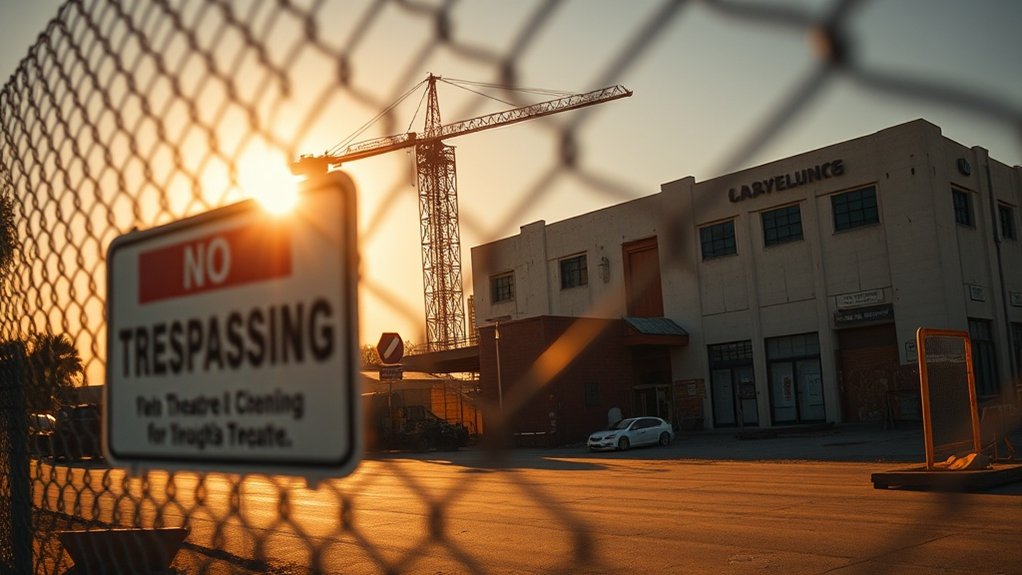
Balancing Preservation and Modern Needs
In steering the redevelopment of the California Theater, a palpable tension reverberates between maintaining historic allure and adapting to contemporary needs.
The preservation of the theater’s facade and its transformation into a vibrant performance venue epitomizes the commitment to historic integrity.
With the project located on a 0.3-acre parcel along Kittredge Street, its proximity to essential transit services ensures its appeal to future residents.
However, the integration of modern residential development demands a delicate balance with development sustainability.
The architectural and cultural preservation poses distinct challenges.
Technical design complexities arise as developers strive to meet modern accessibility and safety standards without compromising historical elements.
These preservation efforts inevitably elevate costs and constrain design flexibility.
Moreover, this commitment to maintaining historic integrity is scrutinized by the community.
Ensuring that the theater’s storied past aligns harmoniously with its future role in the evolving urban environment remains a priority.
Affordable Housing and Community Concerns
Beneath the surface of redevelopment projects like those involving the Berkeley California Theater lies a complex web. Affordable housing quotas and community tensions are at the forefront.
The proposal involves allocating 24 of 148 units for affordable housing. These are divided equally for very low- and moderate-income households. As families move toward multigenerational living arrangements, designing housing to accommodate such structures could enhance community resilience.
This highlights the ongoing efforts towards housing equity. Yet, community engagement remains vital. San Francisco supervisors also approved a similar special district for the redevelopment of the Alexandria Theater, emphasizing housing for families and preserving historic features.
Local resistance reflects concerns. People worry over displacement, heritage loss, and effective urban planning.
Balancing these tensions requires strategic stakeholder discussions. Transparent processes are also crucial.
| Aspect | Detail |
|---|---|
| Affordable Allocation | 24 units; 50% low-income, 50% moderate-income |
| Community Concerns | Displacement, identity loss, density impact |
| Housing Equity Focus | State mandates, diverse income brackets |
Incorporating insights from local voices with policy directives is essential. This can strengthen redevelopment outcomes.
Comparative Analysis: Alexandria Theater vs. California Theatre Projects
Examining two significant theater redevelopment endeavors reveals the multifaceted challenges of urban revitalization.
The Alexandria Theater project offers community amenities like co-working lounges and family-oriented housing. With an emphasis on larger units and a lack of vehicular parking spaces, Alexandria faces zoning regulations that shape its development.
In contrast, the California Theatre includes extensive underground parking and a mixture of residential and commercial space.
The California Theatre strategically adheres to zoning rules to balance urban density. Alexandria focuses heavily on community amenities with co-working areas.
The California Theatre includes significant underground parking provisions. Alexandria prioritizes family-sized units with community benefits.
California Theatre integrates adaptive reuse with new commercial spaces. Zoning impacts both projects as they adjust to regulations for neighborhood integration.
Financial and Market Dynamics in Theatre Redevelopment
The financial and market dynamics in redeveloping historic theaters present both challenges and opportunities.
Investors and developers must navigate high construction costs, which are compounded by market fluctuations in labor and materials.
Caydon Property Group’s bankruptcy illustrates the financial risks involved. This situation has left the California Theatre’s fate in limbo.
Investment strategies often incorporate mixed-use redevelopment. This approach integrates condos, retail, and hotels to bolster financial viability.
However, market demand for mixed spaces can introduce volatility. Delays in California’s permitting process further complicate redevelopment projects.
These delays affect holding costs and threaten project continuity. The legal obligation to sell or demolish the California Theatre by 2026 adds urgency.
Investors should be cautious of persistent leaks that avoid easy detection and can compromise the integrity of the building over time.
Investors must carefully navigate these complexities. Balancing cultural preservation with financial realism is crucial.
Regional Impacts and Future Urban Trends
Could the plans for the California Theatre redevelopment potentially reshape Berkeley’s urban environment? The proposal includes a 23-story mixed-use tower.
This development symbolizes a shift toward greater urban density. It aims to accommodate escalating housing demand near educational and employment centers.
Positioned close to key transit links, such developments align with regional trends. The focus is on enhancing transit-oriented urban living.
The project underscores the necessity for thoughtful integration within the existing urban fabric. Increased building height aids efficient land use.
It addresses urgent housing needs with new residential units. Proximity to BART and AC Transit supports reduced car dependency.
The mixed-use design unifies cultural, residential, and performance spaces. It aims for community balance by preserving historic elements while introducing modern urban form.
Assessment
The redevelopment of California’s theatres presents a contentious mix. It involves preserving historic features while addressing modern urban demands.
Weighing the need for affordable housing against community sentiment is a delicate balance. By examining projects like the Alexandria Theater, stakeholders can identify best practices and pitfalls.
Economic conditions and market shifts add complexity to these initiatives. The regional impact on urban trends remains significant.
Communities maneuver the consequences of redevelopment decisions. These decisions affect future environments.























5 Responses
Just saying, if we can preserve old theatres without sacrificing affordable housing, why not? Look at Alexandria project! #PreservationVsModernization
Alexandria aside, not every city can afford both. #RealityCheck #ModernizationOverPreservation
Are we just ignoring that old theaters have a soul? Modernizing isnt always the answer, sometimes preserving history should be priority #1. Just my two cents.
While I appreciate preservation, shouldnt we prioritize affordable housing over historical theatres? Alexandria vs California, same debate, different coast. #ModernNeedsOverOldSeeds
Why not turn the California Theatre into affordable housing instead? Preserving history is important, but so is addressing homelessness. Just a thought.