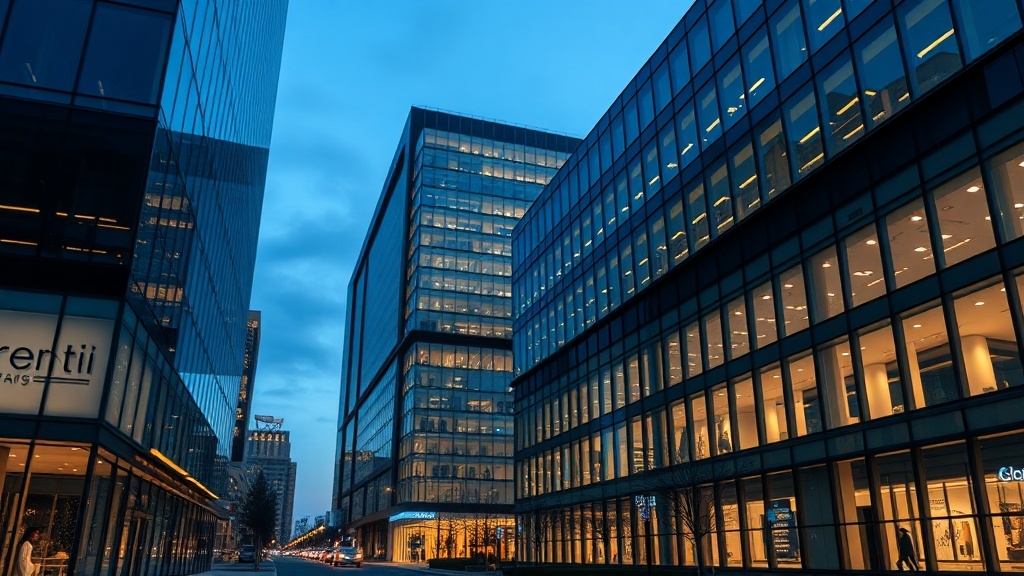

Major Office Transactions Impacting Market Dynamics
In a dramatic shift indicative of ongoing volatility within the West Loop real estate market, significant office property transactions have reshaped market dynamics in recent months. Transcending historical patterns, these transactions illuminate changing transaction trends. For instance, Blue Star Properties and Wolcott Group acquired 2 N. Riverside Plaza for just over $25 million, a marked decline from its 2016 valuation. Similarly, Kohan Retail Investment Group’s purchase of 311 S. Wacker Dr. at an 85% decrease is emblematic of current market conditions. Office sector challenges include rising vacancies, highlighting struggles amid hybrid work adaptations. This trend of reduced valuations is pertinent as Chicago continues to lead the nation in corporate relocations, recording 448 projects in recent years, despite prevailing high vacancy rates. These patterns extend further into leasing activity. Golub Capital’s substantial lease of 205,450 square feet at 225 W. Randolph St., known as The Bell, epitomizes heightened interest following its renovation. Such significant deals underscore the evolving terrain, concentrating attention on West Loop’s evolving status.
Changing Trends in Office Ownership and Leasing
Recent significant property transactions in major office spaces are showcasing a shift in ownership and leasing patterns across Chicago’s West Loop. The availability and demand dynamics indicate evolving tenant preferences and lease structures geared towards high-quality, flexible office environments. Chicago office space boasts the lowest sale price in the U.S., which has attracted substantial investment interest in the city. Increasing vacancy rates and greater sublet availability have prompted companies to reassess office needs. This has led to strategic relocations into updated Class A spaces.
A renewed focus on lease flexibility and coworking spaces underlines the industry’s pivot towards more adaptable leasing models. Companies are now more inclined towards environments that accommodate changing work trends.
| Year | Vacancy Rate | Coworking Space (million SF) |
|---|---|---|
| 2020 | 10.2% | 6.5 |
| 2023 | 15.8% | 8.1 |
| 2025 | 15.8% | 8.5 |
The table shows a noticeable increase in coworking spaces from 2020 to 2025. This reflects the growing demand for flexible workspaces in response to market changes.
Investment in modern amenities and flexible lease structures is reshaping the West Loop’s office environment. These trends are occurring amidst fluctuating market conditions, influencing future real estate decisions.
Strategic Advantages of West Loop’s Location
The West Loop’s strategic location positions it as a vital node in Chicago’s urban landscape.
It offers numerous advantages for businesses and investors. Its proximity to the downtown core provides unparalleled access to the central business district’s amenities and services. This adjacency simplifies integration with Chicago’s vibrant urban development.
The neighborhood benefits from robust transportation connectivity. There is easy access to major CTA lines and proximity to Union Station. These elements support efficient commuting for residents. They also enhance logistical capabilities by ensuring a strong flow of business travel.
Moreover, the presence of major employers like Google and McDonald’s anchors the area as a tech and corporate hub. This attracts a skilled workforce.
The West Loop’s mixed-use amenities and experiential environments bolster its appeal. It stands out as a dynamic business destination.
Challenges and Opportunities for Developers and Investors
In the bustling vibrancy of West Loop’s strategic location, developers and investors face a unique mix of challenges and opportunities. These elements collectively shape the area’s real estate environment.
Market adaptability is crucial, given the complex development hurdles presented by the current economic landscape. This agility helps stakeholders navigate the evolving market conditions.
The adaptive reuse of historical buildings offers strategic advantages. However, this process involves several complexities.
Developers experience slow permitting processes and rising construction expenses. These factors challenge the viability of multifamily housing projects.
Converting office spaces into residential units can mitigate high vacancy rates. This approach aids in asset repositioning and optimizes space utility.
Investment risks persist due to high vacancy rates citywide. Additionally, local property tax uncertainties influence potential investment returns.
AI tools help agents automate marketing, client communication, and lead management, streamlining efforts that are particularly vital for navigating these challenges.
Ultimately, success hinges on strategically managing these challenges. Leveraging available opportunities for growth remains paramount for developers and investors alike.
Economic Indicators and Future Prospects in the Office Market
In a dramatic shift, the West Loop has emerged as the leader in Chicago’s office leasing scene. This strategic hub now commands a majority share of new office engagements in Chicago.
Driving this demand is the employment growth in sectors like Professional and Business Services, Financial Activities, and Information. These sectors are fueling a surge in leasing activity.
The West Loop’s vacancy rate declined to 27.7% in Q3 2025. This draws significant attention to the submarket.
Market valuation is strong, with rental rates averaging $47.14 per square foot in Q2 2025. Despite negative net absorption in the Chicago CBD, the West Loop continues to shine.
Its superior transit access and premium office spaces are attractive to tenants. Future prospects appear promising.
Adaptive reuse strategies are set to sustain momentum and reduce vacancies further. Potential office-to-residential conversions may also contribute to this positive trend. Though many cities are adapting, the transformation occurring in Manhattan highlights a structural transformation in the office market landscape nationwide.
Assessment
The recent surge in office acquisitions within Chicago’s West Loop underscores a transformative period in the city’s commercial environment.
Strategically situated, this district is attracting significant attention as a hub for economic revitalization.
Nevertheless, developers and investors must maneuver the intricate balance of evolving market dynamics and emerging occupancy trends.
As economic indicators suggest both promising potential and inherent challenges, stakeholders need to adopt a vigilant approach.
By doing so, they can maximize opportunities in this volatile environment.