
Key Takeaways
- Over 5,200 Chicago properties went to auction in April, signaling a resurgence of the city’s foreclosure crisis.
- Investors are rapidly moving in, targeting both tax sale lists and bulk portfolios amid market instability.
- Economic challenges such as inflation and unemployment are fueling risks of community blight and potential mass displacement.
Investors Flock to Seized Properties as Chicago Faces Growing Foreclosure Threat
Chicago’s housing market staggers under a crushing wave of foreclosures. In April alone, 5,200 properties hit auction, sending shockwaves across the industry.
Investors, drawn by desperation and opportunity, swarm tax sale lists and bulk portfolio deals, ready to pick apart a crumbling city.
Economic ravages—rising inflation, spiking unemployment, vanishing stability—stoke a fire not seen since the previous crisis.
The threat of widespread blight and mass displacement grows darker by the final day.
Chicago Faces a New Foreclosure Crisis
How quickly can a city unravel? Chicago, once an emblem of stable homeownership and urban renewal, now faces another devastating wave of foreclosures. In April alone, 5,200 properties have been thrust onto the auction block.
As property lists swell and investors swarm at tax sales, the city trembles beneath an onslaught not seen since the dark days of the last financial crisis—its foundations shaken by forces far beyond mere numbers.
The warning signs had been there, lurking in the shadows. In the first quarter of 2025, Chicago led all U.S. metropolitan areas with 3,789 foreclosure starts—a staggering figure, echoing loudly across Illinois, where one in every 857 housing units slipped toward default.
The situation is more than statistics; it is a signal, blaring like a siren, of cracks forming beneath the surface of what was thought to be a resilient housing market. The surge in March confirmed the nation’s growing distress, with an 11% monthly spike in foreclosure filings. Nationally, the foreclosure process has lengthened to an average of 815 days, showing that the path from filing to repossession is slower than at any time in recent history, yet in Chicago the churn of distressed properties continues to accelerate.
Chicago alone, with its dense urban core, accounted for a devastating 5% of all national foreclosure starts in the quarter, cementing its tragic role as the foreclosure epicenter.
Every block affected devastates hopes for urban redevelopment, upending entire neighborhoods.
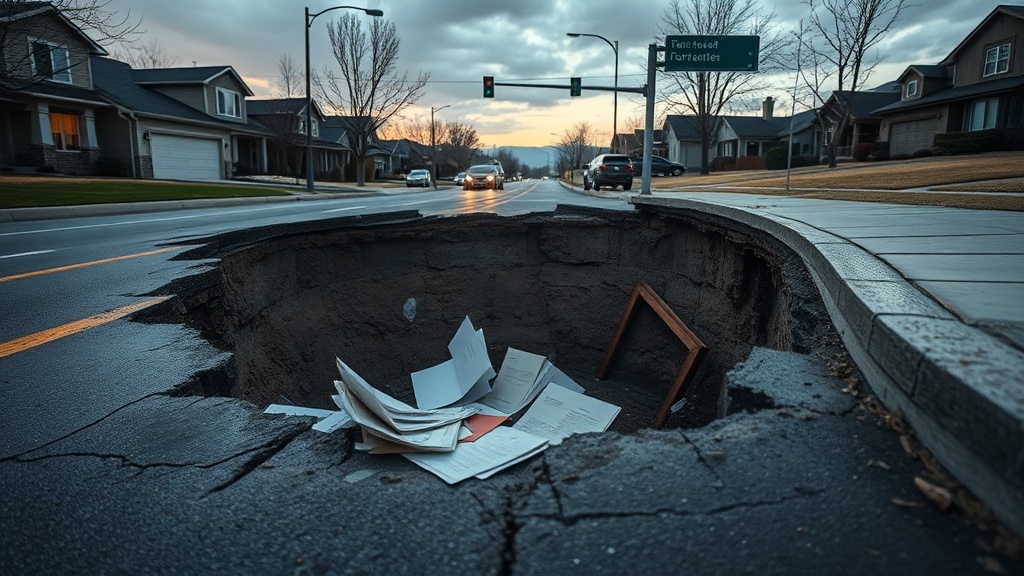
As vacant properties accumulate, the specter of “zombie” foreclosures rises, haunting Chicago’s scene. Deep within Cook County, cycles of optimism and despair have left communities fragile, populations dense, and the threat of blight ever-present.
Such forces jeopardize years of rebuilding, threatening to drag countless families and neighborhoods back into a spiral of abandonment. The average duration to complete a foreclosure process in Chicago now closely mirrors the falling national timeline, which has dropped to about 671 days—meaning properties cycle through distress and auction at a faster and more unforgiving pace.
This epidemic is driven by powerful economic gales. Post-pandemic inflation rages, interest rates climb, and service-sector jobs—so vital to Chicago’s working class—wither under pressure.
Owners grasp at mortgage refinancing, desperately seeking lifelines as their payments swell above shrinking incomes. Yet, as construction and renovation costs soar, even enterprising investors flinch at the expense of reviving deteriorating assets, while high rental demand and moratorium aftershocks drive landlords to desperate measures.
The numbers leave little room for hope. Chicago’s 14% quarterly spike mirrors the grim national reality, and while lender repossessions dropped elsewhere, this city’s foreclosure engine accelerates.
Investor activity is feverish, targeted, predatory. April’s tax sale auctions promise quick gains; portfolios are scooped up in bulk, sometimes before the dust of dispossession even settles.
Redemption periods of up to a year offer faint hope for those on the brink—a short and desperate window as the clock ticks mercilessly on.
Compared to New York, Houston, Miami, Chicago reigns in crisis.
Cook County’s monthly auctions grow larger, paperwork races through digital channels, and thousands more brace for ruin.
The city’s bedrock—its people, homes, dreams—fractures beneath the grim mathematics of supply, demand, and despair.
The wave is breaking. Investors may circle with anticipation, but for Chicago, the unrelenting storm of foreclosure is far from over.


















4 Responses
Though I feel for those losing homes, I kinda envy these investors. Its dog-eat-dog out there. Someones gotta cash in, right? 🤷♀️ #ChicagoForeclosureWave
Isnt it ironic how investors profit from foreclosure crisis? Maybe the city can convert these properties into affordable homes for locals? Just a thought.
Guys, I reckon this foreclosure wave might be a boon for the city. Could it perhaps pave the way for affordable housing?
Isnt it ironic? Foreclosure crisis ironically fuels investor feeding frenzy. Are we just commodifying peoples misery? The system seems rigged, doesnt it?