
Architectural Elegance Meets Historic Significance
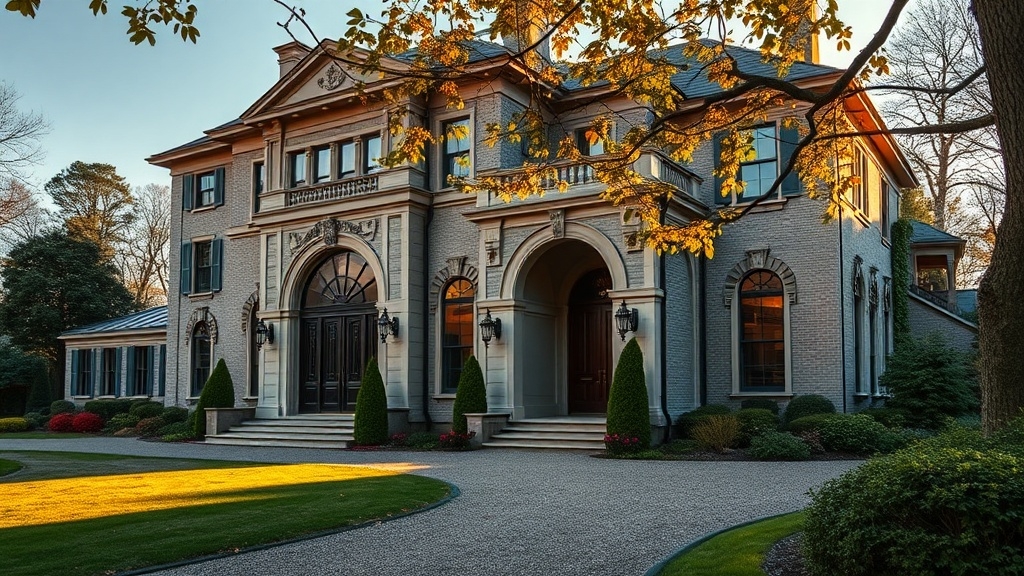
In the heart of Greenwich’s backcountry, a Tudor-style masterpiece stands. It symbolizes architectural grandeur and historic significance.
Designed by Charles Lewis Bowman in 1926, this mansion spreads over 15,862 square feet. It exemplifies the allure of Elizabethan Tudor architecture on a grand scale. Mel Gibson’s Ownership notably included a major restoration, enhancing the estate’s value with modern features such as a movie theater and central air conditioning.
The estate showcases historic charm through intricate woodwork and stone walls. Stained glass windows add to its architectural integrity.
A great hall features 40-foot vaulted ceilings and a rathskeller. The mansion blends traditional English influences with American estate grandeur.
Interiors marked by rustic paneling and carved wood beds emphasize historic ambiance. They offer functional living spaces within.
The residence reflects architectural elegance. It remains a culturally important landmark within Greenwich’s historic setting.
From Mall to Mansion: A Legacy of Transformation
A wave of transformation sweeps across the American architectural terrain, as retail relics convert into opulent residences. Connecticut’s legacy sites, like once-bustling malls, have become focal points of retail evolution, culminating in luxurious mansions. One such significant landmark is the Lockwood-Mathews Mansion, which serves as a cultural landmark in Norwalk, Connecticut. This transformation adapts not only to economic shifts but also emphasizes community engagement through strategic redevelopment. Co-living concepts, with their emphasis on shared amenities and efficient land use, are influencing these transformations by adding modern urban living preferences to historical settings.
| Key Aspect | Feature Highlights | Legacy Impact |
|---|---|---|
| Historical Base | Mid-20th century retail structures | Shift from malls to mansions |
| Adaptive Reuse | Residential/mixed-use redevelopments | Resurgent economic activity |
| Community Influence | Zoning challenges, local government input | Balance legacy with modernity |
These conversions demonstrate a synthesis of historic and luxury elements. They effectively repurpose disused retail spaces into upscale residences, resonating with current urban real estate dynamics.
Luxurious Living With Modern Amenities
When opulence meets innovation, the result is an unparalleled standard of living in today’s high-end real estate market.
This Connecticut mansion, priced at $9.25 million, exemplifies luxurious living with modern comforts through its array of luxury amenities.
Personalized gym and fitness areas offer dedicated spaces equipped with advanced equipment, yoga studios, and spa-style facilities for a holistic lifestyle.
Spa-inspired bathrooms present heated floors, rain showers, and high-end materials like marble, creating serene retreats.
Advanced smart home automation enhances daily life by integrating conveniences like smart lighting, security, and climate control.
Entertainment spaces boast state-of-the-art home theaters and wine cellars, catering to leisure and taste.
Moreover, exploring alternatives to joint ventures in property investment can allow individuals to maintain full control while indulging in such luxury markets.
These meticulously crafted features demonstrate the seamless fusion of luxury and technology that defines contemporary affluent living.
Market Trends and Investment Opportunities
The Connecticut luxury real estate market is marked by resilience, standing out as a beacon amidst national slowdowns. Demand for luxury properties, especially in Greenwich and Westport, remains strong, driven by buyers seeking both privacy and proximity to New York City.
Mid-tier luxury homes are surpassing higher-end properties. This trend is influenced by factors like affordability and rapid turnover.
Investment strategies suggest focusing on coastal and prestigious neighborhoods, such as Fenwick and Riverside. These areas offer high appreciation potential and stability.
Emerging areas like Groton Long Point and Turn of River present enticing opportunities. Rising home values contribute to their attractiveness for investors.
Despite facing inventory challenges, Connecticut maintains balanced price growth. Its strategic location ensures it remains a prime market for discerning investors. The surge in multi-family housing demand continues to reshape investment strategies, offering new prospects amid broader housing affordability concerns.
Assessment
The Connecticut mansion, listed at $9.25M, seamlessly blends historical transformation with modern luxury. It stands as a hallmark of architectural innovation and investment potential.
This property embodies a unique journey, evolving from a commercial hub into a lavish private residence. It symbolizes resilience and reinvention in the real estate market.
Discerning investors are beckoned by the high stakes in luxury real estate, characterized by high value and rich legacy. This estate underscores those stakes emphatically.
With its historical excellence balanced with contemporary allure, this mansion is a rare opportunity. It shines brightly in the world of real estate investment.






















4 Responses
9.25M for a mall-turned-mansion? Seriously? Youd think with that price tag, itd at least come with a food court! #ConnecticutLuxury?
Who needs a food court when you can hire a personal chef? #ConnecticutLuxury
Who needs a $9.25M mansion when you can buy an island for the same price? Modern luxury vs. historic elegance, Ill take privacy any day!
Is it just me or does the idea of a shopping mall-turned-mansion seem like a glorified waste of space? What about affordable housing?