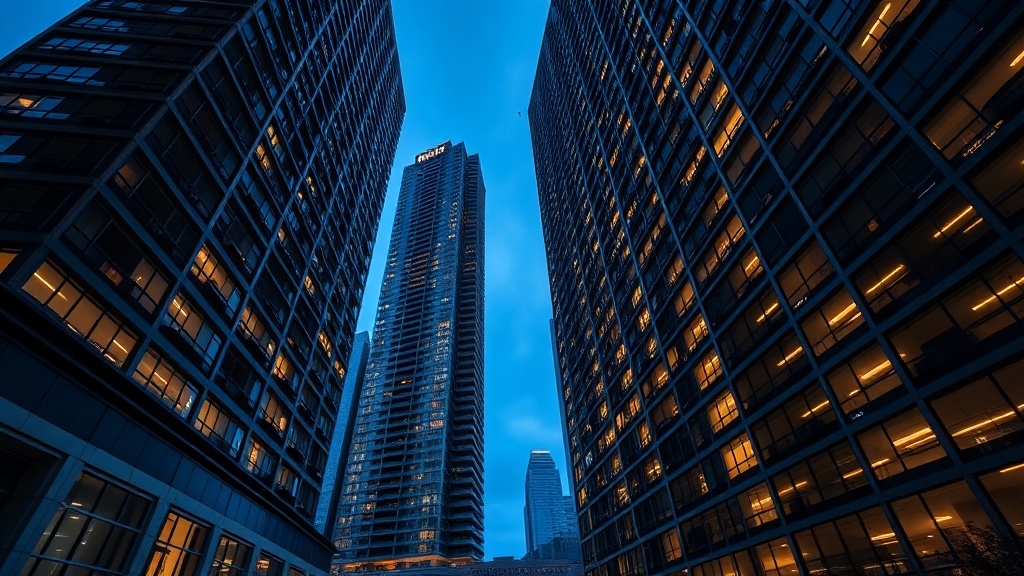
What Is Happening to the Dallas Gold Towers?
In a major shift for downtown Dallas, the city is backing a $409 million plan to convert the 72-story former Bank of America Tower at 901 Main Street into a mixed-use property with apartments and other uses. Dallas City Council approved up to $103 million in TIF funding through the Downtown Connection TIF District. Plans also call for 280 hotel rooms in a four-star or higher hotel as part of the redevelopment.
The agreement involves developers Mike Hoque and Mike Ablon, who are repositioning one of downtown’s best-known skyscrapers.
Conversion Signals a Broader Adaptive Reuse Push
The project reflects a larger Dallas trend toward office-to-residential redevelopment and historic preservation of aging high-rises. Similar projects nationwide have accelerated as remote work reduces demand for traditional office space. City leaders framed the subsidy as support for a stronger business core and a more community-focused property.
Planning also points to parking impacts, with a surface lot across Main Street targeted for a new garage connection.
What the Gold Towers Conversion Includes
Plans for the Gold Towers recast the former office skyscraper as a mixed-use property centered on hundreds of new residences, public amenities, and retained commercial space.
The redevelopment adds a publicly accessible fitness center, 40,000 square feet of open space, a public lounge, and a senior center designed for senior programming.
Residential amenities also include the Peridot Lounge, a clubby bar-and-billiards level, media rooms, an event dining room, and a teaching kitchen.
Wellness features include a fitness center with public access.
Community offerings include open space and a senior center for gathering and programming.
Lifestyle amenities include the Peridot Lounge and media rooms for resident social use.
Additional features include a ground-level pool with waterfall elements, indoor-outdoor lounges, private terraces, and a direct connection to the downtown skybridge system.
The broader Dallas development boom includes projects like Dallas Midtown, a phased mixed-use redevelopment expected to add thousands of new homes and major public amenities.
How Many Apartments Will the Gold Towers Add?
Two 20-story towers and adjoining concourse buildings totaling nearly 900,000 square feet are being repositioned to deliver hundreds of apartments at the former Gold Towers campus in Dallas.
While an exact unit count has not been disclosed, the scale suggests a substantial residential yield.
The property contains 873,378 rentable square feet across the towers and concourse buildings, giving developers broad capacity to create a dense residential mix.
Layout Implications
Typical tower floor plates of about 16,200 rentable square feet and loft-style concourse floors near 56,000 square feet provide flexibility for varied unit layouts.
That combination can support studios, one-bedroom units, and larger apartments in the same project.
With two 20-story towers plus concourse components, the conversion is positioned to add a significant number of homes without requiring new ground-up construction.
Why the Stemmons Freeway Site Matters
Along Stemmons Freeway near Dallas’ Medical District, the Gold Towers site carries unusual weight because it combines historic stature, a large 13-acre footprint, and a highly visible position just outside downtown.
Built beginning in the early 1960s, the complex ranks among Dallas’ earliest high-rises beyond the central business district.
Its ties to Trammell Crow and John Stemmons strengthen its local significance.
Its white concrete-and-glass design reflects postwar international influences.
The site also matters because of transport connectivity.
Positioned along a major freeway near the Medical District, it occupies a corridor with strong regional access and constant public exposure.
Recent city ownership troubles, including code violations and mounting carrying costs, further elevated attention.
That combination makes the property important not only for redevelopment, but also for heritage preservation.
What This Conversion Means for Dallas Housing
Much of the significance lies in how the Gold Towers conversion fits a fast-growing Dallas trend: office buildings are being remade into housing at a time when the city faces rising demand, slower ground-up construction, and intensifying pressure on downtown and near-downtown supply.
Dallas already has more than 2,700 apartments in its conversion pipeline, with downtown projects nearing 2,000 units. These projects help offset construction disruption and a slowdown in new development, while adding residents who can support downtown activity.
Their limits are equally clear. Conversions rarely solve affordability alone, and housing equity remains a central concern as many units stay beyond lower-income reach.
Gold Towers therefore reflects both opportunity and constraint in Dallas. Adaptive reuse is expanding faster than traditional answers to the housing crunch.
Assessment
The Gold Towers conversion marks a sharp shift for a long-standing Dallas office site.
Market pressure continues to erode demand for older workplace space.
By adding apartments along Stemmons Freeway, the project redirects a highly visible commercial property toward residential use.
It does so in a corridor tied to jobs, mobility, and redevelopment risk.
The move underscores a broader Dallas housing trend.
Adaptive reuse is emerging as a practical response to vacancy, land constraints, and changing urban demand.