Detroit Vacant Lots by the Numbers (and Why It Matters)
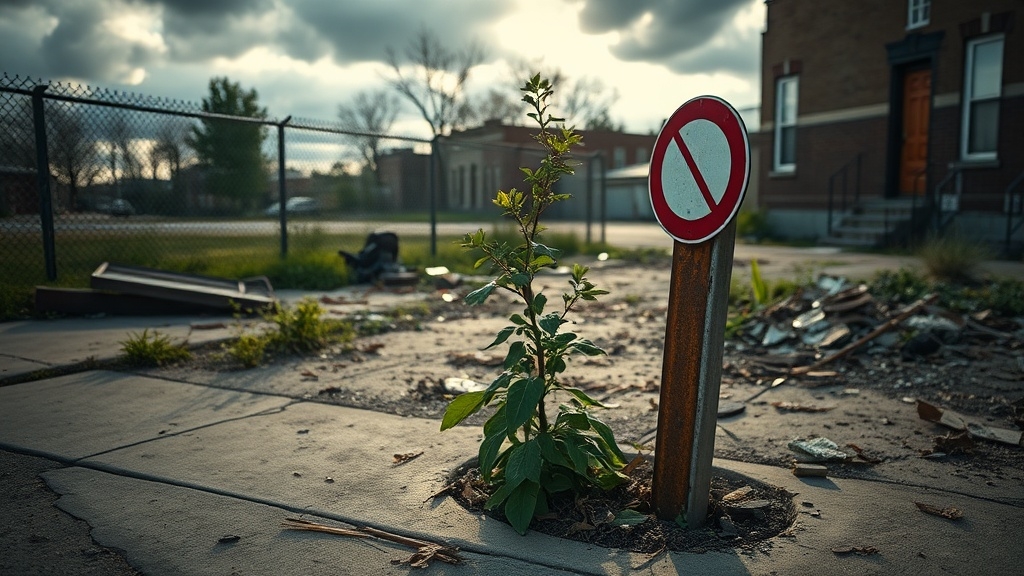
More than 100,000 vacant lots are scattered across Detroit.
Nearly 45 percent of city properties are classified as vacant, including empty structures and structure-free parcels.
Nearly 175,000 properties are vacant overall.
Together, they cover about 18 square miles of idle land.
Detroit’s population has fallen by nearly two-thirds since 1950.
At the same time, rising foreclosure starts nationally can add pressure in cities already grappling with disinvestment.
Numbers That Signal System Strain
The AEI Housing Center estimates 134,000 vacant lots.
It also reports that 36 percent of residential lots are vacant.
Average lot size is about 3,200 square feet.
That’s roughly a typical home site with yards.
Why It Matters for Budgets and Health
Detroit cuts about 100,000 lots five times per year.
The average cost is $13.44 each, totaling about $1.3 million annually.
Those recurring costs limit funds that could bolster reinvestment and tax revenue.
Unmanaged vegetation and dumping risks also intensify public health pressures.
Where Detroit Vacant Lots Are: and Who Owns Them
Mapped by census tract, Detroit’s vacancy crisis appears as a citywide disruption with heavy neighborhood concentration.
Hotspots
Roughly 60% of tracts rank high vacancy.
Maps of residential parcels also show block group clusters suitable for medium- and large-scale open space projects.
West of Woodward, Districts 7, 6, and 5 track with mow zones such as 33 to 34 and 9 to 16.
East of Woodward, Districts 3 to 5 follow the 3, 4, and 5 zone series.
As Boynton Beach’s CRA-backed Cottage District shows, targeted redevelopment of underused land into workforce homes can pair mapping insights with a defined build-out timeline.
Ownership
Ownership mapping uses Regrid parcel boundaries, BSEED vacant property registrations, and DLBA coordinate layers.
Together, these sources inventory publicly held land and adjacent ownership.
Landbank distribution follows DLBA categories, including Inclusive Housing Opportunity Areas and Jobs and Amenity Development Areas.
It also includes project hold areas, with 2023 expansions on the west side.
Why Detroit Vacant Lots Stay Vacant (Root Causes)
The ownership and hotspot maps show where Detroit’s vacancy concentrates.
They also expose why so many parcels remain stuck off market.
Decades of disinvestment and structural racism depressed values.
They also weakened services in high poverty, primarily Black neighborhoods.
Disinvestment and Credit Freeze
Public and private capital retreated.
Lenders avoided racially segregated areas, leaving obsolete housing and 24 square miles of surplus land.
Low sale prices around $10,000 can make taxes and upkeep exceed value.
That market failure blocks rehab financing.
Foreclosures and Demand Collapse
From 2005 to 2017, more than 65,000 homes were foreclosed.
Many reverted to public ownership after tax debts outpaced prices.
Deindustrialization and population loss reduce buyers.
Financing barriers keep 81,000 units off market in 2025.
How Detroit Vacant Lots Are Maintained Today (and the Gaps)
Although Detroit now relies on a mix of code enforcement, Land Bank upkeep, and community stewardship, routine vacant lot maintenance remains uneven across neighborhoods.
Stopgap upkeep on the ground
Code Enforcement issues notices, tickets, and abatements, including mowing and boarding when owners do not comply.
The Detroit Land Bank Authority oversees 59,000 to 66,000 parcels.
The city budgets about $800,000 a year for lot cleaning, alongside demolition and response spending.
Community Stewardship and coordination gaps
Community Stewardship includes side-lot purchases, gardens, and open space projects such as Circle Forest, with grasses and trees.
Yet enforcement is not consistently prioritized.
Many parcels relapse into distress, and the absence of a holistic open space plan delays triage, conservancy transfers, and protection for homeowners.
What Would Speed Detroit Vacant-Lot Reuse in 2026?
How quickly Detroit can move vacant lots from recurring blight to durable reuse in 2026 will hinge on aligning planning, acquisition, and zoning with neighborhood capacity.
Planning and Land Control Risks
A post Plan Detroit open space plan can map clusters, drainage, vegetation, and remediation needs.
It can also set 20- to 50-year reuse types.
DLBA can bank parcels via enforcement, swaps, and donations.
It can then assemble sites through rezoning and lot combinations.
Zoning, Capital, and Safety Outcomes
Adaptive reuse ordinances and Jobs and Amenity Development Areas can reduce barriers in vacancy-heavy areas.
Streamlined financing can narrow appraisal gaps and fund temporary activation.
This can help bridge the time until parks, housing, or conservancy conversions stabilize.
Busy Streets research on 200 projects links deeper community engagement to measurably lower firearm crime.
Assessment
Detroit’s 122,000 vacant lots remain a central constraint on housing stability, tax base recovery, and neighborhood safety.
Fragmented ownership, unresolved title issues, and low market demand keep thousands of parcels off productive rolls.
Maintenance gaps worsen dumping, fire risk, and blight spillover.
Faster reuse in 2026 depends on cleaner data, faster conveyance, predictable mowing and enforcement funding, and redevelopment tools scaled to block level.
Without those changes, vacancy will continue to destabilize Detroit’s estate market.