Key Takeaways
- Sustainable success comes from disciplined systems, not constant hustle.
- Financial clarity is the foundation of both peace and long-term wealth.
- Strong relationships outperform cold tactics in any market cycle.
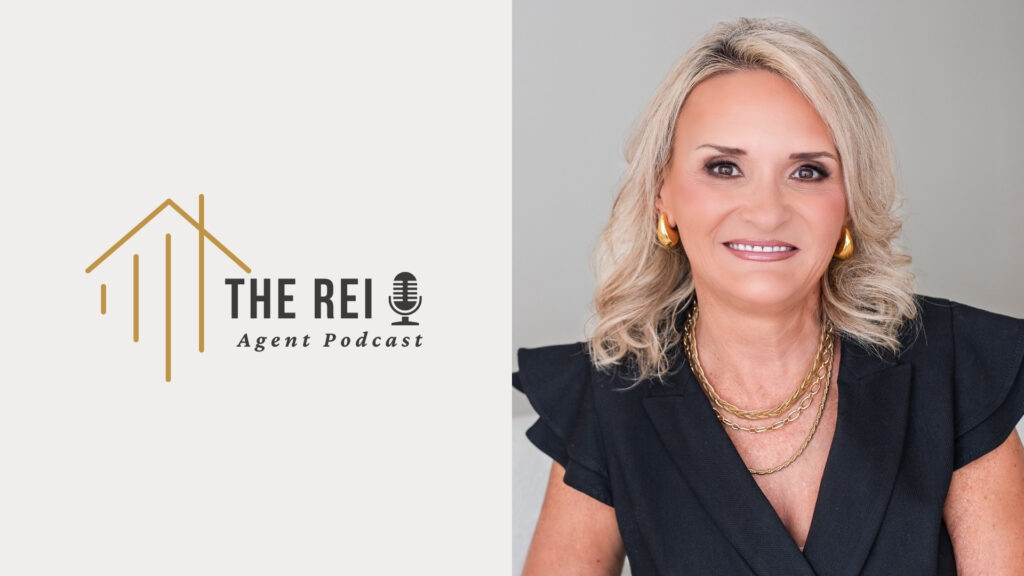
The REI Agent with Kendra Cooke
Value-rich, The REI Agent podcast takes a holistic approach to life through real estate.
Hosted by Mattias Clymer, an agent and investor, alongside his wife Erica Clymer, a licensed therapist, the show features guests who strive to live bold and fulfilled lives through business and real estate investing.
You are personally invited to witness inspiring conversations with agents and investors who share their journeys, strategies, and wisdom.
Ready to level up and build the life you truly want?
Follow and subscribe to The REI Agent on social


When Success Looks Perfect but Feels Like Chaos
On this powerful episode of The REI Agent Podcast, Mattias sits down with Kendra Cooke, a veteran in the industry whose journey reveals what most high achievers never admit out loud.
From the outside, she had it all. The income. The accolades. The lifestyle.
But behind the scenes, her world was quietly unraveling.
“You don’t have a time problem. You have a money problem.”
That single sentence changed everything.
Kendra shares how she once believed working harder was the solution. Longer hours. More hustle. More production. Yet the harder she ran, the more chaotic her life became. What she discovered was not just a business strategy, but a complete mindset shift that redefined success.
The Hidden Cost of Outrunning Your Life
Kendra openly discusses her season of work addiction. Sneaking out of bed to return to the office. Chasing the next deal. Believing productivity equaled worth.
What she eventually realized was that she was not managing time poorly. She was managing money blindly.
“Clarity around your money provides peace you cannot imagine.”
Through coaching, she began tracking every expense. Every dollar. Every habit. She implemented what she now calls Financial Fridays, a weekly appointment with herself to assess income and expenses.
That discipline became freedom.
Not because she worked less. But because she worked smarter.
Surviving Market Shifts Without Losing Yourself
With decades of experience, Kendra has lived through multiple market cycles. High interest rates. Foreclosure waves. Supply shortages. Boom markets. Bust markets.
Her perspective is steady and grounded.
“The market is the market. You just have to build a business that sustains any market.”
Instead of reacting emotionally to market shifts, she teaches agents to build a structure that works in every environment. That means systems. Buckets. Predictability.
She breaks business down into three core categories:
40 percent database and relationships
40 percent key influencers and referral partners
20 percent cold business
Her emphasis is clear. Warm relationships convert better. They create stability. They protect you when markets tighten.
“Relationships are wealth.”
The CEO Mindset That Changes Everything
Kendra challenges agents to stop thinking like salespeople and start thinking like CEOs.
She identifies four pillars of business:
Sales and marketing
Technology
Operations
Finance
Most agents hide in operations. It feels safe. There is no rejection. But the true leaders focus on revenue generation and financial oversight.
“If you are not tracking your numbers, you are guessing your future.”
She teaches agents to outsource what drains their energy and focus relentlessly on what produces income and impact.
Discipline is not restrictive. It is liberating.
Systems Are Not Handcuffs
Many agents enter the industry seeking freedom. Flexibility. Autonomy.
But without systems, that freedom becomes chaos.
“Systems are not handcuffs. Systems changed my life.”
Kendra explains how writing down her schedule, checking boxes, and protecting focused time blocks created more peace than any open calendar ever could.
The most successful professionals are not winging it. They are structured. Intentional. Consistent.
Protecting Your Peace in a Noisy Industry
Beyond production and profit, Kendra emphasizes emotional sustainability.
She recommends Protect Your Peace by Trent Shelton and Buy Back Your Time by Dan Martell as powerful reminders that growth must be balanced with boundaries.
“You cannot build wealth if you are constantly in chaos.”
The real victory is not just financial success. It is laying your head down at night knowing you showed up fully, served well, and honored your priorities.
The Beautiful Bow on It All
As the episode closes, Kendra leaves listeners with a framework that feels simple but carries profound weight.
Relationships. Money clarity. Systems.
Own those three.
“Money, systems, and relationships will change your business if you will own them.”
Her story proves that success without structure leads to burnout, but success with discipline leads to freedom.
The takeaway is not hustle harder.
It is… BUILD SMARTER.
And protect what matters most while you do it.
Stay tuned for more inspiring stories on The REI Agent podcast, your go-to source for insights, inspiration, and strategies from top agents and investors who are living their best lives through real estate.
For more content and episodes, visit reiagent.com.
Articles Related to The REI Agent
- 10 Shocking Truths From the 2025 Global Housing Storm (And How Agents and Investors Can Thrive Through It)
- Shocking Balance Before Wealth (How Erica Clymer’s Holistic Practices Help Agents and Investors Thrive in Global Housing)
- Global Housing Storm (Holistic Solutions to Million-Dollar Dreams, Desperate Sellers, Rising Rents, and Shifting Wealth)
- Top 20 Terrifying Reasons Agents Will Never Be Investors (And How to Fix It)
- 10 Ways to Kill Real Estate Agent Burnout in 2025 (The Holistic Fix)
- Mattias Clymer is Silently Leading a $70M Movement That’s Changing Agent Lives
- Therapy You Didn’t Know You Needed (Holistic Wisdom for Real Estate Professionals)
- From For Sale Signs to Life Design (How The REI Agent Transforms Real Estate Into Holistic Wealth)
- Achieving Holistic Wealth and Success Through Real Estate (Insights from The REI Agent)
- Partnering with Investors (How Real Estate Agents Can Exponentially Maximize Profits)


Contact Kendra Cooke
Mentioned References
Transcript
[Mattias]
Welcome back to the REI Agent. We are here with Kendra Cooke. Kendra, thanks so much for joining us today.
[Kendra Cooke]
Thank you so much for asking.
[Mattias]
Yeah, Kendra, we were getting into this a little bit off show, but tell us a little bit about who you are, where you are in your business now, and kind of what you have done throughout your business. My bird’s eye view.
[Kendra Cooke]
Well, my real estate career started in 1988. And as I said, yes, I’m old. I moved to Nashville, Tennessee from a real small town in Southern Illinois.
Thought I was gonna go to law school, and for the summer was placed at a temporary agency where they sent me to a real estate office. And so I started at the receptionist desk right out of high school, and thought it was a temporary move. Fortunately for me, the owner of the company saw something in me that I didn’t see in myself.
And he really encouraged me by saying, I see something, you’re gonna be a great realtor. I’m like, are you crazy? I’m gonna be an attorney.
And, but tell somebody, especially the man upstairs, your plans, and he will tell you his plans. So I started very early at the reception desk, became an administrator for them. It was during a short sale, REO bust in the late 80s.
And so I worked with a lot of companies. I worked in that department with a couple leaders and learned all about short sales and foreclosures. And then from there, became an office manager in my young 20s, very good at multitasking.
I’m kind of one of those anomalies that have a great sales brain, but I’m really a great operations system structure person. And so then I got licensed in 1996 and the rest is history. I went through being an agent, opening my own brokerage, and then I sold that brokerage in 2017.
[Mattias]
Okay. And since then you have been a full-time speaker, coach and author as well, right?
[Kendra Cooke]
Yes, that’s right. So I had been a coach. I started getting coached in 2006 because we as agents aren’t taught a lot of things that we need.
And it was one of those things where you hit bottom and you’re like, whew, I need some help. And so I got the assistant of a coach and after several years of working as a student, I was asked to come on as a coach. So I’d been doing coaching since 2009 for them, keeping my real estate office going as well.
But in 17, I sold it and went full-time into coaching and speaking.
[Mattias]
Yeah, I guess I wanted to ask about some of the history there too, but I guess before that even, if somebody’s listening here that has never had a coach, never had a good mentor, never had anything to that level, can you sell us on that? And maybe even just like take yourself out of it. Like what experience did you have at having a business coach or a sales coach and how did that transform you as a person and as an agent?
[Kendra Cooke]
Gosh, I think that’s a great question. So for me, it came during a very rough time in my life. I have a little dark history of being addicted to work.
So those of you that are listening to this may also. So we don’t know what we don’t know. So I’m watching people in my office and I felt like they worked all the time.
So I was like, well, to be successful, I have to work all the time. And they have all these things, park benches and bus benches and billboards. And so I must have to do that to be successful.
So I was following people who I thought were successful and they were in their situation. However, my family was falling apart. My health was terrible.
I was just in a really bad place. And so I decided long story short that I would sneak out of bed at night and my family wouldn’t know. And I would go back to my office because my husband had given me several ultimatums and opportunities to fix it.
And I just didn’t know how. And so when the rubber met the road and he’s like, you fix it or else, I’m a believer. And so I prayed about it.
And within two weeks, I had been given a gift of somebody who said, hey, I’m part of a coaching program. Would you wanna attend this event? And I was like, yes, yes, and yes.
I just knew that I had, something had to change. And so I walked in that room thinking, gosh, I’m the big fish in my pond at home. And I walked in there and I was like, oh, I am such a minnow.
And there are so many people in here that are doing things so much better than me. They have a quality of life and they live by a time block schedule and they have relationships. They’re attracting clients versus chasing clients.
And so at that moment, I was like, I need somebody to teach me the way. What I’m doing is not working. And so I will be honest, it was one of the hardest things I’ve ever done is surrendering to someone else’s process because I thought I had it all figured out.
I was like, I just need to fix this one little thing and then everything will be great. And that one little thing went to the next little thing. But what I realized is we’re not taught systems and structure and accountability and financial planning and all the things when we get our real estate license, it’s like, hey, you passed the test, good luck.
And so I just knew something had to change. And so I wanted someone to teach me who had been where I was and was willing to give up their talent, but also their flaws and their success and all of that wrapped up into one to where I didn’t have to reinvent the wheel. So I would tell you coaching absolutely changed my life.
That’s exactly why I do it today. I pray that everybody I coach outsells me, reaches higher accolades than me. I think that’s a good coach.
When you want other people to learn from you, but to take it to the next level is super rewarding for me. I don’t compete with my students. And I think that that was the big gift I was given, people to say, hey, I almost lost my marriage or I didn’t know how to do a profit and loss either.
Or if you just save 20% and never touch it, you really can retire from this business and all the things that I didn’t know. So I would tell you coaching changed my life. And I feel like I’m in the pay it forward mentality now and that I get to do it because somebody did it for me.
[Mattias]
I love it. Yeah, it is true. I mean, there’s something about a real estate agent when they get their license, when they go through the process of becoming one where I don’t know if it’s because there’s like, you have to be part of a brokerage.
If you have to go through this licensure course, I don’t know what it is, but I feel like there’s this big disconnect. I mean, I think everybody jokes about you now have to actually learn how to do the business, but there are very little like things out there for actually doing all the things you need to be like successful and to set up a good business, to live a balanced life out there. There might be some continuing ed, but a coach or consultant that definitely can help that a lot.
But yeah, I think there’s just this big disconnect and I don’t know if people wanting to start another type of business on their own, if it’s more obvious to them that they need to learn how to do all these different things and really set it up like a business and where real estate might be a kind of like this in between kind of thing, since you kind of have a boss with a broker. I don’t know where some of that disconnect comes from, but certainly is important to learn all these things. I did wanna ask about the profit loss thing.
I think that it’s a really timely thing for a lot of people coming into tax season, but I wanted to also quickly ask before that, how many different market cycles have you gone through now? That you’ve experienced the crashes, like obviously we had the big one. You mentioned one in around the 80s, right?
So how many have you gone through now?
[Kendra Cooke]
Oh, goodness. I would say, I love to tell people the market is the market, but yeah, I’ve been through two, maybe even three huge short sell foreclosure markets. Eight, nine and 10 was probably the hardest one I’ve ever survived.
I had all my eggs in one basket and that was new construction. And we all know what happens then, the banks aren’t giving them money and all the builders have leveraged everything they own. So they all walked away.
And so I became a builder for about a year and turned my back on my relationships and my database. And so when I came out of that in 10, I had to recreate myself. So that was a really tough one.
Obviously, I mean, when I got into business, the rates were 11, 12 and 13%. So when people are freaking out over six and seven, I’m like, it’s gonna be fine. You’re still gonna sell houses.
It’s just a different mindset. So I would say I’ve probably been through eight or 10, ups, downs, higher rates, foreclosure, short sale, collapse of the market. But I will tell you in 2016 in Nashville, metropolitan Nashville, like surrounding areas where my market was.
And we were already seeing eight to 10 to 12 offers on every single house and 16 long before COVID hit. And a lot of the agents were like, oh my gosh, I have 20 offers on every house and people aren’t seeing them. We had already hit that boom because when we came out of the collapse of eight, nine and 10, we were so far behind on starts on the market.
That’s just education that we all as agents should have known is, hey, there’s this gonna be this pent up demand because nobody built houses for three years, but nobody stopped aging in population. So the population kept growing. People are still moving to town, but there’s no houses being built.
We’re so far behind the eight ball. A lot of people got out of the industry. And so that was a whole challenge too, from about 13 to 16.
I mean, our market just kept growing. So I’ve been through that kind of market. So when you talk about busts and booms and all that kind of stuff, also multiple offer situations, sight unseen, jacking up the prices, cash out of pocket.
I mean, there’s a lot of them. So I would say eight to 10 probably the markets I moved through.
[Mattias]
Well, and it is, would it be true to say, having gone through that many different shifts, that many different types of markets that it’s almost, it’s helpful, but it’s also like each market’s got its own flavor. Like it’s got its own, is that what you meant when you said like, the market’s the market?
[Kendra Cooke]
Yeah, yeah. And also that you have to build a business to sustain any market. I think that’s really what I mean by it.
Meaning that you have different pillars of business or buckets of business or whatever you wanna call them. Because at any given market, one’s gonna be killing it and the other two are gonna be flat dead. Or you might have two that are really doing well.
And this other one over here is like a waste of time, but you can’t take your foot in and out of markets because what’s working in this one may not work in the next one. And so that was really a big aha for me when I got into coaching. They’re like, listen, we want you to build a business that sustains any market.
So you’re prepared for whatever happens. We don’t get to control the market as real estate agents. We just get to adhere to it when it gets served to us.
And so I think that that was really when I started changing and putting systems and structure in place that you gotta do things even when you don’t want to in those markets. So you’re ready for whatever comes down the pipe when it hits.
[Mattias]
Yeah. Yeah, I mean, I had, going into the pandemic, I had everything kind of set up, doing everything I could to maintain my relationships with my sphere. I was doing a lot of hard work that earned me a good amount of business, a good reputation, like super manual analysis that takes me a good long while that is really accurate for every single time a buyer wants to make an offer.
That kind of practices, I feel like, gave me a good reputation. But then when things got so crazy, I just only had so many hours in the day and kind of got used to the business just kind of falling on my lap, right? Not having to really go out and nurture that database anymore.
And so this has been a shift for me as well. It’s like, well, that was good practice. I should probably get back to doing the things that I need to do to, yeah, get business coming in.
And it’s like almost like maybe a layup in the game. You know what I mean? Like you just gotta go back to kind of the basics.
Like, you know, what’s the shot you can hit every time? And I wanna, yeah, I wanna hear about your buckets and then I would love to hear more about your profit or financials aspect as well.
[Kendra Cooke]
Yes, so I learned through coaching and have done it for, you know, however many years after that, 20 plus years, that my market, I’m just relational. I am not a super techie person. I do use the basic AI, but what I know is people don’t care how much you know until they know how much you care.
And I, for one personally, can see through AI like a magnifying glass. If you’re putting out posts right now and every other word matches everything else in chat GTP, it doesn’t feel authentic to me. It doesn’t feel real to me.
And because I was really slow to the table with technology, I just thrived in relationships. So I would just tell you 40, my goal for my, the people that I coach in real estate is 40% of your business to come from your database. And that means value added service.
Like what, we’re not calling to, I say no more FU calls. Okay, just stop the FU calls, which is follow up by the way. But you know, I’m just calling to follow up.
They don’t need one more person calling them. If you’re not bringing something of value to them, don’t make the call, right? It’s okay to check in.
Hey, I’m excited to catch up with you. Like I wanna see if you know what’s happening in real estate. Do you have any desire to know what’s happening in real estate?
Did you see this new business coming to the community? I’m bringing things of value to them because if we’re not, guess where they’re getting it? On national news.
I don’t know about you guys, but I turned the news off a long time ago. It doesn’t matter what’s happening in Washington DC if I’m selling real estate in Nashville, Tennessee. It’s completely different.
So my goal is 40% of a real estate agent’s business to come out of their database. Relationship value added service. The second 40% bucket, I call key influencers.
Who are the influencers in your community, in your arena that can be your voice when you’re not in the room? You have to build relationships with movers and shakers. So these can be financial planners, private bankers, your mortgage professional, restoration companies.
I mean, there’s a million of them. Divorce attorneys, estate attorneys, probate attorneys. These people all have books of businesses just like we do, and they are able to refer us if we bring value to their clients.
So you have to be really in the flow and build amazing relationships with these people so they are willing to refer you business. So that’s my second bucket. And then the 20% that’s left is just cross your fingers and hope it happens, right?
That’s your website, that’s a sign, that’s a knock a door, that’s an open house. That’s just your cold business. But I just find that for my own business and people that I coach, somewhere between 50 and 85% of warm leads gonna convert.
So I don’t need to chase 50 or 100 leads if I’m only trying to close five deals a month when I can convert 50% of my warm leads. It’s just a different business model. And going back to what you said earlier, I think the reason that the average realtor doesn’t make it two years in the business is we’re not taught business.
I mean, I don’t know about anybody listening to this, but when I got my license, nobody said, track your leads, track your conversions, see where your leads are coming from, build a database, go find people to leverage their database to help you grow. It wasn’t, it was here’s the phone book, good luck, right? So it’s no disrespect to us as business professionals, we just didn’t know.
So when you ask me about coaching, whether you get a free webinar or you follow somebody on social that gives you tips, if you need answers, seek them because we did not get those answers when we got our license. So there is zero judgment around that with me. And when people call me and say, I need your help, I’m honored to help them because somebody helped me.
And so I think that, that’s the reason that I just work a warm business. I know a lot of people bought Zillow leads or realtor.com or any kind of leads. I can just tell you, I’ve never done that.
I don’t know how to convert cold leads. I just, I don’t, I don’t, when I, I don’t want people to hurt my feelings, I don’t want people to disrespect me or, you know, not show up at the appointment. And so I’m not a cold caller, I’m not a cold lead person.
I just found if I would just get out and network and shake hands and ask. I mean, a lot of times it just comes down to, hey, do you know anybody who can use a real estate professional right now? You know, I pride myself in taking great care of my clients and I’ll just wrap this segment up with this.
So many people say to me, oh, I don’t want to call my database. I don’t want to look desperate. And I just say, you are, you are desperate.
Mouths to feed, cars to drive, houses to pay for, taxes to pay. I mean, we have to get past the fact that we don’t want to look desperate as a salesperson. We don’t have to be an ethical salesperson, but we are a salesperson.
And so if you’re sitting around waiting for somebody to ring your phone, they know four or five other realtors that are calling them if you aren’t. So I think we have to stop sitting back waiting for what we want and we have to be a little aggressive and approach it as, hey, I bring a lot of value.
[Mattias]
Yeah, yeah, that’s true. And I don’t know if this is, push back on this if you don’t agree, but half the time when I’m reaching out to people, I’m not even necessarily, like especially the people that I’ve worked with in the past, a lot of them are basically my friends. And so a lot of them I haven’t spoken to in a while.
And so I will almost never bring up real estate. I might say like, how’s the house? But I’m asking questions about their family.
And this is, if you’re not taking notes on your database, you definitely need to start doing this. And I recently built a CRM that has the Ford questions built into it basically. So I have the family, occupation, recreation and dreams categories that I will then ask questions based on those, whatever I can remember of them, I will put that in if I don’t have notes already.
And then on the responses, I’m putting that into those buckets so that the next time I’m reaching out to them, I’ve got things to talk about. Slash, there could be AI that would help generate some basic questions or whatever if you train it properly, but it’s not, it does to your point have to be authentic. And I think we are so bombarded with the noise on social media, on everywhere that like, I think as soon as you sense that it’s not real, not authentic, you filter it out really fast.
That’s why I don’t use any AI generated images. I think that if people see a blog post that has an AI generated image or they sense it might be, they’re like, this is probably just written by AI. What’s probably not even real.
They probably just hallucinated and it’s not anything great. But anyway, so that makes it a little bit easier for me to follow up with people is if I’m not always talking about real estate. So there’s another practice that I do that I’m starting this year is actually providing analysis to all of my past sales on their year anniversary.
So if they haven’t moved away, et cetera, then I will send them analysis. Very basic that, I mean, it’s still my spreadsheet that I use. I just don’t make subjective updates to it because I haven’t been through their house in eight years or whatever.
And then just saying, hey, it’s been a long time since we’ve gone through this process. I just wanted to give you this update. And if you’d want it to be, if you’re wanting to sell or something like that, I would have to actually go through your house and do a little more subjective analysis because this isn’t fully finished, but it gives you a good idea of what your house is worth compared to houses in the neighborhood.
And I think that’s gonna be pretty much always well-received. You know, that’s something that people are interested in.
[Kendra Cooke]
I teach an annual review program and have, I’ve done it for, yeah, 20 years. So I think it’s brilliant. Yeah, questionnaire.
And I even give them a letter that says, hey, this is a 10,000 foot view, right? If you’re interested in talking more about real estate, let’s schedule a call. And also there’s a little checklist here about things that kind of get them thinking like, is there, do you need a vendor?
Have you considered making any upgrades to your houses? Do you need a referral to somebody? So again, it’s value add, value add, value add.
And I also use the floor. So I think you are doing a lot of great things. And the D for me is always dreams, but you know, you have anything going on in your house?
Do you need a referral? You know, what are you dreaming about your next project in your house? And you can get, give them referrals.
Hey, we wanna paint the pink bedroom. Hey, we wanna change out the bi-fold doors or whatever. Again, I’m just always looking for a way to be of service and value to them.
So unlike you, I’m not calling my friends to say, do you know anybody who needs to buy or sell? It’s not my way of, that’s not my style. So I use the Ford acronym as well.
So I think that’s great.
[Mattias]
I love it. Well, let’s get into the financials because I think that, you know, I said that’s timely at the beginning because you know, at the time of recording, we’re still in February, tax season is coming up. A lot of people might have their commission splits reset.
Obviously in most markets, this is also a slower time of year. So yeah, tell us a little bit about how you teach people to be prepared for every season by making sure that business is operating like a business financially.
[Kendra Cooke]
So I just recently did a TEDx talk and it was about female entrepreneurs, the one tip that they need to sustain any market. It works for men too, guys. I was just speaking to a female audience, but for me going back to coaching, as I said, I was sneaking out of bed at night.
I was working a lot of hours, blah, blah, blah. And so I went into this coaching situation to this event thinking, oh my gosh, I have a time management issue. If they can just give me some systems to take care of my time, it’s gonna be amazing.
It’s gonna fix all my issues, blah, blah, blah. And so about 60 to 90 days into coaching, they looked at me and said, you don’t have a time management issue, you have a money issue. And it was like a dagger to the heart.
I’m like, what do you mean? I’m making almost seven figures. Like how can I have a money problem?
And yes, we had the nice cars and the nice house and the kid in the private school, but what I was doing was outrunning. I was spending more than I was making. Again, no disrespect to us as real estate agents, we weren’t taught that when we got our license, but we don’t know what we don’t know.
So I jokingly said, well, I have checks and a credit card, how can I be out of money? But the truth of the matter was I was out of money. And so it was kind of one of those Robin Peter to pay Paul.
And it was one of those next month I’ll pay my quarterly taxes cause I don’t have enough this month. And it just spiraled quite honestly. And so I was running out, trying to outrun the money.
And so the very first assignment was write down everything you spend in a month. And so the easiest way to start, if you’re not in your financial business every single week, here’s a good tip for you. Set aside an hour every Friday and I do what’s called a financial Friday meeting with myself.
And I assess my credit card and my checking account to make sure, hey, I don’t have more charges on my credit card than I have money in there because the bill’s coming out soon, right? The easiest way to do that is take a white piece, just a white piece of paper, a notebook paper, draw a line down the middle, put all the expenses on the left, all the income on the right, subtract the expenses from the income and is there money left over? What you will find is a lot of realtors watch their GCI.
I did it for years, not picking on anybody. Oh my gosh, I made $899,000 this year. And when you take everything out, you’re like, oh, I didn’t even keep 20% of that or 30% of that or 50% of that, right?
And so that was super eye-opening for me and literally changed the trajectory of my business because I don’t know that I would have ever been able to stay afloat. Eventually it was gonna catch up with me. I was gonna have an accident, fall asleep behind the wheel, something was going to happen.
And so the easiest way I can tell you is if you’re not tracking your expenses, it’s so easy to do. And I realize it is turning a mirror on yourself. You are gonna see that, oh my gosh, I waste too much money here.
I’m not making enough calls there because what happens is the money is also a reflection of your prospecting. So when you are just chasing leads, you are chasing the next deal, you’re not truly bringing value added service. You’re not truly sticking to a calendar to prospect every day.
So that’s why realtors have their best month ever and then their worst quarter ever and then their best month ever and their worst quarter ever because when we’re in the business and we’re hustling, like, oh my God, this is great, I’m super busy, I made a ton of money. But what you’re not doing is prospecting when you’re busy trying to keep your deals together. And so you’re gonna feel those things in your P&L about 45 to 60 days out.
Because what you’re doing right now is how your paycheck is gonna look in about two months. So your lead generation, your lead conversion and your money really are all one piece. But we weren’t taught that.
So start with tracking your leads if you’re not, where are those leads coming from and which ones are converting and which ones aren’t. So you can put more money and time into the ones that are converting, relationship, database, key influencers. If you’ve done an open house every Sunday for 10 years and you’ve converted one lead, stop.
There’s a better use of your time, right? So track your leads, track your conversion and then your money’s pretty easy. It’s expenses and income and what’s left over.
And if you are spending a ton of money, when you look at your expenses buying leads and you look at your lead tracker and you’re not getting any leads from that money source, cut it off because that’s money that can go back into your pocket. It’s so much cheaper and I don’t like the word cheaper, but you spend less money converting warm leads than you ever will cold. I mean, you can throw a client party or a food drive or an ice cream social for a few hundred dollars and get five leads and half of them will convert.
Whereas you’re paying, I’m talking about myself, $3,000 a month for two billboards. People are going 80 miles an hour down the interstate. Why the hell did I ever think somebody was gonna see my phone number and call me off of the billboard?
It just didn’t make sense. I could never track a sale back to that. I did shopping carts.
I did moving trucks. Listen, there’s been a mistake in real estate. I promise you I’ve made it and I paid the price.
And I just know that relationship, return on your investment in a relationship business is tenfold. And when I just shut out the noise and said I’m gonna make my calls every day and I’m gonna bring value and I’m gonna do the annual review service and I’m gonna provide client experience with White Glove and I’m gonna host client parties, my business turned completely around. And in 2016, there was eight of us on my team, four sales, four admin.
We closed 363 sites in 365 days and not one bought lead, not one. So that’s, well, I will tell you, leads are tied to your money. So you need to track both of them.
[Mattias]
I love it. It’s really, if you were to picture being a CEO of your business and maybe break down an organizational chart or something where you are managing, I mean, yourself, if you’re a solo, especially if you’re solo what are the KPIs? Like what are the key performance indicators that will push the needle forward?
And can you track those, like you said, like where are those leads coming from? Are you reaching out to people? Are you reaching out to your database?
And that can also then put on the CFO hat, help you forecast, like you said, right? To see what the business is gonna look like. And yeah, I mean, it’s tough to do.
I mean, it’s tough to do everything and that’s where having people like yourself that have systems and everything already in place is where, that’s where the wind comes from. That’s where the experience, the training, the coaching really helps move that needle forward. And coaching new agents back to the buying leads thing, there’s people that like say, you know, I actually, I think I reached out to my agent through Zillow.
So maybe I should just pay for Zillow or whatever. And, you know, it’s like, you can have a business from that model, don’t get me wrong. But like when you are playing secretary with cold leads, if you wanna spend your, you know, hour, two hours a day of prospecting, you know, following up with cold people that most of them don’t wanna talk to you.
Or would you rather be talking to old friends for that time during the day? And like, you know, there’s whole worlds where you can get like the inside sales agents and all that kind of stuff happening, which definitely can be successful. It’s just, you know, what kind of business do you wanna build?
What do you want your day to look like when you are being successful and you are moving, having to, you know, really time block and budget your time effectively?
[Kendra Cooke]
Yeah, yeah. And I say, I teach a CEO mindset class all around the country, actually. And I would tell you there’s four pillars of every business, right?
Sales and marketing, technology, operations and finance. And, you know, sales and marketing, obviously we need to spend the most amount of time there because that’s how we get paid. We have to do the operations, but that’s where we get sucked in the most as salespeople because there’s zero rejection there, zero, right?
We can create a marketing piece. We can, you know, talk to a friend, we can go to lunch. I mean, there’s a lot of places that no rejection happens in operations.
Finance is usually the one that we spend the least amount of time in where we should spend more time because it’s a coalition of how we get paid. The technology I teach people, you can outsource it. I am the most technology challenged human in the planet.
I promise you, it’s not my bag of worms. So I just outsource it, right? And so I just think when you look at the CEO position, as you mentioned, those four pillars, if you can figure out how to outsource the ones that suck your energy and don’t make you money, which for me was technology and admin, same thing.
There’s so many things that you can automate that we have now that I didn’t have 25 years ago, but there are so many drip campaigns, so many things that are automated in our businesses that can cut down on the administration and operations. So that leaves us sales and marketing and finance. And that’s really, if you think about the biggest CEOs you know in the world, where do they spend their time?
Relationship selling, right? They’re making the calls, making the big ask, and then looking at the financials because that’s how the business is gonna sustain any market.
[Mattias]
Well, and the financial piece is the thing that I’ve first outsourced probably. Well, first of all, my lovely wife is very good at keeping track of it, but as her life has gotten busier and busier and crazier, and I’ll be at the investing side of things as well, kind of complicates the books. But anyway, we got a bookkeeper and we had got an accountant first, and then we got a bookkeeper.
And if you are starting to learn how to ask the right questions, you can start figuring out how to forecast and that kind of stuff with their help as well. So you can get the profit and loss and that kind of stuff. You still need to budget yourself personally.
[Kendra Cooke]
Yes, and keep everything separated. I mean, it’s huge to have two checking accounts, two savings accounts, and two credit cards, really. I mean, keep it simple, stupid.
That’s my method because I can just do everything in the business and I can do everything personal. And if I ever get audited, which I have, it’s very easy to provide what they need because the IRS doesn’t really play. So the P&L and keeping your books separate will be a blessing for you if you ever get audited.
[Mattias]
Yeah, and then you can even go a step further and get a fractional CFO role in your organization if you really wanna be really on top of it. Obviously, that’s an expense, but I mean, yeah, it’s an important part. And like you said, it’s one of the key pillars to running a successful business.
Yeah, we have the same mindset with the relationship and value. There’s just so many traps, or not traps, but just so many people marketing to kind of get your money in this space and make things, solve problems, make things easier when in reality, it takes us away. It makes it like harder probably from actually just talking to our friends and talking to our sphere.
[Kendra Cooke]
Right, and just doing business interactions. I was raised on a horse farm, and so my dad always put the blinders on the horses. And he’s like, if you put the blinders on the horses, they can’t get distracted.
And so that’s really what I teach people. Like, put your blinders on. I’m a perfect example.
I created a planner. I live by a planner. And so I just check the box every time I get my time block done.
And at the end of the day, it’s a sense of accomplishment. Most high D personalities are visual learners. So when we write down our schedule and we check the boxes, it’s a sense of accomplishment, whereas it’s too easy to ignore when my phone is chirping that I’m supposed to be prospecting.
I’m like, oh, but I’m gonna talk to a girlfriend or oh, I’m gonna run and get my nails done. Listen, I have all those same distractions. It’s just, I have to really be disciplined.
And the way to do that is have it, you know, my calendar in front of me and really check the boxes. But there is a lot of noise and there’s a lot of distractions and there is a lot of people that will spend your money, but there’s a lot of simple, easy tools that realtors give away all the time for free. If you’re just disciplined enough and can hold yourself accountable, you can make a ton of money in this amazing industry that has provided me a great quality of life for over 30 years.
So I love real estate, I love sales, but don’t think for one second we don’t fall off the horse even when we’re successful. Cause there’s plenty of other things out there distracting us.
[Mattias]
100%. Well, this show has already been full of golden nuggets, but I am curious if you brought a couple of cool nuggets for us today.
[Kendra Cooke]
Let’s see, yes. I would say in wrapping all of this in a beautiful bow, relationships are wealth. That if you’re really looking to build wealth in real estate, it comes from your relationships.
So who you surround yourself with matters. Number two is clarity will provide so much for you when it comes to your finances. I lived in chaos for a really long time and people are like, oh, she’s the number one agent.
We wanna be her, she drives a nice car. If they would open my closet, everything would have fallen out and it would have been a lot of skeletons that nobody should have seen. And so I would tell you really just getting clarity around your money just provides so much and systems are not handcuffs.
Systems for me absolutely changed my life. So if you can systematize everything in your business from your schedule to how you maintain your database, to how you maintain your finances, to how you maintain your relationships, systems, you know, a lot of times people go, oh, I got into real estate cause I want freedom and I just wanna wing it. And I will tell you, I don’t know anybody in real estate making seven figures that’s hanging on it.
So systems and structure will provide so much financial peace, but also just peace of mind that when you lay down at night, you did your best and your best is good enough. So I just teach the basics and I would just say money, systems and relationships will change your business if you’ll own the three of them.
[Mattias]
Discipline equals freedom. I think that’s a key there, right? I mean, if you can lay your head down at night knowing that you’ve taken care of people that are active and busy in your world, there are listings, active buyers, your hot list, whatever.
But then also you’ve reached out to 10 people or five people in your database and you know that you’re setting yourself up for a month now when those active people have gone and they’ve sold. You’re not just scrambling at that point. That’s where that freedom bit comes in.
And I’ve always joked about how it feels like, yeah, we got freedom to choose what 16 hours a day we wanna work, right? Yeah, it’s definitely, it’s almost harder to discipline yourself to live a life that is free in this business like once you kind of get going, right? Like it’s almost like carving out the time for the important things like you were mentioning in the business, but also personally, like going to the gym, having quality time with your family.
It’s almost harder, even though you have this freedom to schedule it.
[Kendra Cooke]
Yeah, because we have so many distractions. Social media has a lot to do with that. Oh, I wanna be her.
I wanna look like him. I wanna do that. I’ll do this workout for a few weeks, get burned out on that.
I mean, there’s just so much noise and distractions and you just really do have to limit it.
[Mattias]
Yeah. And then what about a favorite book? Do you have a favorite book or a fundamental book you think everybody should read or maybe one of these turn things?
[Kendra Cooke]
I have so many. I’m an avid reader. I read a book a week.
I’ll tell you the most, a couple that I’ve read recently that have really resonated with me, Protect Your Peace by Trent Shelton. I think that because our business is so chaotic and we do have the chase and all of these things that he taught me a lot about, being happy where you are and creating that balance and peace and really protecting yourself. And I go through seasons just like everybody else of sticking to my daily schedule and everything.
But if you’re really in that chaotic moment and you’re like, gosh, if somebody could just tell me three things to do, go get Trent Shelton’s book. It’s amazing. Another one that I love that I coach out of a lot is Dan Martell’s Buy Back Your Time.
If you are really struggling with how to get it all done, you can’t buy yourself as your business grows. Everybody has a glass ceiling. We do a lot of self-sabotaging.
We do a lot of stops and starts. And so he takes you through an exercise of things that you can delegate, where your highest and best use of time in production is. I mean, it’s just an amazing book.
It’s an easy read. He’s a pretty candid guy. And so I just think in the market that we’re in, I do believe there’s some pent-up demand.
I do believe there’s a lack of supply. I do believe that when people have a little bit more confidence and everybody gets back in the market, it is going to be a little crazy chaotic. I do believe that.
And so if you’re like gearing up for that and you’re like, how do I best be prepared? Those two books might be two good ones to read as we head into the spring market.
[Mattias]
I love it. Yeah, those are good. Well, I haven’t read the first one, but yeah, Buy Back Your Time is great.
Well, what about if people want to find your book or find more about you, social media, websites, where can they find that information?
[Kendra Cooke]
I keep it super simple. It’s Kendra Cooke, Cook with an E. So it’s C-O-O-K-E.
So Instagram, LinkedIn, Facebook. My website is just my name. Again, you can buy my book or my planner.
I have my memoir with journaling prompts. I’m an avid journaler. It’s how I get through some of the darkest and toughest days in sales is journaling.
So, “Embrace Empower Evolve.” It’s right up there. And then the planner, same thing.
It is a six month planner. I talk about budgeting in there, goal setting, your daily workflow. So that is also for sale on my website.
So super simple, just my name.
[Mattias]
Awesome, Kendra. Well, thank you so much for being on the show. It was a lot of fun talking to you.
[Kendra Cooke]
You too, thank you so much. Best wishes for a great year.
[Erica]
Thanks for listening to the REI Agent.
[Mattias]
If you enjoyed this episode, hit subscribe to catch new shows every week.
[Erica]
Visit REIAgent.com for more content.
[Mattias]
Until next time, keep building the life you want.
[Erica]
All content in the show is not investment advice or mental health therapy. It is intended for entertainment purposes only.
Related Content:
- Awakening Beyond the Grind to Build Your Envisioned Dreams with Bryan Casella
- From Setbacks to Staying Power Building Wealth That Lasts with William Holder
- From Control to Freedom Building Real Wealth Through Ownership with Tim Bratz
- Real Secrets to Leading Boldly, Living Fully, and Building True Legacy with Leigh Brown