Key Takeaways
- You don’t need money or experience to start investing, just relentless action and resourcefulness.
- Co-living and creative housing strategies offer powerful solutions to affordability while increasing cash flow.
- Long-term freedom comes from alignment with your goals, not just transaction volume or deal size.
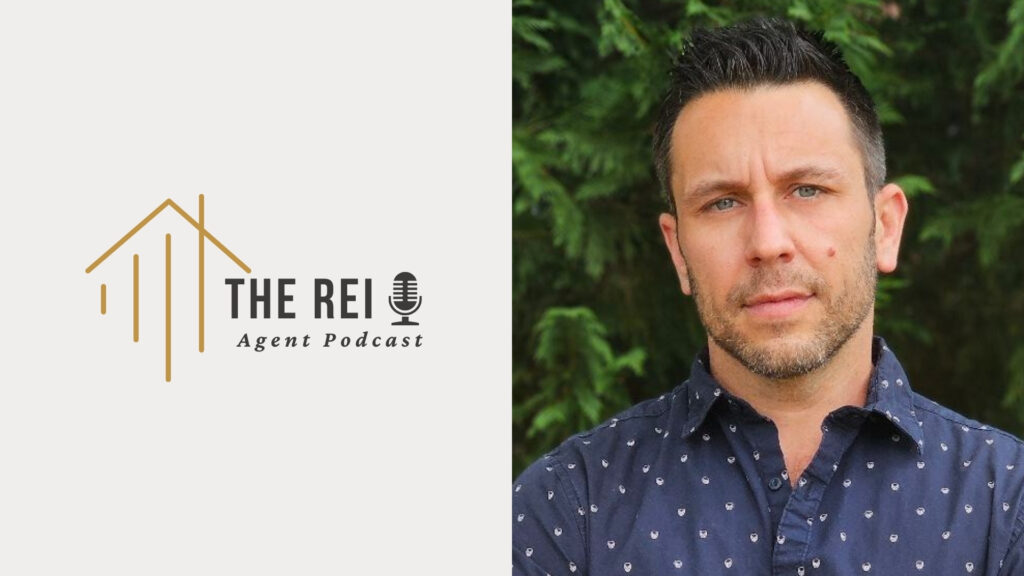
The REI Agent with Adam Balsinger
Value-rich, The REI Agent podcast takes a holistic approach to life through real estate.
Hosted by Mattias Clymer, an agent and investor, alongside his wife Erica Clymer, a licensed therapist, the show features guests who strive to live bold and fulfilled lives through business and real estate investing.
You are personally invited to witness inspiring conversations with agents and investors who share their journeys, strategies, and wisdom.
Ready to level up and build the life you truly want?
Follow and subscribe to The REI Agent on social


A Journey That Starts With Nothing but Desire
Adam Balsinger’s story does not begin with money, connections, or privilege. It begins with awareness.
Awareness that time matters. Awareness that presence matters. Awareness that freedom is worth fighting for.
This episode of The REI Agent Podcast reveals what it really takes to build a life of control, flexibility, and purpose through investing.
There is no hype and no shortcuts. What emerges instead is clarity, action, and persistence.
Adam’s journey resonates because it mirrors a quiet truth many people feel but rarely say out loud.
They want financial success without sacrificing their life in the process.
Growing Up Watching the Trade Between Time and Money
Adam grew up in a blue-collar environment where hard work was respected, but time was often the price paid.
His parents broke generational patterns by earning degrees and increasing income, yet long commutes and demanding schedules limited their presence at home.
Those early observations planted a powerful seed that shaped everything that followed.
“I always wanted the ability to be really present with my kids and my family.”
This awareness became a compass.
Adam did not want income alone.
He wanted autonomy. He wanted control over his schedule.
He wanted to design his life instead of reacting to it.
The First Real Estate Lightbulb Moment
The turning point did not come from a seminar or a guru. It came from curiosity. Adam realized his landlord was generating thousands of dollars a month from a single property.
That realization changed his entire perspective.
“I left that meeting thinking this is exactly what I wanted.”
Real estate stopped being abstract. It became tangible. It was not about properties. It was about leverage and time freedom.
Flipping, Wholesaling, and Learning the Hard Way
Like many investors, Adam started by flipping houses. The work was intense. The timelines were long. The margins were often thinner than expected.
Sometimes he made money. Sometimes he barely broke even.
Eventually, the math forced an honest question.
“Why am I doing six to twelve months of work to make the same money I can make assigning a contract?”
That realization pushed Adam toward wholesaling. Speed replaced long renovation cycles. Efficiency replaced chaos.
Over time, he completed more than one hundred combined flips and wholesale deals.
But something was still missing.
He was busy. He was profitable. Yet he was not free.
The Shift Toward Rentals and Long-Term Wealth
From the beginning, Adam’s real goal had been freedom. Cash flow. Stability. Time ownership. Transactional income alone could not deliver that.
That realization led him into rental properties and eventually into multifamily syndication.
Between 2017 and 2022, Adam was involved in acquiring nearly ninety million dollars in apartment assets.
Then reality intervened.
“Commercial real estate is not as stable as people think.”
Rising interest rates, insurance shocks, and market volatility exposed how fragile aggressive assumptions could be.
Adam pivoted again, not from fear, but from discipline.
Rebuilding With Simplicity and Control
Instead of chasing scale, Adam chose focus. Smaller multifamily properties. Duplexes and triplexes. Affordable housing in Philadelphia. Assets he could understand, control, and sustain.
From that focus emerged another strategy. Co-living.
By renting by the room instead of by the unit, Adam increased cash flow while addressing a real affordability problem in the market.
“We are solving a need, not chasing a trend.”
Vacancies dropped. Income increased. Stress decreased. The strategy worked because it aligned with reality rather than theory.
The Golden Nugget Every Investor Needs to Hear
Near the end of the episode, Adam shared a truth that cuts through nearly every excuse.
“You need literally nothing to get started.”
No money. No experience. No perfect plan. What matters is the willingness to act, learn, fail, and keep moving forward.
“The only thing you need is a willingness to take action and not give up.”
That mindset separates dreamers from builders. Not intelligence. Not resources. Persistence.
Books That Shape the Investor Mindset
Adam credits two books with reshaping how he thinks about wealth and negotiation.
“The Cashflow Quadrant completely changed how I saw income and freedom.”
“Never Split the Difference is the best negotiation book I have ever read.”
These books are not just reading material. They are frameworks for thinking differently about money, leverage, and decision-making.
The Real Measure of Success
Throughout the conversation, one theme remained constant. True success is not measured by doors, units, or deal size. It is measured by alignment.
Adam’s journey proves that wealth without presence feels hollow, and freedom without discipline is fragile.
A Closing Message for Anyone Still Waiting
If there is one lesson from this episode, it is this. You do not need permission. You do not need perfection. You do not need to wait.
“My superpower is being too stubborn to quit.”
That stubbornness, paired with clarity and consistent action, is what builds a life worth living.
This is not just a story about investing. It is a blueprint for reclaiming time, intention, and control.
And it all starts with the decision to begin.
Stay tuned for more inspiring stories on The REI Agent podcast, your go-to source for insights, inspiration, and strategies from top agents and investors who are living their best lives through real estate.
For more content and episodes, visit reiagent.com.
Articles Related to The REI Agent
- 10 Shocking Truths From the 2025 Global Housing Storm (And How Agents and Investors Can Thrive Through It)
- Shocking Balance Before Wealth (How Erica Clymer’s Holistic Practices Help Agents and Investors Thrive in Global Housing)
- Global Housing Storm (Holistic Solutions to Million-Dollar Dreams, Desperate Sellers, Rising Rents, and Shifting Wealth)
- Top 20 Terrifying Reasons Agents Will Never Be Investors (And How to Fix It)
- 10 Ways to Kill Real Estate Agent Burnout in 2025 (The Holistic Fix)
- Mattias Clymer is Silently Leading a $70M Movement That’s Changing Agent Lives
- Therapy You Didn’t Know You Needed (Holistic Wisdom for Real Estate Professionals)
- From For Sale Signs to Life Design (How The REI Agent Transforms Real Estate Into Holistic Wealth)
- Achieving Holistic Wealth and Success Through Real Estate (Insights from The REI Agent)
- Partnering with Investors (How Real Estate Agents Can Exponentially Maximize Profits)


Contact Adam Balsinger
Mentioned References
Transcript
[Mattias]
Welcome back to the REI agent. We are here with Adam Balsinger. Adam, thanks so much for joining us.
Thank you for having me. I appreciate the invitation. Now you’re you, you are in South Carolina, but I’m noticing you’re wearing a sweater.
Is it, is it chilly where you’re at?
[Adam Balsinger]
Uh, you know, man, it’s, uh, what, we’re two weeks away from Christmas and I’m like one of those weirdos that loves Christmas. So I got my Santa on a unicorn flying through outer space shirt. Uh, I have a five-year-old and a three-year-old.
They love Christmas too. So we, we frequently, uh, if you see me during the month of December, I probably have like some kind of Christmas ugliness, ridiculousness that I’m wearing. I hosted a, um, a meetup here in the greater Charlotte area.
And it was last night. And, uh, I advertised it as like ugly holiday themed. And I wore my fleece onesie pajama set, uh, like red and white polka dots.
I was like all decked out. Um, so yeah, it’s a little chilly this time of year and in the Charlotte area.
[Mattias]
You’re you’re, yeah, you’re North you’re for the North. So yeah, not quite getting down to the alligator gator territory.
[Adam Balsinger]
Right. Yeah. Yeah.
Yeah. But I’m from the Northeast and spent a lot of time like several years in Chicago. Um, and, uh, New York, um, New York state.
Prior to getting into real estate, like I had been in, um, direct sales and the direct sales business before. Um, a little bit, a little bit of multi-level marketing, maybe vibes to it. But, um, you know, I’ve always been really entrepreneurial.
And so I spent a lot of years, um, Mattias doing door to door and B2B sales in New York state and in Chicago and Detroit. Um, so it’s pretty hip. It’s pretty hard for me to like be really cold.
Cause I was in Chicago and like negative 20 wind chill, like schlepping around the city, uh, walking in trying to sell people copy paper off the street with no appointment. So, uh, yeah, anyway, I digress.
[Mattias]
Yeah. No, I’m, I want to get into your story. So tell us a bird’s eye view of, of who you are, what you do in real estate right now.
[Adam Balsinger]
Yeah. So I am a, a real estate investor, a full-time real estate investor. Um, I got started in real estate in 2014 as an investor, like broke, you know, no money, no real sense of direction.
I had shut down my direct sales business. Like, I don’t know, a year or two prior, I was still trying to figure out like what my next move was going to be. Um, you know, I, I’d mentioned I’d always been entrepreneurial.
So I wound up like just doing some sales jobs here and there. Um, while I tried to figure out my next move and, and that move wound up being real estate. Um, you know, at the time when I got started, no money, like bad credit, you know, I was renting a room from like a frat buddy from college basically.
Um, and you know, no network, no experience, like no silver spoon and just kind of like dove in and got started and figured it out. Um, I’ve.
[Mattias]
What made you take that jump?
[Adam Balsinger]
I mean, what, what brought you to real estate? Um, so I, I w I’m very fortunate in that. Like I come from a very blue collar background on both, like my mom and my dad’s side of the family, but both my parents wound up being the first in their respective families to go to college.
So I got to witness kind of like my parents shirking or like taking a different path than their family historically had taken. Um, you know, going into more professional white collar kind of jobs. And subsequently, you know, my family, I’m an only child.
We had more around the holidays, like took better trips, cooler trips, like did more stuff kind of than like a lot of our family that didn’t make some of those choices, my aunts and uncles, my cousins. Right. Um, so that was awesome to, to be able to kind of witness how those choices led to different professions, which then led to different incomes and like, right.
Different requirements then to from a like time and like investment of life into their professions. Um, so like kind of middle income, right. Which was different because when I would visit my grandparents, it was in a trailer park.
Um, but so had more, saw my dad and my mom be able to kind of change the family tree. But at the same time, like my dad commuted an hour to an hour and a half, like to and from work every single day. You know, when I was awake in the morning getting ready for school, like I didn’t even see him in the morning.
Like he was gone and he would get home like six 37 we’d have dinner and I would kind of go to bed. And that was a lot of like the younger years of my life. And as I got older and started to get involved in like music and sports and whatever, um, you know, he would do his best to be able to show up and be at things to support me.
Um, but, and I’ve talked about this on other podcasts and openly before too. Like baseball was like my, my best sport. I was not very gifted athletically.
Like I tried really hard. Like I made the varsity team, but I w I was like average at best. Right.
But I liked baseball. Like that was my sport. And so my dad did a great job of like being at most of the games, but he was always off to the side by himself.
And a lot of times, like my dad’s his CPA, like accounting finance, like that’s his background tax. So he’d be Mattias like on his computer, like looking at spreadsheets or like going through spreadsheets and shit, like at the game. Right.
You know, I’m like up to bat. And like, so, you know, like, and again, like very fortunate. Like, I love my parents.
Like my dad is like a, like hero of mine. Right. Um, because of, of what he had to go through to put himself through college or whatever.
Um, but dude, those things stuck with me. And I kind of always wanted to have the ability as I got older to be like present, like really, really present with my kids and my family. And I also had a unique experience where I got in a lot of trouble when I was in high school and my parents decided they pulled me out of public school when I was in 10th grade and sent me to a private school and the private school that I went to, like where I grew up was like very blue collar outside of Philadelphia, like our outside, like dude, I had a cow pasture across the street from my house. Like I would go out in the front, like, yeah, I grew up in the eighties.
So it was like, go out and play. Right. Like we were always mandated by mom, like get out of the house, go play, dude.
I’d be in my front yard hitting golf balls into like the cow pasture to pass time. Um, but so when I went to this private school, like there were kids from more affluent areas, like kids from Philly from like nice sections of Philly people from all over the country and even international students being sent to this school. And it opened my eyes up to people living life at a different level.
Um, I became really good friends. Um, and dude, I have like no friends from, from like school days really, except for two. And both of these guys I met at this private school.
Um, you know, one of them is like my best friend. His dad is like a surgeon. He’s actually a partner at one of the bigger orthopedic surgery hospitals in the city of Philadelphia.
Um, so these people were on a whole different income level dude than, than my family was. And that’s cool. Right.
Like they were taking cooler. Like I mentioned I was taking better trips than my family. Well, their trips like made ours look like we were peasants.
You know what I’m saying? Like, you know, he’s gifted an RS for when he graduated from college. Like that’s an $85,000 sports car back in like the early two thousands, which is when we were graduating from college.
So like dude, totally different lifestyle. But, but while my dad was at the game off to the side, like on his computer or digging through spreadsheets, my buddy’s dad was almost never there. So I S I think at an earlier age, then most of us tend to think about these kinds of things.
I had these kinds of seeds planted in my mind of like money, wealth, investment of time, right? How those things all kind of like play together. And so I really kind of always wanted to have more control over like my schedule and my life.
And the idea of like, I was never one of those kids. It was like, what do you want to do when you, Oh, I want to be a like and knew it right away. Right.
Like my thought was always, I want to make a lot of money and like I want to like do what I want to do whenever I want to do it. And that’s what kind of led me down that entrepreneurial path and got me started in, in the, the, the sales, the direct sales business. And you know, man, we learn things, we meet people, life takes us in, you know, umpteen different directions with, uh, with detours all over the place.
And right after I shut down my business, I was still living in Chicago and I was, I had two roommates. We had just rented a place, um, in a pretty nice section of Chicago. Like I had just shut my business down.
So I was doing pretty well financially at that time, like from the business before it was shut down. Um, so we lived in a pretty decent place from being like a, you know, like young 20 something like punk or whatever. And after I shut my business down, I had a lot more free time on my hands.
And so this, this place that I was renting was a bi-level apartment, three bed, two bath, and just, we had heard from talking to the other people that were living there. We were the first people to fill our unit. Um, but we all met the neighbors, whatever.
And somehow we found out that the guy that was the landlord that owned the property we were renting from, that he had actually bought that property and it was a total mess. When he bought it, he bought it from this elderly woman who just couldn’t keep up with it. Um, it was a big property.
And what he was able to do was to then take that single family, that big single family residence and chop it up into four apartment units. Um, all of which were like three bed, two bath. Um, and you know, this is probably dude like 2010, 2011.
And we’re renting this place for like $2,200 a month. And I was in the downstairs unit. So the upstairs unit was nicer and rented for like 2,400.
So I’m sitting there and I’m thinking like, wait a second, like this guy’s making like nine grand a month off of this property. Like how did like, like how did that happen? You know, like, and that just dude, it just got the wheels turning, you know?
Um, so I wound up reaching out to the property manager and was like, I’d love to talk to the owner, you know, like nothing, there’s nothing wrong. Like I just would love to like learn about real estate and like how he did this. And so I took the guy to lunch, like the property manager helped coordinate this meeting.
And um, you know, I left this meeting like totally swimming in knowledge that like, I had no idea really what the heck the guy was talking about, but I left there thinking like, what, what a great way to create a really significant amount of income for yourself and have like a ton of free time. Like this is exactly what I wanted. Right.
And so that got the wheels turning and then dude ever. So like, that was like when I got bit, I guess, right by the real estate bug. And then I didn’t really do anything about it for like probably two years when I moved back to Philly and was like still trying to figure out what the heck I was doing.
I had a sales job that had a lot of windshield time. I was selling software out of my, um, it was a remote job. So I was driving all over like Southeastern Pennsylvania and South New Jersey to go hit my, uh, my territory.
And I just, I heard like one of those radio advertisements like learn how to flip houses. And I went and kind of the rest is history. But, um, you know, I started out flipping houses.
I wound up, I flipped houses for two or three years.
[Mattias]
You’ve done a number of those flips, right?
[Adam Balsinger]
Well, so I flipped like I flipped for like two or three years kind of, that was the only thing that I was doing. And I was sourcing all my leads from, um, the MLS and from wholesalers. I was doing like three, four or five a year or something like that.
Enough like to put some money in my pocket. But I wasn’t really like making money, you know, like I was kind of covering expenses, trying to figure out how to do more volume. And I wound up kind of throwing some resources at learning direct to seller marketing.
Because prior to that I was relying a hundred percent on wholesalers and real estate agents to send me deals. Right. And so the thought process with the direct to seller marketing was like, I’m going to do this marketing and then I’m just going to buy these deals.
You know, the, like any lead that comes through, like awesome. And, um, what happened in reality was a lot of the vast majority of the conversations I was having, like, I didn’t like the deal. Like I didn’t like the math, the way that it penciled, like whatever.
But, and then like, you know, like you’re in the algorithm, you’re on Facebook, you’re learning, you’re Googling this Google and that like wholesaling started to like hit my feed. Right. Um, not even knowing that this is like algorithm driven at the time.
I know that now. Um, but so, you know, I kind of like then was introduced to this concept of wholesaling and stumbled through a couple of wholesale deals from leads that I had, you know, generated from direct to seller marketing. Uh, the first few were a total disaster.
I made almost no money on my first flip. Like the buyer was actually arrested and like we had to get a power of attorney executed so that his mom could close on his behalf at the settlement table. And I made like 470 some dollars that deal.
Like I was calling the local prisons cause we didn’t know where he was to try to locate this guy. Like it was so much work in hindsight, less than $500. Um, but I wound up doing a really piece of cake wholesale deal that came in off of a bandit sign, right?
Like those, we buy houses signs that you see up, um, like $25,000 profit, you know, closed in 30 days like super simple. And I was like, what the heck am I wholesaling house? Excuse me.
What the heck am I doing? These fix and flips for taking six months, nine months, 12 months. Like Philly is old.
The city, most of those houses were built like 1920, you know? So they’re all gut renovations. There was no such thing as a cosmetic renovation in Philly.
Like you’re gutting it to the studs, all new plumbing, all new electric cause it was all knob and tube, right? Like so why am I doing these big gut renovations and dealing with contractors to make 30 or 40 grand? Like I can assign a contract and make 25.
Like what am I doing? So I transitioned my business completely to wholesale and then kind of focused on wholesaling for several years. So in those early, like I would say first five or six years, I wound up like combined flipped and wholesaled over a hundred properties.
Um, but really dude, I was doing all of it to go out and buy rental properties. And what was really happening was I was getting, I was getting like blinded by the immediate profit potential for a wholesale or a flip. And I wasn’t actually like building a rental portfolio.
I had kind of like accidentally stumbled into a couple doors over the years. Um, but it wasn’t, I wasn’t doing what the goal was to lead me to the freedom that I was after. You know what I’m saying?
I got kind of caught up in the game. And so I started really focusing more on, um, like how do I grow a rental portfolio and how do I acquire units? Right.
And um, that wound up leading me into commercial multifamily apartment complexes and into the syndication space. And so like 16 into 17 was like transition out of wholesale. 17 was really when I started focusing on apartment syndication and I syndicated 10 apartment complexes, like 85 $90 million worth of real estate from 17 to 2022.
Um, I’m no longer syndicating apartment complexes. I think that that segment of like the commercial real estate world is totally overheated and way too competitive right now. Like I don’t like the fundamentals of a lot of commercial multifamily at the, at the moment.
Um, and I only have so much time in a day. Like I like all my team, like it’s back to just like Adam. Um, so in 22, like but that all kind of happened in from 21 leading into 2022 I was having some second thoughts on the way that the syndication business model was really like working in real life.
Like and I think this will make sense for your audience because we’re all getting hit by like the gurus that are selling the programs that like life is going to be a real wealthy forever. Right. Like, and so, you know, my personal experience in apartment syndication is that it’s not as stable like commercial real estate isn’t as stable and consistent as it’s, as it’s made out to be.
Um, it ebbs and flows in my opinion, like very similarly at different times of course, um, to residential real estate. Right. And kind of like the half truth that gets people interested in commercial real estate.
A lot of times it’s like, Oh, well the valuation isn’t based on comparable sales. It’s based on the income that the property can generate. Right.
And that is true kind of because you’re not using Apple to Apple comps. Like what are the chances if I’m buying a hundred unit property that’s 80% two beds, 10% one beds in 10% studios that I’m going to find an Apple to Apple comp like it’s almost non-existent.
[Mattias]
Right.
[Adam Balsinger]
But what happens is you wind up with a prevailing cap rate that you’ll see across the market. And so you’re not having a comparable sale, but the sales determine the cap rate at which all properties transact, right. 5% to six and a quarter or four and a half to five and a half or whatever.
Right. So the cap rate is kind of a derivative if you will, of the comparable sales. So this idea of like, Oh, it doesn’t really matter what happens in the market because as long as you drive your income, your golden, like that’s not really totally accurate.
Sure. And I unfortunately live that truth. Now I learned this, I learned all this as I’m getting into this space.
Right. It’s not like I’m going out acquiring these properties and then learning this later. Yeah.
Um, but you know, the reality I think for most of us is that a lot of us think we’re being conservative and we’re really trying our best to account for ebbs and flows in the market. And like, okay, if this changes to this, like, okay, am I still going to be good? But the reality is, man, is that it’s, it’s almost impossible to project or account in your underwriting or your analysis for the black Swan event.
Like in 2021 people were like, okay, interest rates are probably going to go up at some point, but we were not expecting the like significant changes in the way that insurance companies were handling the premiums and their insurance policies on properties located in the greater Southeast. Like we had an insurance premium jump from year one to year two it’s three X like 300 times it went up and Mattias we didn’t make a claim in that first in that year of ownership. Like we didn’t do anything.
There were no claims. They just tripled our premium. That was a $70,000 increase on a 80 unit property.
Like where does that money come from?
[Mattias]
Right.
[Adam Balsinger]
And so you can account for like one thing going wrong, but who is really accounting for four variables going like as wrong as they possibly could all at the same time. And that’s really what happened in 2022. Um, so anyway, I’ll stop bitching about, I’ll stop complaining about multi-family.
[Mattias]
I mean there’s a lot of people facing hard times in that multifamily family space that yeah, under wrote the deals before all this stuff changed.
[Adam Balsinger]
So I mean, and I mean look and it happens, right? Like it happened in Rezzy and Oh wait, no nine. Like these things happen.
And so I’m being conservative and and doing your absolute best to protect yourself is obviously the best thing that we can do there. And making sure that we never over leverage ourselves on one deal where one bad deal takes us out of the game forever. Right.
Um, yeah. So 2022 rates spiked. I was already kind of like halfway out on syndication and when rates spiked, um, and I start at like, I was like, okay, like that.
I, I gotta like figure something different out. Um, cause I didn’t feel comfortable given the uncertainty in the market with the higher rates and the higher insurance premiums and the increased competition that I was still going to be able to do deals, which deals equated to like money and food on the table. Right.
And so it was like, okay, well I am not feeling good about where the market’s at. Like I got to pivot. And so I just, I pivoted to smaller apartment complexes.
There was way less competition there. Um, so you know, since 2022, my partner and I, um, have been focused almost exclusively on affordable housing in the greater Philadelphia area. Um, you know, we have acquired a bunch of different rental units, primarily duplexes and triplexes.
Um, so, uh, no, I, so I, um, I raise money from private investors. Um, my partner in Philly, so right, I’m down in the Charlotte area. My partner’s in Philly, he’s boots on the ground.
Um, we’re 50 50. Um, and then, so we have, we have entities, we go and we buy in those entities. We borrow all of the money required to do the purchase and the renovations from private investors that I have built relationships with over the 11 years that I’ve been doing this.
Um, and we execute on, or we leverage the burst strategy, right. Buy, renovate, rent, refinance, and repeat. Um, and so we really, we, we prefer multi small multi units.
We will pick up a single family where it makes sense. Um, but really affordable housing section eight. And then, and then more recently, um, we are, we’ve kind of dabbled and dipped some toes of hours into the co-living like rent by the room business model.
And we absolutely love, love, love, love that model. We’re in the process of transitioning some of the units that we currently have, um, allocated for affordable housing, like section eight. And we’re actually converting more of our units over to the co-living pad split model.
Um, as we continue to have eyes and ears open for new opportunities that we can pick up.
[Mattias]
Let’s talk about that a little bit more. Um, if people aren’t familiar with this, are you, are you doing, um, where the, the model where you’re actually taking like things like dining rooms and maybe living rooms and turning them into extra bedrooms and the idea is people more or less than the working force or whatever. They just kind of want a place to crash.
Uh, there’s probably a shared kitchen, but there’s not a ton of like communal living space. It’s kind of their room. Is that accurate?
[Adam Balsinger]
Yep. Yep. Bingo.
Now there’s a lot of, so this is a newer concept, right? The co-living idea, it’s gaining a lot more popularity. It’s totally being driven by like the macro economics of the world that we live in today.
Like for instance, in Philadelphia, listen to how ridiculous this is when we talk about like the affordability crisis, like this subject does not get enough attention at all. Um, but so listen to this, the median wage earner in the city of Philadelphia cannot qualify based on income and expense ratios to rent the median apartment. Median earner can’t qualify to rent the median apartment.
Um, so I personally think that we are entering a time in our country’s history where um, the middle class is, is probably going to continue to be like destroyed. Um, I think we’re going to see more people, um, struggling to get by struggling financially. And so we already have an affordability issue.
I think it’s just going to get bigger as time goes on. And as we continue to print more money and inflation and everything gets more expensive and yada, yada, yada. So this is not like, the way that we approach co-living is not like, Oh my gosh, this is the greatest thing since sliced bread.
This is like we’re solving a need that essentially is like I’m living in a total turd that’s run by a slum Lord that could care less and is infested with cockroaches that I have assigned a year lease to be in. Or I could be homeless or I could rent a room in this like nice, clean, safe, um, you know, reasonably priced property. Um, Philadelphia is very, very, uh, not landlord friendly.
Like we’re like public enemy number one, it feels like in the city sometimes. So, um, we’re very careful with the way that we handle co-living. Um, my partner and I, because Philly has a rule on the books that, um, says that you can only have, um, you can have a maximum of three unrelated adults living in a single rental unit.
So initially my idea was like, I’m going to go buy a 3000 square foot house and I’m just going to make like a 12 bed, five bath with one kitchen. And like it’s all going to be bedrooms, but that wouldn’t fly in Philly. Right.
And so I know people that are doing that kind of stuff under the radar. But if you ever run into an issue where you need the city to like evict, um, they won’t do it if you are not, if your property’s noncompliant based on the rules and the regs. So what we’re doing is we’re taking these smaller apartment units and we’re maximizing the income potential.
So the first co-living deal that we did was a duplex upstairs. We had a two bed, one bath and downstairs we had a one bed, one bath, um, eat in kitchen type of type of thing. So like dining kitchens kind of blended, but it’s own kind of standalone living room because section eight, which we like in the subsidy programs, a lot of times they want to see like a dedicated living room area.
Well, so what we’re doing, um, is we’re taking that living room space and we’re converting it into a revenue generating bedroom, which is really just like a partial wall, like temporary wall and a door. Right. Um, and then we’re trying our best to eliminate communal spaces.
Um, because the data shows that the typical person renting by the room, isn’t using it anyway, but it also just increases the likelihood or the chances that tenant a has an issue with tenant B. I wanted to watch whatever and they wouldn’t block, you know, like whatever. And so we don’t want those issues because tenant A and tenant B have an issue.
I’m losing one of them, if not both. Right. And I had to fill that unit all over again.
I might have to spend money to turn the unit, blah, blah, blah, blah, blah.
[Mattias]
Right.
[Adam Balsinger]
Um, and so we took the two bed, one bed, uh, two bed, one bath upstairs, made it three bed, one bath rent by the room. We took the one bed, one bath downstairs, converted it into a two one rent by the room. Listen to this.
Section eight, both units filled. We would be at 2,700 gross in that rental unit. And section eight is taking a long time to fill vacancies in Philly right now because Philly is incentivizing developers to include affordable housing units in their new developments.
The way that they’re incentivizing is with density bonuses. Like, Hey, Mr. Developer, if you allow, if you will take 20% of your units and put them for S for low income, we’ll actually give you 30% higher density. So you can add seven more units to that property.
Right.
[Mattias]
Right.
[Adam Balsinger]
So what section eight voucher holder in their right mind is renting for me, right?
The 1930 bill single family home that was chopped up into a two bed, one bath apartment with no amenities, when they can take that voucher and get the brand new courts, countertops, right? The washer dryer in unit, the access to the gym and the pool. And it’s the same cost as my unit.
Like, so it’s taking us like four to six months right now to fill a section eight unit. On average, we fill a bedroom co-living in like 15 days. So we have less vacancy.
We’re losing less money per month, um, covering expenses, but now rented by the room, that property grosses 4,000 to $4,100 a month. Wow. 2,700, 4,100.
Which one sounds better. Right.
[Mattias]
Right.
[Adam Balsinger]
I’ve also dabbled with short-term rentals. Um, an idea that was kind of implanted in my mind with the apartment experience that I had was, you know, for a while, my mindset was more doors, more doors, more doors, more doors, right? Even if I’m making $5 a month on the door, like I’ll Walmart this shit and I’ll just make money on volume, even if it’s a small margin.
And in reality, that’s possible. But the likelihood that you’re coming out of pocket to cover expenses is greater. You’re having to take on way more debt, right?
To realize that, um, as a path forward. And so this idea of like, well, wait a second, what about fewer, better performing doors? Right?
Like that became this new kind of mantra of mine. And so I’ve tested short-term rentals. Um, not a big fan of the short-term rental space.
It’s too much immediate customer service required. And I’m doing this for freedom of time, not to have to like, Oh, it’s nine 45 and my phone buzz. And I know that I have a late check-in.
So they must write, like, I don’t want to do that. Um, so I’ve done one short-term rental. I probably won’t do any more unless it’s a screaming hot deal.
And I can like feel super comfortable hiring out and still doing well, um, hiring the property management out and still doing well. But so now the core focus moving forward for my business is continuing to burr affordable housing and also co-living and just building the portfolio that way. Um, and then I also do some coaching now as well.
Um, I had to learn how to develop systems and processes in a way of, of attracting private money to me on a consistent basis when I’m buying like multiple multi-million dollar apartment complexes per year, right? Like the Rolodex of seven people that’ll lend me a hundred grand, like wasn’t going to cut it anymore. So I now also coach real estate investors on how to raise their own private money to fully fund their deals.
Um, so that’s now my business today. Cool. Did you, did you sell all your apartments then?
[Mattias]
All the big complexes?
[Adam Balsinger]
I still, I’m, I’m still working on us on a, uh, on an exit for three of them. I’m still in. Okay.
[Mattias]
Um, yeah, it’s interesting. And I, you know, I think it’s, it’s also, uh, people, people might hear the, you know, there’s affordability crisis. You’re talking about how, uh, the rent is, um, you know, the median rent can’t be afforded by the median income, um, um, in the Philly area.
And people might be like, yeah, landlords just need to reduce the cost. But you also just outlined why that’s so hard. I mean, like with the, uh, with insurance, um, the interest rates are really difficult.
And I think that’s exactly one of the ways people are kind of figuring out how to make things work, make ends meet is getting more creative with what they’re doing. And, and you’re outlining the co-living space as one of them. Short-term rentals is another one, but like you said, it’s very labor intensive.
Um, personally, we, the last burr we did, we turned into a midterm rental. Um, yeah. And, uh, that was our way of trying to make, figure out how to make this property.
We wanted to keep longterm, um, as yeah, as a, as a rental that would actually pencil out.
[Adam Balsinger]
Um, yeah. How do you like, how do you like that midterm space? I was concerned that I didn’t have like in my network, the resources or the contacts to be able to consistently funnel enough leads, you know, to be able to keep that midterm full.
Um, so I wound up like I looked at it, but never, never pulled the trigger on one of those.
[Mattias]
So actually one of our episodes we had, uh, Jesse Vasquez on.
[Adam Balsinger]
Dude, that’s the person that’s, that’s who got me interested in mid-term was Jesse Vasquez on probably a BiggerPockets podcast.
Probably it was our podcast. Come on. Yeah.
[Mattias]
He actually analyzed this deal cause we were debating about what to do. So he like went through the process of how he would analyze it and convinced me to actually go through with it and do it. Uh, which is fun.
Um, but, uh, it’s, it’s a whole different animal. So we, we now know, um, kind of what our market, uh, where the sweet spot, where the sweet spot is for what our rent should be. Right.
Engineer that like, um, then you can really figure out what, what you should be providing, what you should be aiming for. If you’re, if you’re looking to convert a properties into that, that, um, and so, um, that’s been interesting. But, um, the other, the other thing that’s really hard about it, it’s, it’s a different cadence and you know, people that are doing, you know, longterm rentals, they’re, they’re looking, you know, a month out, whatever they’re looking a little bit ahead often.
Right. It’s, it’s kind of rare that the person is like needing to move in tomorrow and that’s kind of like a red flag. Right.
[Adam Balsinger]
Yeah. Yeah.
[Mattias]
Um, but, but for, but for the midterm space, like you almost don’t hear anything until like a week out and that’s like a little bit nerve wracking. Cause like, yeah, beginning looking, going into it, I was budgeting, you know, by way more money, way more rent. Um, we, I thought we needed way more rent to cover, make up for the vacancy that I thought was going to happen.
And so we’ve had three different tenants and we’ve had one day a vacancy. And so that’s been, and one, and the most recent one is signed up for seven months. Um, oh, that’s awesome.
So they’re, uh, almost, you know, a longterm, but, but anyway, so, you know, it’s, it’s been a great space. I think it’s a, it’s really good. And if you go to a furnished finders, um, we really, we put it on all the different platforms, but we’ve just found all of our tenants really through that.
Um, other than one that was word of mouth. Um, but, uh, if you go to furnished finders, they have, um, some metrics that they’ll, you can do your zip code and figure out like what the end is for, um, for that area, how many searches are, how many properties are listed, et cetera. And there’s like certain ratios that I forget what the ratio is at the top of my head, but like it would be, it makes sense.
But yeah, we found out that, you know, about 1800 bucks a month would be the sweet spot. And so a lot of our rentals would benefit from converting to get to that, that price point.
[Adam Balsinger]
Yeah, for sure.
[Mattias]
And it’s a lot of people that just want like, kind of like, I mean, honestly, like you’d almost just throw your, uh, your co-living spaces, bedrooms onto that platform, um, and do a monthly model. Cause you’re probably paying utilities anyway, right?
[Adam Balsinger]
Oh yeah. Yeah. Yeah.
We pay utilities. We got, um, internet service there. Um, so yeah, we’re covering all that stuff.
And it’s part of me, I’m moving cause I’m noticing that my device I’m on is about to die. So I gotta plug into a charger before we get disconnected here from my device dying.
[Mattias]
If that would be a really good experiment because I mean if it’s furnished and you’re paying utilities, you’re really doing everything anyway. So you could just try, um, uh, one of the rooms, uh, I had thought through and I guess maybe talk about this a little bit too. Like do you, um, have any concerns or is there any kind of, uh, etiquette as far as, uh, mixing up genders?
If it’s a solo person, uh, in, in a room, like is, are you going to put a girl or are you going to talk to them about it? If, if, if it’s all guys in this, you know, co-living space, what does that look like?
[Adam Balsinger]
Um, so I can’t really answer that question, honestly. Um, because I am not one that ever wants to manage my own stuff.
[Mattias]
Sure.
[Adam Balsinger]
Um, I am not a manager. Um, you know, I’ve learned that over time. Uh, I’m good.
Like 30,000 foot view. I’m good sales. I’m good.
Like vision casting, but management and day to day operations is, is, is definitely not my strong suit. So knowing that I am really always trying to either a partner with the person that’s going to handle the day-to-day operations, which is what I did with my short-term rental. Um, or just flat out higher it out.
So on, in the co-living property, we leverage a platform called pad split, um, which is essentially like Airbnb to short-term living. Right. Um, so pad split has members that have, they have to apply to become a member on pad split and then members are then eligible to be able to rent rooms that are then listed on pad split.
So they’re handling a lot of like the initial qualification steps. And then we took even, we went a step further and hired an actual third party property manager to handle everything else that pad split doesn’t handle. So if you were to talk to pad split, if they were on your podcast, they would tell you that their initial screening is excellent and that that’s all you need.
But everybody that I’ve ever talked to that’s owned one has advised me that there’s a second level, a kind of harder vetting that they prefer rather than just relying on pad split. So my property manager, um, has kind of a second level, if you will, of vetting and of qualification. Um, and so she’s then having all of the conversations about, but we do communicate like, Hey, this is who’s already in the property, right?
Because when we fill a unit with pad split, the first 10 days go to pad split for filling the unit. So it’s kind of similar to like a property manager taking the first month’s rent, except I’m only losing 10 days instead of 30. Right.
Um, so I don’t want that person to move in and then be gone in a week because like it’s a single girl and didn’t realize that the roommates are all men. Like it doesn’t do me any, it doesn’t do me any good. It hurts me.
Right. So we absolutely disclose that information. We have not implemented any policies internally to control that.
But we also have only been live on pad split for four months with that particular property. So I’m a little, well, and if you’re agreeing behind the gills almost to even doing the vetting, I mean, I don’t think you have as much liability.
[Mattias]
I can just see that there could be possibilities for liability there. Right. Putting, putting people together in the same house that they don’t know.
Um, but, but anyway, that’s, that’s a different conversation. And I do want to get to our time’s kind of running short here and your phone’s going to die. Not anymore, man.
[Adam Balsinger]
I’m, I’m plugged in. We’re good.
[Mattias]
I’ll go for another two hours.
I do want to, I do want to ask you though about a golden nugget. If you have a golden nugget you want to share to our listeners.
[Adam Balsinger]
So yes, absolutely. Um, I host a real estate meeting here locally and this gold nugget is a really important one, but it isn’t one that I actually had on my mind until last night because last night was our last meeting for the year. And I had three panelists come in that are in kind of different niches or like using different strategies in real estate investing.
Right. And I had them in to kind of tell their story and talk about their niche or their strategy, um, to give newer people locally an idea of like areas to focus on with a lot of upside for 2026. And it was funny because in everyone’s story, like we all had really common themes to the story.
And I think that it’s really contrary to what most people think you need when you’re getting started or envision about people getting into real estate. Right. So like gold nugget, you need literally nothing to get started as a real estate investor.
So I know that your, your, um, your show is really right for real estate agents and exploring the concept of becoming a real estate investor or getting into real estate investing. So I think a lot of us, I’ve been doing this for 11 years now, I’ve talked to a lot of like wannabe, like people wanting to get started, so on and so forth. And like, there’s these limiting beliefs that so many people have and I had them too.
And you probably did too. When you first got started, like, well, how am I going to do this? I don’t have money.
Well, good news. You don’t need any money at all. Like you can just borrow it.
You find a good deal and you can borrow, you can find a source where you can tap to be able to access their capital. So it’s not that no money at all is needed. It’s just that it’s not your money that’s needed.
Like, well, I don’t have experience flipping houses. Like neither did anybody else when they flipped their first house. Like the people we watch on HGTV, like they didn’t come out of the womb flipping houses.
Like they had to flip their first house too. Right. And your, your network doesn’t really matter.
Right. Your knowledge doesn’t really matter. Like you can build and acquire and develop and grow all of those things.
You literally, the only thing you need to get started is a passion for improving your life, a willingness to take action and being okay, potentially falling on your face and looking silly for a period of time while you’re figuring things out. Because the truth is no matter how much somebody tries to educate themselves on any subject, we can never learn everything. Like you learn some, you apply the information and it’s through the application of the information that the education actually happens.
Right. And most of us think we need to cram, cram, cram, cram, cram. I’m going to know everything.
And then I can hit the ground running. That’s a fallacy. That’s not even possible.
So my gold nugget would be like, don’t trip over the things that you don’t have find the internal strength or discipline or motivation or whatever, focus on that and you’ll figure it out as you go. As long as you’re willing to just simply not give up. I love it.
That’s, that’s great. It’s fantastic. My superpower is being so stubborn that I refuse to quit.
Like that’s my superpower. Like I’m too stupid to quit.
[Mattias]
I don’t know if everybody would call it stupid, but uh, yeah, no, I, I agree with you. And I think a lot of times to your point, like people get stuck in kind of like learning the new thing or like maybe this is the avenue of investing that I’m going to go into. And then they find another one and they never actually take the step and, yep.
And you know, you may not hit a grand slam the first time, but uh, you know, the education alone is worth it typically. So how about a book you think it’s fundamental for everybody to read or, or one that you’re currently really enjoying?
[Adam Balsinger]
So I’m going to, so a Robert Kiyosaki book is like one of my favorites. It’s not rich dad, poor dad. The cashflow quadrant is a phenomenal book.
Like if, if anybody listening is of the mindset, that’s like, I want to make money, but I don’t always want to have to trade my time to make that money. Cashflow quadrant is an amazing book, like amazing book. Yeah.
So that’s one number two. I know you only asked me for number one, but never split the difference by Chris Voss is possibly the best negotiation and sales book that I’ve ever read. And you’re talking to somebody that did B2B and door to door sales, ran his own sales company, and then did a bunch of sales for other people like solution selling.
And like, I’ve done all those fucking sales programs. Pardon my language. I told you I would slip up every once in a while.
Um, but never split the difference by Chris Voss is so, so, so, so, so good. So good.
[Mattias]
I agree with both of those. And actually, um, in, in my book that I’m working on, uh, we talk about the cashflow quadrant, um, a good bit and just kind of, I think a lot of times agents, uh, will feel like they’ve won by moving from the employed to self-employed, uh, quadrant, which is a great step. And it was huge for me.
Um, a huge moment of realization that, you know, I need to be in this kind of space. Uh, but then to go above and beyond that, to start building up that those other quadrants either by building a business, um, or investing and, uh, having your time and your ability leveraged.
[Adam Balsinger]
Yeah. It’s funny too, right? Because I think, I think most of us actually aspire for the self-employed and it isn’t until you read that book that you’re like, Oh shit.
It’s being self-employed. Like sounds like it really sucks. And then like when you experience it for yourself in real life, like it blows being self-employed is hard, man.
Like there’s, you know, like you don’t get the security of the, of the consistent. So like, it’s just, it’s, it’s, it’s hard. That’s not the end goal.
I agree with you. It’s a step in the direction. It’s a step in the journey, but like, I don’t think it’s the goal, at least not for me.
[Mattias]
Um, yeah. So, uh, I mean, I agree. I think, I think that’s in the book, I, I’m teaching to, to, you know, if somebody just invests while they say they love sales, if they love, you know, the business, which so many people do, uh, love real estate, like just, if you’re investing as you go, um, you build that other side and that’s can be your easy retirement plan with the tax advantages, et cetera.
[Adam Balsinger]
Um, tax advantages. So I haven’t said this anywhere else. Um, but I got over a $20,000 tax return this year over like almost 30 G’s real estate investing.
That’s why.
[Mattias]
Yep. Yep. As a real estate, uh, professional, um, you’ve got some access to some, some powerful tools.
So, um, yeah, you do check with your CPAs of course, but accelerated depreciation is the name of the game. I mean, if, if you’re a, a, an agent that’s out there hustling, um, trying to pick up a rental, um, or investing in a syndication or something, uh, can, can really help you on the taxes and, and your, your retirement.
[Adam Balsinger]
Yeah. And Hey, for your audience, like if you have investor clients that are looking to sell, encourage them to 1031 their money. Um, like that is a, even if they don’t do it, like just that simple recommendation could save your client thousands.
And then guess what? They’re never going to use another agent like ever again. Like you’re going to be their favorite agent forever.
[Mattias]
Absolutely. Um, Adam, if people want to follow on your story or, you know, follow you on social media, where can they find you?
[Adam Balsinger]
So I’m, I’m most active on Facebook and Instagram. Um, but what I would encourage would be, I have a Facebook community, um, a Facebook group community that I’ve created. Um, it’s called the cashflow. So Cashflow Collective, check out.
And if you like what you see, join the group, the community, the cashflow collective, um, my group, I have a meet that’s, uh, you know, it’s kind of associated with my monthly meetup, which we do live stream, um, as well. So if any of your audience gets value, it’s free. They can join the live streams once a month to continue to level up their real estate, investing knowledge and game.
Um, so I would say that Cashflow Collective, Facebook group. Well, Adam, thanks so much for being on the show.
[Mattias]
It’s been a lot of fun.
[Adam Balsinger]
Thanks for having me. I appreciate it. Sharing your soapbox.
[Erica]
Thanks for listening to the REI agent.
[Mattias]
If you enjoyed this episode, hit subscribe to catch new shows every week.
[Erica]
Visit REIAgent.com for more content.
[Mattias]
Until next time, keep building the life you want.
[Erica]
All content in the show is not investment advice or mental health therapy. It is intended for entertainment purposes only.