

Key Takeaways
- Discipline in fitness, finances, and mindset leads to lasting success and confidence.
- Military values like ownership and resilience translate powerfully into business and investing.
- Setbacks can be transformed into six-figure lessons if you commit to learning and adapting.
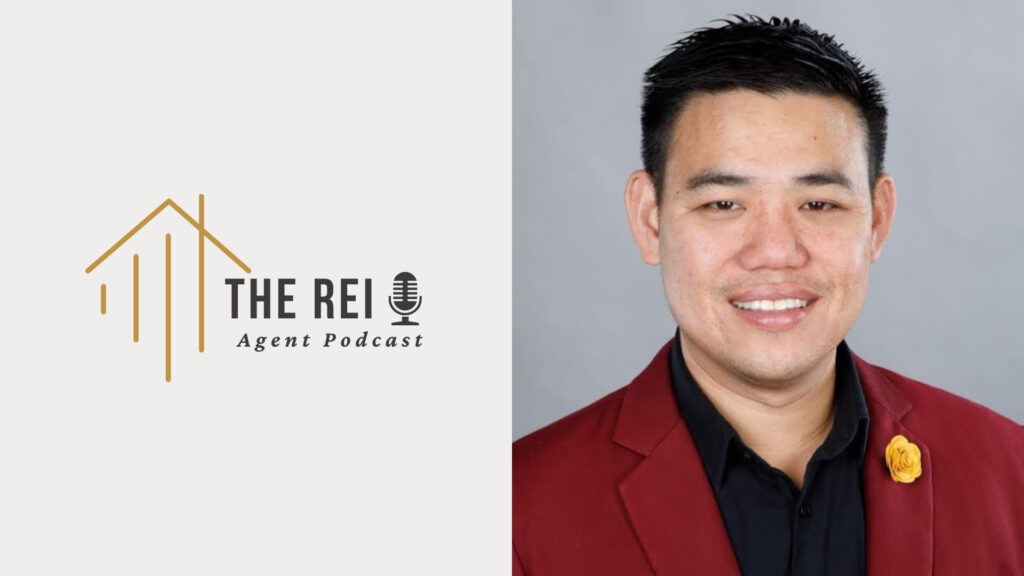
The REI Agent with Nathaniel Cherubini
Follow and subscribe to The REI Agent on social


Redefining Real Estate, Fitness, and Purpose
On this compelling episode of The REI Agent, hosts Mattias and Erica Clymer sit down with Marine Corps veteran, lender, investor, and family man Nathaniel Cherubini, known to many as “Real Estate Nate.”
What unfolds is not just a discussion about real estate but a full-on masterclass in resilience, intentional living, and the pursuit of meaning beyond the paycheck.
From the first minute, Nate brings the heat. His story is one of transformation—military grit meets entrepreneurial fire.
Yet, it’s his philosophy that leaves a lasting mark.
As Erica and Mattias explore the inner workings of this high-performing mind, listeners are taken on a journey that’s equal parts tactical and deeply personal.
“Success is not a number in your bank account. It’s a mindset.”
From VA Loans to Real Estate Wisdom
Nathaniel’s investing story didn’t begin in a seminar room or at a networking event.
It began, like so many, as an “accidental landlord.” But what followed wasn’t accidental at all.
Through hardship—including a $120,000 loss during a failed flip during COVID, Nate and his business partner didn’t fold.
They leaned in. Learned more.
Took extreme ownership. And came back stronger, buying eight more properties and branching into lending, development, and education.
“We turned that into a $120,000 education in what not to do in real estate.”
And it’s not just financial wins Nate speaks on, it’s the why behind every move.
The duty to repay investors even at personal cost.
The belief in mastering your environment before blaming it.
The commitment to a lifestyle of integrity, growth, and ownership.
The Fitness-Finance Connection
Nate’s message isn’t limited to real estate.
In fact, one of the most powerful moments comes when he reveals his secret to confidence: discipline in fitness.
He speaks of six-hour runs, CrossFit camaraderie, and the small daily wins that stack into unshakable identity.
“Every time you follow through on what you say you’ll do—whether it’s getting out of bed or crushing a brutal workout—you build belief.”
It’s clear Nate lives what he preaches.
Whether it’s teaching his kids emotional intelligence, helping other Marines think like investors, or coaching teenagers on how to design their futures, he’s not selling a dream, he’s building one, day by day.
The Deep Roots of True Wealth
For Nate, true wealth isn’t about 100 doors. It’s about alignment.
Alignment with your values.
Alignment with your discipline.
Alignment with your mission.
It’s why he invests. Why he mentors. Why he lives the “whole-of-life” approach.
“You don’t retire from purpose. You evolve into a greater one.”
As Erica and Mattias reflect on their own journeys—balancing rehab, family, financial fears, and hard-won wisdom—it’s clear that this episode isn’t just about one man.
It’s about a movement. A mindset. A method.
Wisdom to Live By
Before the episode closes, Nate distills his personal code of conduct into three brutally honest, beautifully simple life rules:
“Don’t consume more than you need. Don’t spend more than you earn. And be charitable.”
These aren’t just mottos. They’re marching orders for anyone who wants to live boldly.
Final Thoughts: Don’t Chase Comfort—Chase Growth
As the conversation draws to a close, what lingers isn’t the talk of VA loans, syndications, or duplexes. It’s the call to rise.
The challenge to “not wait” until life is comfortable to take action. And the undeniable truth that discipline equals freedom.
Nathaniel Cherubini didn’t just build wealth.
He built wisdom.
And now, he’s passing it on.
“Success is a way of living. It’s in the values you uphold, the problems you choose, and the people you impact.”
This isn’t your average real estate interview.
This is The REI Agent—where wealth meets wellness, and stories spark transformation.
Stay tuned for more inspiring stories on The REI Agent podcast, your go-to source for insights, inspiration, and strategies from top agents and investors who are living their best lives through real estate.
For more content and episodes, visit reiagent.com.
Related Articles
- Mattias Clymer is Silently Leading a $70M Movement That’s Changing Agent Lives
- Therapy You Didn’t Know You Needed (Holistic Wisdom for Real Estate Professionals)
- From For Sale Signs to Life Design (How The REI Agent Transforms Real Estate Into Holistic Wealth)
- Achieving Holistic Wealth and Success Through Real Estate (Insights from The REI Agent)
- Partnering with Investors (How Real Estate Agents Can Exponentially Maximize Profits)


Contact Nathaniel Cherubini
Mentioned References
- The Seven Habits of Highly Effective Teens by Sean Covey
- The Seven Habits of Highly Effective People by Stephen R. Covey
- The Book on Investing in Real Estate with No (and Low) Money Down by Brandon Turner
- Managing Rental Properties by Brandon Turner
- Extreme Ownership by Jocko Willink and Leif Babin
- The Book on Mental Toughness by Andy Frisella
- 75 Hard by Andy Frisella
- BiggerPockets
- Dave Ramsey
- RVShare
Transcript
[Mattias]
Welcome to the REI Agent, a holistic approach to life through real estate. I’m Mattias, an agent and investor.
[Erica]
And I’m Erica, a licensed therapist.
[Mattias]
Join us as we interview guests that also strive to live bold and fulfilled lives through business and real estate investing.
[Erica]
Tune in every week for interviews with real estate agents and investors.
[Mattias]
Ready to level up?
[Erica]
Let’s do it.
[Mattias]
Welcome back to the REI Agent. We have Erica, woo! Erica, you’ve had a number of obligations, children, PT, a lot of things that have prevented some of the recent recordings for you to be on it, but it’s always a better conversation when you’re here.
[Erica]
Yeah, thank you. Yeah, I know, I feel like physical therapy takes up about 40% of my week right now.
[Mattias]
I guess, I don’t know if I mentioned it without you on the air, but we can talk quickly about how your PT is kind of cool, how they’ve kind of been looking at the CrossFit workouts. I don’t know if you wanna talk a bit about how you’re kind of transitioning back into the gym.
[Erica]
Yeah, I think last week maybe was the first week I was able to attend a CrossFit class, and my physical therapist is amazing. Really appreciated his insight. And so the last time we met for PT, I went through, I showed him the CrossFit workouts for the rest of the week, and he helped me modify each one so that I could still go to class, I could still be with the group, and I could do them safely.
And so we decided, because I only have a set number of PT sessions allowed by insurance, we’re spreading them out more, but then we’re gonna meet on Mondays and go through the week’s worth of workouts so that I can participate as much as I can through the week. And so that’s, it’s super nice, and it also helps me feel like I, it gives me more confidence, I guess, in the workout so that I’m not re-injuring myself and I’m making sure that I’m pacing correctly.
[Mattias]
Yeah, it’s probably also just feeling like you can get back to kind of who you were with your life, what it was before, even though it’s not 100%. It just is kind of a good step towards that, to join the community again, the class. It’s nice to have you there.
Yeah, thank you.
[Erica]
It has been nice to be working out with people again, because the last couple of weeks I’ve been doing like very minimal exercises, but then also like upper body. Back in this, our bootcamp room, which is like back in the back, there’s no windows. So it’s okay, but it’s just nice to be back with everybody.
[Mattias]
Yeah. Well, we just talked to Nate Cherubini, who was a very wise person. I really enjoyed the conversations he’s had about lots of different things.
But one of the things that stuck out to me, and I wanted to talk a little bit about more, was how he’s kind of talking to his teenage children and how he’s trying to give them these like life lessons that he’s learned that he wished he knew earlier, trying to mentor teens in general. And it just kind of reminded me of when I was working as a behavior specialist in the high school, in our local high school, how I had a seven habits of highly effective teens like book that would work with kids with and have like a workbook to go with it and try to kind of do all this like character building work with these kids, with these teens. And how I felt like I had a great rapport with them.
They really value what I had to say. They really were trying hard, even though it was really hard to understand these concepts, to make changes, to understand and to kind of grow into being somebody bigger, like a more mature, well-rounded person. And so I’ve always had this hope in the back of my head that that would translate well with my kids when they’re teenagers.
So he was talking about it. And when I was in the elementary schools as a behavior specialist, I just didn’t connect as well. And I feel like I have still some of that disconnect with our kids and just it’s a learning curve to kind of try to communicate things to their level when I wanna talk at a high school plus level with them.
But you’ve been doing some of that too with.
[Erica]
With the kids, yeah. We’ve been talking a lot about the choices that they have in responding to certain situations and helping them understand that if they’re in a situation that doesn’t feel good or they don’t like or that they think is unfair, there are choices they have to respond to it. I think sometimes they just feel stuck in this feeling of anger and frustration and hurt feelings and they want the other person to change so that way the feeling can go away.
And I mean, this is our five and eight year old and so they’re young, young, young. And so I’ve been talking to them about, in this particular situation, I think you maybe have two choices and you can either move yourself away from the situation and go play somewhere else. Or you can, if you would like to, you can talk about what’s going on with the person and kind of suggest change.
And then I think, I don’t know if you heard this, but Isla, our five year old, she said, no, there’s a third option. And I said, well, what’s the third option? She said, I could just do nothing and keep it the same.
And I was like, what? That’s true, that is an option. I don’t know if you would be happy with that.
And she’s like, I don’t think so either. I think the seeds are being planted. But it’s still very hard for them sometimes to recognize that I have something that I can do to respond or to change what’s going on around me.
[Mattias]
Yeah, it’s an ongoing struggle to really try to instill these values and deep concepts to kids. Cause I think they’re often counterintuitive to what we naturally want to feel or how we naturally feel. And so it’s nice.
I mean, Nate boiled down some concepts. I don’t need to give it away now, but he had some pretty simple things that he said that any first grader could understand, but it applies so well to you for your whole life. And I think that’s the art of it is to really take these complex things and to try to boil them down to more core concepts that are more digestible.
And in fact, if somebody has not read or has read The Seven Habits of Highly Effective People, I honestly feel like the teen version was better. Maybe I’m just not mature enough yet to read the adult version, but I felt like it was that. It was like taking these big abstract concepts and making it more simple and approachable.
And I felt like it was very easy to read and to apply even to adult scenarios. So that’s maybe a great example of that’s an art. Maybe Chat GPT can do that for me.
I can plug in a book and be like, all right, now help me explain this to my eight year old, my five year old.
[Erica]
Yeah, I’m reading The Let Them Theory right now with a friend and we’re only a couple of chapters into it, but it focuses so much on identifying the sphere that you do have control over and it’s not how people think or feel about you or what the decisions that they’re making, but it’s more the control that you have about how you think and respond to those situations. And I mean, the end result of all of this is it lowers your cortisol level because you’re less stressed and you’re not worried and you’re not anxious. And so then you end up feeling a lot more calm and then you’re just able to be more productive and functional in life in general.
[Mattias]
Yeah, that would be, I’m excited to read that one. I tried to start, but I think our shared audible had it where you were leaving off so I don’t wanna ruin your place. So I will patiently wait until I can read it as well.
Cause that one has definitely come up a few times in the book as well. And I think most people who have suggested it have been just been like, it’s not necessarily revolutionary but it’s just kind of this book that really resonates and helps you really apply something that you may have kind of understood but not really applied in your life better.
[Erica]
Yeah, that’s true. It’s very simple, easy to act on.
[Mattias]
Yeah. Well, anyway, so this conversation with Nate was really good. Like I said, he is wise.
He had a lot of great things to say. Former Marine, well, he’s still a Marine and he is an investor and a lender. So lots of great applicable information, really, really fun conversation.
So without further ado, here is Nate Cherubini. Welcome back to the REI Agent. We are here with Nate Cherubini.
Nate, thanks for joining us. Thanks for having me.
[Nathaniel Cherubini]
Great to be on your show.
[Mattias]
And I said it right, Cherubini. You did, yeah, little angel. He made the joke off air that you’re 6’2 and 220.
So that’s maybe not the best last name for you. Yeah, yeah, I’m nice. I’m a nice guy.
Yeah, Nate, thanks so much for joining us today. I’m excited to dig into your story a little bit. Off air, you also told us that you are working in the Pentagon.
So you are only two hours away from us, but you came from the West Coast. So tell us a little bit about your background and how you got into real estate. Oh, man, that’s a lot.
[Nathaniel Cherubini]
I grew up in New Jersey, joined the Marine Corps before we invaded Iraq. 21 years later, I’m still in the Marine Corps working in the Pentagon, my full-time job. I’m also a licensed lender.
And along the way, did what military does and we bought a house using a VA loan, turned into accidental landlords, which is a great way to get started. And it was on my last deployment in 2017, I discovered BiggerPockets through a Brandon Turner book and said, let me do this real estate thing. The seed was planted in the 90s, listening to Carlton Sheets on like an infomercial about buying houses with no money down.
And I always said, I’m gonna do real estate and then put it on a back burner for a long time. And yeah, I’ve lived all over Hawaii, Okinawa, Florida, North Carolina. California is when I really started to get into real estate.
That was about five and a half years ago I moved there and I left there about two years ago to come to Virginia. And it’s evolved, COVID happened and things happened and we lost money and made money. So it’s been a journey.
[Mattias]
A couple of follow up questions for you. Where was that property that you became accidental landlords in?
[Nathaniel Cherubini]
North Carolina.
[Mattias]
North Carolina, okay.
[Nathaniel Cherubini]
Yeah, Jacksonville, North Carolina. No. We actually retired bankers were renting it from me.
Great people. Hurricane hit $80,000 worth of damage to a house that was three years old. And they said that they just liked the neighborhood so much they wanted to buy it from us.
So we did a lease to own and then they managed the rebuild and the insurance claim and they like were sticklers on the line items and did a better job than I could have done. And then at the end of the lease term they executed their option of purchase. So it was good.
That’s awesome.
[Erica]
Yeah.
[Mattias]
And then what Brandon Turner book did you get you started? I should probably have known that. Yeah.
He’s got some good ones. They’re all great.
[Nathaniel Cherubini]
Yeah.
[Mattias]
It was one of those early ones. I was surprised that it wasn’t the podcast that it was actually the book because normally I feel like most people would probably get into the BiggerPockets podcast first and then start reading the books. But anyway.
[Nathaniel Cherubini]
Yeah, it was backwards because I didn’t have internet or wifi on a big Navy boat in the middle of the Middle East. So I got a book, an audio book. And then as soon as I got back from that deployment I dug into the podcast and listened.
There’s only, there are 200 episodes in so I listened to all of them and went all the way through like episode 700 by the time I stopped with the committed listening.
[Mattias]
Sure. Yeah. The No and Low Money Down is a great one.
And then also I think I’ve read Managing Rentals. But I think he’s got some other more introductory ones. But yeah, great books, great resources.
[Erica]
What actually got you into the Marines, Nate? Was that something that you always wanted to do?
[Nathaniel Cherubini]
Yeah. I found out my father was a Marine when I was probably 11 or 12. But he wasn’t like real moto about it or anything.
Like motivated about his time. He served 70 to 74. But my grandfather I knew was a Marine.
He came in at the end of World War II. And he was like the guy wearing a red hat and doing shooting events and marching in parades. So I wanted to be a Marine because my grandfather then like someone flipped the script like, oh, your dad also was a Marine.
So that’s surprising. But I didn’t do it when I graduated back in the 1900s as my kids like to say. 1999 I graduated high school.
There was no war. So I waited until there was something in pursuit, like the war on terrorism. So.
[Mattias]
What do you think, you know, when I hear Marines, I think intense. I think discipline. What lessons from your time in the Marines?
I mean, you’re still in it. Do you feel like really applied well to your real estate pursuits?
[Nathaniel Cherubini]
Discipline, no doubt. It doesn’t really matter how you feel that day. You do what you have to do.
And it’s kind of a way of life. I thought it’d be a little more attention to detail. You know, it starts off that way through bootcamp, but I got more attention to detail from working in the family business, building boats and understanding that you put your name on everything that you do.
And then you kind of merge those together and the attention to detail from the family boat business with the discipline from the Marine Corps. I think the importance of relationships because it is people, Marines can be intense. There’s a lot of type A personalities and I tend to be like a peacemaker and not hyper competitive like everybody I work with, which drives me nuts.
But, you know, finding out what makes people motivated to get something done, you know, what influences people to want to get things done and achieve things. I think that that’s helped me like navigating the world of a bunch of alpha mentalities as not really the aggressive person. It’s helped me.
That’s fascinating.
[Erica]
I’m curious, what has it been like for you to be, you know, kind of a part of like the military culture and then also kind of in like civilian work with real estate and the culture differences between the two?
[Nathaniel Cherubini]
Yeah, fortunately, a couple of my assignments have been at big civilian workforce centers like the National Security Agency and the Pentagon, US Cyber Command, which is at the National Security Agency. There’s a lot of civilians there. So it kind of softens you a little bit and you realize that like the kind of humor that’s acceptable and not acceptable, you know, kind of knocks the edges off of, you know, some people are a little rougher.
But honestly, civilian culture there, it’s just that the Marine Corps is made of, it’s a melting pot of people from all over. And when you take the uniform off, they’re just people. And they have the same goals and value system and all.
It’s just everything in the military feels very temporary or you’re waiting for the next duty station or the retirement or your next job. Whereas when you work with civilians, they’re already living that. So it is a bit of a mindset shift when you’re talking to investors and they’re ready to go now and they’re not moving in three years or they’re not just moving from somewhere.
They’ve always lived there. They know everybody. And that’s kind of like an advantage that people don’t realize they have is they know their hometown typically.
They have support networks that are local. They have, you know, a handyman that can be recommended from a family member or a neighbor that they trust. So there’s inherent advantages that people have that they’re not even aware of.
[Erica]
I was thinking about that just in the sense of feeling like you’ve arrived home again and just how much you’ve moved around. Do you feel like, or where is home for you at this point?
[Nathaniel Cherubini]
I don’t know. My family’s in New Jersey. I’ll never go back to that state other than to visit.
It’s expensive there. Lots of potholes and people that don’t smile a lot.
[Erica]
I’ve heard that about New Jersey.
[Nathaniel Cherubini]
It’s not that bad. I just like to give it a hard time.
[Mattias]
Yeah, I don’t even remember what I was saying. Yeah, I mean, Erica, you can probably relate to moving around a lot as a kid for a different reason. But, you know, the home, sense of home was definitely different for you as well growing up, like where that was.
Not as much of a location, but maybe like kind of how you have your things organized in a space, or I don’t know. I mean, you can talk better about that than I can.
[Erica]
Yeah, I mean, we moved every year or two. People often asked if my family was military, and it’s usually like the other answer. My parents were both pastors, and so they moved to different churches.
Mattias has a childhood home that he grew up in, and I don’t really know what that experience is like per se. And home for me has become, I guess, the people more so than the place, and just being with the people that are close to me. But also probably why I haven’t moved since I’ve been on my own then too.
I just sort of hunkered down and settled.
[Nathaniel Cherubini]
Yeah, I mean, absolutely. That’s a great point is the people that you find community with, that you find shared pursuits with. It’s why veterans trust other veterans.
You look for veteran-owned businesses, and you take recommendations. See, I happen to be a lender, so I’m always getting VA referrals. You see that with the CrossFit world and the real estate investor world.
I’ve met people in Southern California or Orlando, and just because we had that connection of real estate investing, we became friends or we trust each other’s advice and recommendations even outside of real estate. So home, though I live in Virginia, it’s about the communities that you build and the groups that you spend time and invest in.
[Erica]
Yeah, I can relate to that for sure. It is interesting that given a shared experience, there’s this automatic baseline of trust that is just there. It just exists without question.
[Nathaniel Cherubini]
Yeah, yeah, it’s perfectly said.
[Mattias]
So after that first accidental landlord into the lease option, what kind of investing did you do after that?
[Nathaniel Cherubini]
So I was in California, went to a conference in Virginia, and a buddy from officer school, he was in from Colorado. His name is Justin. No, he happens to be my business partner now.
We were in line to get food at Chipotle or something, and I said something about tenants, and it was my tenants in North Carolina. And he mentioned that he had tenants in Maryland and North Carolina. And I said, have you heard of Bigger Pockets?
And he said, no. And so we started talking, and realized we both had a major desire to get involved in real estate investing deliberately, not just accidentally. Both his properties were prior lived in, primary residence, so.
We decided to become accountability partners, and within the first week, I had listed my RV on RVShare. Which is like Airbnb for campers. Because I told him I would, and we were gonna be accountable to each other, and like seven days later, so hours before our call, I was like, I gotta get it on the website.
And I got it listed last minute. Actually got a booking before I had our accountability call, so that evolved for a few months, and we realized we had shared values, a shared view of money, which is important, and what to do with money, and the feeling of service, and the realization we’re gonna take off the uniform one day. And we needed to do something that felt bigger than us.
So we decided to partner up and buy some rental properties in 2019. And we did, and been off to the races since.
[Mattias]
Yeah, you mentioned that going through COVID, that changed a lot, even lost some money. Can you get into that a little bit? Yeah, yeah.
[Nathaniel Cherubini]
First home we bought was a duplex for $104,000. The gross rents was like 1,700 a month, you know, so, and the numbers got better over time, obviously. It’s value doubled since COVID.
Actually, it’s more than doubled. And then the second thing we got was a duplex that was nonconforming, and the realtor happened to be a friend of his, and her husband was a contractor. And they told us, like, yeah, we can turn this into a triplex, and we work with the city, it’s our specialty, it’s dealing with permitting and all, like, this is gonna be great.
It wasn’t great. I think they were in over their head, I don’t believe it was anything malicious. But we bought it for like $105,000.
We felt like that was a great deal, because it was listed for a lot higher. We did the full gut job, and ran into some issues with foundation, and we put a new roof on it, and we realized it was gonna take a lot of money, and we had raised all private money for this. And then COVID happened, and the contractor, the biggest problem was they weren’t problem solvers.
They identified problems, like COVID happened, so our crew quit, because they’re getting paid to not work. And so we started offering options, like, we’ll fly down, I got some people, we can get to work, and we work under your license, and they’re like, we’re not comfortable with that. And then her husband hurt his knee, which we can relate to here, a bunch of busted knees.
But at the end of the day, we decided to sell it to a wholesaler. So we bought it for 110, we sold it for 105 after we spent about $85,000, $90,000 on the project. So I mean, overall, we lost 120 grand, so that’s 60,000 a piece.
It hurt, I didn’t have it to lose, I had to take out like a HELOC to cover that, because we paid our investors back, our investors were made whole, because we realized the fundamental client of our business is our investors. They’re gonna make us wealthy, we’re gonna make them whole every time. So we went and took it in order to make them whole.
We took about a month of not talking to each other or about real estate. And then Justin flew out to California, and we did like a deep dive on, okay, let’s turn this into $120,000 education and what not to do in real estate. So we have our master’s degree and what not to do.
And then we doubled down and we bought eight more properties since then, and started developing and land flipping and a whole bunch of other things, because shiny objects happen. But we haven’t lost since, even deals that went away, we didn’t want them to go. We ended up still making money because we always have a plan B and C.
So it was a good learning experience.
[Mattias]
That’s really tough. I mean, that’s really one of those things that, I mean, you can do as much due diligence as you can, but you can’t necessarily foresee something like a pandemic happening, which I mean, we were in the middle of a kitchen renovation for our own house. And we had a lot of issues with contractors at the time as well.
It just took a lot longer. So yeah, it’s definitely tough. But like you said, having good B, C, D plans or whatever is always helpful as well when you’re getting into these things.
So at what point did you start getting into the lending side as well?
[Nathaniel Cherubini]
So Justin retired from the Marine Corps because he’s a quitter and a real estate agent. So he’s crushing it as an agent. I mean, he’s insane.
He pays a guy a couple thousand a month to follow him around with a camera and make content. He’s just like, he’s getting after it. And he invested big in himself.
He spent a lot of money when there was a time of uncertainty when he’s just making his retirement income, and which is like half of what you’re used to making. And he spent money on himself when other people would have been scared and reserving their money is their capital. He spent money on education.
He spent money on mentorship and coaching. And it paid dividends because just three years later, he’s not even three years later, he’s just crushing it on all fronts. So I felt like I had to step up my game.
He’s like, you need to be a real estate agent. I was like, I don’t have the time. You know, showing people’s houses and stuff like that.
So I became a lender. And I joined a guy that wrote some of our loans. We couldn’t beat him ever.
So Carmen Cipolone is my mentor, and I work under him, the Simple Loan Group. And he’s been teaching me the ropes of financing. And it’s interesting to get your license, you learn all the obligatory training of like some of the regulations.
You know, don’t be a bad person. Don’t be a thief, a dishonest, a racist, or a sexist. I’m like, cool, how do I do the lending?
And he’s like, oh, you gotta get hired to learn that. And so you get hired on, and then they kind of pull the curtain back and show you how lending works. So it’s been interesting.
[Mattias]
That’s how it is with getting your license as an agent as well. Like you’d go through all the training and now you get to learn how to actually do the business. Yeah, yeah.
I guess one obvious question I have that you probably have put some thought into, but if you had your real estate hat on earlier when you first joined the Marines, you mentioned the VA loan and moving around a lot. Do you think there would be any way you would more intentionally invest in real estate if you could start over, or would you have advice to people in that kind of similar situation?
[Nathaniel Cherubini]
Yes, yes, yes, yes. My first duty station in 2004 was in Hawaii, and you could buy a condo for $300,000, which I thought was insane, but they’re over a million dollars now. So, man, the opportunities.
I always tell people, and it’s not my original thought, the best time to buy a house is 10 years ago. The second best time is today. It’s like planting a tree.
If you can afford to get into something now, get into something now. The VA loan makes it so easy. There’s no money down, no PMI.
You can get into your primary, and then when you leave, you can rent it out. And even if you’re not, to me, cash flow is great, but preserving capital is also great, especially in high inflation environments, stuff like that. You’re gonna be paying it back at tomorrow’s devalued dollars so get into something today when the dollar’s as valuable as it’s gonna be.
And then with the VA streamlined refinance, I’ve used that like a weapon to get lower rates and then to pull money out and pull that money out and buy investments. I did three streamlines in three years in California on my primary. I actually put a post on it online.
It talks about how to maximize VA products. But that was powerful. Every time you refinance, you skip two mortgage payments.
So every year, I’m making 10 mortgage payments instead of 12, and that’s an extra $7,000 in your pocket right there. And then any money you pull out, and I was able to pull out well over $50,000 and get involved in some other projects down in Florida that paid dividends. So it’s a great product.
I tell Marines all the time, if you’re not drowning in debt and you have your faculties about you, buy a house.
[Mattias]
Mm-hmm. Yeah. So avoid consumer debt.
Oh, absolutely. Yeah, it’s poison. Then B, just buy as many houses as you can.
I was just talking to someone about, they’re in a situation where they’re fine, they’re comfortable in their house. It’s maybe a little smaller than they want long-term. Have very good equity in the house, and they have very good, they have built up savings as well.
But making the jump to a house that they really want is gonna make the payment significantly bigger. I mean, you were just kind of talking about how refinancing is an option, but also just, I mean, the really good point of kind of locking in that payment, that amount of debt on the dollar that’s never gonna be worth as much as it is now. That is a powerful, powerful tool.
And if you don’t buy that property, you can’t really take advantage of it like you could otherwise. And I had somebody in, a good colleague of mine, he had 20, 25 rentals. And in the pandemic, when interest rates went so low, he refinanced all of them.
He wouldn’t have been able to buy 20, 25 properties with those interest rates being low. So that’s another way of saying you’re absolutely right. And I actually make the exact same metaphor about, it’s just like a tree.
The best time was 10 years ago, but the next best time is right now. And kind of securing that property. I also like to look at securing the incoming cashflow if you do turn them into rental.
You’re not seeing everything. You’re not seeing the gross rent. But you kind of control that stream, and that’s kind of cool.
That’s right. Yeah.
[Nathaniel Cherubini]
Yeah. With the Virginia market, like where I’m at, you know, a town home is 650, a single family home is 750 to a million for like a basic four-two colonial. You know, we’re not talking about anything extravagant.
And it seems high. And I tell people, it is high, but if you can afford it, like, it’s not gonna get cheaper. You know, like prices rarely go down in real estate, like say for Detroit or condos on the water, right?
Condos in the cities, that’s the first thing that’s gonna go down. Luxury homes will go down when the markets turn. But I mean, your cookie-cutter three-bedroom, two-bathroom single-family homes, there’s just not enough of them.
We’re still a few, I think four million short of inventory nationwide. You know, I don’t see that changing. So while there are risky classes to get into, I think, you know, your single-family home is always gonna be, you know, a high-demand thing that people, it’s easy to say 10 years ago was a good deal.
It’s hard to say right now is a good deal, too, because if you’re gonna hold it for five to 10 years, like, you’re gonna look back and say that was genius, you know, so.
[Erica]
Nate, have you seen or picked up on any themes from like Marines or veterans that you’ve worked with or even just talked to about just fears or reservations of investing or like the permanence of it or, you know, like putting roots down or have you heard anything?
[Nathaniel Cherubini]
I noticed that while Marines see value in owning property, one theme is that they wanna de-complicate their life upon retirement or separation. So a lot of Marines I know, they wanna like own a home and like have it paid off and kind of live off, you know, without any issues, tenants and stuff like that is what I mean. But there’s a lot of younger Marines that I’ve been like mentoring, if you will, meeting up with them and talking about their vision and goals and the theme is the future is uncertain, government is not a sure bet and they want to get into house hacking and building a portfolio and building passive, you know, income to take the pressure off of whatever their day job’s gonna be.
So I see with younger Marines a big desire to get out of their comfort zone and own real estate and be landlords, while the older ones are a lot more reserved in wanting to deal with tenants and all that, so.
[Erica]
That makes a lot of sense, especially those retiring and just wanting the simplicity of life and not wanting to deal with anything extra.
[Nathaniel Cherubini]
Yeah, yeah, so they’ll lend, they’ll be private lenders.
[Erica]
There you go.
[Mattias]
Yeah, I mean.
[Erica]
It’s connected.
[Mattias]
Invest in syndications too could be another option, but yeah, you know, I think there’s something, we came from the Dave Ramsey world where we were paying off all our student loans and you know, we turned our first house into a rental, but before we did that, we put on a 15 year mortgage again in that Dave Ramsey world and since then, we kind of feel like we’ve maybe graduated from that a little bit.
It might be, I don’t want to call it necessarily finance 101, but I think there’s beauty in it getting a little bit more complex with your finances and one of the things I kick myself for all the time is like the last time we refinanced our house, you know, we have like a 2.7 interest rate or something stupid and the lender was like, do you want to like, you know, try to get more? And I was like, no, I just want to like, I don’t want to make my pay more. I just want to have that as low as possible, get the, you know, everything out that I need and nothing more and I’m like, man, if I could have got another $100,000 or something at 2.7, what could I do with that?
How much more could I turn that into?
[Nathaniel Cherubini]
So it’s, yeah, it’s absolutely, it has shifted the whole mindset on money and interest rates.
[Erica]
We both came, I don’t know about you, but our, we both came from parents who did not own multiple properties or didn’t get into the rental business or investments at all and so that was, that was like a big learning curve for us. Did you have somebody teaching you how to do this?
[Nathaniel Cherubini]
No, I feel like my parents and their generation, I’m going to be real generalized here, with the boomers, there’s a lot of risk adversity. Their parents were depression children and there’s risk adversity there that was handed down, I think, learned behavior because when I would talk about some of the things I’m doing, it was always like, do you really want to be a landlord and do you really want to have to fix things when they break and deal with tenants’ screening and background checks and they were really good at identifying all the problems and my inner marine is like, I’ll figure it out.
It’s just a situation to figure out. It’s like problem solving 101, it’s what we do. We’re all gonna have, my parents, God bless them, they have problems just like everybody does.
We have to pick our problems. Do you want your problem to be how do you pay your bills or do you want it to be like how do I figure out my tenant debacle of whatever that is because there’s plenty. So we have to pick our problems.
Nobody has a problem-free life and I choose to have bigger problems because the payoffs usually a lot bigger.
[Mattias]
And you usually have more options then as well when you, we also deal with problems with tenants and things like that. We did a creative financing deal recently, a couple years ago and we finally had a turnover with a tenant which was relieving some of the tension, some of the problems that we had in that unit but then also financially, I mean, we were able to get $400 more for that unit than we were renting before and that really turns the corner on how that property overall turns and this past winter when it snowed a lot, I was just like, what am I doing?
I’m over there shoveling snow, this property’s not performing and I’m having to do this stuff myself and I’m like, what am I doing? But I sat down and I calculated out just the debt payoff and the appreciation on the property alone and I was like, okay, this is by far the best thing we’ve done for a couple years and the asset’s gonna be performing a lot better and we’re gonna have the benefit of a performing asset and all the appreciation and debt payoff so just gotta hang in.
[Nathaniel Cherubini]
That makes me, something you said in the beginning makes me think of a key thing that investors need to remember is that things can be renegotiated and like we say, we have a plan B. When we deal with investors and raising private money, we give them the spread, like here’s the target rate of return. Also, if everything goes really bad, we’re gonna come to you and tell you we can’t pay you back right now and we’re gonna figure out a way to restructure our debt to you and we’ve converted, not really out of necessity but because it made sense, we’ve converted some of our short-term private money, we’ll pay you back in a year at 8%, converted that into a long-term note holding, you know, a 30-year M with like a five-year balloon. So having good relationships with investors where they understand your intentions are to like maximize everybody’s wins, not just ours. That’s built trust and when we go back to renegotiate, like hey, we have a better idea of how we should end the terms on this, it’s always been met with, you know, it’s been well-received, so I like that.
[Erica]
Nate, I wanted to get into some of your personal side of things a little bit. You don’t, from talking to you today, it doesn’t strike me that you run from a challenge necessarily. You seem to be pretty creative and approaching those head-on.
And before the show, you mentioned you were doing a, was it an ultra marathon?
[Nathaniel Cherubini]
Yeah, I was training for an ultra, you know, five, six-hour training runs going over 30 miles when just training runs, so.
[Erica]
Yeah, okay, so dig into like what you get into when you’re not doing the work stuff, exercise, these kinds of things.
[Nathaniel Cherubini]
It’s really the core of my philosophy. Like you like to focus on the whole-of-life approach and wellness. I think success of any endeavor begins with fitness, moral fitness, physical fitness, spiritual fitness, you know.
I think when you prioritize fitness, you’re managing your time, you’re being accountable to yourself, you know. It’s a very personal thing. It builds confidence, it builds self-esteem.
Every time you say, I’m gonna go out and I’m gonna do this, you know, half marathon with no water when it’s 96 degrees just to prove that I can, like that builds like a belief. It’s the little wins, you know. When you follow through with things you say you’re gonna do, like when your alarm goes off and you get out of bed, that’s a small win.
And I think we have a tendency to hit the snooze, to give ourself breaks, to say, well, I’m not gonna do this today because I did something yesterday that, you know, is really hard. Sometimes you just have to continually do the hard stuff and it doesn’t come easy. It’s not like, you know, people that do this stuff, you know, you put them on a pedestal, you know, the David Goggins type people that are getting after it.
And he’s a freak of nature, but, you know, he doesn’t wanna do it either. Like, I don’t wanna get out and run a lot of times. I don’t wanna go down and lift weights, you know, in my little dungeon gym here in my house.
But I do it and it’s always a negotiation. It’s always, you know, I’m trying to trick myself into like doing this. Every time I walk in the kitchen, I am like, do I have some olives and eggs or do I have a bowl of cereal?
Because I want the cereal, you know? So stuff doesn’t come easy, it doesn’t come natural. But I think a positive mental attitude leads to a frame where you believe you can accomplish whatever you set your mind to, which leads to execution.
And execution is where I think people lack a lot today. Realizing consistency in your actions is a key and not perfection. Progress over perfection, you know?
I’m not gonna be in great shape. I’m 44 years old. I’m not gonna be in great shape at 50 from doing a really great workout once a month.
But if I can just do 10 minutes or more every day of something over the next six years, like that’s gonna be something, you know? And people don’t realize that that comes to everything, you know? I’m a problem solver.
Marines, Marine officers are trained to identify problems and solve them. So I apply that to my life, lifestyle design. I look at like an end state, where do I wanna end up in 10 years?
And then I look at where I’m at now with an honest inventory. And I figure out what are the tensions? What is preventing me from getting to this end state?
And those tensions become your focus areas of effort, you know? And so focus areas for me are typically my fitness. Holistic fitness is the number one thing that if I do that consistently every day, I’m gonna get to my end state.
It’s constructing a value system. Success is not an end state with a picket fence and a house and whatever, right? It’s not a number in your bank account.
Success is a way of living. It’s a mindset. And when you understand what your values are, to me, and your values for me are aligned to the physical fitness and my nutrition and my health and wellness and my children, my family, my career.
If I’m doing things every day that satisfy my values, then I go to bed realizing that I had a successful day. If I have a day where I would just sit around on the couch and eat junk food and ignore my children and not answer emails for my work, I’d feel like crap at the end of the day. I’d have anxiety.
Unstructured free time is terrible for me. And it’s not because I’m not productive. It’s because I’m thinking like, what should I be doing?
It’s my highest and best use of time. So I don’t watch TV. Occasional football, I’ll watch.
You gotta have something. But it really is identifying what your value system is and trying to do something every day towards that. It was just one little line of scripture.
I feel like I did some connecting there. Make my kids put their phones down and hang out with dad for a few minutes. See how bad I can annoy them in 10 minutes and I’ve done something with the family.
So it is really just the daily consistent actions, I think, that can help you feel successful while you’re on your journey because we have a tendency to fixate on what we think the end should be and we lose sight of today. And today’s where we struggle. Today is hard.
Today has the random phone call that didn’t go your way or a deal fell through or an investor had a question or whatever it is. And you got your heads in the clouds about my 50 door portfolio or whatever that is and passive income, sitting on the beach kind of stuff. And today just feels like I’m not doing that so I’m not winning.
And you have to reframe it where if you’re taking care of business today in alignment with your values, you’re winning. And you’ll get there. You’ll get to what your end state is.
I believe you can get there. You can manifest that. You have to believe in it and you have to knock down the small wins.
So, sorry, rambling.
[Erica]
That’s very well said. Stay hard.
[Mattias]
It’s… It’s… It’s…
[Erica]
It’s… Yeah, I was just sitting here thinking like it just takes so many… I always feel like success is in the details, but it’s so many of those micro decisions about how to approach all these different relationships and time and that make you successful.
And I was wondering too, now I can… You and I talked about this a little bit before. I’m post meniscus surgery.
Eight weeks, I think, at this point. It has been like by far… I mean, it was physically difficult being on crutches.
We have three little kids right now. Our youngest is two. And it was just like extremely stressful for our family.
But I think even above and beyond the physical side, because I could adjust. I had my crutches and I had a rolling cart that I pushed around very slowly and put things on it. And…
But more so for me, it was like… Mentally, it was really stressful and hard. I was recovering as I should have been, but it was just slow and feeling like I could just get up and do whatever I could do that day without feeling like I should be doing something different or more.
It was really hard. And so I’m just curious how your injury, because you have a similar, how that’s been affecting you.
[Nathaniel Cherubini]
Well, when I can’t run, I have to change what I put in my mouth because I can’t eat as much, you know? And that changes a lot. Like diet’s a huge thing, you know?
And if you don’t get enough of the right kinds of foods, it can just set you on the wrong path. So I try to fuel myself efficiently. I’m not gonna gain weight while I can’t run.
You build efficiency. You figure out like, how do I get the most out of this trip downstairs? It’s little things, attention to details like you said.
But that’s all good rehearsal for being an investor, being an agent where details matter. Especially if you’re handling transactions for other people, like the details matter to a high level. So when you have challenges like a torn meniscus, a bad back or whatever you’re dealing with, try to find appreciation for the details because it’s honing you, it’s making you better.
And that’s gonna translate into your professional work as well. We have a tendency to get in our heads about a lot of things. And I’m always trying to look on the bright side, always trying to see like, what is the higher, better purpose of this?
Like this bad thing that happened, how can I spin it in my mind into a good thing? And that’s just kind of been a way that I try to handle things. Also, I don’t allow myself excuses.
I teach my kids, I have three as well, but they’re so much easier at 13, 15 and 17. It’s just me and them. It is, because I mean, you can expect them to do things and make them do things and take their phones when they don’t do things.
So, you know, they can make their own breakfast. It’s great, you know?
[Erica]
It would be different.
[Nathaniel Cherubini]
And sometimes they cook dinner for me. And it’s amazing. They make an absolute mess and it’s awful, but whatever.
I still do too. But I teach them, you know, in a way to give them agency, like find your ownership in everything. I show them like, if I get rear ended at a red light, it’s not my fault, you know?
It’s legally not my fault. I’m not responsible for someone rear ending me. But when I come up to a red light, I do give myself space to maneuver my vehicle.
And I check my rear view mirror. And if I see a car coming fast, I can move out of the way. It’s not my fault if I get hit, but I have a responsibility to myself to put myself in a position of advantage and then not to try to, you know, mitigate any kind of outside forces on my life.
So while it’s not my fault if I get rear ended, I gotta look at what’s my role if I do get rear ended. Was there something I could have done? So I’m always trying to teach them, find your role in everything.
Life’s not fair and things are gonna happen that are not fair. What could you have done to maybe change that, the outcome of that incident? And I think by teaching that, you build in them a sense of control.
They have agency. They realize that they can create the day that they want. They can create the life that they want.
They’re not the whims of the universe. Things isn’t, they’re not happening to them. They’re just happening.
And you have to always be kind of creating the circumstances around you, hanging out with good people, making good choices, eating good things, you know. It’s not your fault that you get sick, but could you have done better? Could you have, you know, washed your hands more, eaten healthier foods?
You know, I’m always trying to force that internal look, introspection. And it’s not to like hate on yourself. It’s just to try to have ownership.
[Mattias]
I think that you’ve hit two points that are fundamental like mindset switches that if people do, they will be happier and more successful. One of those is having like that total ownership that you just talked about. I think that’s huge.
And I think it’s often, these both of these things are things that people kind of assume is gonna be the opposite if they do it. So like thinking that you take control of everything makes you fearful that you’re not good enough, that you’re not adequate, that you’re gonna be a failure. And so it’s easier to blame others in the outside circumstances because you’re afraid that you’re not enough.
But what you find is that when you do it, you then control your life, you take control of your life, and then you start doing the things that are needed to be successful because you take control of it. The second one is the whole idea of like lying on a beach, like you mentioned that, drinking mojitos or whatever. That’s like the dream, that’s like the goal of like when you’re rich and successful and you’ve made it, like you can just go and lay on the beach all day and drink mojitos or whatever.
But in the process of trying to get there, you realize that the discipline is what gives you the freedom. And that’s exactly opposite of that goal, that vision you might have. So I guess that would lead me to the question, how do you see yourself retiring?
How do you see yourself with that mindset, with that understanding, being able to actually enjoy life, relax, or just slow down at some point?
[Nathaniel Cherubini]
I don’t have a slow down button, I don’t think, I wouldn’t be happy. You know, the pursuit’s not money for me, though I wanna have an outsized impact, so money’s important. It’s just not the prime motivator, the prime motivator’s to have that impact, you know?
I really enjoy helping people and helping people make original mistakes and not repeat mistakes. I always listen to people smarter than me, it’s why I am where I am, like there’s a lot of smart people that I listen to, and it serves me well. I don’t know what’s next.
As far as when I retire from the Marine Corps in the next three to five years. But I’m definitely going to be involved with mentoring. I have a passion for mentoring teenagers, to help them kind of figure out like lifestyle design, what do they want, while they’re really early and can get, you know, I wish I knew this stuff, you know, 20, 30 years ago.
Holy moly, I don’t know where I’d be. But thank God I figured it out now, you know? I enjoy reaching out and helping people problem solve.
You know, I do it for friends, I do it for family, I do it for other people’s businesses. They’ll reach out with a problem and I’ll spend, you know, a block of four or five hours going over how I think the problem should be approached. So I always tell the kids, you want to make money, learn how to solve big problems.
The bigger the problems, the more money you get paid, and life is full of problems. So at the end of the day, like, pick the problems you want to solve and move towards that. You know, I have some big lofty, you know, goals in the future for things I’d like to drill down on.
Some are, you know, social issues with teenagers, you know, boys, and other things are like foreign policy issues, you know, and I’d like to dig in on a lot of things. So I don’t see me slowing down, I don’t see me owning a lot of properties. I would probably transition to like being a private lender, a hard money lender, because I don’t want to manage the people right now.
But things change, you know, seasons, investing. I thought I’d want to have like, you know, 100 doors and I realized, you know, I don’t want to have 100 doors. Right now we’re developing some properties.
I like that, but I don’t want to do that forever. So I’m always going to be looking at big, bigger problems to solve though.
[Mattias]
Yeah, that’s true. I’m asking the question partly because it’s a, it’s one I don’t know either. I’m addicted to the pursuit and the work.
And I think it’s a good thing. I think that what you pursue and what you work on can change and shift. And I think it naturally does as you get older and slow down.
But it’s, yeah, it’s something that I am not sure exactly what that would look like either.
[Nathaniel Cherubini]
Yeah, you did say one of my favorite things. You said that discipline equals freedom. And I don’t know if that was accidental, but it’s Jocko.
Yeah, I have the flag, you know, above my workout bench. It’s such a good saying.
[Mattias]
Yeah, it’s so hard. It is, but it’s true. Yeah, like that when you really let that sink in, it’s just so true.
Like it’s usually the lack of discipline that makes you feel constrained. Yeah, or it gives you anxiety. Yeah, yeah, exactly.
You know, I had a bunch of listings kind of at different stages of like getting them ready, like lots of work before the listings went live. And I was stressed, very, very stressed. And it wasn’t until I disciplined myself and sat down and wrote all the different stages out and kind of put a timeline together on each of them and sat down to review that every week that I felt more relaxed about it.
So yeah, it’s a process, yeah.
[Erica]
The irony of this, I feel like, is I don’t know if either one of you or me would feel completely satisfied on a beach with a mojito. I mean, maybe for like an hour, I don’t know.
[Nathaniel Cherubini]
Yeah, I would do an hour after dinner, go for a walk, have a mojito or something. That’d be great. But I mean, then I’m gonna get after it.
[Mattias]
Well, I have to ask if you, from our conversation, if you have any kind of golden nuggets or just golden nuggets you like to live by that you would wanna share to our listeners. It could be for people wanting to get into real estate investing, agents. It could be for other veterans.
[Nathaniel Cherubini]
Yeah, I do. This is great. Thank you for teeing it up.
My mother raised me to assume good intentions in others, assume good intentions behind their words, their actions or inactions or behaviors. It served me well because oftentimes we see a text message or an email and it’s easy to assume a tone and get defensive or their cortisol builds up, the stress hormone, which is really bad for you, not so much for them. So we’re punishing ourselves when we ascribe bad intentions as someone’s words or actions.
Oftentimes people are doing the best that they can. And so I’m always trying to clarify my intention when I say things, when I do things. So I tell the kids why something has to be a certain way.
I explain my intentions. And when I have coworkers, they get upset about an email, I’m like, try to reframe the email that they’re reading. Like, did you think that they maybe meant it this way?
Or try to just take the edge off. Because usually we’re not trying to upset each other in our daily interactions. And my inner Jersey, I’m driving on the highway and someone cuts me off and I wanna use the horn fluently like a New Jersey driver would.
But that’s gonna raise my cortisol. It’s gonna make me upset. My heart rate’s gonna race.
I’m not gonna be as good of a driver for a minute while I’m preoccupied. I can also think like, hey, benefit of the doubt, maybe they’re going to see a loved one in a hospital or maybe they have a hurt pet in the back. Then you say a little prayer that they get there safe and right there, all the aggravation’s released.
It’s just like, okay. So I mean, assuming good intentions, I believe, is the foundation of how people should strive to operate. And I’m not perfect.
There’s times when I will lay on the horn, but you’re an idiot. I’m human. Did that yesterday.
Yeah, it happens. Living with gratitude, starting your day with gratitude, realizing the value of today as a gift of the present. Sometimes I go, and this is not a me thing.
I think I heard it in a podcast. Think of 80-year-old you and what that person would, what you would do to come back and relive this day. An 80-year-old with however much wealth would probably trade it all to go back to the age you are now and have your two-year-old and your little ones in the house and be able to relive the chaos that is life right now, right?
Because you have all this time ahead of you. So don’t take for granted the gift of the present, right? It’s cliche, but I mean, it really is true.
So you have to have the inner gratitude, I believe, as a foundation. Treating people well, building genuine connections. That is the cornerstone of being a good agent, a good investor, a good lender.
Treating people, trying to find the win-win solutions, trying to understand people’s actual situations. Why are they buying this house? Why are they doing this investment?
You’re gonna be able to connect at a more human level and build trust and build confidence in each other. And then who knows where that goes? Like I have fishing buddies, I have car buddies, I have sailing buddies that all came from good deals or bad deals even.
We bond over misery sometimes.
[Mattias]
Yes.
[Nathaniel Cherubini]
And what I tell my kids to wrap this up, there’s three things that every first grader can understand. There are three things that are super simple but extremely hard in execution. Don’t consume more than you need and don’t be fat, right?
Like be healthy physically. Don’t spend more of your own money than you make. So don’t be poor.
And then be charitable. Be charitable with your time and resources and give. None of those things come naturally.
We wanna eat the good food. We wanna spend everything, right? Wanna buy the things.
And we don’t wanna give our money away. So they’re not really intuitive, it’s not like natural. So it takes exercise to do those three things.
But if you do those three things, I think you’ll have a pretty happy and successful life. You won’t be fat, you won’t be poor, and you’ll be a good human, so. I love it.
[Mattias]
You got some wisdom. This is great. Are there any fundamental books that you would suggest people read or just one that you’re maybe enjoying right now?
[Nathaniel Cherubini]
Yes, two phenomenal books. And they’re not typical for like real estate reading. And anybody who’s listened to real estate podcasts have heard all the same book recommendations over and over and over.
There’s a ton of great ones out there. But the first one is The Extreme Ownership by Jocko. Again, that’s finding your role in everything, having agency, and realizing that you have the control to change your outcomes.
And then The Book on Mental Toughness by Andy Frisilla. I’m a huge Andy Frisilla, 75 hard. It’s a lifestyle thing.
It’s a challenge that is a lifestyle. And The Book on Mental Toughness is really about facing your challenges, facing adversity, and being a good human, and overcoming whatever comes at you. Problem solving, it comes down to all that.
So a lot of what I’ve talked about. But The Book on Mental Toughness, it’s a newer book as well. And it’s written in like sized 18 font.
So like people with my eyes can read it. Yeah, it’s great. It’s great.
[Mattias]
I wanna pick that one up. I think that in one of the, you talked about exercise and like kind of having discipline and how nobody wants to do it, et cetera. And one of the life hacks I’ve found is joining a class.
So, you know, we’re CrossFitters. That like helps you get that community. It helps give you the accountability.
It helps give you that motivation to keep showing up. And that’s, it aids you. It’s a lot easier to me than to go out and have a run.
Six hours. Yes, agreed. But I’ve noticed in those workouts, in those really tough moments, like I’ve often felt like I don’t have that mental toughness.
I don’t have that, like, you know what? You know, David Goggins, I think, says that like most people give up when they’re only like, you know, when they have like 70% more they could go or something like that. I don’t remember the exact number.
But I just feel like I don’t have that thing that I can switch in my brain. So A, I wanna read that book. But B, I do feel like maybe outsiders would see, not relate to, or not see me that way.
And I think it’s probably, again, just one of those things that as you keep building, as you keep growing, as you keep working on those things, you get better and better at it. The other day, we had this qualifier workout. I didn’t even realize it was a qualifier workout last Friday, actually.
And the only time I could work out was at like nine-ish, and I had to go by myself. And it was miserable. It was, I almost gave up.
Because it was 15 clean and jerks at 155 pounds into 90 wall balls of 20 pounds into 15 more clean and jerks. And so I got like five clean and jerks in at 155. And I was like, this is gonna be horrible.
What am I doing by myself? And honestly, probably the main reason I didn’t stop was I was like, you do this. You need to be more tough.
You need to push through this. This, just getting through this workout, no matter what time you get, is gonna build that muscle, build that discipline, that commitment to yourself like you talked about as well. And my time wasn’t great, but I did it.
And that’s important. Yeah, so I’m gonna read that one.
[Nathaniel Cherubini]
I actually did a, I had a deliberate phase in my life. I was a sergeant. This was back in like 2008, 2009, where I was like, I’m gonna build my mental toughness.
And I would deliberately like psych myself out. Like we know ourselves better than anybody. Like you feel like you don’t have that toughness.
I’m surrounded by 18 to 25-year-old young men and women that are like athletes, you know? So I feel like I’m out of shape. You know, I’m clearly not when you look at the average 44-year-old, you know?
We just know ourselves, and we’re our toughest critics. Right. But I would go through, I went through a year and a half of towards the end of a workout, I would think of something that I really didn’t wanna do, and then I’d have to just do it.
So if I did a three-mile run with a plate carrier, and then like 100 ammo can presses, I would finish that and be like, it would really suck to do like a 1,000-yard high crawl, you know, or do another three miles with a plate carrier, or like just double it up, you know? So like, it was once a week on Fridays, you know, I punished myself to then indulge in things I probably shouldn’t have on the weekend, bad food and alcohol, younger. But yeah, I mean, I would finish a workout or get halfway through a workout, and I’m negotiating with myself like, you know, I’m on round two of five, maybe I should cut it short of three rounds, because this is brutal, you know?
And it’s hot out, and I have things to do, and that’s when I laugh, and I know like, this is gonna be a good workout at five, so I’m gonna do six rounds. You know, and do that extra round. If you do that extra round, you start to build a mental toughness that will, it will surprise you.
You’ll realize you have a lot more, you’ll value yourself a lot more. You’ll be like, man, I can get after this, you know? So psych yourself out sometimes, add an extra rep, add an extra round.
I always tell myself, suck less, you know?
[Mattias]
Well, and that feeling you get when you do it, when you push through, is so good. And that’s what people need to understand. That’s why we’re talking about the whole discipline.
It was freedom that is just, it makes you feel so much better to accomplish it, versus if you do give in, and do give yourself that excuse, you just don’t, you may not feel horrible right away, but you’re gonna have a way different feeling if you’ve actually, yeah, gone harder than you initially went out to. I love that.
[Erica]
I’m just gonna say real quick. I was just thinking, when you guys were talking about these workouts, I’m almost having to do the opposite to give that mental toughness, where I would really love to go really hard, but the mental exercise for me is to lower the intensity intentionally, and to get really comfortable there. And I feel like that, it’s like the opposite end of the spectrum, but it’s also this mental stress.
[Nathaniel Cherubini]
It’s a discipline, it takes that, yeah. Because I see people all the time that go too hard, and they get injured. And I’m like, dude, stop that cycle of injury.
Workout smarter, you know? It takes discipline to workout smart as well.
[Erica]
Yeah, yeah.
[Mattias]
Yeah, that’s a good point. If people are interested in learning more about you, or hearing more of your wisdom, is there a good place for people to follow you, or to get a loan from you?
[Nathaniel Cherubini]
Yeah, I mean, I’m not super active on social. My, you know, Justin, my business partner, is always trying to get me on it. @RealEstateNate_TPI is my Instagram.
I also have a fitness one, it’s @AverageDad_StayFit. So I do post some things on there, I put some workouts on there. I’m gonna start putting some more lending content on the real estate one.
So if people wanna connect, I do check it. And I’m always down to talk, talk shop, talk fitness, or whatever. Cool.
[Mattias]
Get your teenagers to start managing your socials. I know, I know, I should. I need, I think my eight year old might be able to do that.
It’s amazing. No, thanks so much. Thanks so much for being on here.
This has been a really good conversation. I really enjoyed it.
[Nathaniel Cherubini]
Thanks for having me. You both are great. I love what you’re doing.
I weaned myself off the bigger pockets a little bit. So I found a new home with you guys and with David Green over on his show. So yeah, you’re great.
[Erica]
Awesome, thank you, Nate. Yeah, it’s been so fun. Thanks for the conversation.
Thanks for listening to the REI Agent.
[Mattias]
If you enjoyed this episode, hit subscribe to catch new shows every week.
[Erica]
Visit REIAgent.com for more content.
[Mattias]
Until next time, keep building the life you want.
[Erica]
All content in the show is not investment advice or mental health therapy. It is intended for entertainment purposes only.
No related posts.






















5 Responses
Cherubinis journey is inspiring, no doubt. But, isnt there too much emphasis on the Marine-to-master transformation? What about his real estate achievements?
Marine-to-master highlights strength and resilience. Not every success story needs a real estate plot twist.
Interesting read, but isnt Nathaniel Cherubini just repackaging common sense wisdom into buzzwords? Is the fitness-finance connection really groundbreaking? 🤔😁
Interesting read, but isnt Cherubini just another ex-Marine cashing in on real estate? Wheres the uniqueness in his journey?
Interesting read, but arent we glorifying real estate too much? Isnt it just another market, not a divine path to fitness and purpose?