How Hawaiʻi Island’s Luxury Tax Proposal Works
At its core, Hawaiʻi County Council Bill 128 would create a third residential property tax tier aimed at non-owner-occupied homes assessed above $4 million.
The measure passed its first Council reading with seven ayes after introduction by Jennifer Kagiwada and James Hustace.
Backers say the proposal targets about 842 ultra luxury homes on Hawaiʻi Island.
Current Structure Under Pressure
Hawaiʻi County now uses two tiers for higher-value residential property taxation.
Tier 1 taxes homes under $2 million at $11.10 per $1,000, while Tier 2 applies $13.60 per $1,000 above that threshold.
Primary residences with a home exemption remain taxed at $5.95 per $1,000. In 2025, investors nationwide increasingly treated regulatory risks as a core underwriting factor when evaluating residential assets.
New Tier Focus
Bill 128 is designed to advance tax equity and improve revenue allocation for housing and homelessness programs.
The exact Tier 3 rate would be set during 2026 budget discussions, with supporters framing it as a progressive self-funding tool.
Which Big Island Homes Would Pay More
Luxury second-home owners along the Kona-Kohala coast would bear the brunt of Bill 128. The bill applies a new Tier 3 tax to non-owner-occupied residential properties assessed above $4 million.
That reaches 842 properties with a combined estimated value of $5.3 billion. On average, each is worth about $6.3 million. In other luxury markets, a $29.5 million estate has helped set new pricing benchmarks and highlighted how marquee sales can influence buyer expectations.
Prestige Communities in Scope
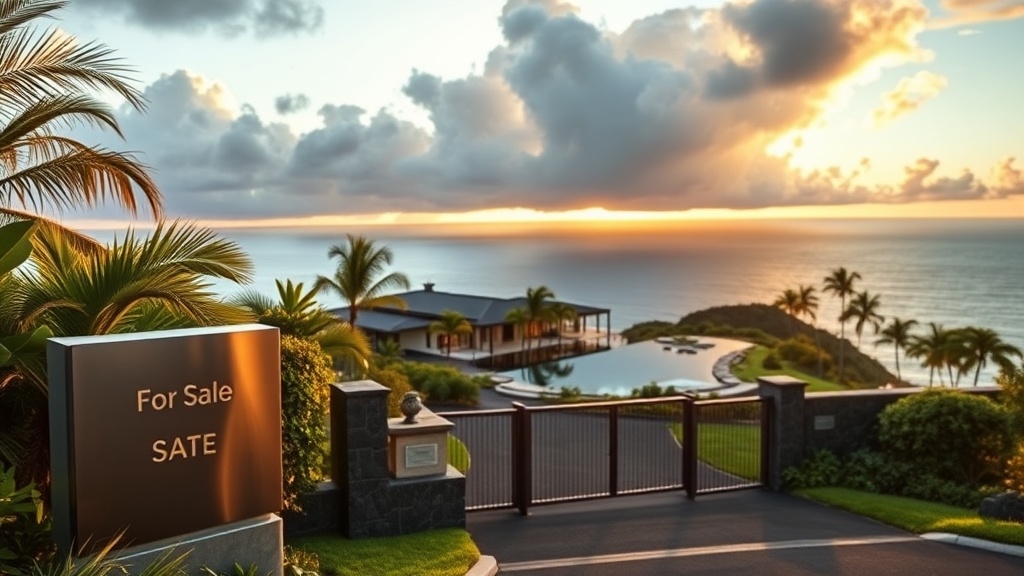
Most are concentrated in West Hawai‘i prestige corridors, including Kūkiʻo, Hōkūli‘a, and Kohanaiki. The affected inventory includes oceanfront estates, second and third homes, vacant luxury houses, and some vacation rentals that are not owner-occupied.
A recent $23 million sale in Kohanaiki illustrates the level of property likely to fall into the category.
Homes Left Out
Primary residences with a home exemption would not be included, even at high values. Affordable rentals and long-term rentals also remain outside the proposal.
How This Differs From Hawaiʻi’s Other Home Taxes
Unlike Hawaiʻi’s statewide conveyance tax, which is triggered only when a property changes hands, Bill 128 would raise annual property taxes on a narrow class of non-owner-occupied homes assessed above $4 million on Hawaiʻi Island.
That creates a clear contrast with the conveyance tax.
The state tax applies only at the time of sale, with rates that rise sharply at $1 million and would increase further on $2 million-plus transactions under House Bill 2049.
By comparison, Bill 128 would add a local annual tax tier, with final rates to be set in the 2026 budget.
Exemptions Narrow the Reach
Its exemptions also work differently.
Primary residences would keep the owner-occupied rate of $5.95 per $1,000 regardless of value, while affordable rentals and long-term rentals would be excluded from the higher tiers.
Hotels and commercial properties would also be excluded.
But resort-area residences could still be taxed.
Why Some Luxury Homeowners Oppose It
Rising annual carrying costs are at the center of opposition from some owners of high-end second homes, luxury condos, and speculative residential land.
For these owners, Bill 128 represents a sharper recurring expense, with the new tier applying to residential properties above $4 million at $13.60 per thousand dollars beyond $2 million.
Concerns About Tax Burden
Because the measure targets non-owner-occupied properties, affected owners argue they are being singled out for a growing share of public revenue needs.
Some view that shift as a challenge to wealth preservation, especially in a market long defined by relatively low effective property taxes.
Worries Beyond the Bill
Opponents also focus on market perception.
They contend that multiple proposals aimed at high-value property create uncertainty around luxury ownership, even as owner-occupied homes with exemptions remain protected from higher tiers.
What the Luxury Tax Could Mean for Sales
Sales at the top of Hawaii’s housing market could face a more selective tax environment if lawmakers advance new levies on high-value transactions and non-owner-occupied homes.
For most local buyers, the effect appears limited because homes under $2 million would see lower conveyance taxes, while primary residences remain exempt from proposed luxury increases.
Luxury sales above $2 million could absorb higher closing costs under marginal tax changes.
Second-home demand in West Hawaii may soften as 842 ultra-luxury properties face added pressure.
Revenue could redirect market priorities through affordable housing support, rental conversions, and Hawaiian Home Lands funding.
Agents and sellers may watch tourism impact closely, especially where investment demand shapes pricing.
Still, first-quarter Oahu luxury sales rose 106 percent, suggesting high-end activity has remained resilient despite growing tax uncertainty.
Assessment
The proposal has intensified scrutiny of Hawaiʻi Island’s high-end housing market. If enacted, it would raise costs on qualifying sales and could alter pricing, timing, and buyer behavior at the top of the market.
Supporters frame the measure as a targeted revenue tool, while opponents warn of reduced activity and broader ripple effects. Its fate now carries added significance for luxury owners, developers, and local officials tracking housing-related revenue and market stability.