Key Takeaways
- Sustainable energy initiatives, such as large solar farms, can influence nearby property values, often leading to a decrease.
- Real estate investors need to be aware of the potential risks associated with properties close to these installations.
- Balancing sustainability goals with property investment strategies may present new opportunities for savvy investors.
Navigating the Impact of Solar Farms on Real Estate
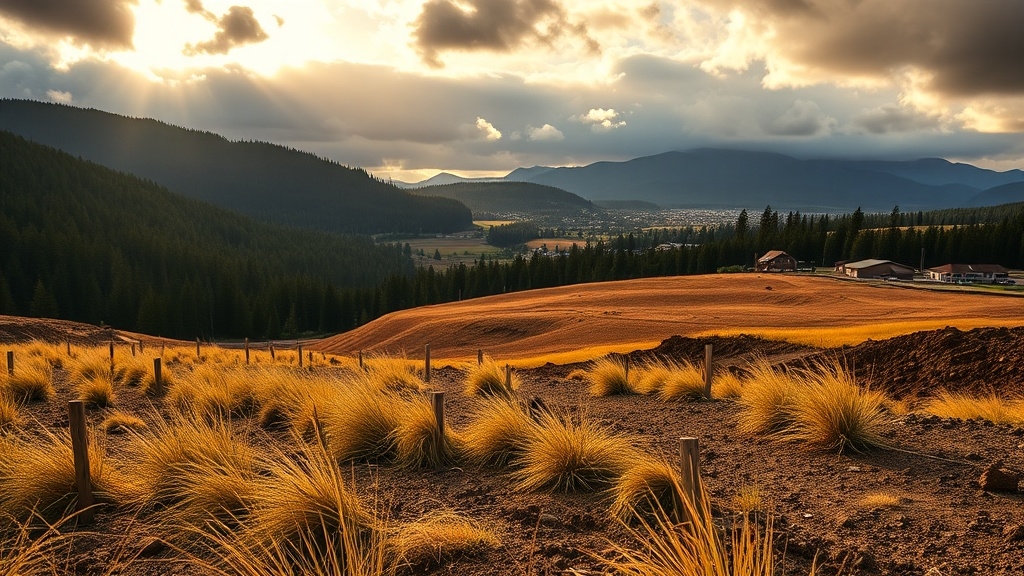
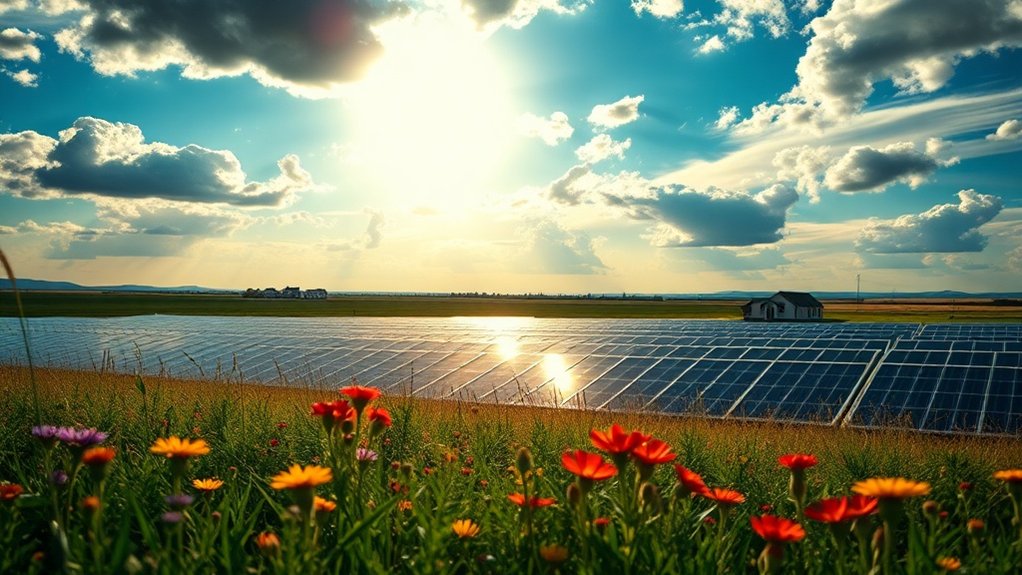
Driving past a massive solar farm, you might feel a sense of conflict. On one hand, sustainable energy shines bright for the future.
On the other, plummeting property values near these installations could raise your eyebrows a bit. It’s a brave new frontier for seasoned real estate investors.
Nearby homes are seeing dips in value, hidden risks that savvy investors need to weigh seriously. Understanding this balance between sustainability and investment could reveal new opportunities.
Understanding Property Value Trends and Solar Farms
When it comes to understanding property value trends around solar farms, you’ve got to roll up your sleeves and dig into the data.
In today’s property market, solar economics play a significant role in shaping real estate values, especially near utility-scale solar farms. Studies have pinpointed that residential properties close to these solar giants see a value dip, typically between 1.5% and 4.8%. Research shows that rural agricultural lands within a two-mile radius actually experience a boost, seeing an increase in value by as much as 19.4%. The effect fades as you move more than three miles away, where the market rebounds.
In states like California, Connecticut, and Massachusetts, these declines are negligible, reflecting stronger local acceptance.
On large-lot properties, you’ll notice stability and sometimes value growth. Their size provides a buffer from impacts.
Meanwhile, agricultural and vacant lands are seeing skyrocketing values, ramped up by the lucrative leasing opportunities solar farms offer.
Recognizing these nuances gives you the upper hand.
You’re ready to traverse the terrain with a rugged sense of adventure and freedom.
Factors Driving Depreciation Near Large Solar Installations
You’re standing at the crossroads of real estate adventure, where massive solar installations and property values intersect. The tale begins with solar farms larger than 5 megawatts.
These are the giants influencing property values for homes within 0.5 miles, with declines reaching up to 7.9%. Imagine yourself as both explorer and strategist in this complex setting. You need to see how glare and aesthetics come into play, perceptually driving down values.
Residents’ perceptions, driven by unsightly views and glare, can redefine this grand adventure, influencing market behaviors and sales prices. Research from the Proceedings of the National Academy of Sciences highlights how residential homes within three miles of solar sites can see a decrease in value, accentuating this perceptual impact.
However, with the right marketing strategies and community engagement, you can maneuver through these challenges. Understand your local market and engage with the community. Recognize these perceptual hurdles as keys to aligning interests between solar farms and property owners.
Rural vs. Urban: Regional Impacts and Variations
Even in the midst of the rolling fields and bustling city streets, you possess the power to turn challenges into opportunities. When you’re maneuvering through rural property or urban development, understanding the regional impacts of big solar farms becomes essential.
In rural areas, solar farms can depreciate property values by 1.5% to 5.8% within 0.6 miles. Yet, agricultural land benefits as demand and lease payments increase surrounding land value. Despite declines in residential values, stability exists through consistent income from land leases. Economic studies indicate that communities near solar farms may experience minor positive changes in overall property values, suggesting potential benefits to some property owners.
Urban development tells a different story. Solar installations often bring a neutral to positive influence on property values due to better integration and enhanced tax bases. Urban projects can support schools and add amenities while benefiting from existing infrastructure.
Dissecting the Influence of Visibility and Aesthetics
Although solar farms may seem like a hurdle for property values, they also present a thrilling opportunity to steer and seize in real estate. You’ll find visibility concerns at their heart, affecting property values noticeably within 0.5 miles due to aesthetics. But don’t worry, beyond 3 miles, these impacts disappear.
| Distance | Impact Percentage |
|---|---|
| Within 0.5 mi | Up to -7.9% |
| 0.5-3 mi | Dwindles gradually |
| Beyond 3 mi | No effect |
| High glare | -5.4% to -6.9% |
| Midwest Sites | +0.5% to +2% |
Aesthetic preferences matter. Since the 1970s, people have been fretting over solar farms’ looks despite scant evidence supporting dips in value. Visual perceptions guide community concerns, but well-engineered environments can mitigate glare and boost appeal. These engineering solutions are akin to the safety precautions emphasized in natural gas usage, ensuring the sustainability and harmony of energy infrastructure within communities. Harness region-specific strategies and your understanding of these trends. You’ll ride the waves of real estate free and undeterred.
Navigating Investment and Policy Considerations
Welcoming the challenge head-on, you’ve examined how visibility and aesthetics impact property values, and now it’s time to steer through the investment terrain.
Stay ahead by understanding market trends. Larger projects might dim property values from poor screening and lack of community engagement.
Research indicates that residential homes within three miles of solar sites saw an average value decrease of 4.8%, highlighting the impact of solar installations on property values. Yet, solar farms provide economic stability. More favorable than warehouses or cluttered developments, they offer long-term, low-impact land use that neighbors often prefer.
Smaller solar endeavors? They can be neutral or even beneficial to property values.
Land use strategies emphasize zoning aligned with solar benefits. Policies demand a keen eye, balancing economic and aesthetic concerns.
Research shines light on the road ahead—integrate findings for informed decisions.
In practicality, pair solar success with smart community dialogue. Engage locals to bolster cooperation.
Agricultural lands blossom with value spikes, at times soaring by 19.4%, reflecting a lucrative opportunity.
Arm yourself with these insights for a stable investment journey, where risk is tamed, and growth welcomed.
Assessment
You’ve got the grit to turn challenges into opportunities. Sure, properties near solar farms are taking a hit, but you’re savvy. You’ll assess market trends and leverage zoning insights like a vintage compass guiding you through uncharted territory.
Immerse yourself in the data. You’ll find those hidden gems that others overlook. Use the power of sustainability while protecting your investments.
Your quest for freedom and adventure in real estate isn’t just a journey—it’s a revolution. Welcome it.