

Key Takeaways
- House hacking can be a powerful wealth-building tool with low barriers to entry.
- Systemizing your business and partnering with the right people unlocks long-term freedom.
- Co-living is an emerging, cashflow-focused strategy with cultural and financial advantages.
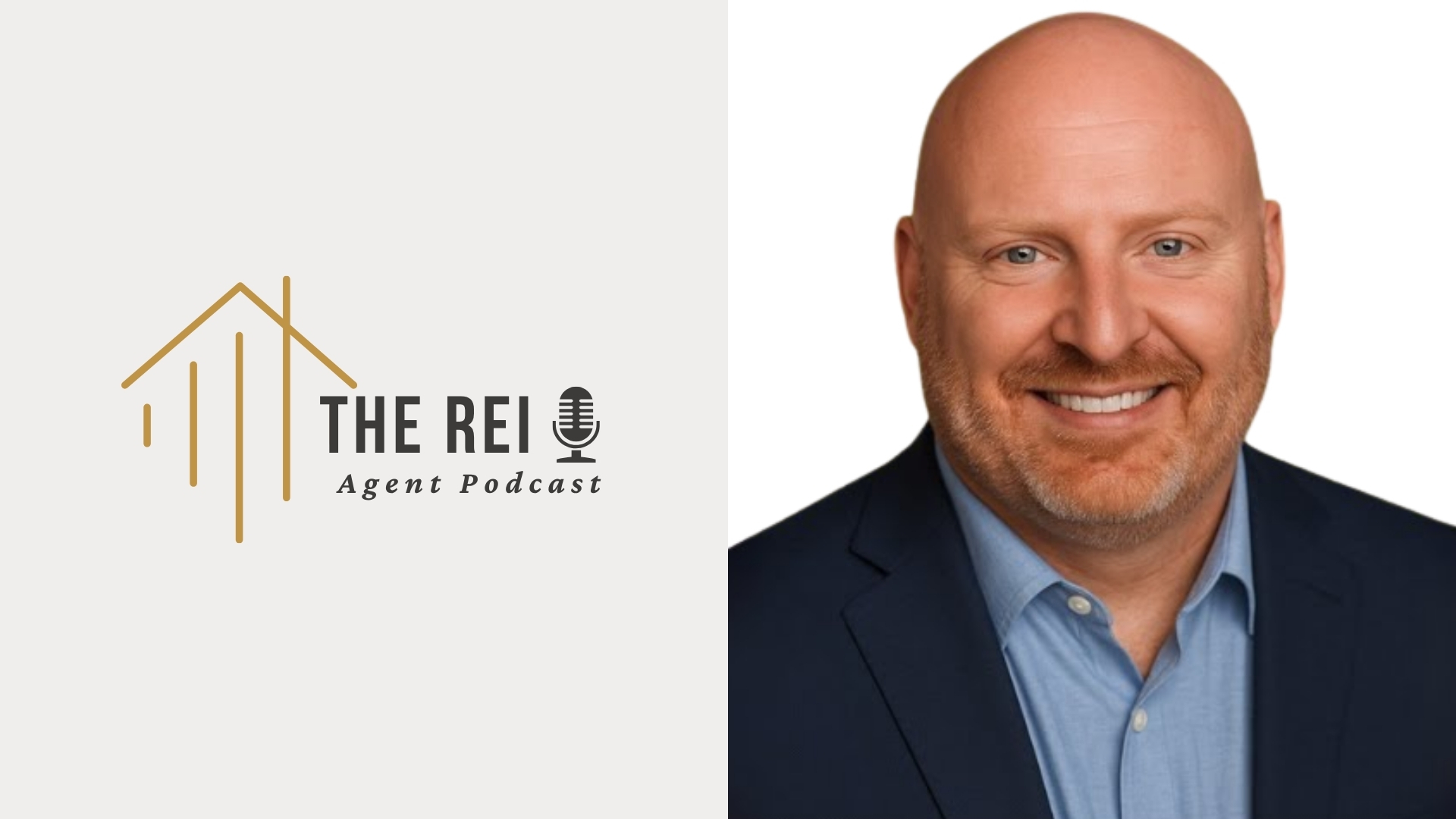
The REI Agent with Craig Curelop
Follow and subscribe to The REI Agent on social


From Burnout to Breakthrough: A Real Estate Journey Begins
When Craig Curelop first stepped into the world of real estate, he wasn’t chasing Instagram glory or overnight success.
He was simply trying to escape a soul-crushing 9-to-5 and build a life of freedom.
This episode of The REI Agent Podcast dives deep into Craig’s powerful story—from sleeping behind a curtain while renting out his bedroom on Airbnb, to scaling a thriving real estate team and portfolio that now supports a peaceful homestead life in Idaho.
“I literally stayed behind a curtain in the living room while guests came and went—just to make the numbers work.”
Craig’s story isn’t just about house hacking. It’s about bold decisions, uncomfortable growth, and unwavering faith in what’s possible when you bet on yourself.
When Sacrifice Meets Strategy: The Rise of the FI Guy
Craig didn’t stumble into success. He engineered it through persistence and an uncanny ability to spot opportunity where others saw risk.
After his first house hack in Denver, achieved with only 3.5% down, Craig was hooked.
He went on to buy several more properties, each one inching him closer to financial independence.
“I was living for free and making $400 a month while living there. I was like, okay, I can make these sacrifices now.”
He didn’t stop there. As others began asking for his help, Craig accidentally became a real estate agent. Soon, referrals turned into clients.
Clients turned into closings. And closings turned into a booming business.
100 Deals in 12 Months: The Relentless Hustle of a Mission-Driven Agent
Craig wasn’t just working hard, he was working with purpose. In his first full year as an agent, he closed over 100 deals, most of them helping others repeat the house hacking blueprint.
“There was a time when I literally worked every Saturday and Sunday showing homes. I did not have balance then.”
But Craig knew hustle had an expiration date. Burnout was real. And he didn’t want to be stuck in the transaction treadmill forever.
So, he built a team.
From Lone Wolf to Leader: Scaling a Team Rooted in Purpose
Craig’s next leap wasn’t into a bigger deal, but a bigger vision.
He created The FI Team, a group of like-minded agents committed to helping others achieve financial independence through real estate. Every team member was expected to be not just an agent, but also an investor.
“We’re not just trying to do deals—we’re helping agents build wealth so they don’t have to do this forever.”
Partnering with Ben Kinney’s organization, PLACE, Craig unlocked new levels of systemization, scalability, and sanity.
The result?
A team that 4X’d production year-over-year while giving Craig his time and life back.
Reimagining the Living Experience: The Co-Living Model That Changes Everything
Craig’s latest chapter isn’t in a high-rise or commercial park.
It’s in co-living, a revolutionary rent-by-room model infused with culture, intention, and connection.
These aren’t just rental homes, they’re thriving micro-communities.
“We create households where people want to stay, take care of the space, and grow together.”
With plans to raise a fund focused on cashflow-heavy markets, Craig is now building a new future where others can achieve abundance through values-driven investing.
The Morning That Changes Everything: Routines, Faith, and Focus
At the core of Craig’s transformation is discipline. Each morning starts at 5 a.m., with scripture, silence, and sweat.
His phone stays off. The noise of the world doesn’t enter until he’s grounded in purpose.
“I’ve come to believe the Bible is every book combined into one.”
That clarity carries through everything Craig does—from running a high-performing team to raising chickens on his Idaho land.
Craig’s Golden Rule: Get Uncomfortable Every Day
Craig closes the episode with a challenge that every aspiring agent and investor needs to hear:
“Every day, do something that scares you. Compliment a stranger. Ask for a discount. Make the uncomfortable normal—and growth becomes automatic.”
Success doesn’t belong to the lucky.
It belongs to the brave. And Craig’s story is living proof that you can go from broke and boxed in to fulfilled and financially free if you’re willing to do the work.
Build the Life You Want, One Brave Decision at a Time
Craig Curelop didn’t wait for permission. He didn’t follow a script.
He rewrote the rules—and built a life of intentional wealth, purpose, and peace.
Whether you’re a seasoned investor or just dreaming of your first deal, Craig’s journey reminds us that success is a byproduct of courage, consistency, and clarity of vision.
“Start with where you are. Use what you have. Grow into who you’re meant to become.”
Stay tuned for more inspiring stories on The REI Agent podcast, your go-to source for insights, inspiration, and strategies from top agents and investors who are living their best lives through real estate.
For more content and episodes, visit reiagent.com.


Contact Craig Curelop
Mentioned References
Transcript
[Mattias]
Welcome to the REI Agent, a holistic approach to life through real estate. I’m Mattias, an agent and investor.
[Erica]
And I’m Erica, a licensed therapist.
[Mattias]
Join us as we interview guests that also strive to live bold and fulfilled lives through business and real estate investing.
[Erica]
Tune in every week for interviews with real estate agents and investors.
[Mattias]
Ready to level up?
[Erica]
Let’s do it.
[Mattias]
Welcome back to the REI Agent. Mattias here. Erica is needing to do PT, so she can’t join again.
She was expressing frustration about how she really just seems to have to focus on that at the moment and not be as present for these podcasts. So she misses you all. Sorry, we hope that she will get back in here soon.
But getting her back up and running is the priority for sure. So things have been really good in that regard. She has been walking around and she’s noticed a lot of different types of improvements just from simply being able to turn in a shower as opposed to having to awkwardly pivot on her good leg.
So great improvements there. We’re really excited. Things feel a lot more normal.
She actually was able to bake some sourdough bread yesterday. She was baking something every weekend before the surgery. And then when the surgery happened, she just realized how much walking and stuff is involved with baking and how hard that is.
When you’re using crutches and pushing a cart around to literally do everything, it’s just not easy to get flour out of the pantry, to get all the ingredients together, put them in the mixer. She has to come back and forth to fold the sourdough. I don’t know how to do sourdough, but it’s hard.
It’s hard. And how do you get something out of the oven on crutches? Anyway, that was a really good indicator.
It was nice to see her be able to do that again. And she also just made an amazing loaf. So if you’re into sourdough or if you know anybody who does sourdough, sometimes they don’t turn out as well as others.
She tells me they don’t turn out as well. I always think they look great and taste amazing, but she was really happy with how it turned out. So it was a good day for her to be able to do that again.
And actually she joined a CrossFit class today for the first time. It was a Murph prep. If you’re not familiar with Murph, it is a Memorial Day workout where people, you run a mile, you do 100 pull-ups, 200 push-ups, and then 300 air squats, and then you run a mile again.
So she was actually like, you know, I can do most of this stuff. She couldn’t run. She walked 100 meters and then she did push-ups and was able to do pull-ups.
And I think she did air squats to box, which she’s been doing in PT. So hopefully she didn’t get in trouble because she did PT afterwards. So hopefully she’s not in trouble for doing all that.
And hopefully she doesn’t pay for it later. But yeah, like I said, kind of getting back into the groove of things. We have a really good guest today.
I don’t want to spend too much time blabbering about CrossFit, although I am always in on a mission to convert people. But anyway, we have Craig Curlap today on the show. And if you’re not familiar with him, he wrote the House Hacking Strategy book for BiggerPockets.
So house hacking is one of the strategies that is the easiest to get started with and definitely one of the most recommended ones. One of the most fundamental ones that I think people should do when I’m writing my book about no and low money down strategies for kind of getting started in real estate sales and also in investing, house hacking is just the way to go. You can do low down payments, three and a half percent FHA.
If you’re in a rural area, you could do even 100% financing with the USDA loan. You can get into conventional financing, sometimes even at 3%, 5%. Check with your lender.
But you can do that, run out rooms, and then rinse and repeat. So he did that multiple times in the Denver area, was working at BiggerPockets and ended up writing the book on it. Became very famous for that strategy and became, he was, well, I don’t wanna tell his whole story, so we’ll just let him do it.
But anyway, Craig is a great listen, so definitely check it out. He is an investor and an agent, so it’s kind of perfect for the show. And he’s actually living in a different state now, kind of having a well-balanced life where he is kind of more nine to five, still very busy and very successful, but he’s not having to grind kind of like a lot of agents have to on the weekends, open houses, showings, evenings, et cetera.
So great example of what you can do if you’re a little bit intentional and you work out systems to kind of set things up. So without further ado, here’s Craig. Welcome back to the REI Agent.
I had the honor of having Craig Curl up today. Craig, thanks so much for joining us.
[Craig Curelop]
Mattias, thank you so much for having me, man. Pumped to be here.
[Mattias]
Yeah, so I guess, do you wanna just start with how you got into real estate? I can say that you, obviously you have the FI team in the background. You’ve got a house hacking book.
That’s a BiggerPockets book, right?
[Craig Curelop]
Yep, yep, yep.
[Mattias]
Yeah, that’s awesome. So we got a perfect guest here of having agent experience and investing experience. So I guess, yeah, how did you get started in real estate?
[Craig Curelop]
Yeah, so I guess if we take it back to my life before real estate, I was working in California at a venture capital company, at a company that I hated. And I was looking for ways out and ways to retire early and ways to build wealth in kind of like a fast, I guess like fast but reliable way. And real estate kind of kept coming across my path.
So one of the interns that I, I kind of ran the intern program. And so one of the interns, his dad had just retired at like 45 because on like a nine unit building. My landlord I noticed was coming to collect $2,000 checks from me and 20 other units in the building.
And I was like, oh, wow, that’s a lot of money. And then I kept seeing it in books. So it was kind of like one of those things where it just kind of kept popping up.
And so I was drawn to it. And so I read the books and I started talking to people and I started interviewing people. And then I came across BiggerPockets and I was like, okay, I keep seeing the stat that 90% of the world’s millionaires own real estate.
So rather than try to be the next Mark Zuckerberg or Steve Jobs or whatever, I’m just gonna own real estate and be the guy that hopefully very little people know and can just build wealth. And so then I found BiggerPockets and then I started working for BiggerPockets because they had a job in finance. And then I got networked in with all those guys, right?
So like I was working with Scott Trench and Josh Dorkin and Bren Turner and all these guys that you probably hopefully have heard of. And they’ve all kind of became mentors to me. And within like a month of moving to Denver, I had purchased my first house and it was a house hack at the time.
So for those that don’t know what a house hack is, it’s when you buy a property with a low percent down. I put three and a half percent down, lived in one unit, rented out the other. At the time, the only way to house hack that people really knew was a duplex or triplex or a quad.
There wasn’t all these different strategies. And so I looked for a duplex and that’s what I did. But the thing is, is like it was really hard in Denver to find a duplex, to live in one side, rent out the other and actually have a cash flow.
So I lived in my living room behind like a curtain and a room divider, like a cardboard box looking thing. And I rented out my bedroom on Airbnb. That made me $1,100 a month.
And I ended up cash flowing while living in the house. I was living for free and making $400 a month while living there. And I was like, okay, I’m young.
This is like, I can make these sacrifices now. I might as well. And this will all be part of the story.
So that was kind of my first foray into real estate.
[Mattias]
Wait, so you had guests come stay at your, and you were still there behind the curtain in the living room?
[Craig Curelop]
Yeah, I literally, the women guests weren’t there. I stayed there, so they don’t want to clean the sheets like in between, like because of me, you know? So yeah, I would literally, yeah, I had guests, like a revolving door guest.
And this is back when Airbnb was, I don’t want to say it was just coming out because it had been out for a while, but like it wasn’t what it was today. Like my Airbnb, you know, like in the pictures, there was not a single photo on the wall. It was not decorated.
I had like the college, American flag, comforter, not even made. Like you probably know what I’m talking about. Like it was bad.
But it made me $1,100 a month. The upstairs made me like $1,750 or something. And my mortgage was like $2,000.
So it worked.
[Mattias]
That’s amazing. Yeah, I mean, it’s such an awesome place to be. I mean, I think anybody wanting to get started, if they’re young and flexible and able to grind like that, I mean, that’s just such a great strategy to get started because do you still own this unit?
Yeah. And I mean, I’m assuming that the equity now is insane from owning it for many years in Denver, right?
[Craig Curelop]
Yeah, yeah, I was in Denver. And that was kind of like the investment thesis on the property, right? So like the investment thesis was I was buying in a good location and it was actually great, but I could bike to work.
Actually, I could walk to work. And it would appreciate over time. And sure enough, it was like kind of like the next neighborhood over from where all the development was happening.
And so now all the development happening, it’s been eight years now, it’s starting to happen and push into my neighborhood just as I was hoping. And yeah, I mean, I bought that at like 385 and I got it appraised in 2022 for 800,000. And I haven’t gotten it appraised since.
It’s 2025 now as we record this. So the market, I don’t think has done much since then. It’s maybe, it could be a little higher, could be a little lower, I don’t know.
But that’s the huge, it’s double, you know?
[Mattias]
Yeah, that’s amazing. Yeah, it’s so cool. I mean, it’s, and again, 3.5% down and you were able to delay some gratification with having your own place or whatever and you’re able to make a little bit of money along the way. And then were you always intending to just get the next one as soon as you could or how did that work?
[Craig Curelop]
Yeah, I mean, the situation wasn’t as bad as you thought, as you’d think it was, like it was actually decent. But I did wanna get out of there. So the plan was immediately upon the year mark, I would go and buy the next house.
Okay. And so that’s what I did. Yeah, so exactly a year later, I bought a five bed, two bath house in the suburbs of Denver for a little less actually, for like 343 and I rented out the bedrooms.
So I lived in one room, I had my own privacy and I rented out the other four bedrooms. And the way the numbers worked there was that I was making probably about 3,000 bucks a month in rent and my mortgage was like 2,000. So I was pretty much living for free and making 1,000 bucks a month.
And then when I moved out, I rented out my room and you know, I made 1,200 bucks a month.
[Mattias]
Oh, that’s awesome. And through the whole time you were with Bigger Pockets, at what point did you start writing this book? When did this book come about?
[Craig Curelop]
Yeah, so after the second house hack, I was going on my third is when the book came out. Okay. And so I had written, you know, I kind of, yeah, I’d written the book on house hacking and I also got my real estate license.
So I got my real estate license for the second one and I figured, hey, if I was just gonna only do my own deals, it’d be worth it, right? In Denver at that time, it was like about 10 grand per commission. I was like, it cost me about 1,000 bucks to get the license, maybe like 500 bucks a year to maintain it.
So, you know, totally worth just doing one deal a year for myself.
[Mattias]
Yeah.
[Craig Curelop]
And so I did that for 2018, didn’t do any deals in 2018 except my own. And in 2019, I did my third house hack and my buddy who I worked with at Bigger Pockets was like, yo, like you got your license, I wanna do this too. Can you help me buy a house?
And I said no, actually. I was like, no, I’ll refer you out to somebody else. So that’s what I did.
I legitimately did not wanna be a real estate agent. And then my other buddy came like literally a month later and was like, hey, I want a house hack now too. Like, can you come look at me and look for a house with me?
And I was like, all right, fine. So I went, I looked for houses with him. It was fun, he was my friend.
It was like, we laughed and joked and it was like two bros looking at houses together. Like I’m not, well, yeah, whatever. Yeah, in a friendship way.
I don’t know if I can see your audience. I almost said something I probably shouldn’t have. So like a month later, my other friend came up to me and said, hey, I want a house hack too.
And so I was like, okay, whatever, I’ll help you out. And so him and I went and we looked at houses together and it was super fun. And I really enjoyed the whole process.
And at the end of that month after we closed, I made a check for 10 grand. And I was like, oh, well, that’s like kind of nice. Like what if I could do that again?
And so then I started doing it like with other people and I started reaching out on BiggerPockets to other people that wanted a house hack in Denver and I could show them my experience and basically just show them exactly what I did. And so that’s what I did. And I was doing like one or two deals a month pretty consistently.
I was making like 10, 20,000 bucks a month. And I didn’t know that was good. Like I didn’t, I kept my job at BiggerPockets the whole time because I was like, I don’t know if this is enough, I don’t know.
No, I had no realtor experience. I had no mentorship with being a realtor. It wasn’t until I asked David Green, who has the David Green team, a team of agents.
And I was talking to him and I was like, yeah, I’m doing two deals a month. I don’t know like if that’s enough or if that’s good. And he’s like, if you’re doing two deals a month, you’d be the best agent on my team.
And I was like, well, so I guess that is pretty good. So I left BiggerPockets. I graduated from BiggerPockets, I like to say, because it was very nice.
And then I went full time as being an investor-friendly agent in Denver and then really took off from there.
[Mattias]
Wow. Yeah, that’s awesome. And for like, you know, not really wanting to be or not really trying to be an agent, that’s a really good amount of deals to do.
So they were mostly house hacking clients. Is that correct?
[Craig Curelop]
Yeah, almost all of them were.
[Mattias]
And what were like the demographics of it? Like, I mean, was it mostly younger people that were, you know, single? Like, is that pretty common or?
[Craig Curelop]
Mostly younger, for sure. Not necessarily single. Sometimes there was like couples on board doing it, but.
Yeah, I mean, mostly like single. And by single, I mean like not married. So like, it was a boyfriend, girlfriend.
But yeah, like usually people in their 20s and 30s kind of looking to do this for the first time. But we’ve gone, we’ve probably helped people with investments of anywhere from 18 all the way to 80, so. Yeah, quite literally, I can think of two people in both ends of the spectrum, so.
[Mattias]
That’s amazing. Yeah, no, when we first were looking for a house, this was before I was an agent, my wife and I. Actually, we were just engaged at the time.
She like put a hard line to the house actually, now I own that place. And we also don’t have very many like multifamily in the area, so I think if we could have afforded a multifamily in the area and there were options, she might have been more interested in that. But yeah, no, what a great way to jumpstart your, yeah, your portfolio.
For sure, yeah. So then, now you have a team. How did that evolve over time?
[Craig Curelop]
Yeah, so it started out, so me in that first year, right, so I was doing two deals a month while working at BiggerPockets. So I left BiggerPockets and it was a little bit of like a perfect storm to where I had just written the book on house hacking, so my name was out there. I had already gone on like 100 or something podcasts promoting the book and sharing with people that I was doing this in Denver as an investor-friendly agent.
And continued, and so I had kind of people coming in that way. It was COVID, so COVID, and everyone was kind of scared for like a month, but after that, like everyone was all about it because it was, rates were at 2%, 2.5%. And frankly, like during COVID, I wasn’t afraid of it. And so showings were down 88%.
And I was like, if you want to get in the house, like I’m down if you are. And so I would just go in the houses with people and I’d talk to the seller and be like, hey, if you want to see our house, my buyer’s interested, we can take a look at it. And there was no one else to be showing.
So it was like, the market was ours. It was like, you know, the store was closed but the doors were open kind of thing. And so we were just, for like two months, we were just picking houses like super easy and was great.
And then, yeah, and then I kind of became like the expert of helping investors in the Denver area, especially like house hacking and rent by room and making stuff work. And the houses just worked, man. Like you get a five bed, three bath house and it’s going to work every time.
And so we just did that over and over and over again. I did over a hundred deals in my first 12 months of being a full-time agent. And that was, well, it was like, I mean, of course the money was good.
It was very stressful. It’s all, I mean, good thing there was COVID because there’s nothing else to do. Like everything else was closed.
So all I did was work. And so after that, I was like, I don’t know that I can do this like forever or I did. So I’m either going to have to quit or build a team.
And so then I decided to build a team of investor-friendly agents and yeah, that’s kind of how it started. And it’s evolved quite a bit since, but I’ll pause so you can, if you have any questions.
[Mattias]
Yeah, I mean, a hundred, yeah, that’s just like nonstop. And when you have that many things happening, there’s always like, you know, more problems, of course, like in transactions, et cetera. So that is a lot of volume to handle by yourself.
How did you start getting agents? I mean, were they people that you knew? How’d you recruit?
Were they new agents or were you recruiting others from other firms, et cetera?
[Craig Curelop]
So I didn’t know I wanted to start a team. A client of mine got his license and asked if he could like partner with us, basically. And like basically come up under me and can I teach him and stuff?
And I was like, yeah, sure, right? And again, like, I didn’t know what I didn’t know. My splits were very overly generous.
We would just give leads out, like no questions asked. I made like every mistake in the book, because again, I didn’t have that like mentorship for it. And so, and also starting at such a easy time to be in real estate, I’ll say.
It was like, you know, I built a team and built it quick and it was really good and really successful, but I think anybody could have built a real estate team in 2020, 2021 and been pretty dang successful. So it’s not saying much.
[Mattias]
Yeah, but yeah, it’s all about how you continue right after the dust settles. I mean, I think it’s, I’ve been seeing a lot of people looking for a greener pastures, switching firms, doing all sorts of different things. Now that things have kind of slowed down a little bit, for whatever reason right now, my sales are booming.
And I know that’s definitely not the case throughout the country. I think there’s a lot of markets that have slowed down. I mean, has Denver slowed down overall?
[Craig Curelop]
Denver has slowed down a little bit for sure. We are like up, we’re doing really well this year too. And I don’t know why, I think it was because we’re, we’ve kind of figured out, we can talk about this a little bit later, but I mean, yeah, this year we’re up like four X over last year at the same time.
The market is at stable, maybe slightly up, but yeah, we’re super outperforming the market right now. And yeah, just a testament to like the team and the stuff and the, you know, like a lot of the stuff that we’ve grown through.
[Mattias]
So what kind of admin support have you hired or at what stage did you do that? You got the person that joined, a past client. Did you get a transaction coordinator or just some sort of general admins in thereafter or how’d that work?
[Craig Curelop]
Yeah, so I did have a transaction coordinator during that 100 deal span when it was just me. Sure. So, so transaction coordinator, still have her today.
She’s awesome. The agents were kind of the next, I think I’ve got two or three agents and then I hired a VA. The VA is still with me today.
He’s awesome. And then I hired like a operations person and this is all probably like towards the, I think I hired the VA like mid 2020 and then I hired the VA probably like five or six months after late 2020. And then she, we parted ways about two years ago and then hired a new operations person who is absolutely incredible.
So right now our team looks like me as the operator. We’ve got a head of operations. We’ve got a VA and we’ve got our transaction coordinator and we’ve got, you know, our other kind of third parties, people that we work with.
[Mattias]
Okay. I’m curious what you have your VA doing. I’m asking for selfish reasons.
I’ve got, I’ve got a VA that helps with this podcast and has done some odds and ends throughout the, for transactions and whatnot. So I’m curious what all you’ve delegated because that’s kind of a hot topic too. I mean, I think this gets sent out there a lot, maybe a little bit more in the investing world than in the agent world.
But yeah, it’s a great way to delegate for not that much money.
[Craig Curelop]
Yeah, it’s great. So my VA, he does email and calendar. He’ll, so yeah, so instead of me filtering my emails, he’ll just like have an important folder and he’ll put anything that’s important in there and I maybe have five or seven emails to answer every day instead of like filtering through hundreds.
Yeah. So that has saved me. He updates our CRM, he updates all of our trackers, all of our data, all that kind of stuff.
And so he looks and finds opportunities in our CRM and kind of brings it to agent’s attention. Hey, this is this, this is that, this is this. A lot of data stuff and just like helping with tracking.
That’s probably his biggest thing is just like tracking and then lots of like one-off tasks, you know, massive uploads to the CRM or some CRM cleanup.
[Mattias]
So now you have your business more systemized and delegated. Does that A, free you up more to invest more? Are you kind of focused on other forms of investing now other than just house hacking?
What does your investment portfolio look like now?
[Craig Curelop]
Yeah, so one big element that I should talk about that was like transformed our real estate agent team just before we moved from that subject is we partnered with this company called Place. Have you ever heard of them?
[Mattias]
I don’t think so, no.
[Craig Curelop]
So Place was founded by Ben Kinney and Chris Suarez, the number one and number two in the country. And they’re basically like the backbone for the top teams in the country to basically take them from like, hey, you’re pretty good in your market to, okay, like you’re building a real business and being part of something that’s like bigger and better than ever. And so it totally transformed our company.
I said earlier that we’ve like 4X this year, a lot of that is because of the systems and stuff that we’ve partnered with them on and we’ve been implementing and really it’s been a scratch the surface there. So we’re super excited to grow with them. And yeah, that’s been a huge, huge testament to our success.
[Mattias]
Oh, that’s awesome. Yeah, okay. So, I mean, there’s still tons of growth happening, obviously, 4X is a pretty good growth.
[Craig Curelop]
Yeah, I mean, it’s obviously not sustainable, but hey, we’ll take it. You know? And yeah, so yeah, there’s a lot of stuff evolving.
We’re able to attract more people to the team. We’re able to partner with more people. We’re able to just help more and more residential people as well as investors out and just our whole team’s mission is like, hey, is to help people through, help people build financial independence through real estate investing.
So that’s kind of what, that’s what we do. That’s awesome. In terms of like, because of that partnership, a lot of the pressure and like mental bandwidth has been taken off of me so that I can focus on some other things.
I still do some deals myself. I’ll probably do maybe 24 to 30 deals myself a year. And ideally, one thing that works really well in Denver for investing is co-living.
And so we have a lot of people buy these co-living homes. So single family home, kind of like what I did on that second house where I lived in one room, rented out the other. But these days, a five bedroom doesn’t really work.
You kind of need at least six, but ideally seven or eight. Wow. We are, we’ve built a management company to help manage these co-living homes so people can still achieve these good cashflow numbers without having to do all the work.
And we’re starting a way to educate people on the co-living space as well. And then I’ve bought a decent amount of them myself too. That’s awesome.
[Mattias]
Okay, so you have like a property management, it’s kind of specialized in like a rent by the room kind of thing. And when you have agents come on, I mean, how often are you also mentoring them in investing in themselves? Like, I mean, I think you’re, are they usually already investors?
I mean, how much, I would imagine everybody’s kind of also trying to purchase real estate as investments in the team.
[Craig Curelop]
Yeah, for sure. So sometimes they come with one, sometimes they’re interested in investing. When you become a real estate agent, it becomes a little bit harder to buy a property because you go from a W-2 to 1099.
It’s two years of like income to typically be able to afford a house. And so when it comes time and they’re ready, absolutely, I think almost everyone on our team has at least one investment property. And if they don’t have one, then they’re gunning for one.
Like they’re saving up, they’re ready to go, or if the right opportunity comes along, they’re gonna take it. And so, yeah, I mean, it’s super exciting to kind of be on a team where investing is a primary focus. And we’re trying to not just, we’re not just trying to have our agents like spin the wheel and do deals, do deals, do deals, but we’re actually trying to help them build wealth so that they can eventually not do this forever.
[Mattias]
Right, at least have options, right? Like not be stuck. Yeah, I wanna be the 90-year-old agent still showing up for office hours.
[Craig Curelop]
Exactly, exactly. So props to those people like always wanting to learn even though they’re old.
[Mattias]
Yeah, yeah, it’s the difference between wanting to and having to. I mean, I think like I am a busy person and I would wanna be engaged in something always, but I like to have options and I like to kind of pursue things if I find that I’m interesting. So I don’t like being stuck.
For sure, yeah, I totally agree. So currently your sights are set on still investing as well, but you’re looking to kind of with this new, you said place system, you’re looking to grow the team more. Is that gonna involve more agents, higher volume per agent now or all of the above?
[Craig Curelop]
Yeah, so that’ll be more agents. So it’s attracting more agents and also getting our agents into higher production. So right now we’re doing both, right?
Our agents are currently producing more and now we are hiring more agents, that’s in Denver. And we’re also gonna look to spread into different markets. So looking to grow a team up here in Idaho is actually where I live now.
We’re opening up a team in Arizona and we brought a team in San Diego as well. So looking to expand markets too. And yeah, because the system that we have with place is very rip-off and duplicatable in terms of like this works, can work in any market, in any place.
And so it’s just a matter of putting the work and getting it done.
[Mattias]
That’s awesome. It’s exciting. Have you, and now with your investment portfolio or with what you’re looking for is for investments yourself, are you taking on different things like, apartment buildings or anything or Airbnb’s?
Have you done any other strategies as well?
[Craig Curelop]
I’ve done Airbnb’s, I don’t love them. So now I just, I do the arbitrage where I rent it out to somebody who Airbnb’s for me. And they just pay me a steady rent each month, which I love that.
For multifamily, I’m in a couple of like syndications as a limited partner, two or three multifamilies, but I don’t do that myself. I actually don’t want to, I don’t care to. I think that’s a route that a lot of people go, but I try to go like the different way from other people because then it gets oversaturated and the deals dry up and then like things don’t happen.
And so our next step in terms of really scaling is we’re gonna start scaling co-living. In a way to where we’re gonna likely, towards the end of this year, we’re gonna plan to raise a fund to buy these co-living homes and these things cashflow. I mean they cashflow pretty good in Denver, which is an appreciating market, but we’re probably gonna go to some markets that are a little bit better with cashflow because I look at my portfolio as kind of like a stocks and bonds like approach.
Like the stocks you buy for appreciation, so those are my Denver properties. Well I’d like to go to some other markets that are a bit heavy on cashflow because my return on equity right now is not great. So go into a cashflow heavy market and that’s kind of like what the plan is for probably the second half of this year.
Yeah, we’re excited to kind of grow and that’s how we’ll kind of do our commercial stuff.
[Mattias]
That’s cool. So maybe more Midwest kind of markets. I think typically it’s like if you’re in the coast more, it’s gonna be more appreciation than you go in.
It’s gonna be maybe a little bit better cashflow.
[Craig Curelop]
Further from the ocean. Further from the ocean is more cashflow usually, yeah. But yeah, I mean Texas is pretty good.
Florida is actually pretty good. It’s like those are our two. Okay.
Perhaps North Carolina. Actually not a ton in the Midwest, mainly because with co-living, you kind of do need like some people, like places where people actually want to live. It’s just like there are places kind of like Denver and Austin like 10 years ago where like they’re just kind of starting to pop off.
The prices haven’t really caught up to what they probably will be. And so those are kind of the markets that we’re being part of.
[Mattias]
Okay, that’s cool. Yeah, I think I heard David Green once talking about how you can build like kind of an investment pyramid, if you will. So like you kind of get your base cashflow at the start, at the bottom, and then from there you can kind of get into more maybe equity plays or kind of higher dollar, riskier moves kind of thing.
And I think I’m similar to you, not to the extent our market would definitely be more appreciation than cashflow heavy. So I’ve burned most of my property, so I’m doing decently on both ends. But yeah, I’ve thought about how to also kind of explore other markets to increase that cashflow potential as well.
So it’s interesting, like we’re both kind of having the inverted pyramid, if you will.
[Craig Curelop]
Yeah, well, I think like I heard that advice too. And when did you hear it? I’m curious.
Like when?
[Mattias]
It was actually in Denver last year at the Better Life Tribe conference.
[Craig Curelop]
Oh, okay. Yeah, like I think that advice like was fantastic advice when like the rates were down and cashflow was easier to obtain. My approach has totally changed.
My approach now for someone starting out is buying an appreciating market. And like, because you’re gonna be young, you’re gonna be cash, like you’re gonna be working like whatever, you know. But the appreciation is gonna make you way wealthier than the cashflow.
Like my cashflow for my properties, it’s just allowed me to sustain them really. Maybe I’ve been able to, you know, spend a little bit of that, but mostly just goes back into the properties. Whereas, and that portfolio has become like a multimillion dollar equity thing.
So if I want to retire right now, perhaps I could sell my properties in Denver, now go buy them in Indiana or something where I get a eight or 10% cash on cash return. And then I could still be making pretty good money passively. And you get there much faster than if I were to try to buy that same portfolio in Indiana directly.
[Mattias]
That’s true. Yeah, no, that’s a really good point. And I don’t regret either.
You know, I had a lot of equity growth through the pandemic. So it was very nice to be in this area for that. Again, nothing I’m sure quite like Denver or San Diego or any of those markets.
But no, that’s awesome. And so when you’re doing co-living, you’re still talking about like the rent by the room kind of model, right? This isn’t like assisted living.
[Craig Curelop]
No, so rent by room, it’s funny. There’s like kind of two ways. I called it rent by room for like the longest time.
And that’s if you read this book, it’ll say rent by the room in there. Co-living is a little different, like in the smallest way. And I don’t really do need to get into semantics, but it’s, you know, with rent by room, you’re just renting out room.
With co-living, you’re really trying to create a culture within the house so that people want to stay. People want to live there. People want to take care of the home.
And like, it’s like a household, kind of like the way my business partner, who we’re doing this co-living stuff with, the way he talks about it is like, he got into this because he used to live with hippies. And there would be like 20 or 30 people living in this massive home. And they would all do a little bit to take care of the home.
And like, that was kind of like the mission, right? And so that’s kind of what we’ve adopted is the mission of the home. These five, six, seven, eight, up to 10 people oftentimes is to take care of the home.
And they grow closer in that because when you do something together to make something happen, you get closer to people. That’s why military people and veterans are always like, they’ll die for their brothers even well after they’re out of the army, right? Like, it’s nowhere near that kind of camaraderie, but it’s that principle that applies.
[Mattias]
That’s awesome. That’s really cool. You could get like a fixer-upper and have them flip it for you too.
[Craig Curelop]
Maybe that would take it to the next level, dude. You should do that, yeah.
[Mattias]
I’ll get back to you in a year. I’ll tell you how it goes. We have, I talk about it a lot on the podcast, but we’re CrossFitters and we’d like to have this like extreme bond with the people that we work out with.
So I get that completely. And that’s a really, I mean, that is a really cool model. I haven’t really heard it described that way, but it makes a ton of sense.
[Craig Curelop]
Yeah, yeah, and it works. That’s what keeps the occupancy high. It keeps the people wanting to stay.
You’ve got a really nice place to live that’s well taken care of, that the landlord cares about. And it’s like a third of the price as rent or half, easily half the price as rent in other places. I mean, it’s like a no-brainer.
It’s wins all around, you know?
[Mattias]
Yeah, and then I would imagine people kind of start recruiting as well. They could probably have a wait list basically for the house if there’s ever a vacancy. There’s somebody waiting to fill it.
[Craig Curelop]
Yeah, usually other houses too. But like, and it’s nice because the people from house A like the system, like how things are run. So then they just go to house B if they want to move.
Their job moves them to a different side of town. Oh yeah, we’ve got a house over there. Like go live in this one.
And it becomes super easy for everybody.
[Mattias]
Wow, that’s really cool. I love that. So you’re in Idaho.
Are you also selling, you’re talking about doing still, like you’re back to your 24 deals a year. That’s in Denver?
[Craig Curelop]
Yeah, most of those are in Denver still. So I still help primarily people in Colorado. And again, like I know Colorado off the back of my hand.
I’ve walked thousands and thousands of houses in Colorado. And they’re all about the same. You know, there’s like probably seven to 10 layouts that I know all of them pretty comfortably by just looking at pictures.
And you know, we leverage our team. We leverage our showing agents. And still I’m able to definitely provide people a good quality service.
Yeah.
[Mattias]
That’s cool. What took you out there? What made you move?
[Craig Curelop]
Freedom. We was just, it was just kind of like, my wife and I, we were in Denver. We never really felt like it was home.
And we were just kind of wanting some land. You heard the chickens in the background. You know, kind of wanting the homestead and all that.
And it’s just a lot harder to do that in Colorado. A, with the prices. B, with just, there’s a lot of people.
So we wanted like less people and just more chillness. So we landed on Northern Idaho, which never would have guessed in a million years that I would be here. But here we are, here I am.
[Mattias]
Is that in the mountains? I’ve seen beautiful pictures from Idaho. I’m not super familiar with it.
[Craig Curelop]
Yeah, it’s mountainous. It’s like a lot of pine. Like, just like, yeah.
It’s not quite like the majestic mountains of Colorado. But they’re very prevalent. Like we have three, like there’s mountains all around.
You know, 360.
[Mattias]
Yeah. That’s, that sounds beautiful. Now, if my wife were on the podcast, unfortunately she couldn’t today.
She’s doing physical therapy for her meniscus tear. Yeah. She would be asking you about how you kind of keep yourself balanced through all this craziness.
I mean, you’ve done some pretty amazing things. It’s been very, very busy. Do you have any routines or, I mean, what are your tips for keeping your head right?
[Craig Curelop]
Yeah, so I’ve had a morning routine for years and I very rarely stray from it. It kind of started with how Elrod’s book, The Miracle Morning. And I’ve kind of transformed it to be the way that I need it to be.
But I’ll wake up pretty much always at 5 a.m. And I’ll, you know, the first thing I’ll do is I’ll be in the Word. I’ll read the Bible or just kind of be with my own time with God for like 30 to 45 minutes. Then I’ll go hit the gym, come back, make a quick protein shake, take a shower, and kind of start the day.
So definitely exercise and just being alone. Like without, and I don’t turn my phone on until I get to the gym. So like hour and a half, hour 15 or so after I wake up before I get distracted with any technology stuff.
And that’s kind of where I’m at now. I used to, you know, I used to read 60 books a year. I used to like do a bunch of journaling and writing and all that.
Wow. I’ve come to the conclusion that I think the Bible is basically all of those books plus every book ever written combined into one. So I’m good like with a lot of the, I’ll read a self-help book if someone like really recommends it or something.
But that’s kind of like where my routine is. And then I’ll try to take like 30 minutes to an hour like in the middle of the afternoon to just go outside and like do some yard work or something. Like just to get outside, get a little bit active and then I’ll come back in and work a little bit.
And then weekends I try to take off for the most part. Spend time with my wife, go get coffee, do the millennial stuff that 30 year olds do. You know, I don’t really drink, I don’t really party.
We hang out with friends on nights and weekends and all that. So I feel like I’ve lived a pretty balanced life and all the stuff that we do, you know, I’ve got, we’ve got people that are really helping and instrumental in all of it, right? Like talked about all the people on the team that are helping and instrumental.
I’ve got my partner with the co-living business that’s helping and instrumental. And so as you kind of grow, you’ve got to leverage other people so that you can stay high level and just have your time for sure.
[Mattias]
I mean, that’s what a testament to being intentional about your life and designing in this crazy business. You have been able to live a really great life that feels balanced and it’s like, you know, you’re not out in the evenings showing houses. You’re not on the weekends showing houses.
You’re not doing open houses. I mean, there’s, yeah, it’s a great testament to how if you’re intentional and worth, willing to work on building something bigger than just yourself, how you can design your career as a real estate agent. So kudos to you.
That’s awesome.
[Craig Curelop]
Yeah, thank you. And I started off like in that year, I just did 100 deals. I would literally work Saturday at 10 a.m. for showing until Sunday 4 p.m. I would do showings all weekend. Like it was like, there was a time where like the grind was real and I did not have balance. I still tried to get up early and work out and all that. I never let working out get in the way or eating unhealthy.
I can never let my health get sacrificed, but I definitely let time with friends, travel, and that kind of stuff, let that go to build something bigger.
[Mattias]
Were you married at the time?
[Craig Curelop]
I was dating my now wife. So, no, but, yeah. That’s a good test for her.
And she was super, I mean, I like, obviously, like she’s amazing and she’s totally supported me through the whole thing and she gets it. Like, praise God, like we’re blessed enough where she doesn’t have to work. And so, like, and that was always like my dream and was like, hey, I wanna be able to fully provide for my family someday.
So, we’re a little more traditional. We’re like, when we have kids, like I want her to be home with them and all that kind of stuff. And I don’t wanna pay someone else to raise my kids, right?
Like I want my wife to raise my kids. So, and then, of course, I’ll be there too. And yeah, so, so yeah.
No, it’s, it starts off, you gotta do the hard work up front, right? And there’s still hard work, like I still work hard, but now it’s, I have more time to relax and do fun stuff.
[Mattias]
Yeah, and then as you get better at the job, you know, it becomes more efficient. Like, I can’t, you know, the first time I wrote an offer, I think I had to rewrite it like 16 times. I was like so anxious and excited and just.
Review it a bunch of times and yeah. So obviously now that’s like a pretty quick task, but yeah, that’s awesome. So what a great testament to, again, like what is possible in this business, in this life, because then at the day, you know, you’re making choices, you’re making decisions, even if you’re just deciding to keep going and doing whatever you’re doing and not deciding to, you know, hire out or look into any other ways of making this business bigger than yourself.
That’s a decision, you know, indecision is a decision. But I’m curious if you have any golden nuggets you’d like to pass on to the listeners here.
[Craig Curelop]
Yeah, you mentioned that question. It’s always, I guess the biggest golden nugget is, and it’s like maybe a little cliche. I’ll try to think of something that’s not cliche.
I guess like every day, try to do something that you’re scared of or that you’re like uncomfortable doing. Just like really pushing your boundaries and see what you’re made of. And if you’re just kind of starting out, do something like really little, like give somebody a compliment at the grocery store or like ask for a discount at the cashier clerk or, you know, stuff that like really has no repercussion, but just like the little stuff that makes you a little uncomfortable.
And then as you kind of start to flex, like you’re a muscle guy, right, like a CrossFit. As you start to work your muscle, you start to build it, it starts to become a lot easier to do. And so then, you know, then it becomes easier to ask the clerk for discounts or whatever.
And actually I don’t do that, I’m just saying like it’s an example. But then, you know, but then hopping on the phone with someone you don’t know becomes easier. Cold calling or prospecting becomes easier.
Door knocking becomes easier. You know, all this stuff becomes easier as you start to like work into being uncomfortable every day.
[Mattias]
So, yeah. I mean, it is a great analogy for with exercise. You know, you have to stress your body, you have to push your body, you have to shock your body to get it to, you know, respond the way you want it to, to be stronger, to be fitter.
And, you know, if you’re always complacent and comfortable, you’re likely not growing, you’re likely not taking the risks that are needed to have a more desired lifestyle like you have now. So that’s great.
[Craig Curelop]
Yeah, thanks, Ben.
[Mattias]
Okay, so other than the house hacking strategy book, do you have any recommended books that you think are either fundamental for everybody to read or just one that you kind of currently think are good to recommend?
[Craig Curelop]
There’s a Bible, if the Bible counts, I’ll take that one. If you want like a more, I guess a book that kind of talks about scaling and stuff, there’s like the E-Myth, which is pretty popular, and also Buy Back Your Time. I think there are two that are, and Who Not How.
If you’re looking to, if you’re in the place of, I’m working like crazy, I’m making good money, but like, I cannot go on like this, like, I’d say those books are, honestly, those three books would be great.
[Mattias]
Perfect. Yeah, I love that. Okay, so now, if people want to buy the house hacking book, or follow you, or learn more about you, what are places people can go?
[Craig Curelop]
Yeah, you can find me on Instagram, TheFiGuy. If you want to buy the house hacking book, you can just get it anywhere on Amazon or whatever. I think if you go to biggerpockets.com, they have some bonuses and stuff, so if you’re like really wanting house hacking, you want like my calculator and all that, then that’s, you can go to BiggerPockets and purchase all that stuff. Yeah. Otherwise, just hit me up on Instagram. I’m looking pretty, I like to think of myself as a pretty normal dude.
I answer almost all my DMs. If you ask me something of value, you’re not just saying like, hi with a wavy face. I’m sure you get those too or whatever. It’s just like, all right, clearly a bot.
[Mattias]
Cool. No, well, thanks so much. It’s been a great conversation.
I really enjoyed it. Cool. Thanks, Mattias.
Thanks so much, man.
[Craig Curelop]
It’s good to meet you. Good to see you.
[Erica]
Thanks for listening to the REI Agent.
[Mattias]
If you enjoyed this episode, hit subscribe to catch new shows every week.
[Erica]
Visit REIAgent.com for more content.
[Mattias]
Until next time, keep building the life you want.
[Erica]
All content in the show is not investment advice or mental health therapy. It is intended for entertainment purposes only.
No related posts.






















7 Responses
House hacking is overrated. Craig Curelop may have succeeded, but what about the risks involved? Not everyone can be a real estate guru!
Risk is part of every investment. No guru required, just smart choices and calculated risks.
Interesting read but isnt house hacking just glorified renting? Not everyone is cut out for the constant tenant turnover. Thoughts?
Does anyone else feel Craig Curelops strategies are too idealistic? Real estate aint a piece of cake. Its risky business, folks!
Interesting read. But isnt house hacking just a glorified way of saying youre a landlord? Lets talk about that. #JustAThought #HouseHackingOrLandlording
Interesting read but isnt house hacking just glorified room renting? Curelop’s strategy isn’t revolutionary, it’s survival for most millennials. Thoughts?
House hacking or survival, call it what you want. Its still smart finance in this economy.