Key Takeaways
- Florida Airbnb is not collapsing, but the easy money version of it is gone
- Rising insurance, HOA assessments, and regulations are crushing poorly underwritten deals
- Professional operators and disciplined investors are still succeeding in select markets
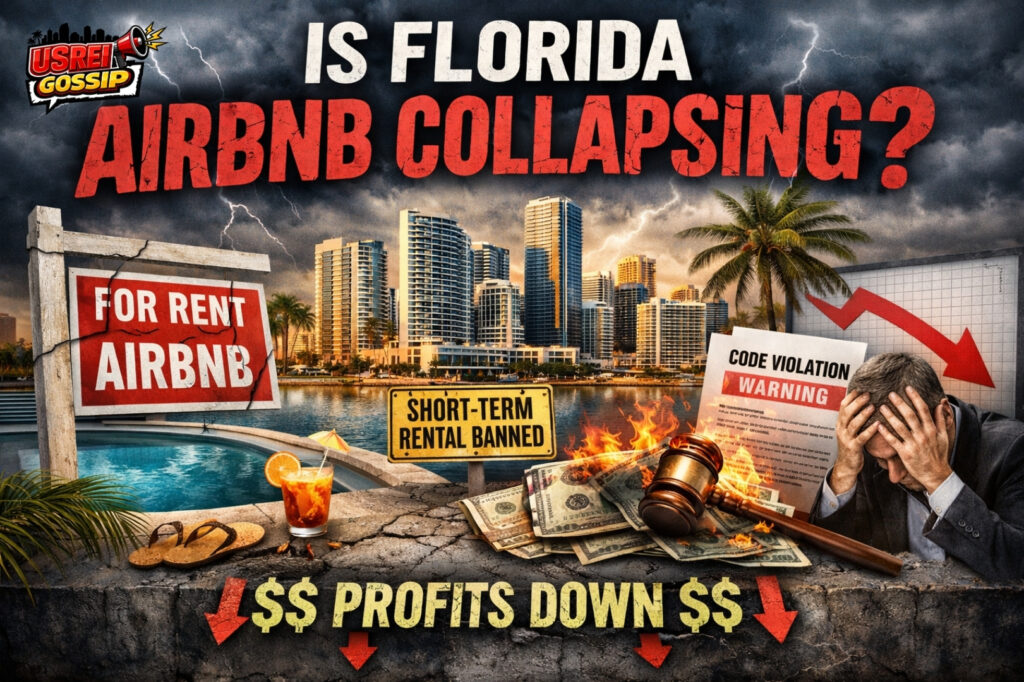
Florida Airbnb is not collapsing, but the version of Florida Airbnb that social media sold to millions of investors absolutely is.
That distinction matters because what is happening right now is being wildly misdiagnosed online. Viral posts are calling it a crash, a bust, even a death spiral.
In reality, Florida’s short-term rental market is going through something far more uncomfortable and far more revealing.
A ruthless correction.
To understand why the gossip feels convincing and why it is still wrong, we need to walk through what actually happened, step by step.
The Florida Airbnb Boom Was Real, But It Was Not Normal
From 2016 to 2019, Florida’s short-term rental market grew steadily and rationally. Occupancy hovered around the mid-50 percent range statewide.
Prices rose slowly. Returns were modest but dependable.
Airbnb was not a lottery ticket. It was a yield enhancer layered onto tourism-driven housing.
Then came 2020.
Florida stayed open when much of the world shut down. Hotels suddenly looked risky. Remote work erased seasonality. Domestic travel flooded the state.
Occupancy exploded. Nightly rates spiked. RevPAR surged to levels never seen before.
This was not organic growth. This was a global anomaly.
And it permanently distorted expectations.
The Pandemic Super Cycle Rewrote Investor Psychology
The 2020 to 2022 period created a false baseline that many investors mistook for the new normal. Properties were underwritten using peak 2021 numbers as if they were durable.
Leverage was cheap. Influencers preached passive income.
New towers were marketed explicitly around Airbnb potential.
The problem was simple and fatal.
Those numbers were never meant to last.
When borders reopened, travel diversified, and work-from-anywhere normalized, demand did not disappear. It just stopped being artificially concentrated in Florida.
The market did not collapse. It normalized.
Why Social Media Says It’s Collapsing (And Why That’s Misleading)
The collapse narrative took off in 2023 when viral charts began circulating showing massive revenue drops in places like Orlando and Miami. Some posts claimed declines of 30 percent or more.
Those posts left out three critical facts.
First, supply exploded. Thousands of new listings hit the market at once, diluting revenue per listing even as total nights booked continued to grow.
Second, flawed datasets misclassified blocked calendars as vacant units, artificially depressing occupancy figures.
Third, peak-to-trough comparisons were used deliberately. July 2021 was compared to off-season 2023, creating shock value but not truth.
When verified data is used, and supply is adjusted for, the picture changes dramatically. RevPAR declines exist, but they resemble a return to 2019 levels, not a collapse to zero.
Social media did not document a crash. It documented the end of fantasy underwriting.
The Real Crisis Is Not Demand. It’s Costs!
Tourism to Florida remains strong. Occupancy today sits roughly where it did pre-pandemic. What changed is everything below the revenue line.
Insurance costs have exploded. HOA fees have surged. Property taxes are being reassessed aggressively. Maintenance costs are up sharply.
For many operators, especially condo owners, insurance alone now consumes a staggering share of gross revenue.
Then came the Surfside effect.
Condo Investors Are Getting Hit the Hardest
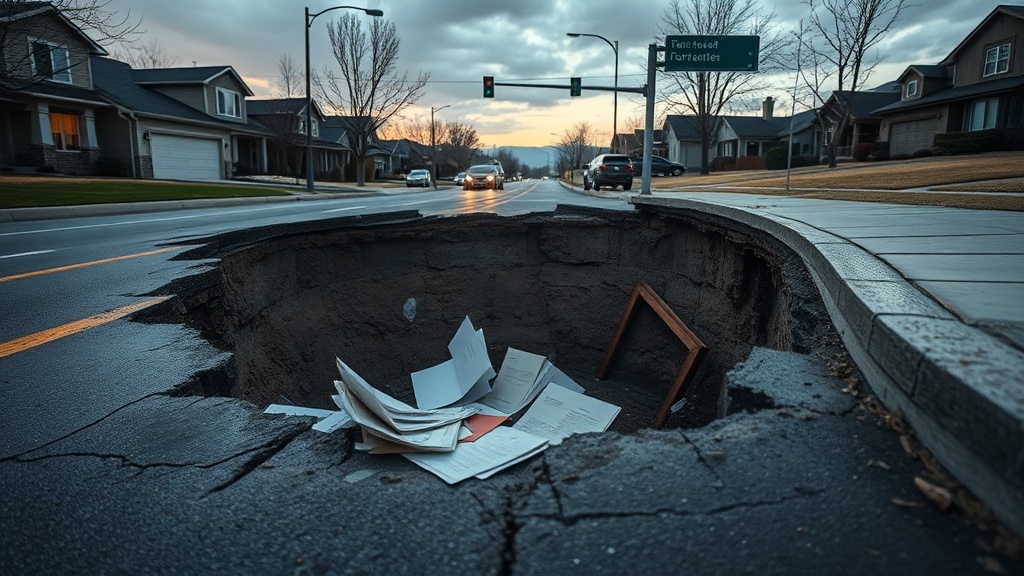
Post-Surfside legislation forced Florida condo associations to fully fund reserves and complete structural inspections. For owners in older coastal buildings, this triggered massive special assessments.
Many investors are now facing bills of $20,000, $50,000, or even $100,000 per unit.
That is not a market cycle. That is a solvency event.
This is why distress is concentrated in specific segments. Older condos. Highly leveraged buyers. Late entrants who underwrote using 2021 assumptions.
It is not happening everywhere. But where it is happening, it is brutal.
Regulation Did Not Kill Airbnb, But It Raised the Bar
Florida did not ban Airbnb statewide. What happened instead was more subtle and more punishing.
Cities deployed enforcement technology. Licensing tightened. Noise, parking, and occupancy rules became weaponized.
Miami Beach continued aggressive bans. Fort Lauderdale mandated inspections and monitoring devices. Orlando restricted whole-home rentals in core zones.
The message was clear.
Amateur operators are no longer welcome.
Professional, compliant operators can still function, but the days of casual, unregulated hosting are over.
A K-Shaped Market Has Emerged
Florida Airbnb did not collapse evenly. It split.
On one side are professional operators, cash-heavy owners, and unique properties in high-barrier markets. These units still perform.
Margins are thinner, but the model works.
On the other side are leveraged investors in generic inventory, oversupplied markets, and aging condos facing assessments. For them, profitability has collapsed even if bookings have not.
That is the truth hiding behind the gossip.
So, is Florida Airbnb collapsing?
No.
Florida Airbnb is not dying. It is growing up.
The collapse narrative confuses the death of easy money with the death of demand. They are not the same thing.
The market is no longer forgiving. The math is no longer optional. And the penalty for bad underwriting is now real.
What social media calls a collapse is actually a purge.
And like every purge, it feels chaotic on the way out.
Frequently Asked Questions
Is Florida banning Airbnb statewide?
No. Florida has not issued a statewide ban on Airbnb or short-term rentals. The state generally preempts local governments from outright bans, but cities with pre-2011 ordinances and those using zoning, licensing, noise, parking, and occupancy rules can severely restrict or effectively block short-term rentals in practice.
Why does it feel like Airbnb is collapsing if tourism is still strong?
Because profitability and demand are not the same thing. Tourism remains strong, but operating costs have surged. Insurance, HOA fees, special assessments, taxes, and compliance costs have crushed margins for many owners, especially those who bought late and used heavy leverage.
Which Florida markets are under the most pressure?
Oversupplied markets and older coastal condo markets are under the most stress. Disney-adjacent areas like Kissimmee face extreme listing saturation, while coastal condos are being hit hard by insurance hikes and post-Surfside special assessments.
Are investors actually selling Airbnb properties?
Yes, but selectively. Distressed sales are concentrated among condo owners facing large assessments and investors whose properties no longer cash flow. This is not a wave of forced selling across all property types or markets.
Are short-term rentals still profitable anywhere in Florida?
Yes. Professional operators with well-located, unique, or luxury properties in high-barrier markets are still generating returns. Profitability is lower than during the pandemic peak, but viable models still exist for disciplined operators.
Did social media exaggerate the Airbnb crash narrative?
Yes. Many viral posts relied on flawed datasets, peak-to-trough comparisons, and ignored the impact of rapid supply growth. Normalization back to pre-pandemic levels was framed as a collapse, which is misleading.
What role did insurance play in the current situation?
A massive one. Florida property insurance costs have risen to several times the national average. For short-term rentals, especially condos, insurance alone can now consume a significant portion of gross revenue, dramatically raising break-even occupancy rates.
How did the Surfside condo law affect Airbnb investors?
Post-Surfside legislation requires mandatory inspections and fully funded reserves for older condos. This has triggered large special assessments that wiped out years of profit for some investors and forced others to sell.
Is this a temporary downturn or a permanent shift?
It is a permanent shift in standards, not a temporary dip. The easy money era is over. The market now rewards professional management, strong balance sheets, and realistic underwriting.
What is the biggest mistake investors made during the boom?
Underwriting deals using 2021 performance as the baseline. Those numbers were created by a global anomaly, not a sustainable market condition.
What should current Airbnb owners be doing right now?
They should audit insurance exposure, HOA financial health, reserve studies, local enforcement rules, and realistic cash flow under normalized occupancy. Survival now depends on operational discipline, not optimism.
Is Florida still one of the best tourism markets in the U.S.?
Yes. Florida remains one of the strongest tourism markets in the world. The issue is not demand. The issue is who can afford to operate in the new reality.