Why Miami’s Office Market Is Beating Other Metros
Although many U.S. office markets remain trapped in weak demand and negative absorption, Miami-Dade has posted a sharply different trajectory since 2020. In the wake of Mamdani’s NYC victory, a NYC investor exodus is accelerating relocations and contract activity into Florida.
Relocations and investor pricing have been reset by lifestyle amenities and international connectivity.
Miami is also among the top-performing metros expected to lead office-sector job growth relative to northern peers.
Disruptive Drivers Pressuring Other Metros
Corporate and legal clustering
Since 2020, 127 companies relocated into Miami-Dade, taking 2.2 million square feet.
Twenty one of the Am Law 50 and 38 of the Am Law 100 now keep offices there.
Citadel moved its global headquarters from Chicago to Miami in 2022, reinforcing Florida’s business friendly pull.
Class A rents reached $73.28 per square foot, up 7% year over year and more than 50% since Q1 2020.
Buyers represented 49% of purchasers, while Capital Economics forecasts 15% capital growth.
The Data: Vacancy, Absorption, and Occupancy Since 2020
As other U.S. office markets widened out, Miami-Dade held the lowest vacancy among 25 major metros at 15.5% in April 2025.
Average asking rents climbed, with listing rates at $56.5 per square foot in April 2025, up 15% year over year.
Vacancy and Occupancy
Direct vacancy fell 3.5% from 2020 to 2025, hitting 14.6% in Q2 2025.
Total vacancy was 14.8% in Q3 2025 as Class A tightened 5 basis points.
Absorption showed seasonal trends: 112,742 square feet prior quarter versus 22,964 recently.
That left year-to-date absorption at minus 17,237.
Occupancy rose 8.2% from 2021 to 2025, even as August 2025 office-using employment slipped 0.6% year over year.
This points to variation across submarkets.
Metrics Snapshot
- National direct vacancy: 20.5% at end 2025
- Leasing activity: up 1.6% vs Feb 2020
- Miami leased: 3.2 million square feet in 2025
- Broward vacancy: 10.9%
- Palm Beach vacancy: 9.0%
- Construction added: 2% to Miami stock
What’s Driving Demand: Corporate Relocations and Expansions
Vacancy tightening and uneven absorption have been reinforced by a steady stream of corporate moves that are reshaping Miami-Dade’s office demand profile.
Relocation logistics are pushing firms toward turnkey Brickell and Waterford blocks. Talent repatriation is supporting higher-density hiring in tech and finance.
Miami is capturing headquarters decisions from Anaplan, Varonis, and Galderma, along with large leases like ADP’s 78K SF at Waterford.
Expansions by Microsoft in Brickell, Amazon in Wynwood, and Blackstone in 2024 are widening the tenant mix.
Citadel’s 2024–2025 growth and Goldman Sachs hiring in Palm Beach County are intensifying competition for Class A space and amenity-rich locations. Deals continue to cluster by transit.
Recent demand signals
| Move type | Examples |
|---|---|
| Relocations | Anaplan, Varonis, Galderma |
| Expansions | Microsoft, Amazon, Blackstone |
| New campuses | MSC Group, Assurant |
What’s Next: New Supply, Rent Growth, and 2026 Recovery
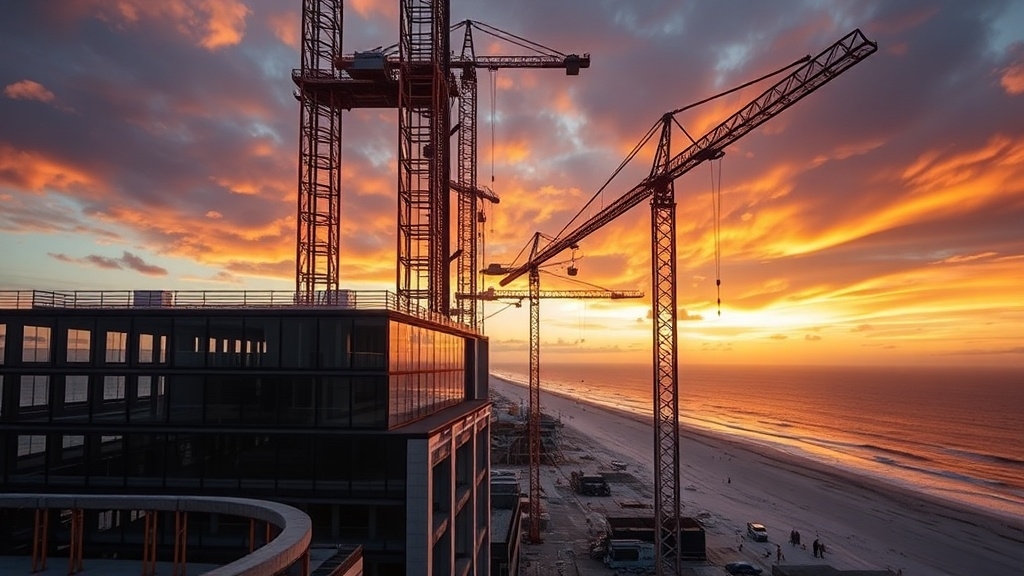
Tight supply conditions are set to collide with a larger 2026 development wave.
This could keep Miami-Dade office pricing under pressure even as availability shifts by submarket.
Supply Shock Signals
The pipeline stands at 1.3M square feet in Q3 2025, about 2.7% of inventory.
Wells adds 93,716 square feet next quarter.
The Vizcaya Capital Building also lifted the pipeline by 70,000 square feet.
Rent and Recovery Stress
Rents rose 4.2% in 2025, with listings at $57.30 per square foot.
Capital Economics expects value recovery starting in 2026.
This is supported by tight trophy supply, rising construction costs, and transit improvements.
Disruption Watchlist
Citadel HQ and Santander Brickell could start in 2026, totaling 2.4M square feet.
The pipeline is 60% pre-leased.
Q3 2025 absorption was 112,742 square feet.
Vacancy fell to 14.7%.
2025 leasing reached 3.2M square feet.
How to Underwrite Miami Office Deals (Returns and Risks)
Uncertainty now anchors Miami office underwriting.
Cap rates are repricing faster than fundamentals.
Returns Under Pressure
Office cap rates in the metro sit near 8.05% to 8.59%.
That’s far above Miami core pricing around 4.7%.
Model yields must reflect higher debt costs.
They must also reflect slower exit liquidity.
Vacancy is 15.5% versus 19.7% nationally.
Class A drives 68.4% of leasing and supports $56.5 per square foot asking rents.
Risks That Break Models
Operating costs are rising fast.
Insurance is up 29% year over year, maintenance 24%, and taxes 22%.
Debt structuring must anticipate the 2026 maturity wall.
That includes $14.9 billion coming due and potential refi proceeds pressure.
Capex reserves should cover $400 to $550 per square foot AAA replacement costs.
They should also cover lease-up risk from 1.3 million square feet under construction.
Rising construction and capital constraints—like Seattle’s 400M funding gap—underscore how quickly cost escalation can stall large projects and pressure underwriting assumptions.
Assessment
Miami’s office outperformance since 2020 has been real, but uneven across submarkets.
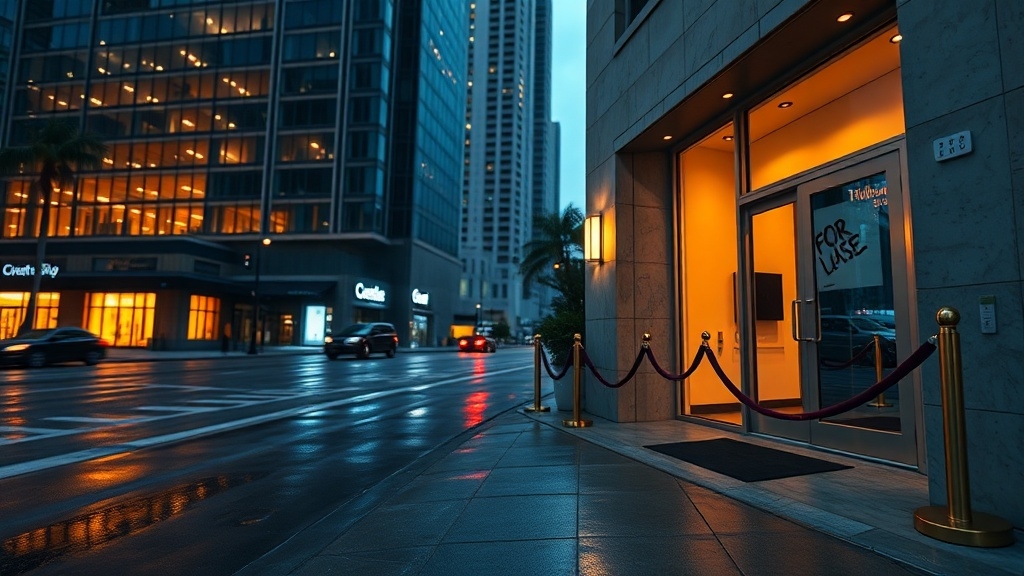
Rising private club and experiential retail leasing signals a reordering of prime ground-floor space, as traditional office footprints stabilize.
New deliveries and higher financing costs keep underwriting tight, with lease-up risk concentrated in older, commodity towers.
Rent growth looks constrained until absorption consistently outpaces supply.
A clearer recovery path appears more likely in 2026, contingent on corporate expansions continuing with stricter tenant selection.