
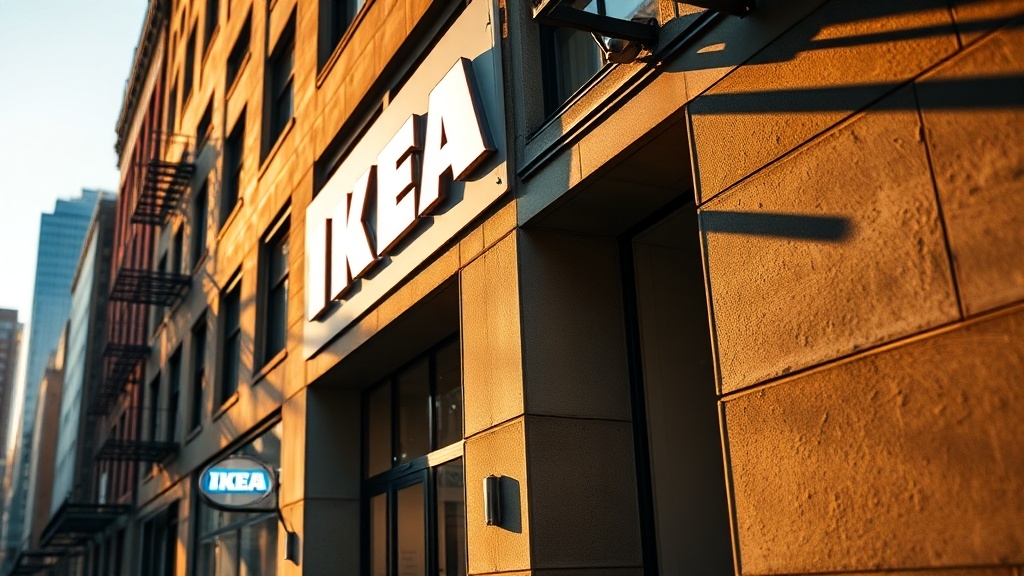
Strategic Urban Expansion
As Ingka Investments focuses on Manhattan’s core, their acquisition of retail space at 570 Fifth Avenue is a calculated response to urban growth dynamics. It also reflects changing consumer preferences. This urban retail expansion showcases Ikea’s intent to prioritize city center proximity. The goal is to enhance accessibility for city dwellers. Anchoring the largest development on Fifth Avenue in over 60 years, the 80,000-square-foot space signifies a strong commitment. The incorporation of AI-powered market analysis ensures that investments are strategically made based on predictive insights, aligning with current market trends. The new IKEA location will feature two cellar levels, adding to the innovative use of space. Ingka Investments holds a one-third stake, securing its position in the changing retail landscape of city centers. This aligns with Ikea’s global strategy of shifting towards smaller, urban-centric stores. Recent openings in major city centers worldwide have redefined how urban consumers experience retail spaces.
Multi-Use Property Development
Urban real estate environments are evolving at an accelerated pace. Multi-use property development stands at the forefront of this transformation.
This dynamic approach integrates residential, retail, and commercial spaces. It leverages mixed-use benefits to encourage urban revitalization. Developments like the Morris Adjmi-designed 277 Canal Street exemplify this model within the recently rezoned Soho/Noho area.
In Soho, developments like the Morris Adjmi-designed 277 Canal Street exemplify this model. The project combines 100 residential units with significant ground-level retail.
Historic preservation is harmonized with modern architectural elements. This combination safeguards neighborhood identity while injecting contemporary vibrancy.
Adaptive reuse is a key strategy, transforming historic buildings into multifunctional assets. Barrier-free access and other modern upgrades further enhance these spaces.
As a result, such projects stimulate economic growth and diversify urban settings. They also nurture thriving community ecosystems, pivotal in New York City’s evolving skyline.
Significant Financial Investment
With urban revitalization efforts reshaping Manhattan, significant financial investments are fueling this transformation. IKEA’s recent purchase of a prime SoHo property highlights this trend.
The $213 million acquisition has considerable financial implications for both IKEA and the broader retail market. This move signifies a strategic expansion into high-value urban real estate.
Supported by a $195 million loan from Morgan Stanley and UBS, IKEA’s strategy is clear. By securing approximately 61,000 square feet in a prestigious location, they aim to boost brand visibility.
This acquisition reflects IKEA’s confidence in Manhattan’s resurgent retail environment. Investors have increasingly dominated real estate markets, particularly in Sun Belt states, outbidding local buyers. Alongside a $292 million commitment to construction, it underscores belief in the long-term viability of New York City’s retail sector.
| Property Value ($ million) | Loan Amount ($ million) | Construction Investment ($ million) |
|---|---|---|
| 213 | 195 | 292 |
Leadership and Market Outlook
In a rapidly evolving global retail environment, IKEA’s leadership remains steadfast. They expertly steer the company through the complexities of modern urbanization and consumer behavior shifts.
Guided by its Inter IKEA Group Management Team, the brand’s leadership dynamics are crucial. They ensure alignment with strategic goals focused on innovation and transformation.
Jon Abrahamsson Ring, as CEO, works alongside specialized managers. Together, they drive the execution of initiatives to optimize the value chain and advance digital transformations.
Meanwhile, IKEA’s strategic insights team meticulously tracks market trends. This tracking helps them adapt to urban growth and demographic shifts effectively.
This foresight aids in the creation of flexible retail formats tailored for high-density areas like Soho.
It underscores IKEA’s move towards smaller, integrated city locations that enhance consumer connection and urban relevancy.
Communities are actively engaging in grassroots movements, including initiatives like community land trusts, to promote affordable housing solutions that could influence how corporations such as IKEA participate in urban development.
Assessment
The acquisition of a significant property in Soho marks a daring step in IKEA’s urban retail strategy. By investing heavily in a multi-use development, the company underscores its commitment to expanding its footprint within prime New York City real estate.
This move not only reflects a strategic pivot towards urban markets but also exemplifies confidence in the area’s robust retail potential. As the leadership team maneuvers through this high-stakes expansion, industry observers keenly watch their execution and long-term impact.






















4 Responses
Isnt it risky for IKEA to invest big in Soho? Could this be a sign of overconfidence in the retail market? Just my two cents.
So IKEAs betting big on Soho, huh? Just hope they dont turn it into a flat-pack jungle. What about local businesses?
Interesting move, but isnt NYC saturated already? Isnt diversifying into less developed markets a smarter investment strategy? Just my two cents.
I get the expansion, but isnt IKEA betting too much on Soho retail? Seems like a risky move. Thoughts, anyone?